
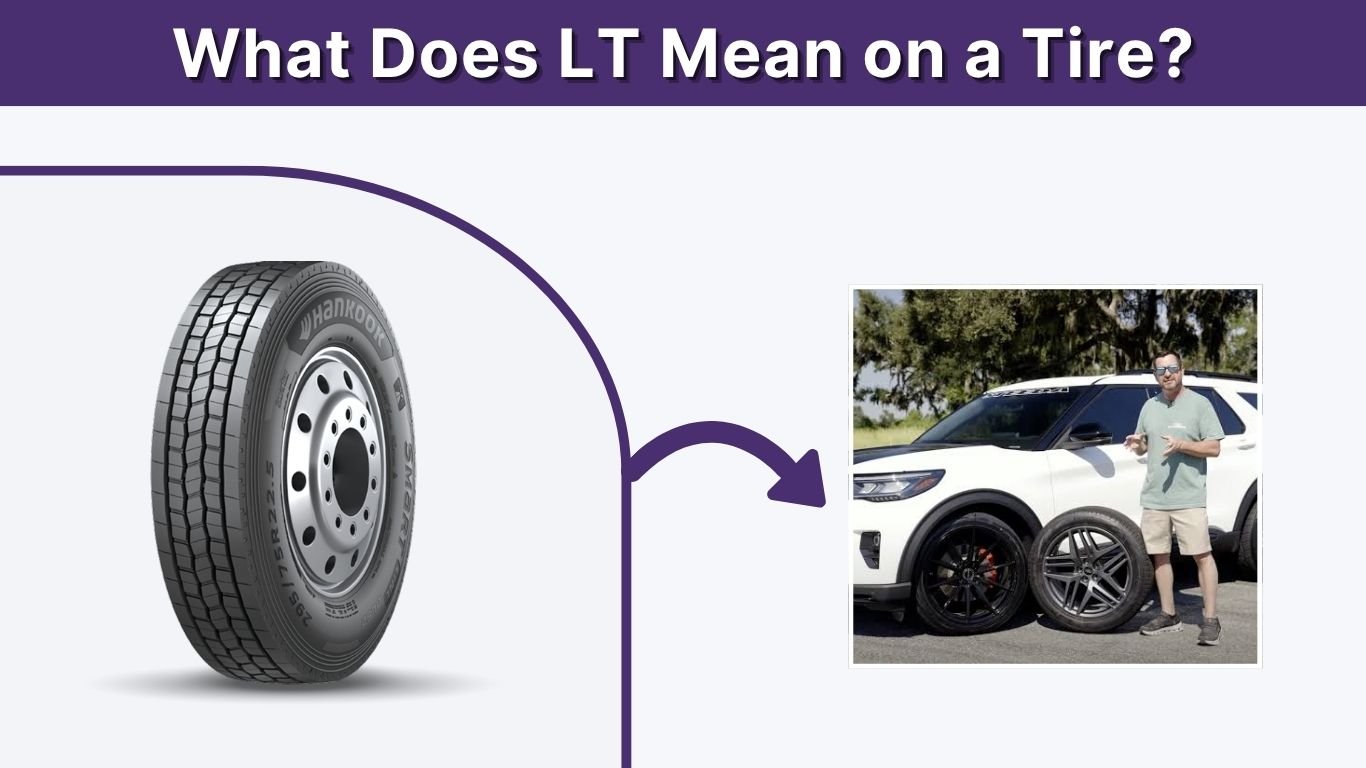
When shopping for new tires, you might notice the letters “LT” printed on the sidewall before or after the tire size. But what does LT mean on a tire, and why is it important? LT stands for Light Truck, indicating a tire designed for vehicles that may carry heavier loads or tow trailers. These tires differ from standard passenger tires in construction, load ratings, and inflation requirements. Understanding LT tire markings helps you choose suitable tires for your truck, SUV, or work vehicle.
What Does LT Mean on a Tire?
LT stands for Light Truck, a tire classification commonly used for pickup trucks, heavy-duty SUVs, and commercial vehicles. LT tires are engineered to handle demanding applications involving substantial cargo and towing. Compared with standard passenger tires, they often feature stronger internal construction and operate at higher inflation pressures. However, their actual load capacities depend on individual tire specifications.
What Does LT Stand for on Tires?
The letters LT identify a light truck tire rather than a standard passenger tire. These tires are designed around the load requirements of trucks and similar vehicles.
For example, a tire marked LT265/70R17 belongs to the light truck category. This designation does not identify a specific brand, tread pattern, or weight capacity.
Where Is LT Located on a Tire?
You can find LT molded into the tire’s sidewall, usually as part of its size designation.
In LT-metric sizing, the letters appear before the numbers, such as LT275/65R18. In flotation sizing, they appear at the end, such as 35×12.50R20LT. Both formats identify light truck tires.
How to Read LT Tire Size Markings
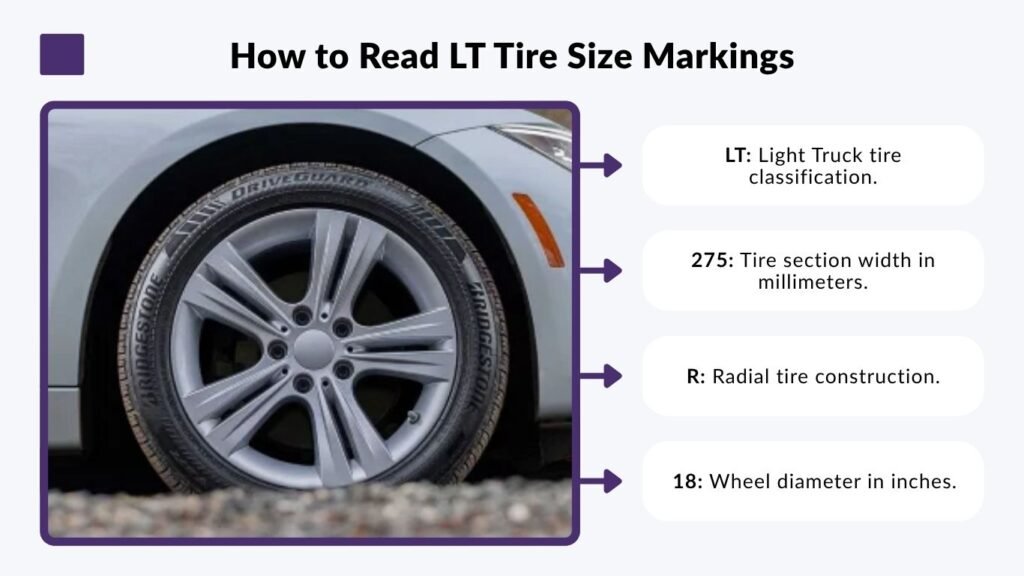
Understanding tire markings makes selecting replacements easier. LT tire codes contain information about width, sidewall proportions, construction, and wheel diameter. The letters and numbers work together to describe the tire’s dimensions and classification. Learning these markings is particularly useful when comparing tires for towing, commercial driving, or off-road use, where proper fitment and load capacity are important.
Understanding LT275/70R18 Tire Size
Consider the common tire size LT275/70R18. Each part has a specific meaning:
- LT: Light Truck tire classification.
- 275: Tire section width in millimeters.
- 70: Sidewall height equals 70% of the section width.
- R: Radial tire construction.
- 18: Wheel diameter in inches.
Additional markings identify the tire’s load range, load capacity, and speed rating.
What Does LT Mean After Tire Size?
Some off-road and light truck tires use flotation sizing, such as 35×12.50R20LT.
Here, 35 represents the nominal overall diameter in inches, 12.50 represents nominal section width, and 20 identifies the wheel diameter. The LT suffix still means Light Truck.
Therefore, the meaning of LT remains the same whether it appears before or after the size.
LT vs. P vs. ST Tires: What’s the Difference?
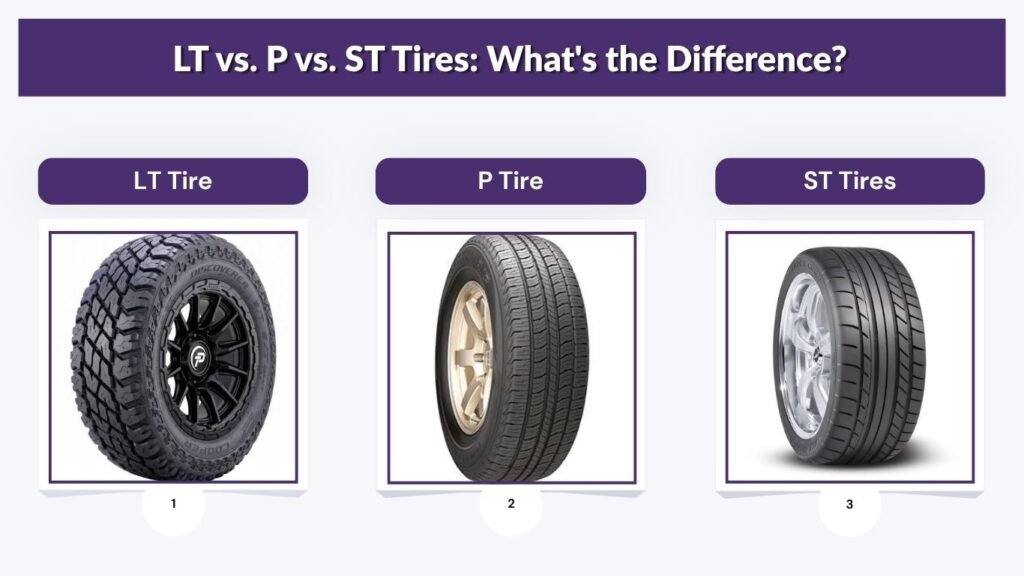
Not every truck, SUV, or trailer requires the same tire classification. Manufacturers produce passenger, light truck, and special trailer tires for different operating conditions. Although their dimensions sometimes overlap, their load ratings and inflation requirements can differ significantly. Recognizing these designations helps prevent unsuitable substitutions and ensures replacement tires meet the vehicle manufacturer’s requirements.
Main Differences Between Tire Types
- P Tires (Passenger): Designed primarily for passenger cars, crossovers, and some light-duty trucks, emphasizing everyday comfort and road performance.
- LT Tires (Light Truck): Designed for light truck applications involving heavier loads, towing, and demanding operating conditions.
- ST Tires (Special Trailer): Designed specifically for trailer applications, including utility, cargo, and recreational trailers.
Are LT Tires Better Than Passenger Tires?
LT tires are not automatically better than passenger tires. Their advantages depend on how the vehicle is used.
Drivers who regularly carry heavy cargo or tow substantial loads may benefit from properly rated LT tires. However, passenger tires can provide a smoother ride, lower rolling resistance, and better everyday comfort.
The correct choice depends on vehicle specifications rather than tire classification alone.
Advantages and Disadvantages of LT Tires
Light truck tires provide several advantages for vehicles operating under demanding conditions. Their construction is typically intended to support higher load requirements than comparable passenger tires. However, stronger construction can involve compromises in weight, comfort, and fuel efficiency. Understanding these characteristics helps drivers decide whether LT tires suit their everyday transportation, commercial driving, towing, or recreational needs.
Key Benefits of LT Tires
- Load-carrying capability: Properly selected LT tires can support demanding cargo and towing applications.
- Stronger construction: Many feature reinforced casing components designed for higher service loads.
- Off-road options: Numerous LT tire models offer aggressive tread patterns for rough terrain.
- Commercial suitability: Appropriate LT tires can serve trucks and vans operating under frequent heavy loads.
Potential Drawbacks of LT Tires
LT tires can be heavier and less comfortable than comparable passenger tires. Their stiffer construction and inflation requirements may create a firmer ride, particularly on unloaded vehicles.
Some models also increase rolling resistance, potentially affecting fuel economy. LT tires may cost more than passenger alternatives.
These drawbacks vary by tire model, vehicle, and operating conditions. Choosing LT tires solely because they appear stronger does not guarantee better performance.
What Does Load Range C, D, or E Mean on LT Tires?
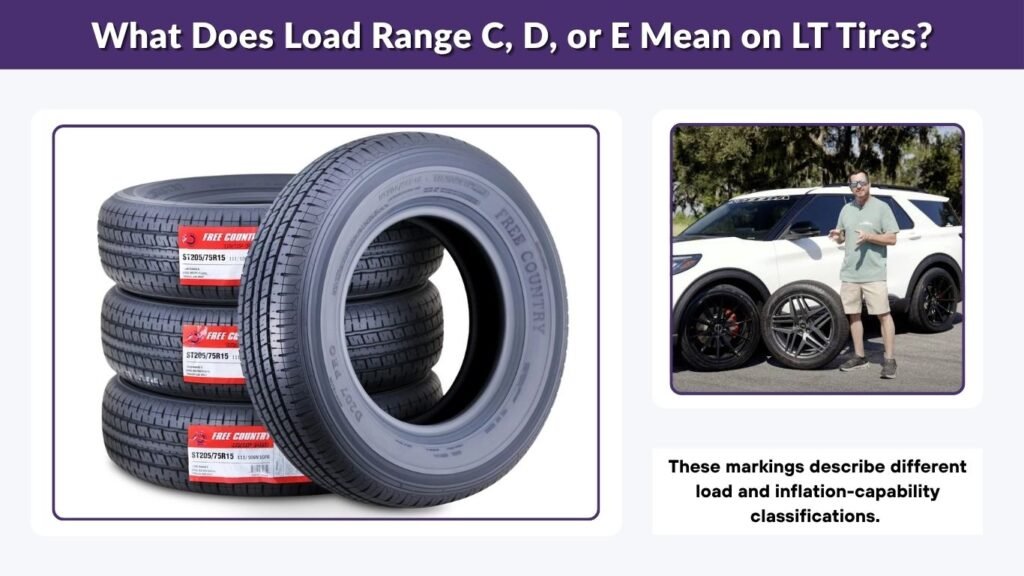
Besides the LT designation, many light truck tires display load range letters such as C, D, or E. These markings describe different load and inflation-capability classifications. They help distinguish tires with similar dimensions but different operating requirements. Understanding load ranges is essential because the LT designation alone cannot tell you how much weight an individual tire safely supports.
LT Load Range C
Load Range C is commonly associated with a maximum-load reference inflation pressure of 50 PSI for LT-metric tires.
It may suit certain light-duty hauling applications, provided the tire’s rated capacity meets the vehicle’s requirements.
LT Load Range D
Load Range D typically uses a maximum-load reference pressure of 65 PSI in LT-metric applications.
It offers a different load and pressure capability than Load Range C, although actual capacity depends on the tire’s size and specifications.
LT Load Range E
Load Range E commonly has a maximum-load reference pressure of 80 PSI for LT-metric tires.
It is frequently used for applications involving heavier trucks, cargo, and towing. However, Load Range E does not mean every vehicle should operate at 80 PSI.
Always follow the vehicle-specific pressure and load requirements.
How to Choose the Right LT Tires for Your Vehicle
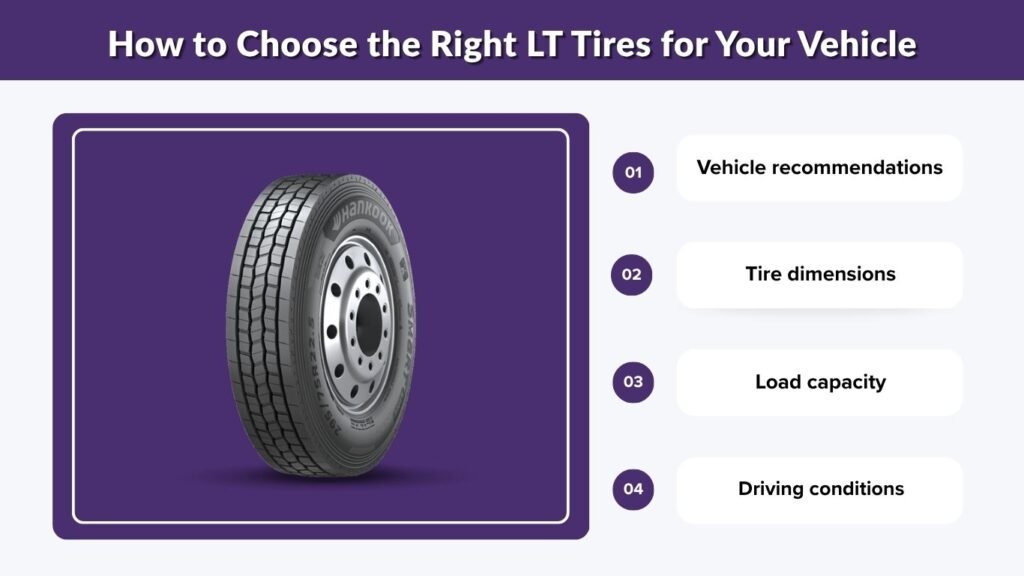
Selecting suitable LT tires requires more than matching the letters and wheel diameter. Tire size, load capacity, inflation pressure, and driving conditions must all be considered. A tire suitable for one pickup truck might not meet another truck’s requirements. Checking manufacturer recommendations before purchasing helps maintain safe handling, appropriate load support, and reliable performance during everyday use.
Important Factors to Check
- Vehicle recommendations: Check the driver’s door-jamb tire placard and owner’s manual.
- Tire dimensions: Confirm the correct width, aspect ratio, and wheel diameter.
- Load capacity: Select tires that meet or exceed the vehicle’s required load rating.
- Driving conditions: Consider highway travel, off-road terrain, towing, and cargo usage.
- Inflation requirements: Use the appropriate vehicle-specific pressure for the selected tire and load.
Can You Replace Passenger Tires With LT Tires?
In some cases, replacing passenger tires with LT tires is possible, but the change requires careful evaluation.
LT and passenger tires use different load-inflation standards. Even tires with similar dimensions may require different pressures to support the same weight.
Consult the vehicle manufacturer or a qualified tire specialist before changing tire classifications. Never assume that matching tire dimensions makes the substitution safe.
FAQs
Drivers often encounter additional questions when comparing light truck tires with standard passenger tires. Common concerns involve tire compatibility, load capacity, sidewall markings, and daily driving comfort. Understanding these details can prevent incorrect purchases and unnecessary replacement costs. The following answers address five common questions about LT tire designations and their applications on trucks, SUVs, and other vehicles.
1. What Does LT Mean on a Truck Tire?
LT means Light Truck. It identifies tires designed for light truck applications, including vehicles that carry heavier cargo or tow trailers.
2. What Does LT Mean on a Tire Size?
LT identifies the tire classification. For example, LT265/75R16 indicates a light truck tire with a 265-millimeter nominal section width, 75% aspect ratio, radial construction, and 16-inch wheel diameter.
3. Can You Put LT Tires on a Regular Car?
LT tires are generally unnecessary for regular passenger cars. Installing them may affect ride quality and vehicle handling. Any change must meet the manufacturer’s fitment, load, and inflation requirements.
4. What Does LT C Mean on Tires?
On an LT tire, Load Range C identifies a load and inflation classification. It should not be confused with the C suffix on some European commercial van tire sizes, which indicates a different tire category.
5. Do LT Tires Last Longer Than Regular Tires?
Not necessarily. Tire lifespan depends on tread compound, driving conditions, maintenance, loading, and alignment. LT construction does not automatically guarantee greater tread life.