
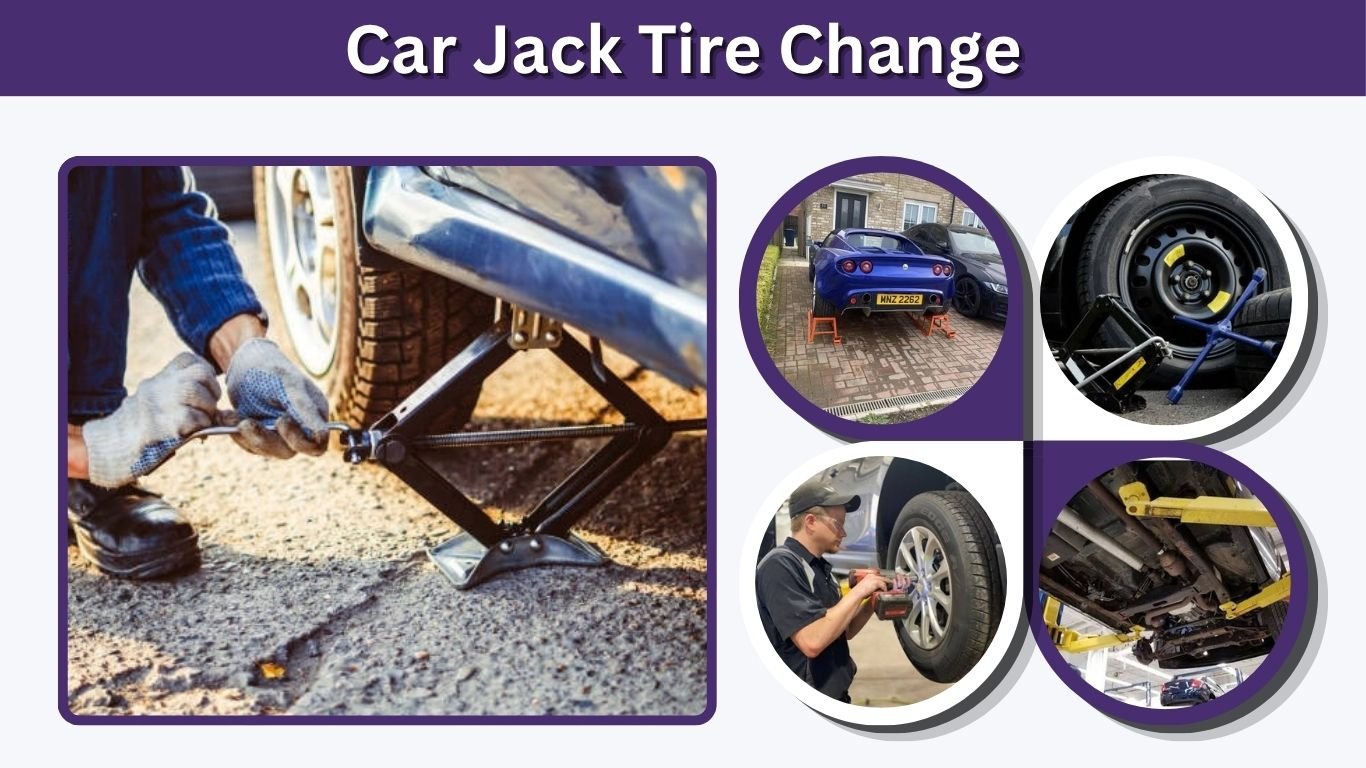
A car jack tire change can be straightforward when you use the correct lifting point and follow basic safety precautions. The biggest risk is not removing the wheel—it is improperly supporting the vehicle. A jack placed on weak bodywork, uneven ground, or the wrong part of the frame can shift or collapse. Before lifting your car, park on firm, level ground, engage the parking brake, and check the owner’s manual. This guide explains safe jack points, correct placement, lifting height, jack types, and tire-changing steps.
How to Use a Car Jack for a Tire Change
A car jack raises one corner of the vehicle high enough to remove a damaged tire and install the spare. Emergency jacks are intended for short-term lifting during a tire change, not for working underneath a vehicle. Exact operating instructions vary between vehicles, so your owner’s manual should always take priority over generic advice.
Before You Start
Prepare the vehicle before touching the jack:
- Move to firm, level ground.
- Get as far away from moving traffic as practical.
- Turn on hazard lights.
- Switch off the engine.
- Put an automatic transmission in Park.
- Apply the parking brake firmly.
- Keep passengers away from the work area.
- Use wheel chocks when available.
- Find the spare, jack, and lug wrench.
- Read the vehicle’s tire-changing instructions.
If you cannot reach a location where you can work safely, calling roadside assistance is preferable to attempting a roadside tire change beside fast-moving traffic.
Where to Place a Car Jack When Changing a Tire
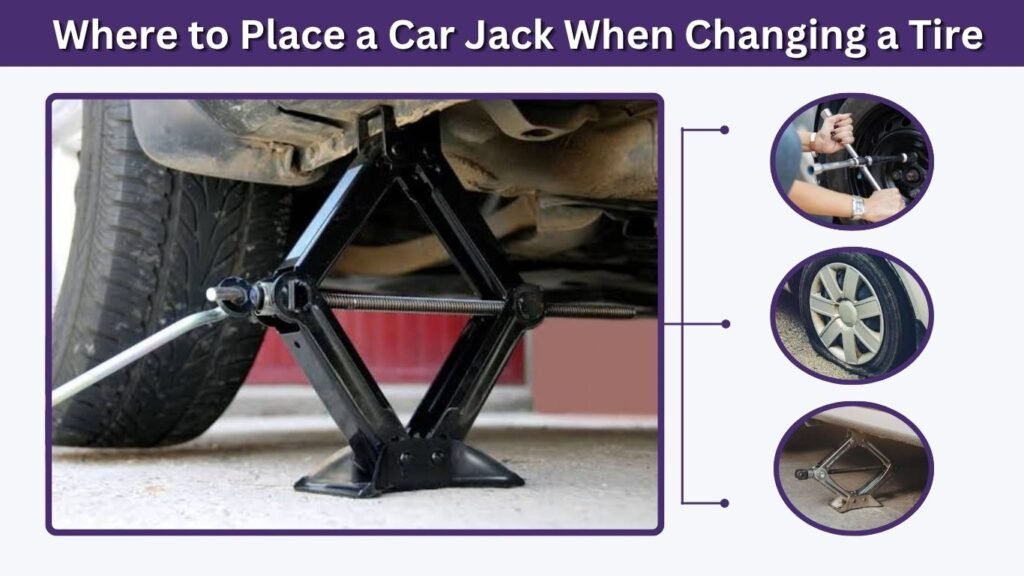
Correct jack placement is critical. A vehicle’s underside contains strong structural lifting areas as well as plastic trim, sheet metal, exhaust components, and other parts that cannot safely support the car’s weight. Putting a jack under the wrong location may damage the vehicle or cause it to slip.
Find the Manufacturer’s Jack Point
Most passenger cars have designated jacking points near each wheel. These are usually reinforced sections beneath the sides of the vehicle.
Depending on the model, the lifting point may appear as a notch, tab, reinforced pinch weld, or specifically shaped section designed to match the factory jack.
AAA recommends consulting the owner’s manual because jack-point locations vary by vehicle. Never choose a location simply because it looks strong.
Safe Jack Points for a Car Tire Change
When identifying a jack point:
- Look in the owner’s manual first.
- Find the point nearest the flat tire.
- Look for notches or factory markings.
- Make sure the jack contacts the reinforced structure.
- Keep the jack away from plastic body panels.
- Position the jack upright on solid ground.
Some cars use specially designed jack saddles that fit over a reinforced pinch weld. Others specify locations on the frame or another structural component.
Using the wrong point can bend bodywork or make the vehicle unstable.
How to Jack Up a Car for a Tire Change
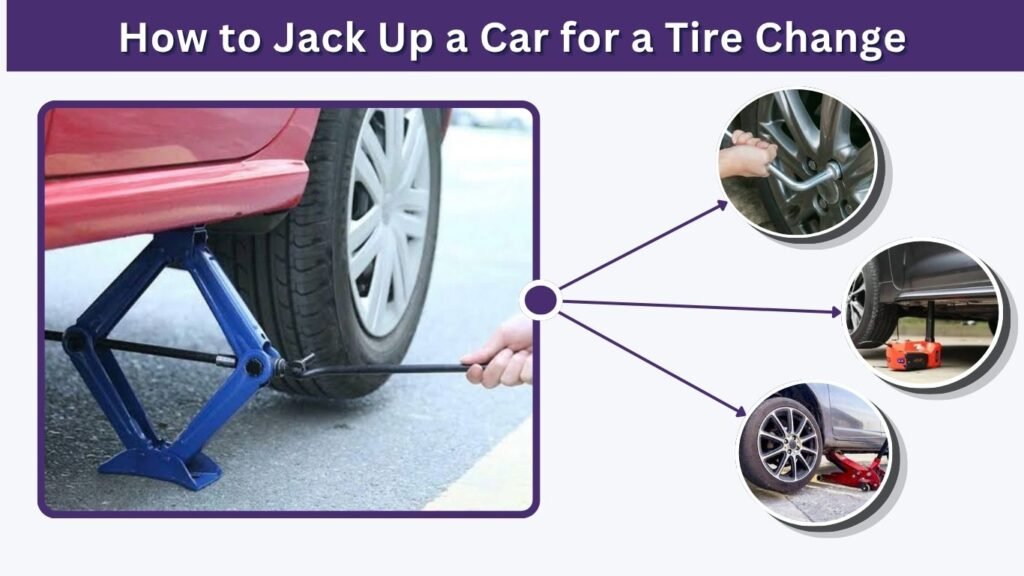
Once you have identified the correct lifting point, position the jack carefully before raising the vehicle. The jack should remain vertical and stable as the load transfers onto it. Stop immediately if the jack begins leaning, shifting, sinking into the ground, or contacting the vehicle incorrectly.
Step 1: Loosen the Lug Nuts First
Before lifting the car, loosen each wheel nut roughly a quarter to half turn.
Do not remove them yet.
Breaking the nuts loose while the tire remains on the ground prevents the wheel from rotating and reduces the amount of force you need to apply while the car is balancing on the jack. AAA specifically recommends loosening the lug nuts before raising the vehicle.
Step 2: Position the Jack
Place the jack directly under the approved jack point nearest the flat tire.
For a scissor jack, align its top saddle or notch exactly as specified by the vehicle manufacturer.
Raise it slowly until the jack makes firm contact with the vehicle. Before continuing, check again that both the base and lifting point are stable.
Step 3: Raise the Car Slowly
Operate the jack gradually.
With a typical scissor jack, this means turning the handle to extend the jack. Hydraulic jacks usually rise through repeated pumping.
Watch the jack continuously as the vehicle rises.
If it starts tilting or moving, lower the vehicle carefully and reposition it before continuing.
How High Should You Jack a Car for a Tire Change?
There is no single height that works for every vehicle. You only need enough clearance to remove the flat tire and fit the inflated replacement tire onto the hub. Raising the car much higher than necessary increases instability.
Remember the Spare Is Taller
A flat tire is compressed against the road, while an inflated spare has its full diameter.
Therefore, lifting only until the flat tire barely leaves the ground may not provide enough space to install the spare.
Raise the car until the replacement tire can slide comfortably onto the wheel studs or hub.
AAA guidance uses roughly six inches of clearance as a general example, but the actual required height depends on the vehicle and tire.
How to Change a Tire With a Car Jack
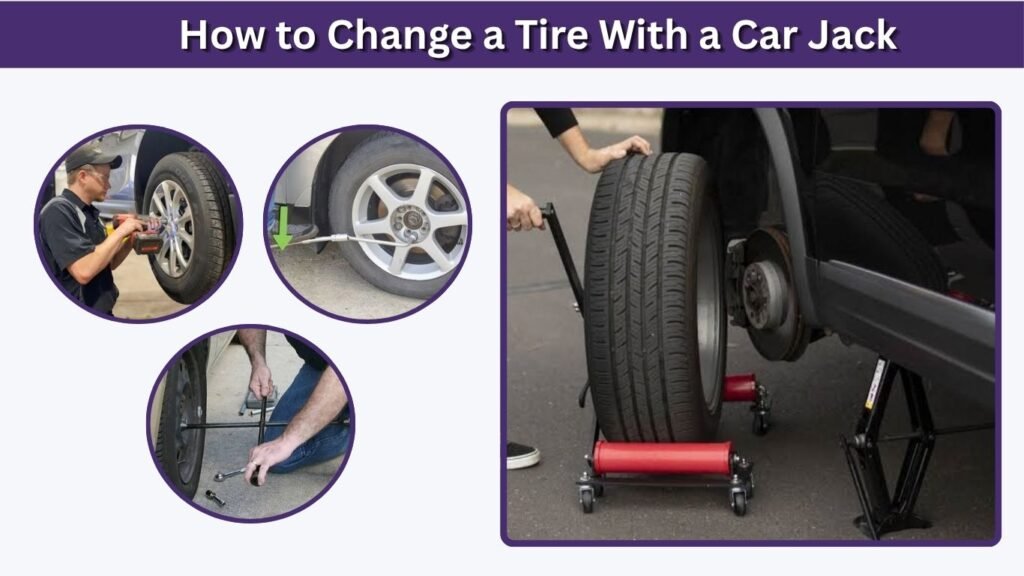
After the vehicle is safely lifted, the tire itself can be replaced. Avoid leaning heavily against the vehicle or making movements that could shift its weight while it is supported by the jack.
Tire Changing Steps
Follow this basic sequence:
- Loosen lug nuts while the tire is still grounded.
- Position the jack at the approved lifting point.
- Raise the vehicle until sufficient clearance exists.
- Remove the loosened lug nuts.
- Pull the flat tire straight off.
- Place the spare onto the hub.
- Start every lug nut by hand.
- Tighten them lightly in a star pattern.
- Lower the vehicle until the tire touches the ground.
- Tighten the lug nuts more firmly in a star pattern.
- Lower the car completely.
- Apply the manufacturer’s specified final wheel-nut torque.
Starting the nuts by hand helps prevent cross-threading, while an alternating tightening pattern helps seat the wheel evenly.
What Type of Car Jack Is Best for Changing Tires?
Several jack designs can lift vehicles, but they serve different purposes. For an emergency roadside tire change, the jack supplied by the manufacturer is generally designed to work with that vehicle’s designated lifting points.
Common Types of Car Jacks
Typical choices include:
- Scissor jack: Compact and commonly supplied with passenger cars.
- Hydraulic floor jack: Larger, faster, and convenient for home garages.
- Bottle jack: Compact with high lifting capacity but requires sufficient ground clearance.
- Electric jack: Uses electric power to lift the vehicle and may reduce manual effort.
A jack must have an adequate weight capacity and compatible lifting range.
For roadside use, compact size matters. For routine tire rotations or garage work, a quality floor jack paired with properly rated jack stands generally offers greater convenience and stability.
Never exceed a jack’s rated capacity.
Do You Need Jack Stands for a Tire Change?
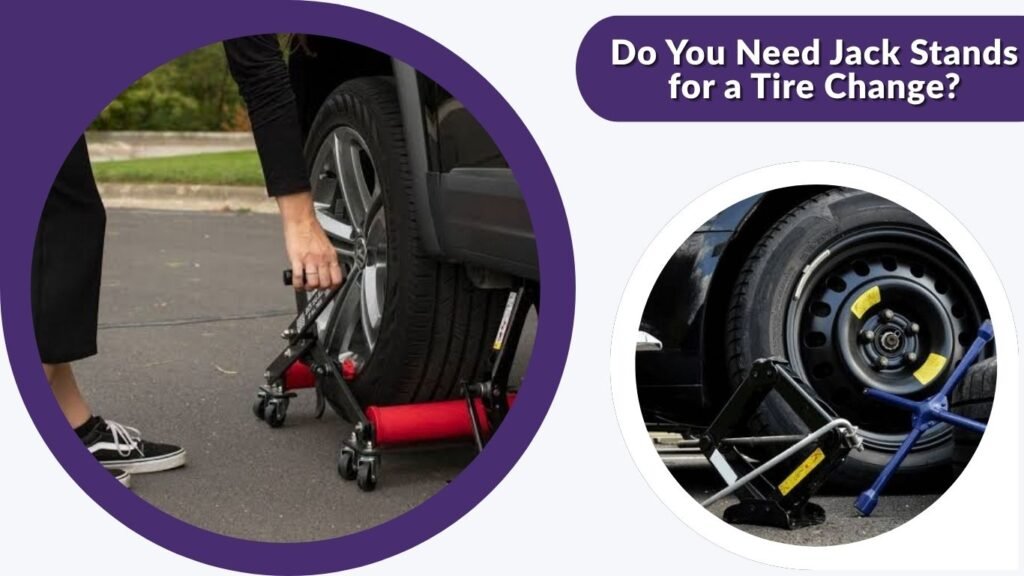
A basic roadside wheel replacement can normally be performed using the vehicle’s emergency jack without crawling underneath the car. However, an emergency jack should never be treated as safe support for underneath-the-car maintenance.
Never Work Under a Jacked-Up Vehicle
Manufacturer safety guidance is clear: never place any part of your body underneath a vehicle supported only by a jack.
A jack is a lifting device, not a substitute for properly rated support equipment.
If a repair requires getting underneath the car, use suitable jack stands at approved support points or have the vehicle raised professionally.
For a roadside tire change, remain outside the underside of the vehicle throughout the procedure.
What If the Car Falls Off the Jack?
A car falling from its jack can cause severe injury and substantial damage. The priority is personal safety, not immediately trying to recover the wheel or jack.
What to Do After a Jack Failure
If the vehicle slips or falls:
- Move away immediately.
- Do not reach underneath the car.
- Keep passengers away.
- Do not try to lift the vehicle by hand.
- Inspect for visible damage from a safe position.
- Call roadside assistance if you are unsure how to recover it.
- Have damaged suspension, brakes, wheel hubs, or bodywork inspected.
If anyone is trapped or injured, contact emergency services.
Never crawl beneath the fallen vehicle to retrieve a jack or wheel.
Manufacturer warnings emphasize that a vehicle can roll or slip from a jack and cause serious or fatal crushing injuries.
Can You Change a Car Tire Without a Jack?
Normally, no safe roadside method exists for changing a wheel without appropriately rated lifting equipment. Improvised methods involving rocks, blocks, unstable ramps, or makeshift levers can shift unexpectedly and cause the vehicle to fall.
Avoid Improvised Lifting Methods
If your jack is missing, broken, unsuitable, or cannot be positioned safely, contact roadside assistance.
The same advice applies if:
- The ground is soft or severely sloped.
- The vehicle is dangerously close to traffic.
- You cannot identify the jack point.
- Lug nuts cannot be loosened safely.
- The vehicle is damaged around the lifting area.
- The supplied spare or tools are unavailable.
An inconvenient wait is safer than placing yourself beside an unstable vehicle.
Common Car Jack Tire Change Mistakes
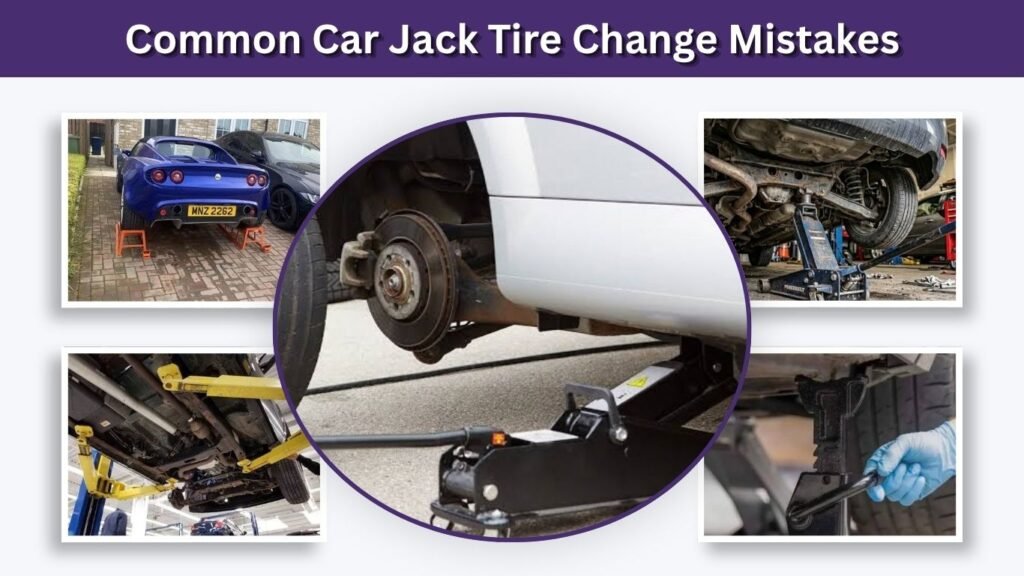
Most tire-changing problems come from preparation or lifting errors rather than from removing the tire itself. Taking a few additional minutes to secure the car can dramatically reduce the risk of jack failure.
Mistakes to Avoid
Never:
- Jack a car on a steep slope.
- Lift on loose or unstable ground.
- Place the jack under plastic trim.
- Guess where the jack point is.
- Start or run the engine while the vehicle is jacked up.
- Let passengers remain inside unnecessarily while lifting.
- Crawl underneath a vehicle supported only by a jack.
- Raise the vehicle higher than necessary.
- Exceed the jack’s rated load.
- Apply violent force to a stuck wheel while the car is unstable.
- Forget to set the parking brake.
Manufacturer guidance commonly specifies firm, level ground, approved lifting points, and keeping people clear of the underside of the vehicle.
What to Do After Changing the Tire
The job is not finished immediately after lowering the car. The replacement wheel must be secure, and temporary spare tires may have strict operating limitations.
Final Safety Checks
Before driving:
- Confirm the car is fully lowered.
- Remove the jack.
- Tighten lug nuts in the specified pattern.
- Verify final lug-nut torque as soon as possible.
- Check spare-tire pressure.
- Store the jack and tools securely.
- Remove wheel chocks.
- Check the temporary spare’s speed limit.
- Arrange repair or replacement of the flat tire.
Temporary compact spares are designed primarily to get you to a repair facility, not for normal long-distance driving. Follow the limits printed on the spare tire and specified by your vehicle manufacturer.
FAQs
Where should I put the car jack when changing a tire?
Place the jack at the manufacturer-approved jacking point nearest the flat tire. The location is normally shown in the owner’s manual and may be identified by a notch or reinforced section beneath the vehicle. Never place a jack under plastic bodywork or an unapproved floor section.
How high should I jack up the car to change a tire?
Raise the car only high enough to remove the flat tire and install the fully inflated spare. Because the spare is taller than the compressed flat tire, some additional clearance is necessary. Avoid unnecessarily lifting the vehicle higher because additional height can reduce stability.
Can I change a tire using only the factory car jack?
Yes, the factory jack is generally designed for emergency tire replacement when used exactly as described in the owner’s manual. It should be positioned on firm, level ground at the designated jack point. Never use an emergency jack as the sole support when working underneath the vehicle.
What should I do if my car falls off the jack?
Move away from the vehicle and never reach underneath it. Keep other people clear and call roadside assistance if you cannot safely recover the vehicle. If anyone has been injured or trapped, call emergency services. The car may also need inspection for wheel, brake, suspension, or body damage.
Do I need a car jack to change a tire?
Yes, a standard wheel change requires suitable lifting equipment so the damaged tire can clear the ground. Do not use unstable improvised methods when a proper jack is unavailable. If you do not have a compatible jack or cannot find a safe lifting location, roadside assistance is the safest option.