
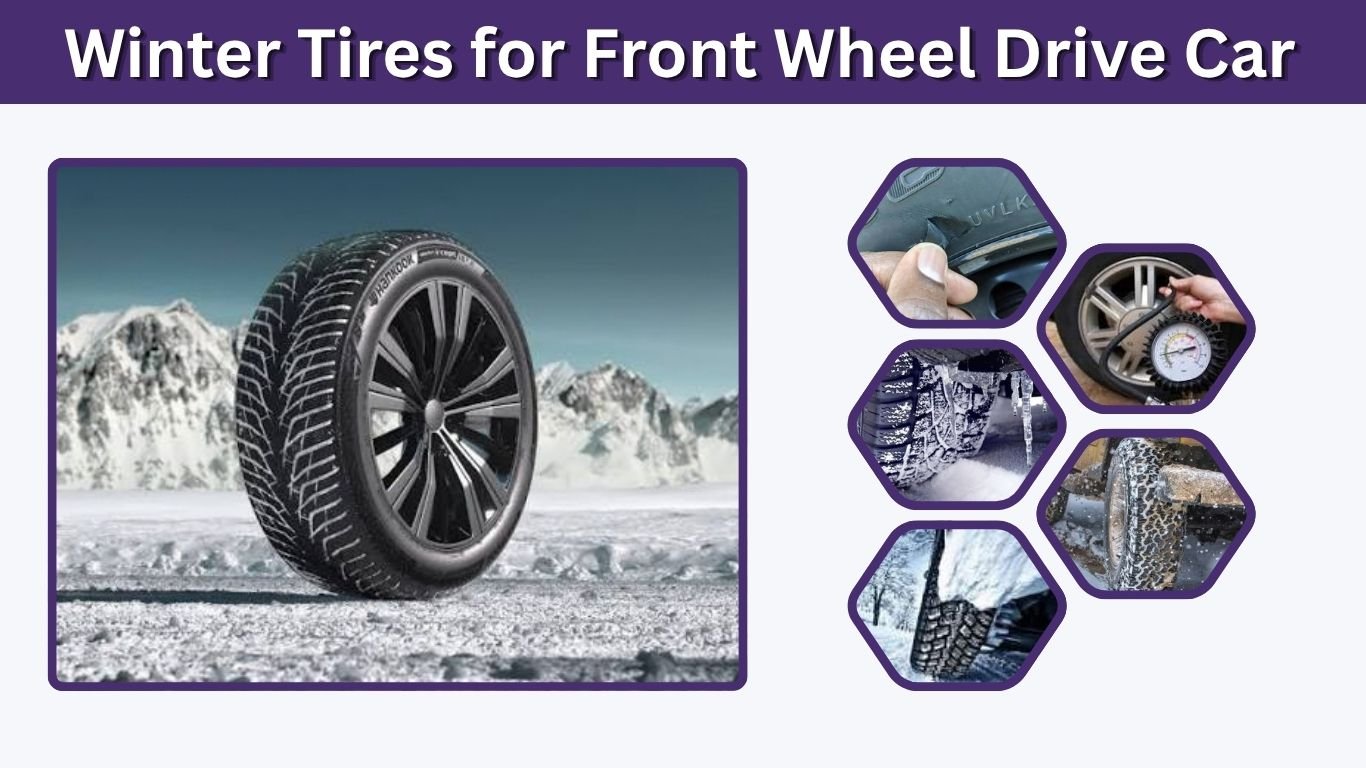
Winter tires for a front wheel drive car can make a major difference in snow, slush, ice, and freezing temperatures. Although front-wheel-drive vehicles often accelerate better in snow than rear-wheel-drive cars, they still depend on all four tires for braking, steering, and stability. For that reason, installing winter tires only on the front wheels is not recommended. Four matching winter tires provide the most predictable handling. This guide explains why FWD cars benefit from winter tires, whether you need two or four, and how to choose the right set.
Do Front Wheel Drive Cars Need Winter Tires?
Front-wheel-drive cars send engine power to the front wheels. Because the engine and much of the drivetrain’s weight are usually positioned over those wheels, FWD vehicles often have useful traction when accelerating on slippery roads. However, drivetrain layout cannot create tire grip. Snow, ice, and cold pavement still reduce traction at all four corners of the vehicle.
Front-Wheel Drive Helps With Acceleration
One advantage of FWD is that the driven tires carry significant vehicle weight. This can help them bite into light snow when pulling away from a stop.
However, better acceleration can give drivers too much confidence. Front-wheel drive does not provide a comparable advantage when stopping because all four tires contribute to braking.
During cornering, the rear tires are also essential for keeping the vehicle stable.
Winter Tires Improve More Than Starting Traction
Dedicated winter tires use tread designs and rubber compounds engineered for low temperatures, snow, and ice.
They can improve acceleration, but their larger advantage is balanced grip during braking and cornering. Michelin recommends winter tires for drivers who regularly encounter snow, ice, or freezing conditions and recommends fitting them on all four wheels.
Winter Tires for Front Wheel Drive Car: 2 or 4?
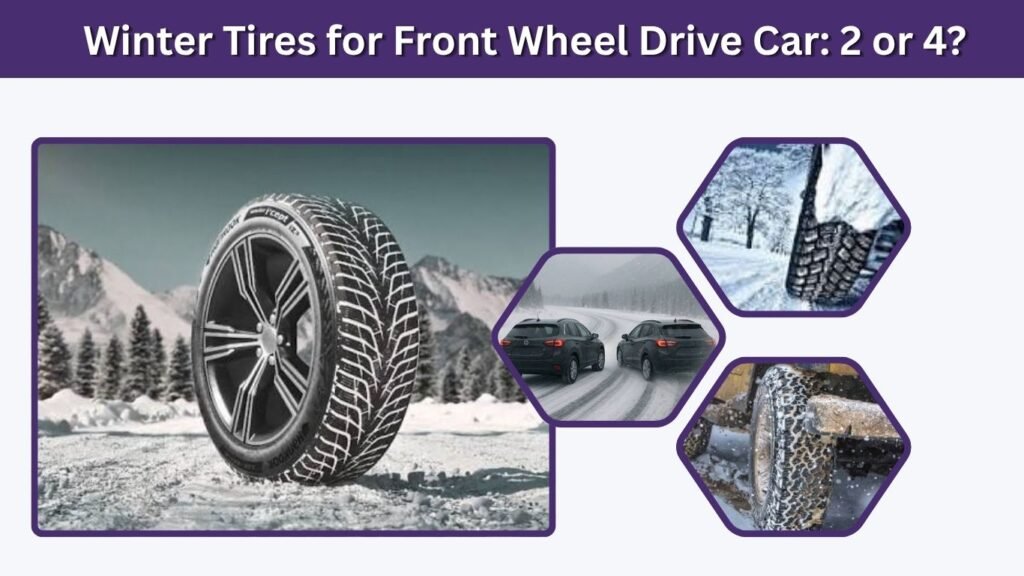
Use four winter tires, not just two on the front axle. This is one of the most important points when preparing a FWD vehicle for winter. Although putting winter tires on the front may increase acceleration traction, it creates a significant difference between front and rear grip, potentially making the vehicle unstable during braking or cornering.
Why Two Front Winter Tires Can Be Dangerous
Imagine a FWD vehicle with winter tires on the front and ordinary all-season tires on the rear.
On a snowy curve, the front winter tires may continue gripping while the rear tires begin sliding. This can cause oversteer, where the back of the vehicle swings outward.
Tire Rack testing and guidance warn that mixing winter tires on the front with lower-traction tires on the rear can make a front-wheel-drive car more likely to lose rear-end stability.
Why Four Winter Tires Work Better
Four matching winter tires give the front and rear axles more similar traction characteristics.
That improves:
- Acceleration in snow
- Braking performance
- Cornering grip
- Rear-end stability
- Steering response
- ABS performance
- Traction-control effectiveness
- Emergency maneuver predictability
Tire Rack recommends maintaining the same level of winter traction at all four corners, while U.S. Tire Manufacturers Association guidance states that if winter tires are installed on the front axle, winter tires should also be installed on the rear.
Best Winter Tires for Front Wheel Drive Cars
There is no single tire model that is best for every FWD car. The right tire depends on the vehicle, tire size, local winter conditions, driving style, budget, and whether roads are primarily snowy, icy, wet, or dry. Rather than choosing solely by brand, compare winter-performance characteristics and ensure the tire meets your vehicle manufacturer’s specifications.
Look for the 3PMSF Symbol
A good starting point is the Three-Peak Mountain Snowflake, commonly abbreviated 3PMSF.
The symbol shows a snowflake inside a three-peaked mountain and identifies tires that meet specified snow-traction performance requirements.
Do not confuse this with an M+S marking alone. Many all-season tires carry M+S markings, whereas the 3PMSF symbol indicates qualification for severe-snow performance testing. Michelin recommends looking for 3PMSF-marked tires when selecting tires for true cold-weather conditions.
Choose the Correct Tire Size
Check the driver’s door-jamb label or owner’s manual for the original tire specifications.
Important specifications include tire size, load rating, and appropriate speed rating. Do not install a different size simply because a winter tire is cheaper unless that alternative size is specifically approved for your vehicle.
Using the correct fit helps preserve steering behavior, braking performance, speedometer accuracy, and sufficient clearance around suspension and brake components.
Winter Tires vs All-Season Tires on a FWD Car
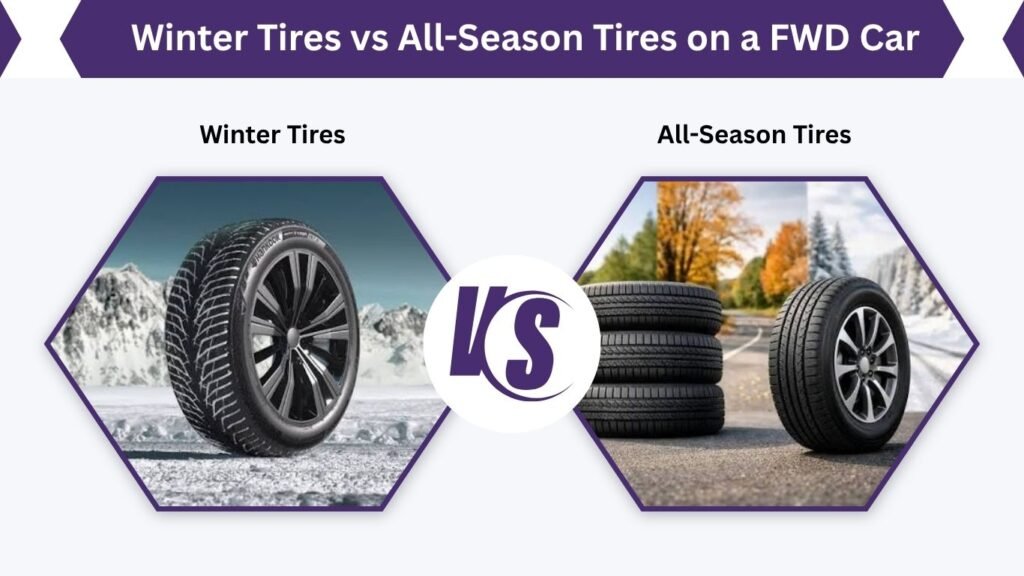
Many front-wheel-drive vehicles are delivered with all-season tires, and they can be adequate in mild climates. However, all-season tires are designed to balance summer and winter characteristics rather than maximize performance in severe cold, snow, or ice.
When All-Season Tires May Be Enough
A quality all-season or all-weather tire may be practical where winters are mild, snowfall is infrequent, roads are cleared quickly, and temperatures do not remain extremely low.
Tire Rack notes that modern all-weather tires can be useful in colder metropolitan areas where snow removal and road treatment are reliable.
However, all-season tires should not automatically be considered equivalent to dedicated winter tires.
When Dedicated Winter Tires Are Better
Dedicated winter tires make more sense when you frequently encounter deep snow, packed snow, icy roads, freezing temperatures, steep hills, or poorly cleared roads.
Michelin notes that winter tires are purpose-built for sustained cold conditions and recommends them for drivers routinely facing snow, ice, and freezing weather.
For a FWD car, four dedicated winter tires can often make a greater winter-driving difference than many drivers expect.
Does FWD With Winter Tires Beat AWD With All-Season Tires?
This comparison is more complicated than simply declaring one vehicle better. AWD helps distribute engine power to additional wheels, which can substantially improve acceleration. But AWD cannot manufacture grip between the tire and road.
Tires Determine the Available Grip
Whether your vehicle is FWD, AWD, or 4WD, acceleration, braking, and cornering ultimately depend on the contact between the tires and road.
Bridgestone emphasizes that drivetrain technology can only work with the traction available from the tires. Heavily worn or unsuitable tires limit even sophisticated AWD systems.
A FWD car equipped with four good winter tires can therefore be extremely capable in winter conditions.
AWD remains useful for acceleration and climbing, but winter tires improve the fundamental grip required for stopping and turning as well.
When Should You Install Winter Tires?
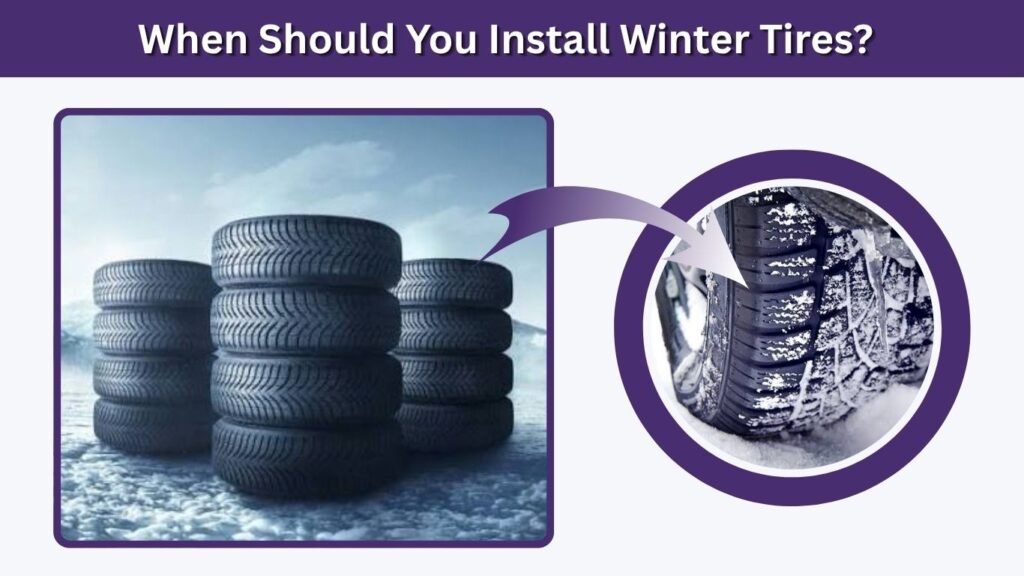
Do not wait until a major snowstorm begins before thinking about winter tires. Installation is easier when planned before consistently cold conditions arrive, and winter compounds are designed to remain flexible when ordinary performance-oriented compounds become harder.
Watch Temperature, Not Just Snow
A commonly used guideline is to consider winter tires when temperatures remain around 45°F (7°C) or lower.
Cold weather matters even when pavement is dry because tire compounds behave differently as temperatures change. Michelin describes winter tires as designed for sustained temperatures below roughly 45°F and recommends changing back when warmer conditions return.
Avoid driving winter tires throughout hot summer weather unless the tire manufacturer specifically designs them for year-round use. Their softer compounds can wear more quickly in warm conditions.
How to Maintain FWD Winter Tires
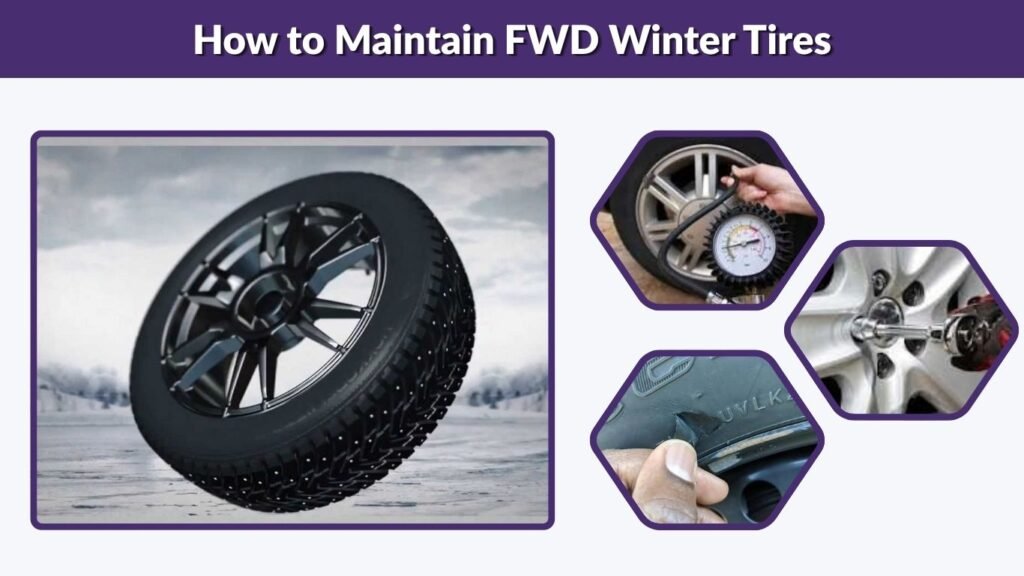
A good set of winter tires still requires regular care. Front-wheel-drive cars can place additional acceleration and steering demands on the front tires, which may contribute to differences in front-to-rear wear if rotations and inflation checks are neglected.
Winter Tire Maintenance Checklist
Check these regularly:
- Cold tire pressure
- Tread depth
- Uneven tread wear
- Cuts and sidewall damage
- Wheel alignment
- Wheel balance
- Recommended rotation intervals
- Lug-nut torque after installation
- Tire age
- Seasonal storage conditions
Always use the vehicle manufacturer’s recommended cold inflation pressure rather than the maximum pressure molded onto the tire sidewall.
Cold weather naturally lowers tire pressure, making regular checks especially important during winter.
Can You Put Better Winter Tires Only on the Front?
No. Even when the front wheels provide power, intentionally giving them much more grip than the rear can disturb the handling balance of the vehicle.
Balanced Grip Is More Important
During acceleration, front traction may seem like the priority. During an emergency stop or slippery corner, however, rear stability becomes equally important.
If the rear tires lose grip before the fronts, the vehicle may rotate unexpectedly.
Michelin explicitly advises against installing winter tires on only one axle because mixed traction characteristics can produce unpredictable handling.
For that reason, the better approach is four matching winter tires with similar tread depth and condition.
Do Traction Control and ABS Replace Winter Tires?
Modern safety technology is extremely useful, but none of these systems can produce traction that the tires do not have. ABS helps prevent wheel lock during braking, while traction control reduces excessive wheelspin during acceleration.
Electronic Systems Still Depend on Tire Grip
If a tire has poor traction on ice, ABS can manage that limited grip but cannot turn it into high traction.
Similarly, traction control may reduce wheelspin, but the vehicle still needs appropriate tire grip to accelerate effectively.
Tire Rack notes that maintaining comparable winter traction at all four corners helps systems such as ABS and traction control work with a more balanced vehicle.
How Long Do Winter Tires Last?
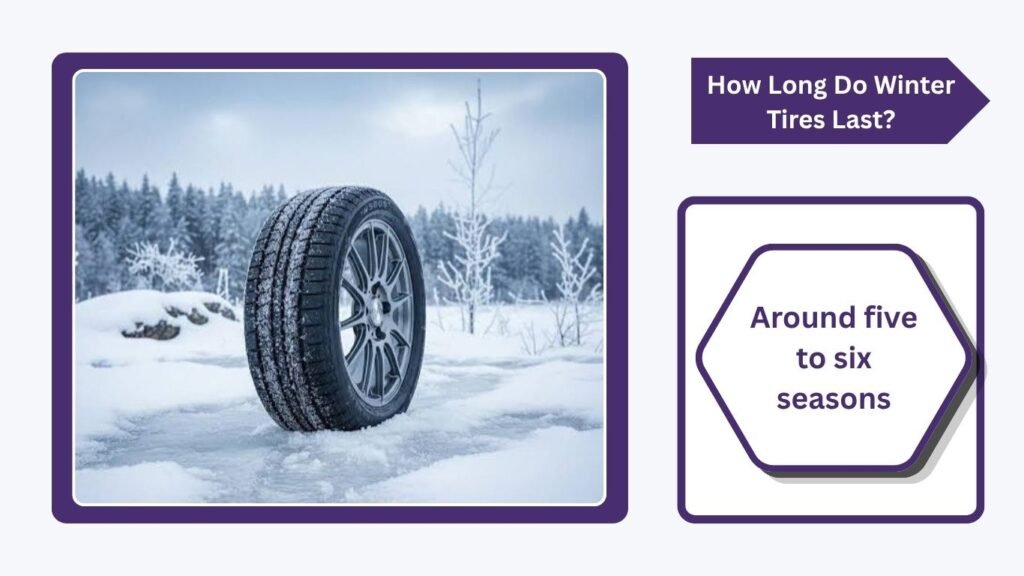
Winter tire lifespan depends on annual mileage, driving style, road surfaces, tire compound, storage, rotation, and whether the tires are used during warm weather. There is no single mileage number that applies to every set.
Inspect Them Every Season
Before reinstalling winter tires, check tread depth, cracking, uneven wear, puncture repairs, and age.
Michelin says winter tires commonly provide around five to six seasons depending on mileage, road conditions, storage, and maintenance, but actual usable life can be shorter or longer.
Tires that no longer have adequate winter tread should not be kept simply because they still meet a basic legal tread minimum.
FAQs
Do I need 2 or 4 winter tires on a front-wheel-drive car?
You should install four winter tires. Using winter tires only on the front increases front traction while leaving lower grip at the rear, which can make the rear slide during turns or braking. Four matching tires provide more balanced acceleration, steering, braking, and stability.
Are front-wheel-drive cars good in snow with winter tires?
Yes. FWD cars can perform very well in snow when equipped with four suitable winter tires. The vehicle’s weight over the drive wheels helps acceleration, while winter tires add the cold-weather grip needed for braking and cornering. Driver technique and road conditions remain important.
What are the best winter tires for a front-wheel-drive car?
Look for four matching tires in the manufacturer-approved size with strong snow, ice, wet-road, and braking performance. For severe winter conditions, the 3PMSF symbol is an important qualification. The best specific tire ultimately depends on your vehicle, climate, road conditions, and budget.
Can I use two winter tires on the front and all-season tires on the rear?
This setup is not recommended. The front winter tires can develop significantly more grip than the rear all-season tires, increasing the possibility of rear-end sliding or oversteer. Tire manufacturers and industry guidance recommend winter tires on all four wheel positions.
Are winter tires worth it on a FWD car?
They can be highly worthwhile if you regularly drive in freezing temperatures, snow, or ice. Front-wheel drive mainly helps deliver engine power, whereas winter tires improve the actual road grip used for acceleration, braking, and cornering. Four winter tires therefore complement FWD rather than duplicate what it already provides.