
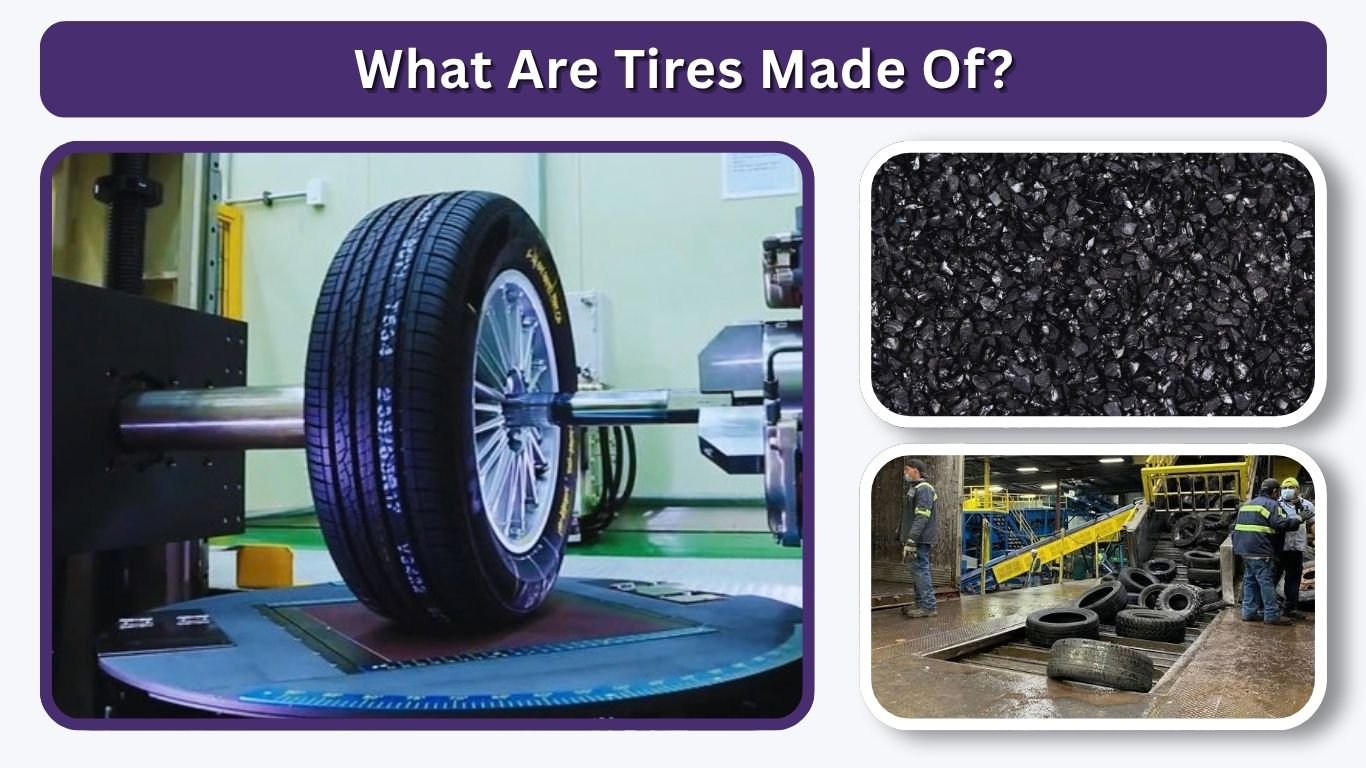
Tires may look like simple pieces of black rubber, but modern tires are actually complex engineered products made from many different materials. Rubber is the most recognizable component, yet manufacturers also use steel, textile fibers, carbon black, silica, oils, sulfur, and specialized chemicals. Each material contributes to traction, strength, flexibility, heat resistance, or durability. Understanding what tires are made of can help explain why different tires perform differently in rain, snow, high-speed driving, racing, and everyday road conditions.
What Are Tires Made Of?
A modern tire contains a carefully engineered combination of natural rubber, synthetic rubber, reinforcing materials, fillers, oils, and chemical additives. Manufacturers adjust these ingredients depending on the tire’s intended vehicle, climate, speed rating, load capacity, and performance requirements. Passenger-car tires, racing tires, aircraft tires, and winter tires therefore use different formulations even though their basic construction principles are similar.
Main Materials Used in Tires
The most common tire materials include:
- Natural rubber
- Synthetic rubber
- Carbon black
- Silica
- Steel wire
- Polyester or nylon textile cords
- Processing oils
- Sulfur
- Zinc oxide
- Antioxidants
- Anti-aging compounds
- Adhesion agents and other chemical additives
Rubber forms much of the tread and sidewall, while steel and textile materials strengthen the internal structure. Carbon black and silica influence durability and traction, and chemical additives help control how the rubber behaves during manufacturing and use.
Are Tires Made Only From Rubber?
No. Although people often call tires “rubber tires,” a tire is not made entirely from rubber.
A modern car tire contains several internal layers, including steel belts, reinforcing cords, bead wires, liners, rubber compounds, and other materials. Rubber is extremely important because it provides flexibility and road grip, but rubber alone would not give a tire enough strength to handle vehicle weight, cornering forces, road impacts, and high-speed operation.
Why Tires Require So Many Materials
A tire must perform several jobs at the same time. It has to support thousands of pounds, maintain contact with the road, absorb impacts, resist heat, remain flexible, provide traction, and survive thousands of miles of driving.
No single material can efficiently perform all these jobs. Manufacturers therefore combine different materials so each tire component can perform a specialized function.
What Type of Rubber Are Tires Made Of?
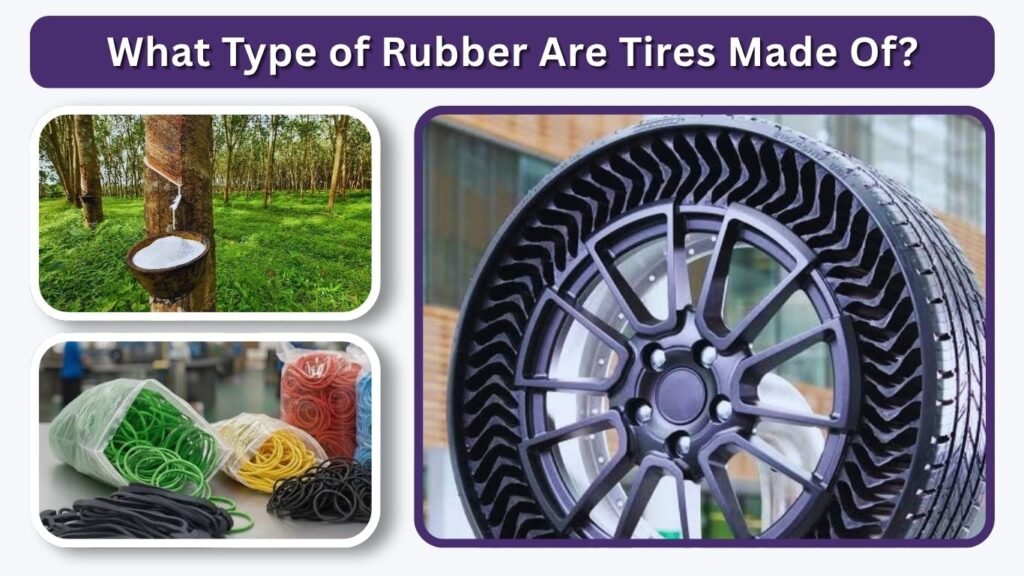
Rubber is one of the most important materials in tire manufacturing. However, manufacturers normally use several rubber compounds rather than one single type. The exact formulation varies between manufacturers and tire categories because tread rubber, sidewall rubber, inner liners, and other components require different physical characteristics.
Natural Rubber
Natural rubber comes primarily from latex collected from rubber trees. It provides excellent elasticity, strength, and resistance to mechanical fatigue.
Because natural rubber handles repeated flexing well, it is especially valuable in tire components that experience constant movement while a vehicle travels.
Natural rubber is widely used in passenger tires, commercial truck tires, aircraft tires, and many other tire categories.
Synthetic Rubber
Synthetic rubber is manufactured from chemical feedstocks rather than harvested directly from trees. Common tire-related synthetic rubbers include styrene-butadiene rubber and butadiene rubber.
These materials allow engineers to modify characteristics such as:
- Abrasion resistance
- Wet traction
- Heat resistance
- Flexibility
- Rolling resistance
- Cold-weather performance
Modern tire compounds frequently contain combinations of natural and synthetic rubber instead of relying completely on one type.
What Are Rubber Tires Made Of?
The visible rubber portion of a tire itself is also a mixture. Rubber compounds can contain carbon black, silica, oils, sulfur, resins, antioxidants, and additional chemicals.
These ingredients change the physical properties of the rubber. The tread compound, for example, may be designed primarily for traction and wear resistance, while sidewall compounds need excellent flexibility and resistance to cracking.
Important Materials Inside a Car Tire

The inside of a tire is much more complicated than its smooth black exterior suggests. A tire contains multiple layers positioned strategically between the tread, sidewalls, beads, and inner liner. Together, these components create a flexible but extremely strong structure capable of maintaining its shape under significant pressure and load.
Carbon Black
Carbon black is a very fine carbon-based material commonly added to tire rubber.
It helps reinforce the rubber compound and improves wear resistance. It also contributes to the familiar black appearance of most tires.
Without reinforcing fillers, rubber can wear much more quickly under constant contact with pavement.
Silica
Silica has become an important ingredient in many modern tread compounds. Tire manufacturers use specially engineered silica systems to influence traction, rolling resistance, and overall tread performance.
Advanced compounds may combine silica and carbon black rather than relying entirely on one reinforcing filler.
Silica is especially useful when engineers want to balance fuel efficiency with wet-road grip.
Steel
Steel is primarily found in the belts and beads of modern radial tires.
Steel belts sit beneath the tread and reinforce the tire’s structure. They help stabilize the tread area and maintain the tire’s shape while driving.
Steel bead wires are located around the inner edges of the tire. They help secure the tire firmly against the wheel rim after installation and inflation.
Textile Fibers
Many tires contain textile reinforcing materials such as polyester, nylon, rayon, or similar high-strength fibers.
These materials may be used in body plies or reinforcing layers.
Textile cords help the tire maintain structural integrity while remaining flexible enough to absorb movement and road impacts.
How Is a Modern Car Tire Constructed?
Modern radial tires consist of several individual components assembled into one structure. Each part serves a different purpose, from protecting the tire against road wear to sealing pressurized air inside the casing. Understanding these parts makes it easier to understand what car tires are actually made of.
Tread
The tread is the outer section that contacts the road.
Its rubber compound must balance several properties, including traction, wear resistance, heat management, rolling resistance, and braking performance.
Different tread compounds are used depending on whether a tire is intended for highways, winter conditions, off-road use, performance driving, or other applications.
Sidewall
The sidewall runs between the tread and the bead area.
It uses flexible rubber compounds designed to withstand repeated bending as the tire rotates and absorbs road irregularities.
The sidewall also protects internal tire components from environmental exposure and minor physical damage.
Steel Belts
Steel belts are positioned beneath the tread in most radial passenger tires.
They reinforce the tread area and improve stability.
The belts help control deformation when the tire accelerates, brakes, corners, or travels at highway speeds.
Body Ply and Inner Liner
The body ply forms part of the tire’s structural framework and may contain textile cords embedded in rubber.
Inside a modern tubeless tire, an air-resistant inner liner helps retain compressed air. The liner uses specialized rubber compounds with relatively low air permeability.
Are Tires Made From Petroleum?

This question can be confusing because tires contain both natural and synthetic materials. Tires are not simply solid petroleum products, but petroleum-derived ingredients can play an important role in their production.
Petroleum-Based Components
Many synthetic rubbers historically rely on petrochemical feedstocks. Certain processing oils, resins, and chemical ingredients used in tire manufacturing may also originate from petroleum-related sources.
However, tires also contain substantial amounts of non-petroleum materials such as natural rubber, steel, silica, minerals, and textile reinforcements.
Modern Material Development
The tire industry continues investigating alternative raw materials, recycled inputs, renewable oils, sustainable natural rubber sources, and improved manufacturing technologies.
The goal is not simply to replace one ingredient. Manufacturers must maintain strict standards for traction, safety, durability, heat resistance, and structural strength while changing the material composition.
What Are Different Types of Tires Made Of?
Although most tires share similar basic ingredients, specialized tires may use substantially different compounds and reinforcing structures. Engineers modify the material formulation depending on speed, temperature, terrain, load, vehicle type, and operating conditions.
Winter Tires
Winter tires use rubber compounds designed to remain flexible at lower temperatures.
Their tread compounds and tread designs help maintain traction in cold conditions, snow, slush, and certain icy environments.
The exact formula differs among manufacturers, but silica and specialized polymers are commonly associated with modern winter-tire technology.
F1 and Racing Tires
Formula 1 and other racing tires use highly specialized rubber compounds engineered around extreme grip, temperature behavior, and competition requirements.
Racing tires normally prioritize performance differently from ordinary passenger tires.
Their compounds are designed to operate within particular temperature ranges and may sacrifice long tread life in favor of traction and responsiveness.
Airless Tires
Airless or non-pneumatic tires do not depend on compressed air in the traditional way.
Depending on the design, they may use engineered rubber, polyurethane-like materials, reinforced composites, flexible structural spokes, steel, or specialized polymers.
Their structure supports the vehicle mechanically instead of depending entirely on internal air pressure.
Aircraft Tires
Aircraft tires contain highly reinforced rubber compounds, strong casing materials, bead structures, and multiple reinforcement layers.
They must handle extremely high loads, landing impacts, braking forces, and rapid changes in tire speed.
Their construction is therefore considerably stronger than ordinary passenger-car tires.
How Tires Are Manufactured
Tire manufacturing involves much more than simply pouring rubber into a mold. Individual compounds and reinforcing materials are prepared separately before being assembled into an uncured tire. Heat and pressure are then used to create the finished structure.
Mixing the Rubber Compound
Rubber is combined with reinforcing fillers, processing ingredients, sulfur, and other chemical additives.
Different rubber compounds can be prepared for different sections of the same tire.
The tread, sidewall, inner liner, and other rubber components may therefore have distinct formulations.
Building the Tire
Manufacturers assemble components such as:
- Inner liner
- Bead assemblies
- Sidewalls
- Steel belts
- Reinforcing layers
- Tread rubber
At this stage, the product is often referred to as a green tire because it has not yet completed the curing process.
Curing and Vulcanization
The assembled tire is placed into a curing mold and subjected to controlled heat and pressure.
Vulcanization creates chemical bonds within the rubber compound, significantly changing its strength, elasticity, durability, and heat resistance.
The mold also creates the final tread pattern, sidewall markings, and overall tire shape.
Why Tire Materials Matter for Performance
Two tires that look almost identical can behave very differently because their compounds and internal construction are different. Material selection influences how a tire responds to heat, rain, cold weather, braking, cornering, and long-distance driving.
Traction and Braking
Tread compounds directly influence how effectively a tire interacts with pavement.
Softer compounds may provide stronger grip in certain situations but can wear more quickly. Harder formulations may increase tread life but require careful engineering to maintain traction.
Manufacturers therefore seek a practical balance.
Durability and Heat Resistance
Tires constantly flex and generate heat while traveling.
Reinforcing materials, rubber compounds, carbon black, silica, antioxidants, and other additives help tires withstand these repeated stresses.
Without appropriate materials, heat and flexing could cause premature deterioration.
Rolling Resistance
Tire deformation consumes energy as a vehicle moves.
Modern compounds are engineered to limit unnecessary energy loss while maintaining acceptable traction and durability.
Lower rolling resistance can contribute to better fuel economy in gasoline vehicles and improved driving efficiency in electric vehicles.
FAQs
What Are Car Tires Made Of?
Car tires are made from combinations of natural rubber, synthetic rubber, steel, textile cords, carbon black, silica, oils, sulfur, and other chemical additives. Different materials are used in the tread, sidewalls, belts, beads, body plies, and inner liner.
What Type of Rubber Are Tires Made From?
Most modern tires use combinations of natural rubber and synthetic rubber. Common synthetic types include styrene-butadiene rubber and butadiene rubber. Manufacturers adjust the mixture depending on the tire’s required traction, durability, flexibility, and temperature performance.
Are Tires 100% Rubber?
No. Rubber is a major component, but tires also contain steel, textile fibers, fillers, oils, minerals, and chemical additives. These materials provide structural strength and improve properties such as grip, wear resistance, air retention, and heat management.
What Are Modern Tires Made Of?
Modern tires combine engineered rubber compounds with carbon black, silica, steel reinforcements, textile cords, sulfur, processing agents, and specialized chemicals. Individual tire components use different formulations according to their function.
What Are Airless Tires Made Of?
Airless tires vary by manufacturer and design. They may contain rubber tread compounds, flexible polymers, polyurethane-type materials, reinforcing composites, steel, and engineered spoke structures. Unlike conventional pneumatic tires, their load-supporting structure does not depend entirely on compressed air.