
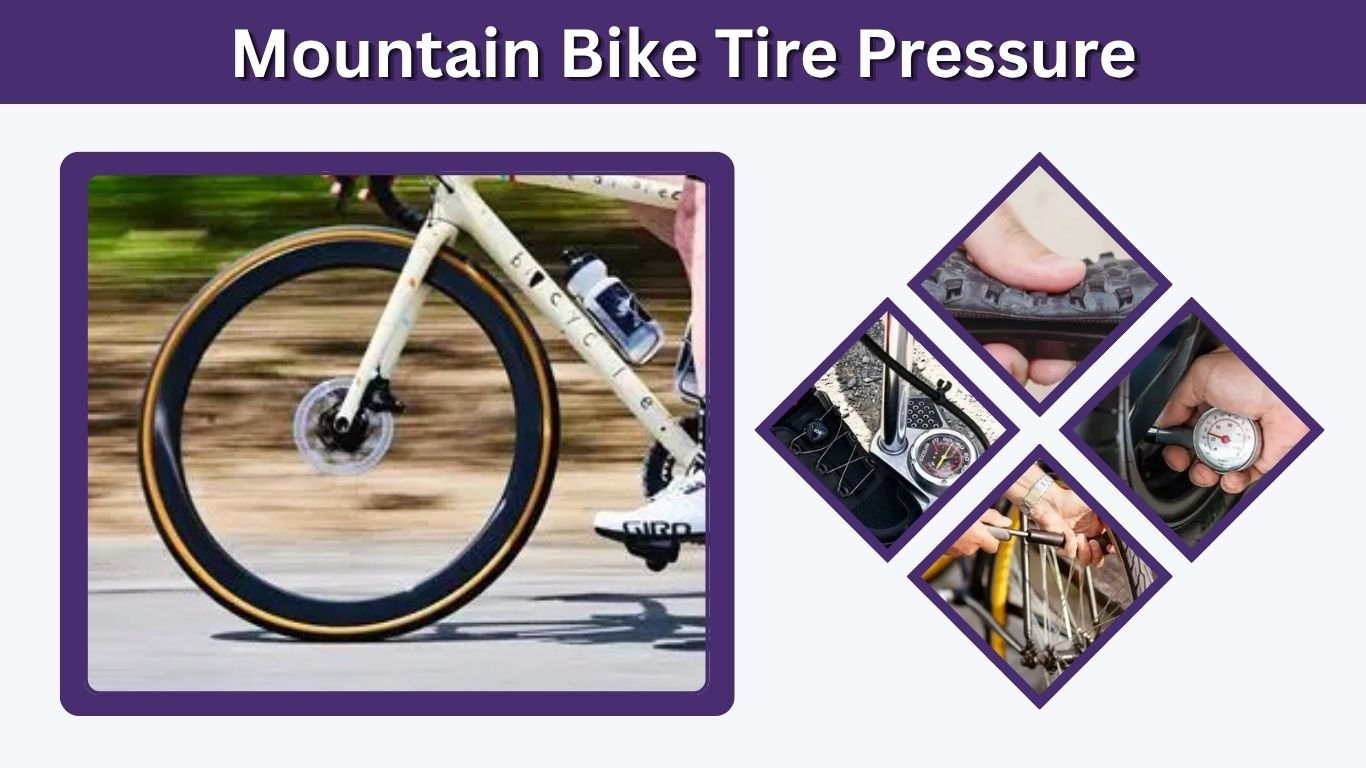
Mountain bike tire pressure affects traction, comfort, speed, handling, and puncture protection. Although many riders use 22–30 PSI, there is no single pressure that works for every bike or trail. Your ideal setting depends on rider weight, tire width, wheel size, inner tubes or tubeless construction, terrain, and riding style. This guide provides practical starting pressures and explains how to adjust them for your setup.
What Is the Ideal Mountain Bike Tire Pressure?
For most adult riders using 2.3–2.5-inch trail tires, a good starting point is 22–25 PSI in the front tire and 25–28 PSI in the rear tire.
The rear normally needs more pressure because it supports more weight and receives harder impacts. However, these numbers are starting points rather than fixed recommendations. Tire volume, rim width, total system weight, casing construction, riding conditions, and riding style can all change the correct pressure.
| Mountain Bike Setup | Front Tire | Rear Tire |
| Tubeless cross-country | 19–24 PSI | 21–26 PSI |
| Tubeless trail riding | 21–26 PSI | 24–29 PSI |
| Tubed trail riding | 25–30 PSI | 28–33 PSI |
| Enduro or downhill | 23–29 PSI | 27–34 PSI |
| Mountain bike on pavement | 28–35 PSI | 30–38 PSI |
Always remain within the minimum and maximum limits printed on the tire and rim.
Why Mountain Bike Tire Pressure Matters
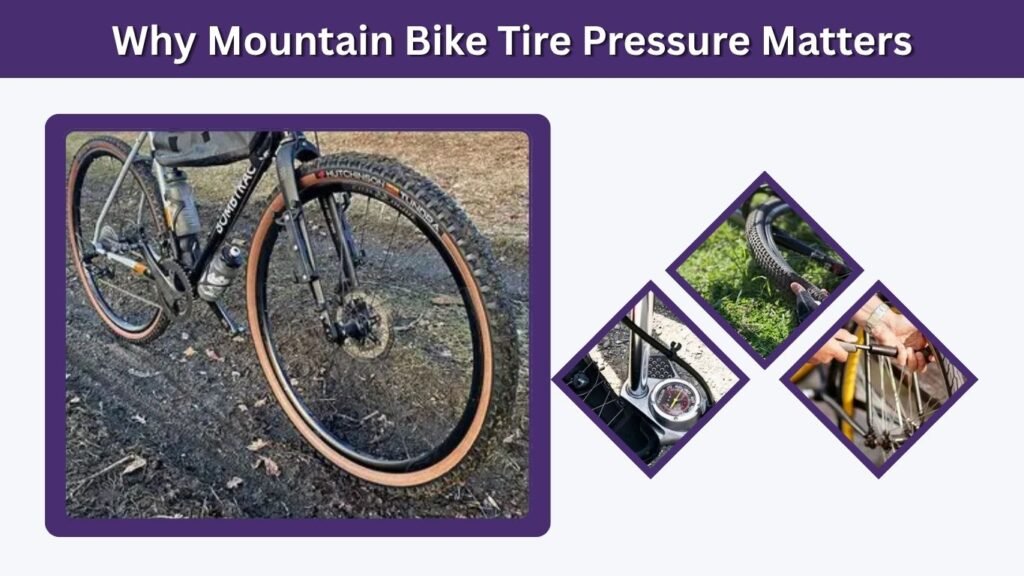
Pressure determines how well the tire supports your weight and changes shape over obstacles. Too much or too little air can reduce control and increase the possibility of damage.
Traction and Comfort
Lower pressure allows more of the tread to contact the ground. This can improve grip on roots, rocks, loose dirt, and wet trails. The tire also absorbs small impacts instead of transferring every vibration to the rider.
However, extremely low pressure can make the tire feel unstable during hard cornering. It may also cause the sidewall to fold or allow the rim to strike rocks.
Speed and Puncture Protection
Higher pressure can feel fast on smooth surfaces, but excessive pressure may cause the bike to bounce across rough trails. A slightly softer tire can roll more efficiently over irregular ground because it absorbs obstacles instead of lifting the entire bike.
Tubeless tires can generally operate at slightly lower pressures than tires with inner tubes. Wider tires also require less pressure because their greater air volume provides more support.
Mountain Bike Tire Pressure Chart by Rider Weight
The following chart provides starting pressures for a typical trail bike with 2.3–2.5-inch tubeless tires.
| Rider Weight With Gear | Front Tire | Rear Tire |
| Under 140 lb | 18–21 PSI | 21–24 PSI |
| 140–180 lb | 21–24 PSI | 24–27 PSI |
| 180–220 lb | 24–27 PSI | 27–30 PSI |
| Over 220 lb | 27–31 PSI | 30–35 PSI |
Add approximately 3–5 PSI when using inner tubes. Riders with aggressive styles, rocky trails, heavy e-bikes, or lightweight tire casings may also need additional pressure.
Simple Mountain Bike Tire Pressure Calculator
Use the following method to find a practical starting point.
Begin with:
- Front tire: 22 PSI
- Rear tire: 25 PSI
These base pressures suit a rider weighing approximately 150–180 pounds with gear, using 2.3–2.5-inch tubeless tires.
Make the following adjustments:
- Add 1 PSI for every additional 20 pounds of rider weight.
- Subtract 1 PSI for every 20 pounds below the base weight.
- Add 3–5 PSI for tires with inner tubes.
- Add 1–3 PSI for narrow 2.1–2.25-inch tires.
- Subtract 1–3 PSI for wide 2.6–2.8-inch tires.
- Add 1–2 PSI for sharp rocks, jumps, or high-speed downhill riding.
- Add 2–5 PSI for extended pavement riding.
- Subtract about 1 PSI for wet or loose trails, provided the tire remains stable.
Professional calculators also consider total bike-and-rider weight, tire width, casing, rim construction, rim width, wheel diameter, riding style, and surface conditions. Their results should still be treated as starting points that require testing.
Tubeless Mountain Bike Tire Pressure
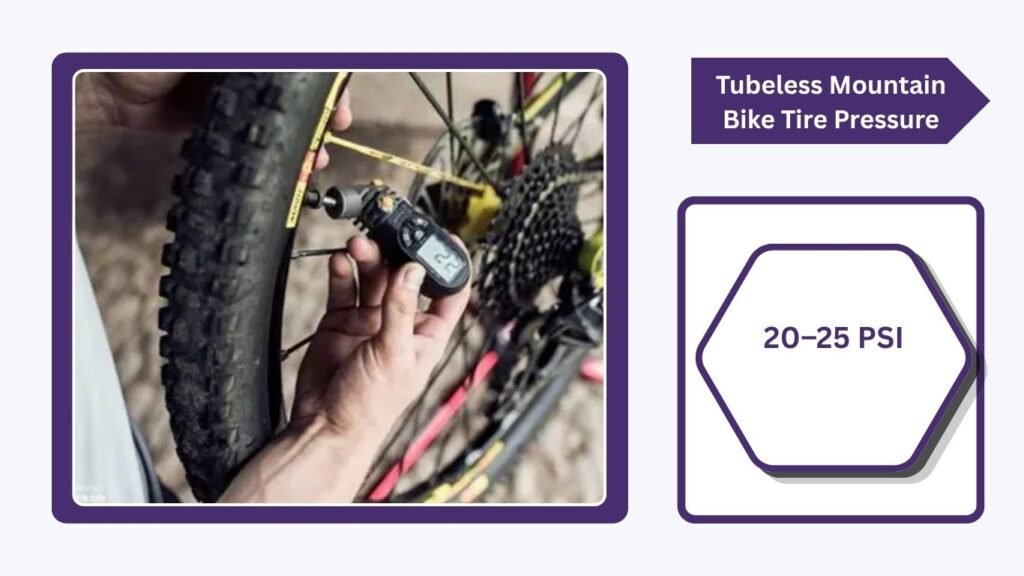
Tubeless systems eliminate the inner tube, reducing the risk of pinch flats. As a result, riders can usually lower their pressure to gain more traction and comfort.
A typical tubeless trail setup may use:
- Front: 20–25 PSI
- Rear: 23–28 PSI
Do not reduce the pressure simply because the tire is tubeless. Lightweight casings may still fold in corners, lose air at the bead, or allow the rim to contact rocks. Heavier riders and aggressive riders may need pressure near the upper end of the range.
Tire Pressure With Inner Tubes
Mountain bike tires with inner tubes usually need more pressure. When pressure is too low, an impact can trap the tube between the tire and rim, creating two small holes commonly called a pinch flat.
For a typical 2.2–2.4-inch tubed tire, start around:
- Front: 26–30 PSI
- Rear: 29–34 PSI
Increase the rear pressure for rocky terrain, heavy loads, jumps, or hardtail bikes. A hardtail often needs additional rear-tire protection because it does not have rear suspension to absorb impacts.
Pressure for 26, 27.5, and 29-Inch Mountain Bikes
Wheel diameter alone does not determine the correct PSI. Tire width, air volume, casing, rim width, rider weight, and terrain usually have a greater effect.
Most adult mountain bikes use 26-inch, 27.5-inch, or 29-inch wheels. The tire must match the wheel diameter, which is normally printed on its sidewall.
29er Mountain Bike Tire Pressure
For a 29er with 2.3–2.5-inch tubeless tires, begin around 21–25 PSI in front and 24–29 PSI in the rear. A 29-inch tire may feel stable at relatively low pressure because of its large overall volume and contact area.
27.5-Inch Mountain Bike Tire Pressure
A 27.5-inch bike with similar tire width can often use nearly the same pressure as a 29er. Start around 22–26 PSI in front and 25–30 PSI in the rear, then adjust according to grip and rim protection.
26-Inch Mountain Bike Tire Pressure
Many 26-inch bikes use narrower tires and inner tubes. A common starting range is 27–32 PSI in front and 30–35 PSI in the rear. Wider tubeless tires may operate at lower pressures.
Best Pressure for Different Riding Conditions
Trail Riding
For general dirt trails, use enough pressure to prevent rim strikes while allowing the tire to absorb roots and rocks. Most tubeless trail riders will fall between 21 and 29 PSI.
Downhill and Enduro
Downhill riding creates harder impacts and greater cornering forces. Riders commonly increase rear pressure by 2–4 PSI compared with ordinary trail settings. Tire inserts and reinforced casings may allow lower pressures without sacrificing rim protection.
Riding a Mountain Bike on the Road
For pavement, increase both tires by approximately 3–6 PSI. The tires should feel firm but should not exceed the limits printed on the tire or rim. Extremely high pressure is unnecessary and may reduce comfort and grip.
Wet or Loose Terrain
Reducing the front tire by approximately 1 PSI can increase the contact area and improve steering grip. Avoid large reductions, especially when riding sharp rocks or using lightweight casings.
How to Check and Fine-Tune Tire Pressure
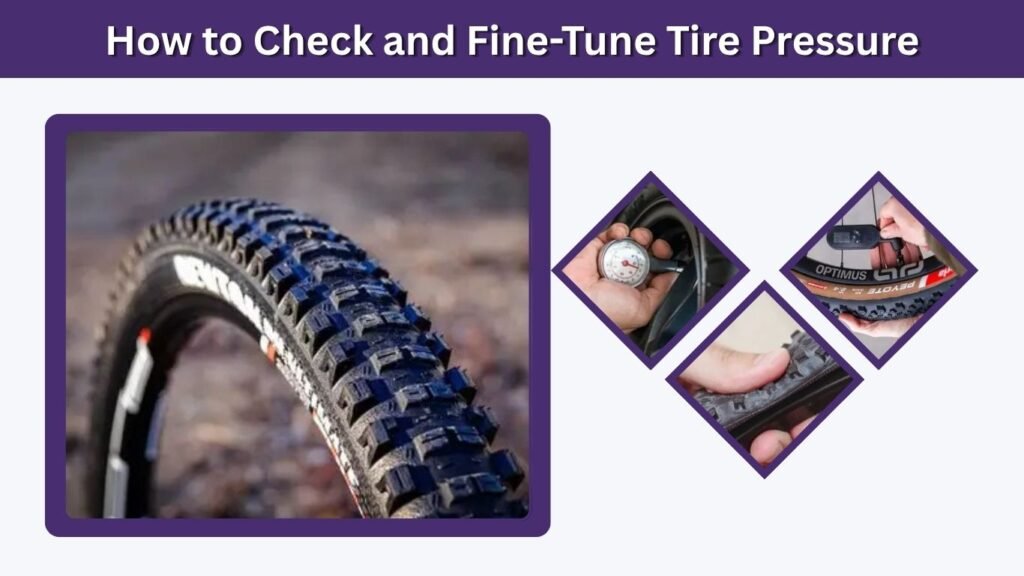
Use a floor pump or low-pressure digital gauge rather than squeezing the tire with your thumb. Small changes of 1–2 PSI can noticeably affect a mountain bike.
- Set the tires near the recommended starting pressure.
- Ride a familiar trail under normal conditions.
- Reduce pressure by 1 PSI if the bike feels harsh or lacks grip.
- Add 1–2 PSI if the tire folds, strikes the rim, or feels unstable.
- Record the final front and rear pressures for future rides.
Check pressure before important rides and after major temperature changes. Always inspect the tire sidewall and rim specifications before making adjustments.
FAQs
What pressure should mountain bike tires be?
Most mountain bike tires operate between 20 and 35 PSI. Tubeless trail bikes commonly use 21–26 PSI in front and 24–29 PSI in the rear. Tubed tires, narrow tires, heavier riders, and rocky terrain generally require higher pressure.
Is 40 PSI too high for a mountain bike?
Forty PSI is usually higher than necessary for modern wide mountain bike tires on trails. It may create a harsh ride and reduce traction. However, it may be acceptable for certain narrow tires, pavement riding, or tires whose manufacturer recommends that range.
Should the front and rear tires have the same pressure?
Usually not. The rear tire supports more weight and experiences harder impacts, so it normally needs 2–4 PSI more than the front. The lower front pressure can provide better steering grip and help the tire absorb trail irregularities.
What is the best pressure for 29-inch mountain bike tires?
A useful starting point for 29-inch tubeless tires is 21–25 PSI in front and 24–29 PSI in the rear. Adjust for rider weight, tire width, casing strength, terrain, riding speed, and whether tire inserts are installed.
How accurate should a mountain bike pressure gauge be?
A mountain bike gauge should provide consistent readings at low pressures, ideally in increments of 0.5 PSI or less. Consistency is especially important because a difference of only 1–2 PSI can affect traction, comfort, cornering support, and rim protection.