
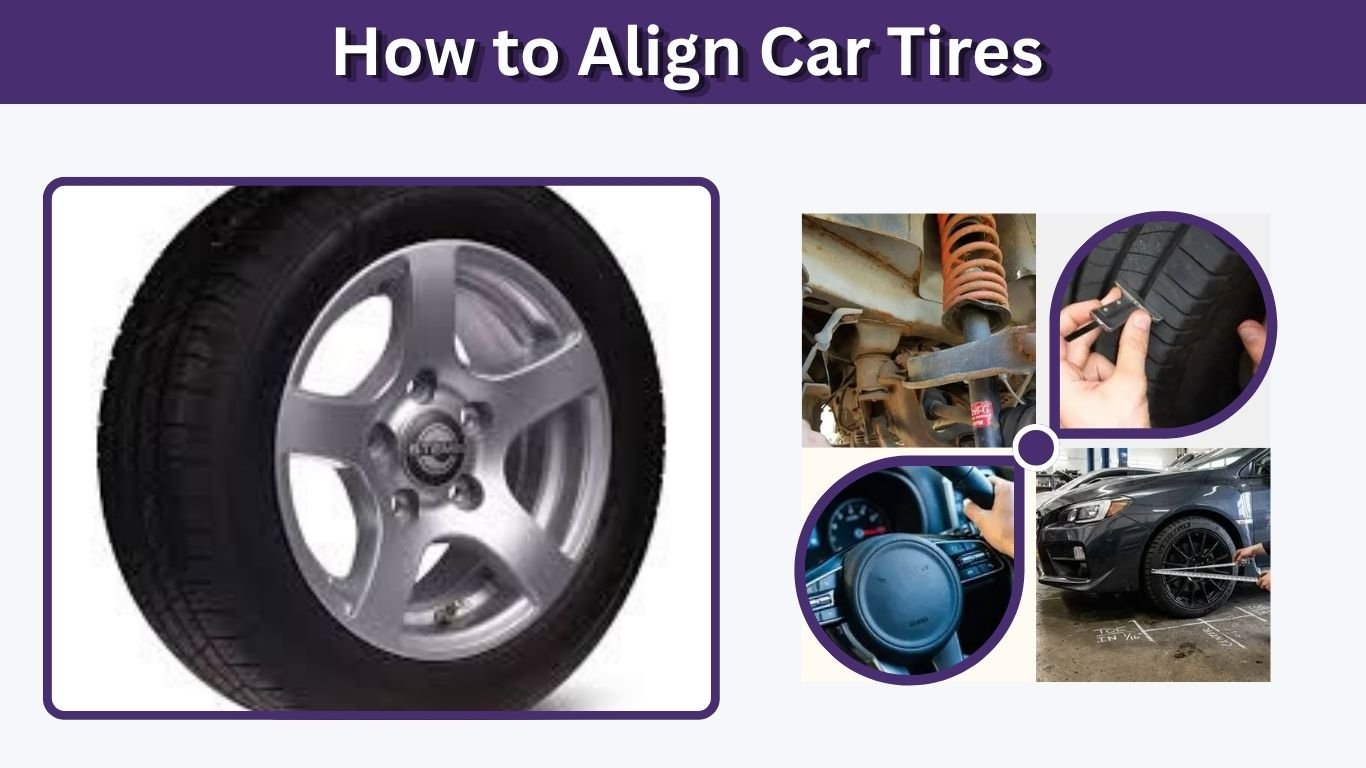
Car tire alignment, more accurately called wheel alignment, adjusts the angles of the wheels so they sit correctly against the road. Proper alignment improves steering, prevents uneven tire wear, and helps the vehicle travel in a straight line. Although you can perform basic alignment checks at home, accurate adjustments usually require professional equipment because even small angle errors can affect handling and tire life.
What Does Car Tire Alignment Mean?
Wheel alignment does not involve adjusting the tires themselves. Instead, a technician changes specific suspension angles that determine how the wheels point and contact the road.
Correct alignment helps:
- Keep the car driving straight
- Improve steering response
- Reduce uneven tread wear
- Prevent unnecessary tire replacement
- Improve vehicle stability
- Reduce strain on suspension parts
Alignment can change after hitting potholes, curbs, road debris, or other hard objects. Normal suspension wear can also gradually move the wheels out of their correct positions.
The Three Main Wheel Alignment Angles
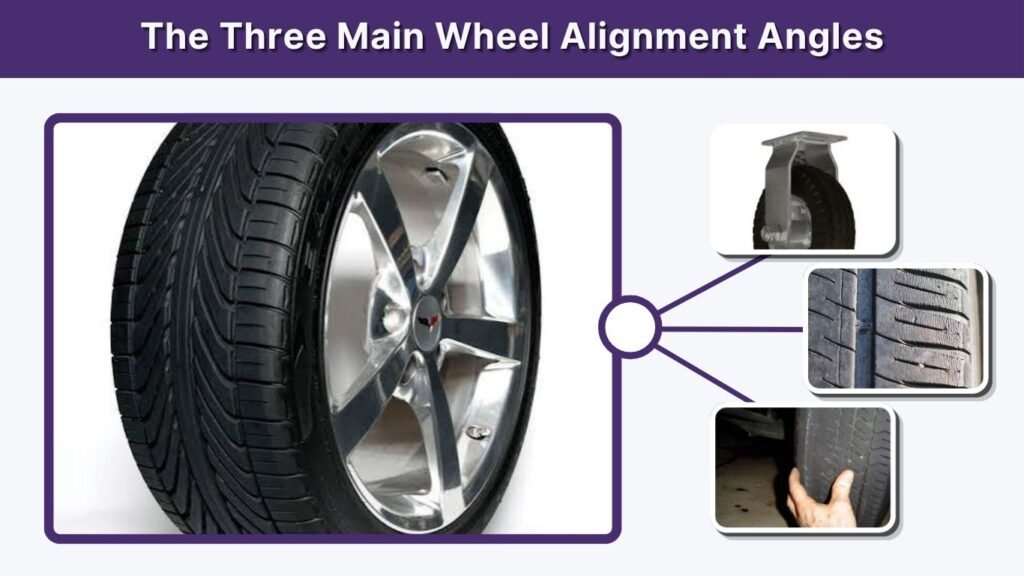
Technicians measure three primary angles during a wheel alignment.
Toe
Toe describes whether the front edges of two tires point toward or away from each other when viewed from above.
- Toe-in: Front edges point slightly inward.
- Toe-out: Front edges point slightly outward.
Incorrect toe is one of the most common causes of rapid tire wear. Excessive toe can create a feathered tread pattern, where one side of each tread block feels smooth and the other feels sharp.
Camber
Camber describes the inward or outward lean of a wheel when viewed from the front of the vehicle.
- Negative camber: Top of the wheel leans inward.
- Positive camber: Top of the wheel leans outward.
Too much camber can wear one edge of the tire faster than the rest. Camber problems may result from worn suspension parts, impact damage, modified ride height, or incorrect adjustments.
Caster
Caster describes the angle of the steering axis when viewed from the side. It affects steering stability, cornering, and the steering wheel’s ability to return toward the center after turning.
Caster normally does not cause direct tire wear, but unequal caster can make the vehicle pull toward one side.
How to Know Your Car Needs Tire Alignment
An alignment problem can develop gradually or appear immediately after an impact.
Common warning signs include:
- The vehicle pulls left or right.
- The steering wheel is crooked while driving straight.
- The tires wear unevenly.
- The steering feels loose or unstable.
- The car wanders on a level road.
- The steering wheel does not return properly after turning.
- Tires produce unusual road noise.
- The vehicle recently hit a deep pothole or curb.
Road slope, strong wind, tire pressure differences, and brake problems can also cause pulling. Check tire pressure before assuming the alignment is incorrect.
How to Check Car Tire Alignment at Home
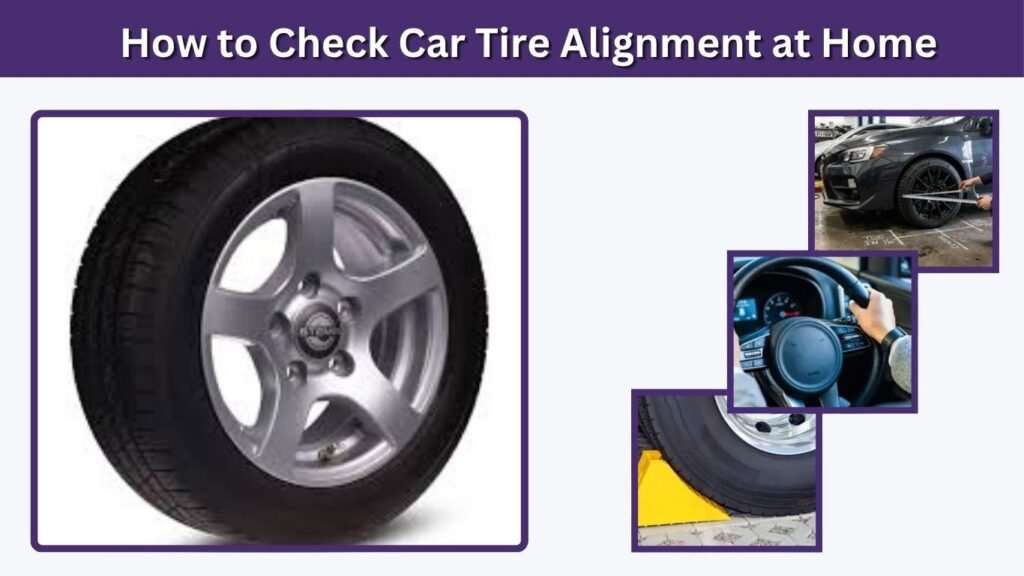
Home measurements can reveal obvious toe problems, but they are not as precise as computerized alignment equipment.
Inspect the Tire Tread
Park on level ground and inspect each tire. Look for excessive wear on the inner or outer edge, feathering across the tread, or unusual patches.
Uneven wear does not always mean alignment is the only problem. Incorrect pressure, worn shocks, damaged wheel bearings, and unbalanced tires can produce similar symptoms.
Check the Steering Wheel Position
Drive slowly on a flat, straight road when traffic conditions are safe. Observe whether the steering wheel remains centered while the vehicle travels straight.
A noticeably crooked steering wheel may indicate incorrect toe settings or another steering-related issue.
Perform a String Alignment Check
A string method can provide a rough toe measurement.
You will need:
- Strong string
- Measuring tape
- Jack and properly rated jack stands, if adjustment is required
- Wrenches suitable for the tie rods
- Wheel chocks
- Level working surface
Run string around the vehicle at approximately wheel-center height. Adjust the string so it sits parallel to the rear wheels, then measure the distance between the string and the front and rear edges of each front wheel.
A difference between the two measurements suggests toe-in or toe-out. However, manufacturer specifications are often measured in very small fractions of a degree, making professional equipment much more accurate.
How to Align Car Tires at Home
A basic home adjustment usually changes front-wheel toe through the steering tie rods. Camber and caster may require special bolts, shims, adjustable components, or suspension repair.
Prepare the Vehicle
Inflate all tires to the manufacturer’s recommended pressure. Remove unnecessary heavy items from the vehicle and park on a flat surface.
Check the tires and suspension for damage. Alignment should not be attempted when tie rods, ball joints, control-arm bushings, wheel bearings, or other suspension parts are loose or worn.
Measure the Existing Toe
Use the string method or measure between identical tread points at the front and rear of the tires. Record the measurements before making adjustments.
Measure carefully from the same height on both tires. Small measuring errors can produce an incorrect result.
Adjust the Tie Rods
Secure the vehicle safely before working underneath it. Never rely only on a hydraulic jack.
Loosen the tie-rod locking nuts and rotate the tie rods in small, equal amounts. Adjusting both sides helps preserve the steering wheel’s centered position.
A small tie-rod movement can create a noticeable change in wheel angle. Avoid making large adjustments at once.
Recheck the Measurements
Tighten the locking nuts, roll the vehicle backward and forward to settle the suspension, and measure again.
Continue only with very small adjustments until the toe matches the manufacturer’s specification. Make sure the steering wheel remains centered.
Test the Vehicle Carefully
Test-drive the car at low speed in a safe location. Confirm that it tracks straight and that the steering behaves normally.
A home adjustment should generally be followed by a professional alignment check. Incorrect alignment can reduce stability and rapidly damage expensive tires.
Why Professional Wheel Alignment Is Better
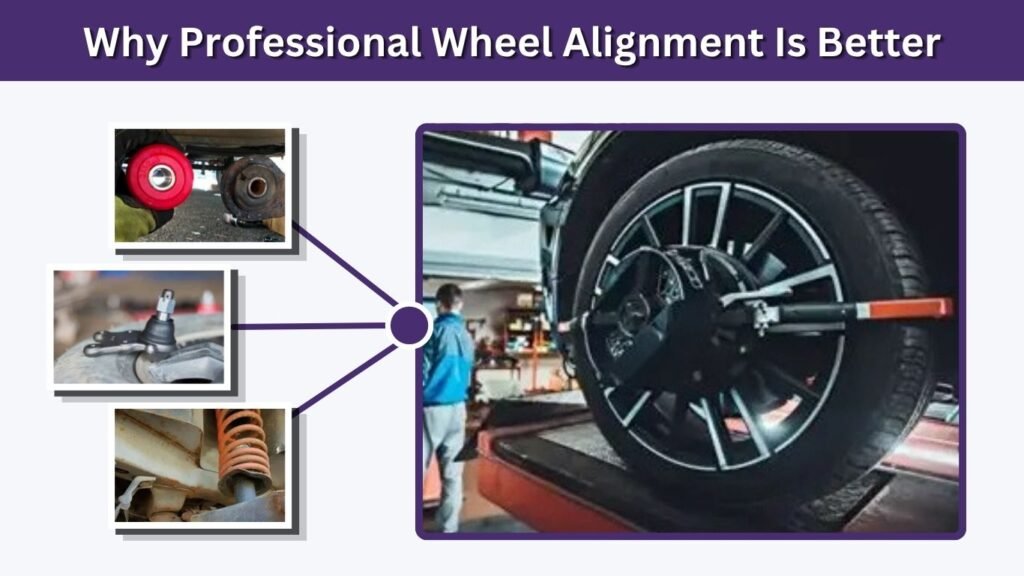
Professional shops use computerized cameras or sensors to measure toe, camber, caster, thrust angle, and other values. The technician compares those measurements with specifications for the vehicle’s exact model.
A professional alignment may also reveal:
- Bent suspension components
- Worn tie-rod ends
- Loose ball joints
- Damaged control arms
- Weak bushings
- Incorrect ride height
- Rear-wheel alignment problems
Some vehicles have adjustable front and rear wheels, while others allow only limited factory adjustments. Damaged or worn parts must be repaired before the vehicle can hold a correct alignment.
Front-End vs Four-Wheel Alignment
The correct alignment service depends on the vehicle.
| Alignment type | What it adjusts |
| Front-end alignment | Adjusts only the front wheels |
| Thrust alignment | Aligns the front wheels with the rear thrust line |
| Four-wheel alignment | Measures and adjusts all four wheels where possible |
Many modern cars, SUVs, and independent-suspension vehicles benefit from four-wheel alignment. Aligning only the front wheels may not correct a vehicle that has a rear-wheel or thrust-angle problem.
How Long Does It Take to Align Car Tires?
A standard wheel alignment usually takes approximately 30 to 60 minutes. The service may take longer when:
- Suspension parts are rusted or seized
- Previous adjustments were incorrect
- The vehicle has modified suspension
- Rear-wheel adjustment is required
- Damaged components must be replaced
- Calibration of steering or driver-assistance systems is needed
An alignment cannot correct loose or broken suspension parts. Repairs must be completed before final adjustments.
How Much Does Car Tire Alignment Cost?
Alignment prices depend on the vehicle, location, shop, and type of service. A basic front alignment generally costs less than a complete four-wheel alignment.
In many areas, a wheel alignment may cost approximately $75 to $200. Luxury vehicles, modified cars, advanced suspension systems, and additional sensor calibration can cost more.
Some shops offer lifetime alignment packages, but the conditions and included services should be reviewed carefully.
How Often Should You Align Car Tires?
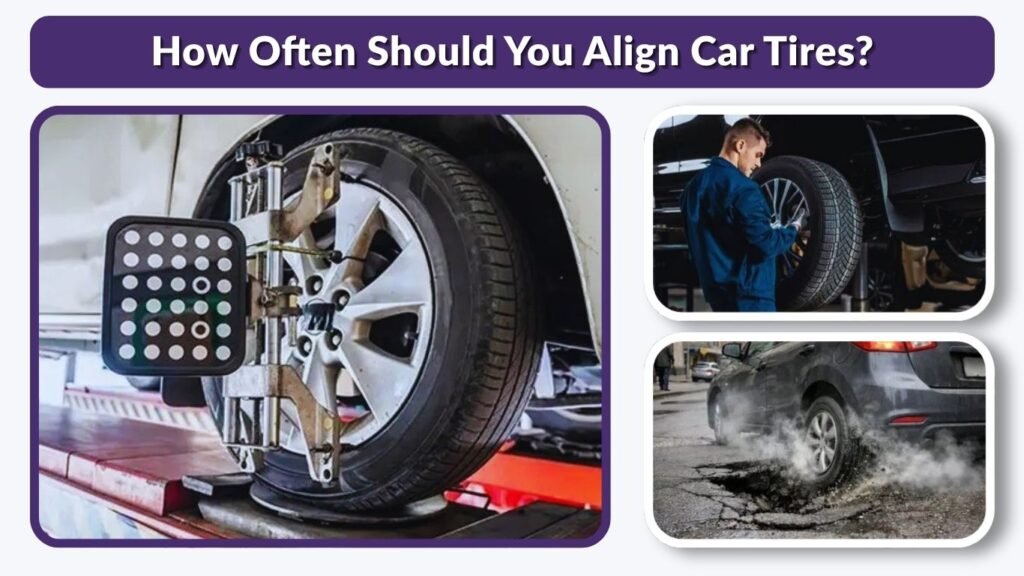
There is no universal interval for every vehicle. A practical approach is to have the alignment checked approximately once a year or whenever warning signs appear.
You should also consider an alignment inspection after:
- Installing new tires
- Hitting a large pothole
- Striking a curb
- Replacing steering components
- Replacing suspension components
- Raising or lowering the vehicle
- Noticing uneven tread wear
- Experiencing pulling or wandering
Rotation and balancing do not correct wheel alignment. These are separate maintenance services.
Alignment, Balancing, and Tire Rotation
These three services are often confused.
Wheel Alignment
Alignment adjusts the direction and angle of the wheels. It corrects pulling, crooked steering, and certain types of uneven wear.
Wheel Balancing
Balancing distributes weight evenly around the tire-and-wheel assembly. It normally corrects vibration that occurs at certain speeds.
Tire Rotation
Rotation changes tire positions to promote even wear. It does not adjust wheel angles or correct vibration caused by imbalance.
A vehicle may need one, two, or all three services depending on its symptoms.
FAQs
Can I align my car tires myself?
You can check and roughly adjust front-wheel toe using strings and careful measurements. However, professional equipment is needed to accurately measure camber, caster, rear alignment, and very small toe differences. A professional inspection is recommended after home adjustments.
Does a car alignment fix steering-wheel vibration?
Alignment usually does not fix speed-related steering vibration. Vibration is more commonly caused by wheel imbalance, damaged tires, bent wheels, or worn suspension components. Alignment is more closely associated with pulling, crooked steering, and uneven tire wear.
Will an alignment make my tires last longer?
Correct alignment can significantly reduce irregular tread wear and help tires reach their expected lifespan. However, proper inflation, rotation, balancing, suspension condition, and driving habits also affect how long the tires last.
Do I need an alignment after replacing tires?
New tires do not automatically require alignment, but checking it is a smart precaution. Existing alignment problems can quickly damage new tread. An alignment is especially important when the old tires showed uneven wear or the vehicle pulled to one side.
Can bad alignment damage a car?
Poor alignment can rapidly wear tires and place additional strain on steering and suspension components. It may also reduce handling stability and wet-road control. Severe pulling, unstable steering, or visible suspension damage should be inspected promptly.