
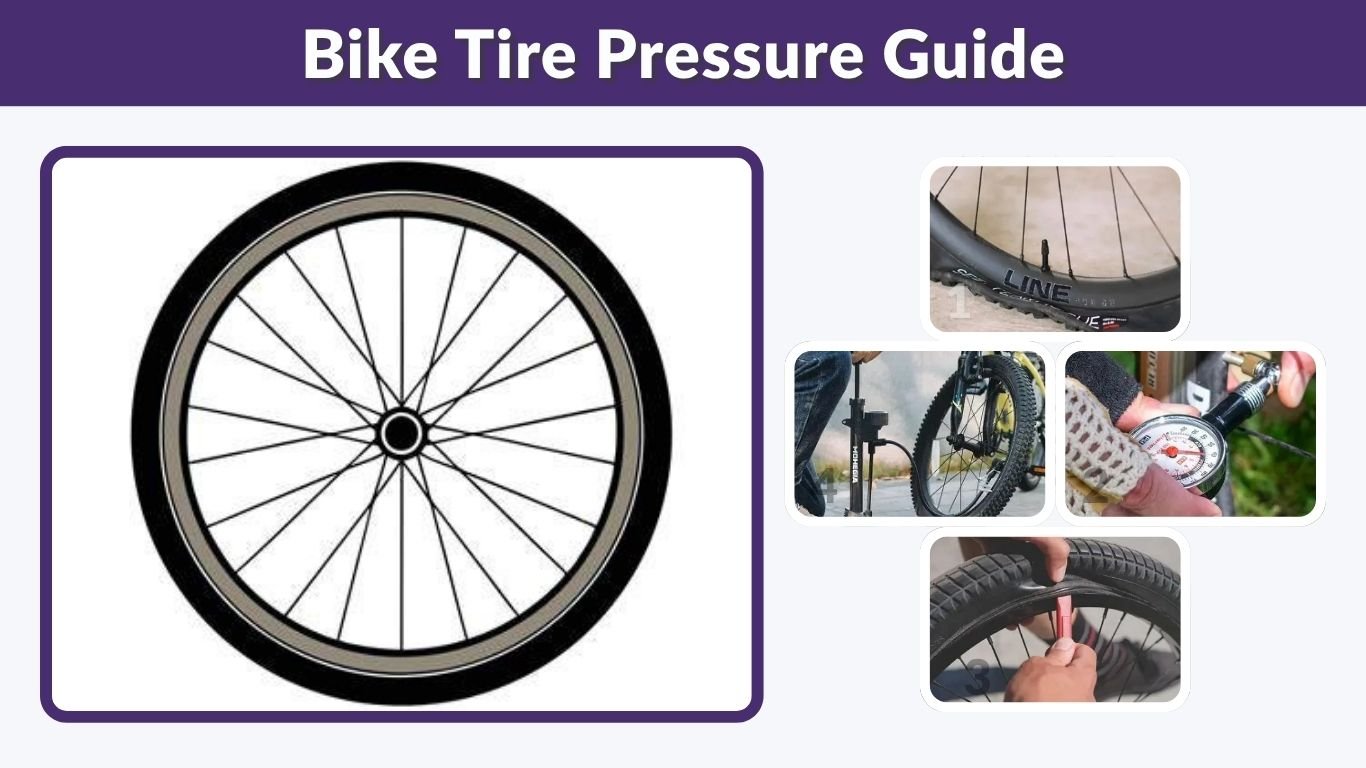
Bike tire pressure affects comfort, speed, grip, safety, and flat protection. If your tire pressure is too low, the bike may feel slow and unstable. If it is too high, the ride can feel harsh, and the tires may lose grip on rough surfaces. The correct bike tire pressure depends on tire width, rider weight, bike type, road surface, and whether you use tubes or tubeless tires.
What Is Bike Tire Pressure?
Bike tire pressure is the amount of air inside a bicycle tire, usually measured in PSI, which means pounds per square inch. Some pumps and gauges may also show pressure in bar.
Every tire has a recommended pressure range printed on the sidewall. This range gives a safe limit, but it is not always the perfect pressure for every rider. A lighter rider usually needs less pressure, while a heavier rider may need more.
Bike Tire Pressure Chart
A bike tire pressure chart gives a helpful starting point. However, the best pressure can change based on tire size, rider weight, terrain, and riding style.
| Bike Type | Common Tire Width | General PSI Range |
| Road bike | 25–32 mm | 70–100 PSI |
| Gravel bike | 35–50 mm | 30–60 PSI |
| Mountain bike | 2.1–2.6 in | 20–35 PSI |
| Hybrid bike | 32–45 mm | 40–70 PSI |
| Fat bike | 3.8–5 in | 5–15 PSI |
| Kids’ bike | Varies | 20–40 PSI |
Use this chart as a starting guide, then adjust based on how the bike feels while riding.
Road Bike Tire Pressure
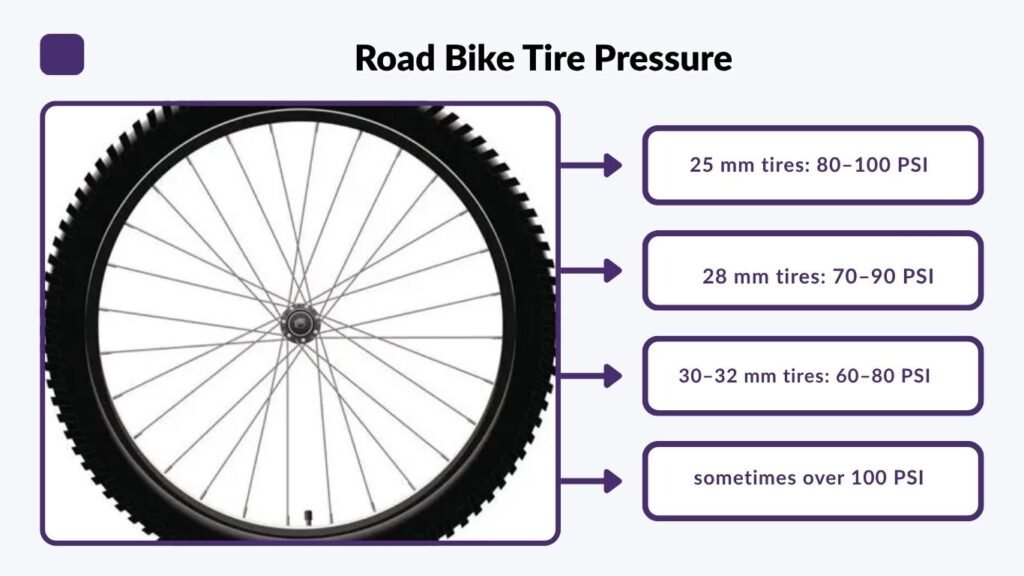
Road bike tire pressure is usually higher than mountain bike or gravel bike pressure because road tires are narrower. Higher pressure helps support the tire and reduce rolling resistance on smooth pavement.
Many older road bikes used very high pressure, sometimes over 100 PSI. Today, many riders use wider road tires and slightly lower pressure for better comfort and grip.
Common Road Bike PSI Guide
- 25 mm tires: 80–100 PSI
- 28 mm tires: 70–90 PSI
- 30–32 mm tires: 60–80 PSI
- Heavier riders: add a little pressure
- Rough roads: reduce pressure slightly
If the road feels harsh or the tire bounces over bumps, the pressure may be too high.
Mountain Bike Tire Pressure
Mountain bike tire pressure is much lower because MTB tires are wider and built for rough terrain. Lower pressure improves grip on rocks, roots, dirt, and loose trails.
However, pressure that is too low can cause rim strikes, tire squirm, or burping in tubeless tires. The goal is to find a balance between traction and support.
Mountain Bike Tire Pressure Chart
| Riding Style | Suggested PSI Range |
| Cross-country | 22–32 PSI |
| Trail riding | 20–30 PSI |
| Enduro | 18–28 PSI |
| Downhill | 18–26 PSI |
| Tubeless MTB | Often 2–5 PSI lower than tubes |
A tubeless mountain bike tire can usually run lower pressure than a tube setup because there is no inner tube to pinch flat.
Gravel Bike Tire Pressure
Gravel bike tire pressure sits between road and mountain bike pressure. Gravel tires are wider than road tires but narrower than most mountain bike tires.
For smooth gravel, slightly higher pressure can feel faster. For loose gravel, mud, or rough tracks, lower pressure improves comfort and control.
Most gravel riders use around 30–50 PSI, depending on tire width and rider weight. A 40 mm gravel tire may work well around 35–45 PSI for many riders, but lighter riders may prefer less.
Hybrid Bike Tire Pressure
Hybrid bike tire pressure depends on tire width. Many hybrid bikes use tires between 32 mm and 45 mm. These tires are wider than road tires, so they do not need extremely high pressure.
A common hybrid bike pressure range is 40–70 PSI. If you ride mostly pavement, use the higher side of the range. If you ride rough paths, broken roads, or light gravel, try slightly lower pressure for comfort.
What Affects Correct Bike Tire Pressure?
Correct bike tire pressure is not the same for everyone. Several factors change the ideal PSI.
Rider Weight
Heavier riders usually need more tire pressure to support the tire and avoid rim damage. Lighter riders can often use less pressure for better comfort and grip.
Tire Width
Wider tires need less pressure because they hold more air volume. Narrow tires need more pressure because they hold less air.
Terrain
Smooth pavement allows higher pressure. Rough roads, gravel, dirt, and trails usually need lower pressure for better grip and comfort.
Tube vs Tubeless
Tubeless tires can usually run lower pressure than tires with tubes. This reduces the risk of pinch flats and improves traction.
Bike Tire Pressure Gauge
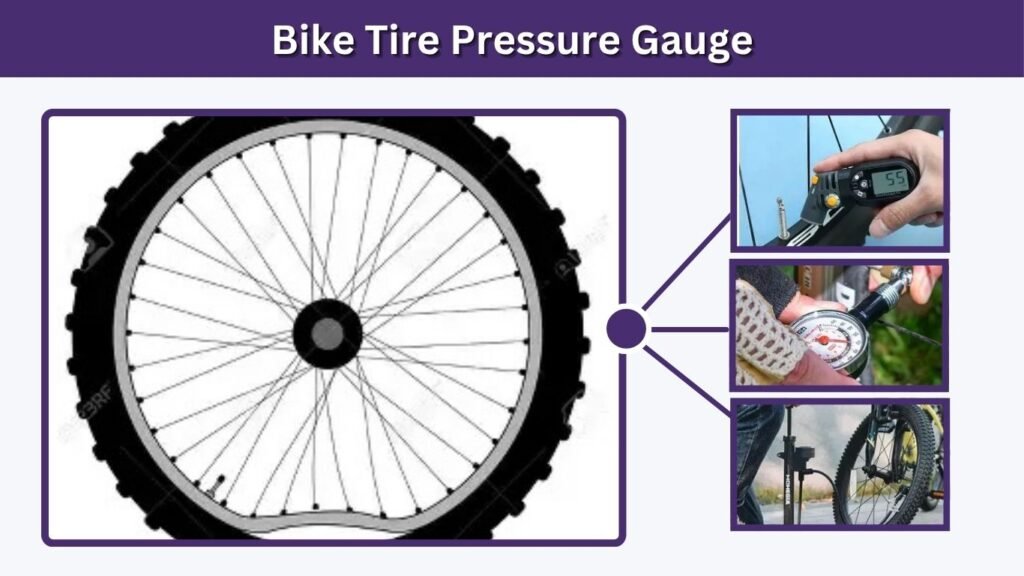
A bike tire pressure gauge helps you measure PSI accurately. Many floor pumps have built-in gauges, but they are not always perfectly precise. A separate digital or analog gauge can give a more reliable reading.
A pressure gauge is useful for road bikes, mountain bikes, gravel bikes, e-bikes, and fat bikes. It is especially helpful if you want consistent pressure before every ride.
Types of Bike Tire Pressure Gauges
- Digital pressure gauge
- Analog dial gauge
- Pump-mounted gauge
- Low-pressure MTB gauge
- Presta and Schrader compatible gauge
Choose a gauge that matches your valve type and pressure range.
Bike Tire Pressure Calculator
A bike tire pressure calculator estimates your ideal PSI using details like rider weight, tire width, bike type, surface, and tubeless or tube setup.
A calculator is useful because it gives a more personalized answer than a general chart. Still, it should be used as a starting point, not a final rule. After using a calculator, test the pressure on real rides and adjust it.
How Often Should You Check Bike Tire Pressure?
Bike tires naturally lose air over time. Narrow road tires often lose air faster than wide mountain bike tires. Tubeless tires may also lose pressure if sealant is low or the tire is not fully sealed.
Check tire pressure:
- Before long rides
- At least once a week for regular riding
- Before races or fast group rides
- After repairing a flat
- When the tire feels soft or unstable
Daily riders should check pressure more often because small changes can affect ride quality.
Signs Your Bike Tire Pressure Is Wrong
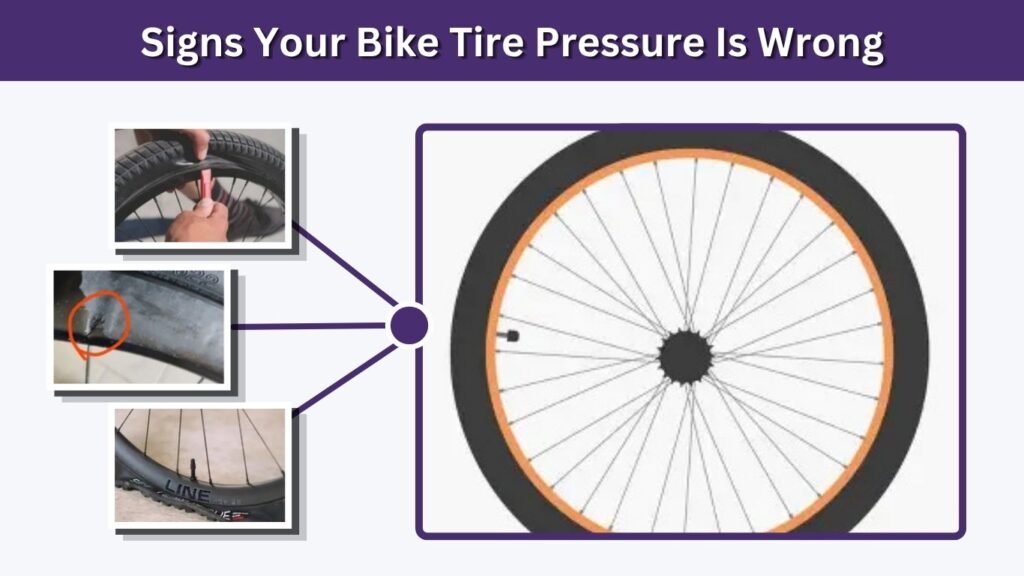
Wrong tire pressure can make riding uncomfortable or unsafe. The bike may feel slow, harsh, bouncy, or hard to control.
Pressure Too Low
- Tire feels soft
- Bike rolls slowly
- Rim hits bumps
- Steering feels vague
- Higher chance of pinch flats with tubes
Pressure Too High
- Ride feels harsh
- Tire bounces on rough roads
- Less grip in corners
- More hand and body fatigue
- Poor control on gravel or trails
FAQs
What pressure should bike tires be?
Bike tire pressure depends on the bike type, tire width, rider weight, and surface. Road bikes often use 70–100 PSI, mountain bikes use 20–35 PSI, and hybrid bikes use 40–70 PSI. Always check the tire sidewall for the safe pressure range.
Is higher bike tire pressure always faster?
No, higher pressure is not always faster. On very smooth roads, higher pressure can feel quick. On rough roads, too much pressure makes the tire bounce, which can reduce comfort, grip, and efficiency. A slightly lower pressure is often better.
How do I know if my bike tire pressure is too low?
Your tire pressure may be too low if the tire feels squishy, the bike rolls slowly, or the rim hits bumps. On tube tires, low pressure can also cause pinch flats. Add air slowly and test the ride feel again.
Do mountain bike tires need less pressure?
Yes, mountain bike tires usually need less pressure because they are wider and used on rough terrain. Lower pressure improves traction and control. Many MTB riders use around 20–35 PSI, but the best number depends on rider weight and trail conditions.
Should I use a bike tire pressure calculator?
A bike tire pressure calculator is helpful for finding a starting PSI based on your weight, tire size, and bike type. However, it is not perfect. Use the result as a guide, then adjust pressure based on comfort, grip, and riding surface.