
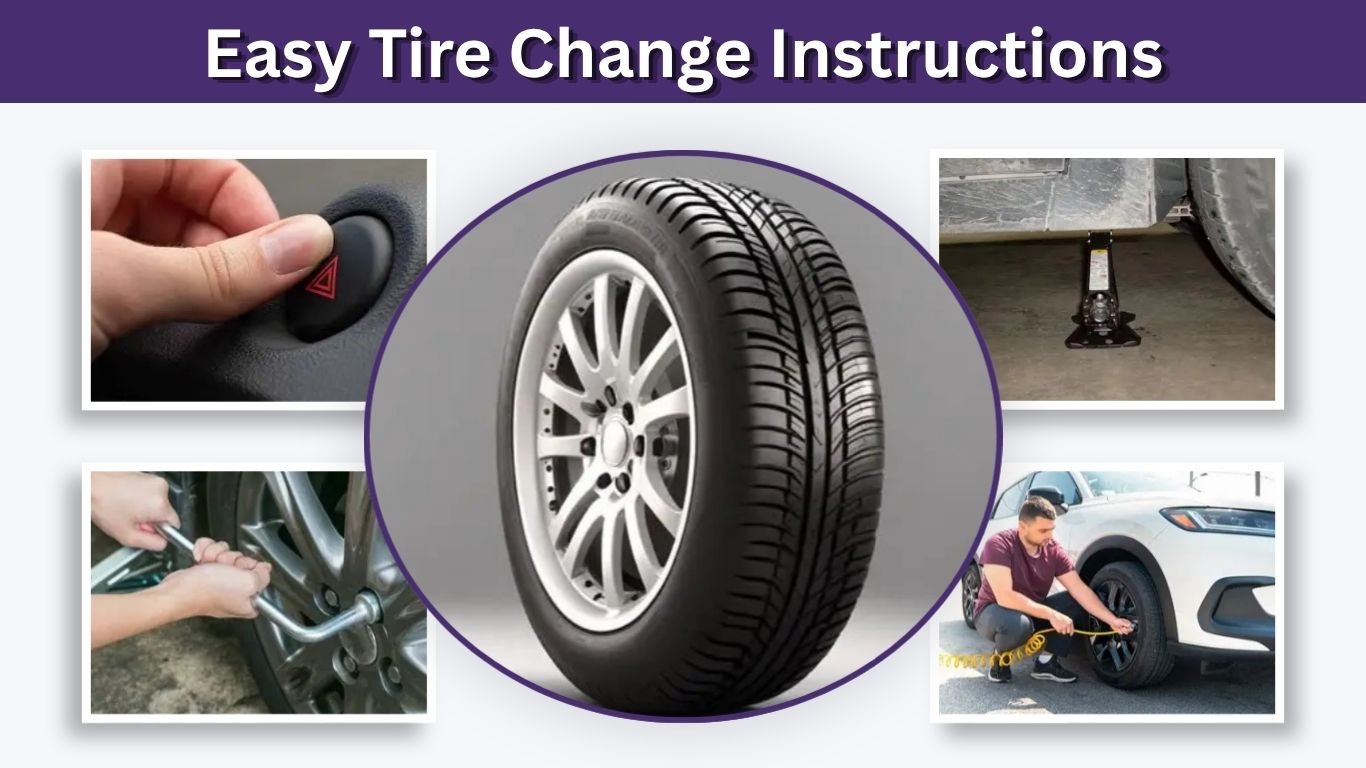
Knowing how to change a tire is an important skill for every driver. A flat tire can happen anywhere—on the highway, in a parking lot, or even close to home. With the right tools and safe steps, you can replace a flat tire with a spare and get back on the road. This guide gives simple instructions on how to change a car tire safely, even if you have never done it before.
What You Need Before Changing a Tire
Before you start, make sure you have the right tools. Most cars come with a spare tire, jack, and lug wrench, but it is always smart to check your vehicle before an emergency happens.
| Tool or Item | Why You Need It |
| Spare tire | Replaces the flat tire temporarily or fully |
| Car jack | Lifts the vehicle off the ground |
| Lug wrench | Loosens and tightens the lug nuts |
| Wheel wedges | Stops the car from rolling |
| Owner’s manual | Shows jack points and tire instructions |
| Flashlight | Helps if the flat tire happens at night |
| Gloves | Protects your hands from dirt and sharp edges |
Check Your Spare Tire First
Many drivers forget to check their spare tire until they need it. A spare tire with low air pressure may not help during an emergency. Check your spare tire at least once a month when you check your regular tires.
Some vehicles have a full-size spare, while others have a temporary spare, also called a donut tire. A donut spare is usually smaller and should only be used for short distances at lower speeds.
Read the Vehicle Instruction Manual
Your car’s instruction manual gives important details about where to place the jack, how to remove the spare tire, and what type of spare your vehicle uses. This is especially useful because jack points are different from one car model to another.
If you place the jack in the wrong area, it can damage the car or make the vehicle unstable while lifted.
Safety Steps Before You Change a Flat Tire
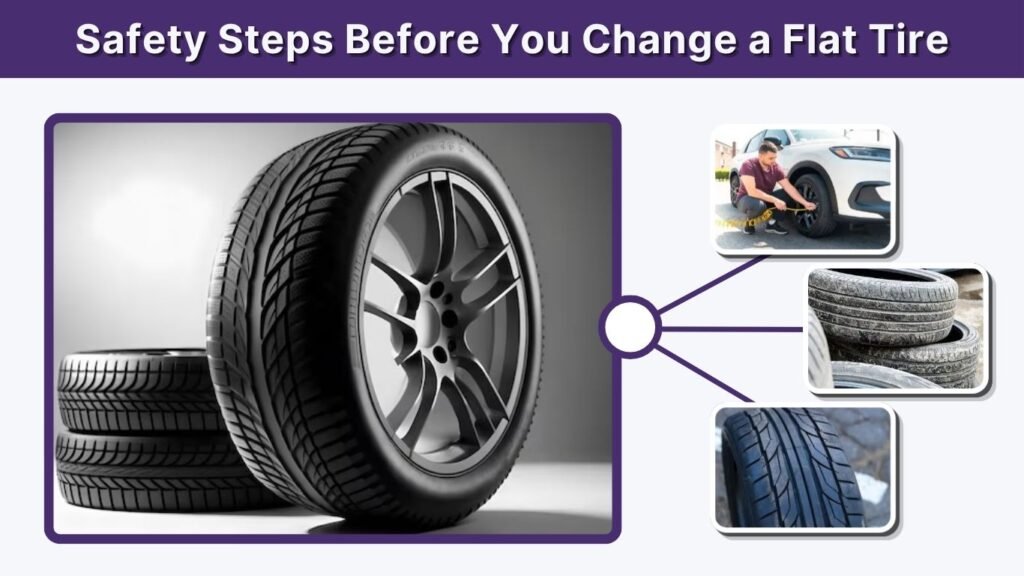
Safety is the most important part of changing a tire. Before touching the jack or lug wrench, make sure your vehicle is in a safe position.
You should never try to change a tire in the middle of traffic or on soft, uneven ground. A safe location can prevent accidents and make the process much easier.
Pull Over to a Safe Area
As soon as you notice a flat tire, slow down carefully. Do not brake suddenly or make sharp turns. Turn on your hazard lights and look for a safe, flat area.
Good places to stop include:
- A wide road shoulder
- A parking lot
- A gas station
- A quiet side street
- A flat driveway
Avoid stopping on a curve, hill, bridge, or narrow road where other drivers may not see you clearly.
Use the Parking Brake and Wheel Wedges
Once the car is parked, put it in park if it is automatic. If it is a manual vehicle, put it in first gear or reverse. Then apply the parking brake.
Place wheel wedges in front of or behind the tires to stop the vehicle from rolling. If you do not have wheel wedges, large stones or blocks of wood may help in an emergency.
Do Not Crawl Under the Vehicle
When using a car jack, never crawl under the vehicle. A standard tire-changing jack is made only for lifting the car long enough to remove and replace a tire. It is not designed to support the vehicle while someone is underneath it.
Step-by-Step Instructions on How to Change a Tire
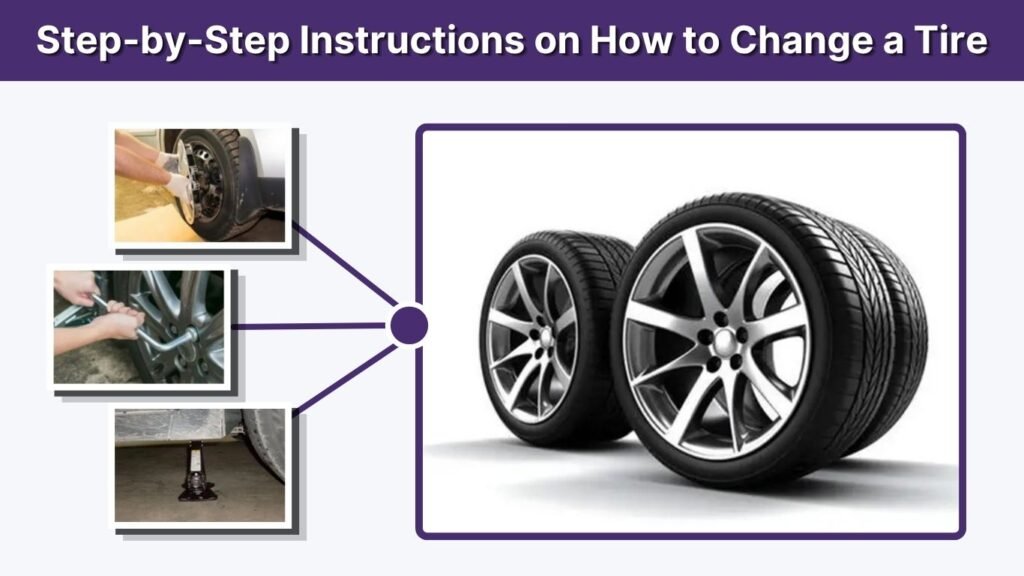
These instructions explain how to change a flat tire on a car. They are written for a normal passenger vehicle with a spare tire, jack, and lug wrench.
Follow each step slowly and carefully.
Step 1: Remove the Hubcap or Wheel Cover
If your car has a hubcap covering the lug nuts, remove it first. Some hubcaps pull off by hand, while others may need the flat end of the lug wrench.
Place the hubcap somewhere safe so it does not roll away or get damaged.
If your lug nuts are already visible, you can skip this step.
Step 2: Loosen the Lug Nuts
Use the lug wrench to turn each lug nut counterclockwise. Do this before lifting the car with the jack. The tire should still be touching the ground because the weight of the vehicle keeps it from spinning.
Do not remove the lug nuts completely yet. Loosen each one about a half turn or one full turn.
If the lug nuts are very tight, press down carefully on the wrench with your foot. Keep your balance and avoid sudden force that could cause injury.
Step 3: Place the Jack Under the Correct Jack Point
Look for the correct jack point under the vehicle. Many cars have a marked metal area near each tire. Your owner’s manual will show the exact location.
Place the jack on firm, flat ground. Make sure it is straight and stable before lifting.
Avoid placing the jack on plastic trim, weak metal, or uneven ground. This can damage the car or cause the jack to slip.
Step 4: Lift the Vehicle
Raise the jack slowly until the flat tire is about six inches off the ground. You need enough space to remove the flat tire and install the spare tire.
Watch the vehicle as you lift it. If the jack starts to lean or move, lower the car and reposition the jack before continuing.
Step 5: Remove the Lug Nuts and Flat Tire
Now remove the loosened lug nuts completely. Place them in a safe spot, such as inside the hubcap or your pocket, so they do not get lost.
Hold the tire with both hands and pull it straight toward you. If the tire is stuck, gently wiggle it from side to side until it comes loose.
Set the flat tire on the ground away from the work area.
Step 6: Mount the Spare Tire
Line up the holes in the spare tire with the wheel bolts. Push the spare tire straight onto the hub until it sits flat.
Make sure the tire is not crooked. A spare tire that is not seated correctly can shake or come loose while driving.
Step 7: Put the Lug Nuts Back On
Place the lug nuts back onto the bolts by hand. Turn them clockwise until they are snug.
Do not fully tighten them while the car is still in the air. Tightening too much while lifted can make the car unstable on the jack.
Use a star pattern when tightening the lug nuts. This helps the wheel sit evenly.
| Number of Lug Nuts | Tightening Pattern |
| 4 lug nuts | Top, bottom, left, right |
| 5 lug nuts | Star pattern across the wheel |
| 6 lug nuts | Opposite sides in sequence |
Step 8: Lower the Car and Tighten the Lug Nuts
Lower the car slowly until the spare tire touches the ground. Once the tire is firmly on the ground, tighten the lug nuts fully with the lug wrench.
Use firm pressure and follow the star pattern again. This helps prevent uneven tightening.
After tightening, lower the car completely and remove the jack.
Step 9: Replace the Hubcap and Store Your Tools
If the hubcap fits the spare tire, put it back on. Some temporary spare tires do not allow the original hubcap to fit, so store it in the trunk.
Put the jack, lug wrench, wheel wedges, and flat tire back in your vehicle. Do not leave tools on the roadside.
What to Do After Changing the Tire
Changing the tire is not the final step. You still need to drive carefully and check the spare tire as soon as possible.
A spare tire is often a temporary solution. It helps you reach a repair shop, but it may not be safe for long-distance driving.
Drive Slowly on a Spare Tire
If you are using a donut spare, check the speed limit printed on the tire. Many temporary spare tires should not be driven faster than 50 mph.
Avoid hard braking, sharp turns, and long highway trips. A smaller spare tire can affect steering, braking, and traction.
Visit a Tire Shop Soon
Go to a tire repair shop as soon as you can. A technician can inspect the flat tire and tell you whether it can be repaired or needs replacement.
Common causes of flat tires include:
- Nails or screws
- Sidewall damage
- Worn tread
- Valve stem leaks
- Road debris
- Low tire pressure
If the flat tire is repairable, you may be able to use it again. If the damage is on the sidewall or the tread is badly worn, replacement is usually safer.
Common Mistakes to Avoid When Changing a Tire
Even simple tire-changing instructions can go wrong if important safety steps are skipped. Avoid these common mistakes to protect yourself and your vehicle.
Loosening Lug Nuts After Lifting the Car
Always loosen the lug nuts before using the jack. If you wait until the tire is in the air, the wheel may spin and make the nuts harder to remove.
Using the Jack in the Wrong Place
The jack must be placed under the correct jack point. Putting it under the wrong area can bend the vehicle frame, damage plastic parts, or cause the car to slip.
Forgetting to Tighten the Lug Nuts Again
After lowering the car, tighten the lug nuts firmly. Loose lug nuts can cause shaking, wheel damage, or even wheel separation while driving.
Driving Too Far on a Temporary Spare
A donut spare is not made for long trips. It is designed to get you to a safe place or repair shop. Always replace or repair the regular tire quickly.
Simple Instructions for an Emergency Tire Change
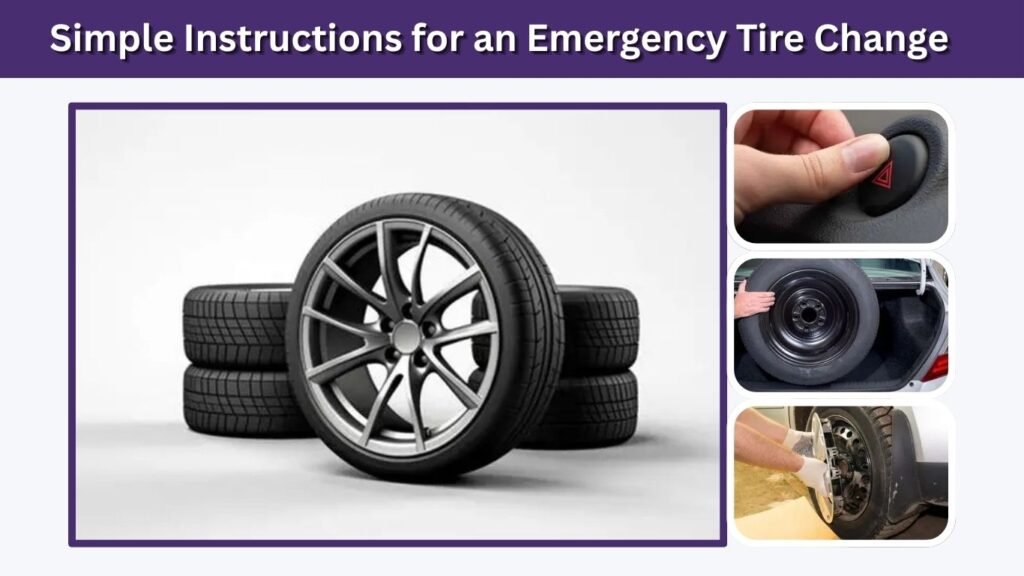
If you need a quick instruction card on how to change a tire, use this short version:
- Pull over to a safe, flat area.
- Turn on hazard lights.
- Apply the parking brake.
- Place wheel wedges.
- Remove the hubcap if needed.
- Loosen the lug nuts slightly.
- Place the jack under the correct jack point.
- Lift the car until the tire is off the ground.
- Remove the lug nuts and flat tire.
- Install the spare tire.
- Hand-tighten the lug nuts.
- Lower the car until the tire touches the ground.
- Tighten the lug nuts in a star pattern.
- Lower the car fully.
- Store tools and drive slowly to a repair shop.
These simple instructions on how to change a tire are useful for beginners, but you should still read your vehicle manual for model-specific details.
When You Should Not Change the Tire Yourself
Sometimes it is safer to call roadside assistance instead of changing the tire on your own. Your safety should always come first.
Do not try to change the tire yourself if:
- The car is on a busy highway with no safe shoulder
- The ground is soft, muddy, or uneven
- The vehicle is on a steep hill
- You do not have the right tools
- The spare tire is missing or flat
- Lug nuts are damaged or impossible to loosen
- You feel unsafe because of weather, traffic, or location
In these situations, stay inside the vehicle if it is safe, keep your hazard lights on, and call for help.
Car Tire vs Bicycle Tire Instructions
Some people search for instructions on how to change a bicycle tire or bike tire, but this article focuses on changing a car tire. The process is different.
A bicycle tire usually requires tire levers, a pump, and sometimes a replacement inner tube. A car tire requires a jack, lug wrench, spare tire, and careful vehicle safety steps.
If you are changing a car tire, do not follow bicycle tire instructions. If you are changing a bike tire, do not use car tire tools or car tire steps.
FAQs
How long does it take to change a tire?
For most drivers, changing a tire takes about 15 to 30 minutes. Beginners may take longer, especially if they are reading the vehicle manual or working carefully for the first time.
Can I change a tire without a jack?
No, you should not change a car tire without a proper jack. The jack lifts the vehicle safely so the flat tire can be removed. Without it, the job is unsafe and usually impossible.
Should I tighten lug nuts before or after lowering the car?
You should hand-tighten the lug nuts while the car is lifted, then fully tighten them after the tire touches the ground. Use a star pattern for even tightening.
How far can I drive on a spare tire?
It depends on the spare tire. A full-size spare may allow normal driving, but a donut spare is usually for short-distance use only. Check the tire label and owner’s manual.
What should I do if the lug nuts will not loosen?
Make sure you are turning the lug wrench counterclockwise. If the lug nuts are too tight, damaged, or rusted, it is safer to call roadside assistance or a mechanic.