
Learning how to read tire size helps you choose the right replacement tire, understand your vehicle better, and avoid buying the wrong fit. Tire numbers may look confusing at first, but each letter and number has a meaning. Whether you drive a car, truck, motorcycle, ATV, or bicycle, tire size markings tell you the width, height, rim size, load rating, and speed rating.
What Does a Tire Size Number Mean?
A tire size is usually printed on the sidewall of the tire. For most cars, it looks something like P215/65R16 95H. This code gives important information about the tire’s type, width, aspect ratio, construction, rim size, load index, and speed rating.
Example Tire Size: P215/65R16 95H
Let’s break down this common car tire size:
| Tire Marking | Meaning |
| P | Passenger vehicle tire |
| 215 | Tire width in millimeters |
| 65 | Aspect ratio, or sidewall height percentage |
| R | Radial construction |
| 16 | Rim diameter in inches |
| 95 | Load index |
| H | Speed rating |
So, P215/65R16 95H means the tire is made for a passenger vehicle, has a width of 215 mm, a sidewall height that is 65% of the width, radial construction, fits a 16-inch wheel, and has specific load and speed limits.
Where to Find Tire Size on a Tire
You can find the tire size on the tire sidewall. Look for a long group of letters and numbers near the outer edge of the tire.
You may also find the correct tire size in:
- The driver-side door sticker
- The vehicle owner’s manual
- The fuel door label on some vehicles
- The tire information placard
- The manufacturer’s website
For the most accurate size, use the tire size listed on your vehicle placard, not only the number printed on your current tire. A previous owner may have installed a different size.
How to Read Tire Size Numbers Step by Step
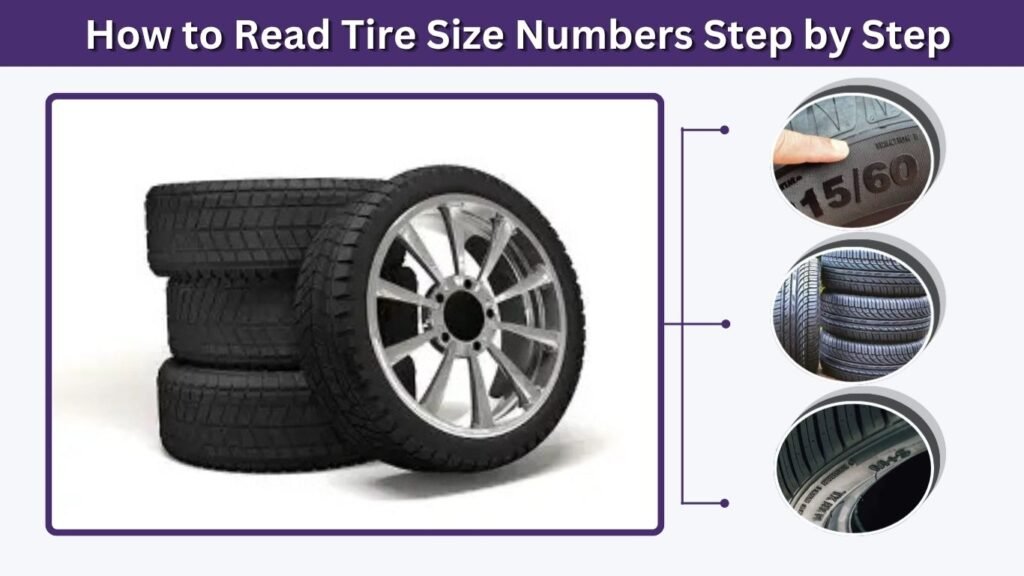
Reading tire size becomes easier when you separate the code into smaller parts. Each section explains one part of the tire’s measurements or performance rating.
Step 1: Read the Tire Type Letter
The first letter tells you the tire category. Not every tire has a starting letter, but many car and truck tires do.
Common tire type letters include:
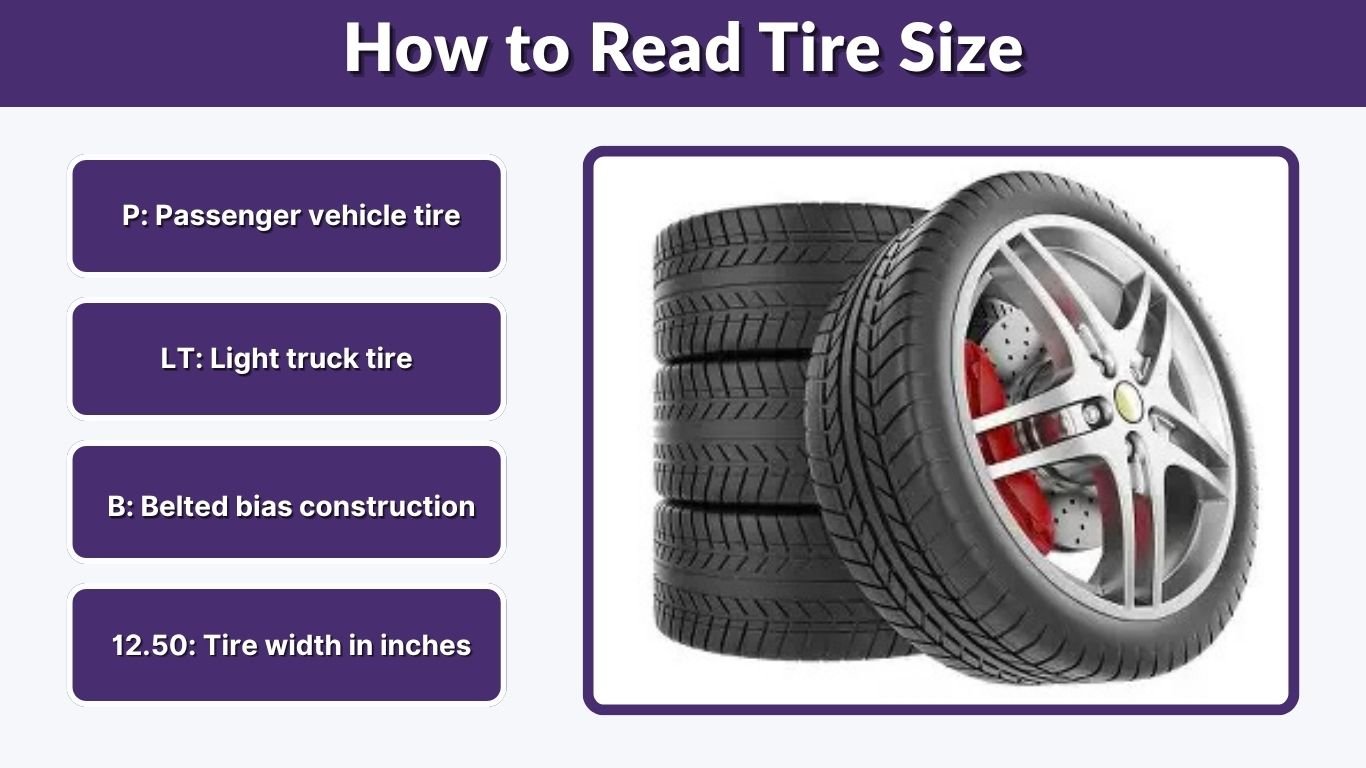
- P: Passenger vehicle tire
- LT: Light truck tire
- T: Temporary spare tire
- ST: Special trailer tire
- No letter: Euro-metric passenger tire
For example, P215/65R16 is a passenger tire, while LT265/70R17 is a light truck tire.
Step 2: Read the Tire Width
The first large number after the letter shows the tire width in millimeters. In P215/65R16, the number 215 means the tire is 215 millimeters wide from sidewall to sidewall.
A wider tire may offer more road contact, but it must still match the vehicle and wheel properly. Installing a tire that is too wide can cause rubbing, poor handling, or inaccurate speedometer readings.
Step 3: Read the Aspect Ratio
The number after the slash is the aspect ratio. In P215/65R16, the number 65 means the sidewall height is 65% of the tire width.
A lower aspect ratio usually means a shorter sidewall. For example, a 45-series tire has a lower sidewall than a 65-series tire. Lower-profile tires are common on sportier vehicles, while taller sidewalls are common on SUVs, trucks, and comfort-focused cars.
Step 4: Read the Construction Letter
The letter after the aspect ratio tells you how the tire is built. The most common letter is R, which means radial construction.
Most modern car tires are radial tires. You may also see:
- R: Radial tire
- D: Diagonal or bias-ply construction
- B: Belted bias construction
For regular passenger vehicles, radial tires are the standard choice.
Step 5: Read the Rim Size
The number after the construction letter is the rim diameter in inches. In P215/65R16, the number 16 means the tire fits a 16-inch wheel.
This is one of the most important parts of reading tire and rim size. A tire made for a 16-inch rim will not fit a 17-inch rim. Even if the tire width seems close, the rim diameter must match exactly.
Tire Size Chart With Common Examples
Different vehicles use different tire size formats. Cars, trucks, motorcycles, bikes, ATVs, and lawn equipment may not all use the same code style.
| Tire Size Example | Common Use | How to Read It |
| P215/65R16 | Car tire | 215 mm wide, 65 aspect ratio, 16-inch rim |
| LT265/70R17 | Light truck tire | 265 mm wide, 70 aspect ratio, 17-inch rim |
| 33×12.50R15 | Off-road tire | 33-inch height, 12.5-inch width, 15-inch rim |
| 120/70ZR17 | Motorcycle tire | 120 mm wide, 70 aspect ratio, 17-inch rim |
| 25×8-12 | ATV tire | 25-inch height, 8-inch width, 12-inch rim |
| 700x25c | Bicycle tire | 700c wheel size, 25 mm tire width |
| 20×8.00-8 | Lawn mower tire | 20-inch height, 8-inch width, 8-inch rim |
This is why the phrase “how to read tire sizes” can mean different things depending on the vehicle type.
How to Read Tire Size in Inches
Some tire sizes are written in inches instead of the metric format. This is common on off-road tires, ATV tires, lawn mower tires, golf cart tires, and some truck tires.
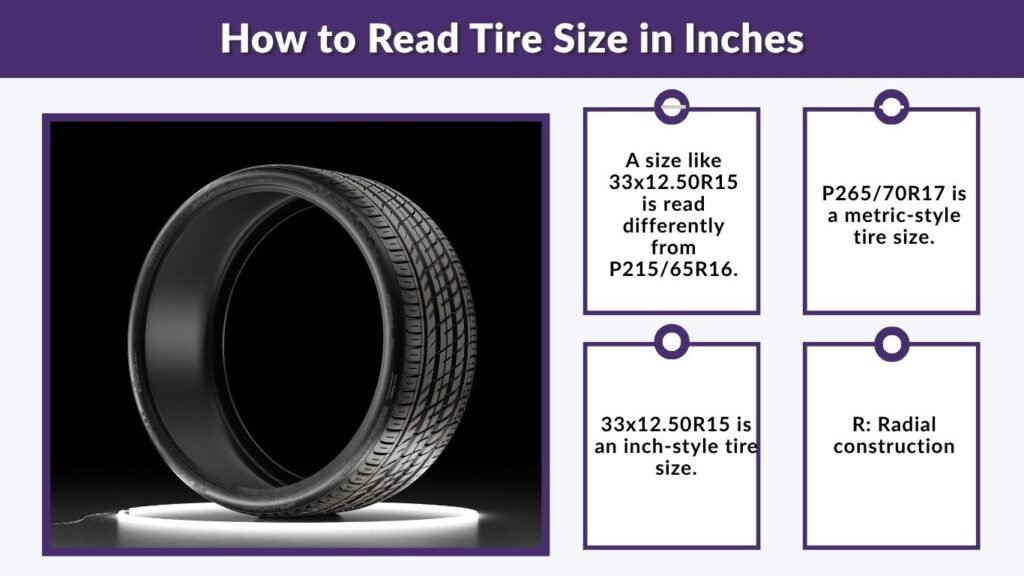
A size like 33×12.50R15 is read differently from P215/65R16.
Example: 33×12.50R15
Here is what the numbers mean:
- 33: Overall tire diameter in inches
- 12.50: Tire width in inches
- R: Radial construction
- 15: Rim diameter in inches
This means the tire is about 33 inches tall, 12.5 inches wide, and fits a 15-inch wheel.
Metric Tire Size vs Inch Tire Size
Metric tire sizes show width in millimeters and rim size in inches. Inch tire sizes usually show overall height, width, and rim diameter in inches.
For example:
- P265/70R17 is a metric-style tire size.
- 33×12.50R15 is an inch-style tire size.
Truck and off-road tire shoppers often compare both formats when choosing larger tires.
How to Read Car and Truck Tire Sizes
Car and truck tire sizes look similar, but truck tires may include stronger construction and higher load ratings. This matters because trucks often carry heavier loads or tow trailers.
How to Read Car Tire Size
A car tire size like P205/55R16 91V means:
- P: Passenger vehicle
- 205: Width in millimeters
- 55: Sidewall height is 55% of tire width
- R: Radial construction
- 16: Fits a 16-inch wheel
- 91: Load index
- V: Speed rating
When reading car tire sizes, always match the size recommended by the vehicle manufacturer.
How to Read Truck Tire Size
A truck tire may look like LT275/65R18 123/120S. The LT means light truck, and the load rating may be higher than a passenger tire.
Truck tires may also have load range letters, such as Load Range C, D, or E. These ratings help show how much air pressure and weight the tire is designed to handle.
If your truck is used for towing, hauling, or off-road driving, tire size and load rating become even more important.
How to Read Motorcycle, ATV, and Bike Tire Sizes
Not all tire size codes are made for cars. Motorcycle, ATV, bicycle, and dirt bike tires often use different formats.
How to Read Motorcycle Tire Size
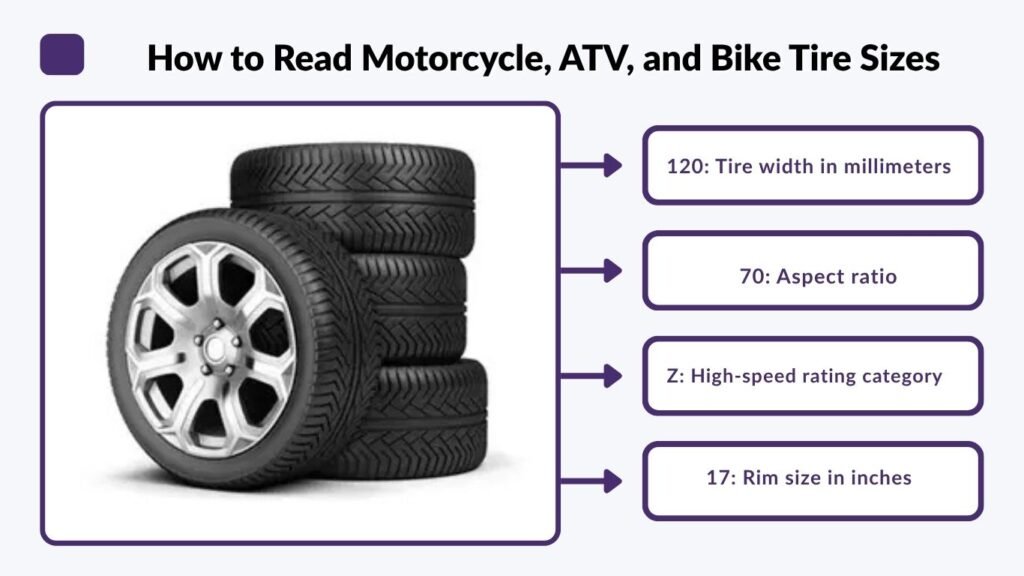
A motorcycle tire size may look like 120/70ZR17.
This means:
- 120: Tire width in millimeters
- 70: Aspect ratio
- Z: High-speed rating category
- R: Radial construction
- 17: Rim size in inches
Motorcycle tire sizes must match the front or rear wheel requirements. Front and rear tires often have different sizes.
How to Read ATV Tire Size
ATV tire size is often written like 25×8-12.
This means:
- 25: Tire height in inches
- 8: Tire width in inches
- 12: Rim diameter in inches
ATV and four-wheeler tire sizes are usually easier to read because all three main numbers are in inches.
How to Read Bicycle Tire Size
Bike tire sizes can look different depending on the system used. Common examples include 700x25c, 26×2.1, or 29×2.25.
For 700x25c, the 700c refers to the wheel size, and 25 refers to the tire width in millimeters.
For mountain bike tires like 29×2.25, the 29 is the wheel diameter in inches, and 2.25 is the tire width in inches.
Bicycle tire sizing can be confusing because road bikes, mountain bikes, and older bikes may use different systems.
How to Read Load Index and Speed Rating
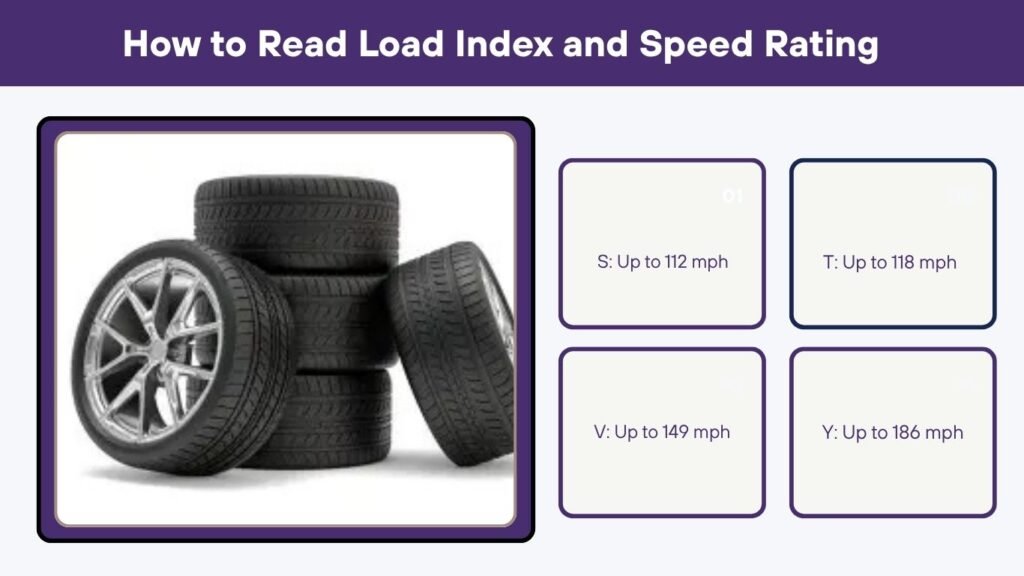
The numbers and letters after the main tire size are also important. They show how much weight the tire can carry and how fast it is rated to travel safely.
What Is Tire Load Index?
The load index is a number that shows the maximum weight a tire can support when properly inflated. In P215/65R16 95H, the number 95 is the load index.
A higher load index means the tire can carry more weight. However, you should not choose a lower load index than the one recommended by your vehicle manufacturer.
What Is Tire Speed Rating?
The speed rating is the letter after the load index. In P215/65R16 95H, the H is the speed rating.
Common speed ratings include:
- S: Up to 112 mph
- T: Up to 118 mph
- H: Up to 130 mph
- V: Up to 149 mph
- W: Up to 168 mph
- Y: Up to 186 mph
Speed rating does not mean you should drive at that speed. It simply shows the tire’s tested performance limit under proper conditions.
Other Tire Sidewall Markings to Know
A tire has more than just size numbers. The sidewall may also include manufacturing details, traction ratings, temperature ratings, and tire pressure information.
DOT Code
The DOT code shows that the tire meets Department of Transportation requirements. It also includes the tire’s manufacturing date.
The last four digits often show the production week and year. For example, 3224 means the tire was made in the 32nd week of 2024.
Maximum Tire Pressure
You may see “Max Press” on the tire sidewall. This is not always the recommended pressure for your vehicle. The correct tire pressure is usually listed on the driver-side door sticker.
M+S and 3PMSF Symbols
Some tires include M+S, which means mud and snow. Winter tires may include the three-peak mountain snowflake symbol, often called 3PMSF. This shows the tire meets certain snow performance standards.
Common Mistakes When Reading Tire Size
Many drivers misread tire size because the code includes both metric and inch measurements. A small mistake can lead to buying a tire that does not fit.
Confusing Rim Size With Tire Height
In P215/65R16, the number 16 is the rim diameter, not the total tire height. The full tire height is calculated using width, aspect ratio, and rim size.
Ignoring the Load Index
Two tires may have the same size but different load ratings. This is especially important for trucks, SUVs, trailers, and vehicles that carry heavy loads.
Using the Current Tire Instead of the Door Sticker
If your current tires are the wrong size, copying them can repeat the mistake. Always check the vehicle’s tire placard or owner’s manual.
Mixing Different Tire Sizes
Using different tire sizes on the same vehicle can affect handling, braking, traction control, and all-wheel-drive systems. Some vehicles use staggered tire sizes, but only if designed that way by the manufacturer.
FAQs
What do the three numbers mean in tire size?
The main numbers usually show tire width, aspect ratio, and rim size. For example, in 215/65R16, 215 is the width in millimeters, 65 is the aspect ratio, and 16 is the rim diameter in inches.
How do I read the rim size on a tire?
The rim size is the number after the construction letter. In P225/60R17, the 17 means the tire fits a 17-inch rim. This number must match your wheel size exactly.
How do I read tire size numbers in inches?
An inch-style tire size like 33×12.50R15 means the tire is 33 inches tall, 12.5 inches wide, and fits a 15-inch rim. This format is common on off-road and ATV tires.
What does the R mean in tire size?
The R means radial construction. Most modern passenger vehicle tires are radial tires because they offer good durability, handling, and ride comfort.
Can I use a different tire size on my car?
Sometimes a different tire size can fit, but it must be approved for your vehicle, wheel size, load rating, and clearance. The safest choice is to use the tire size listed on the vehicle placard or owner’s manual.