
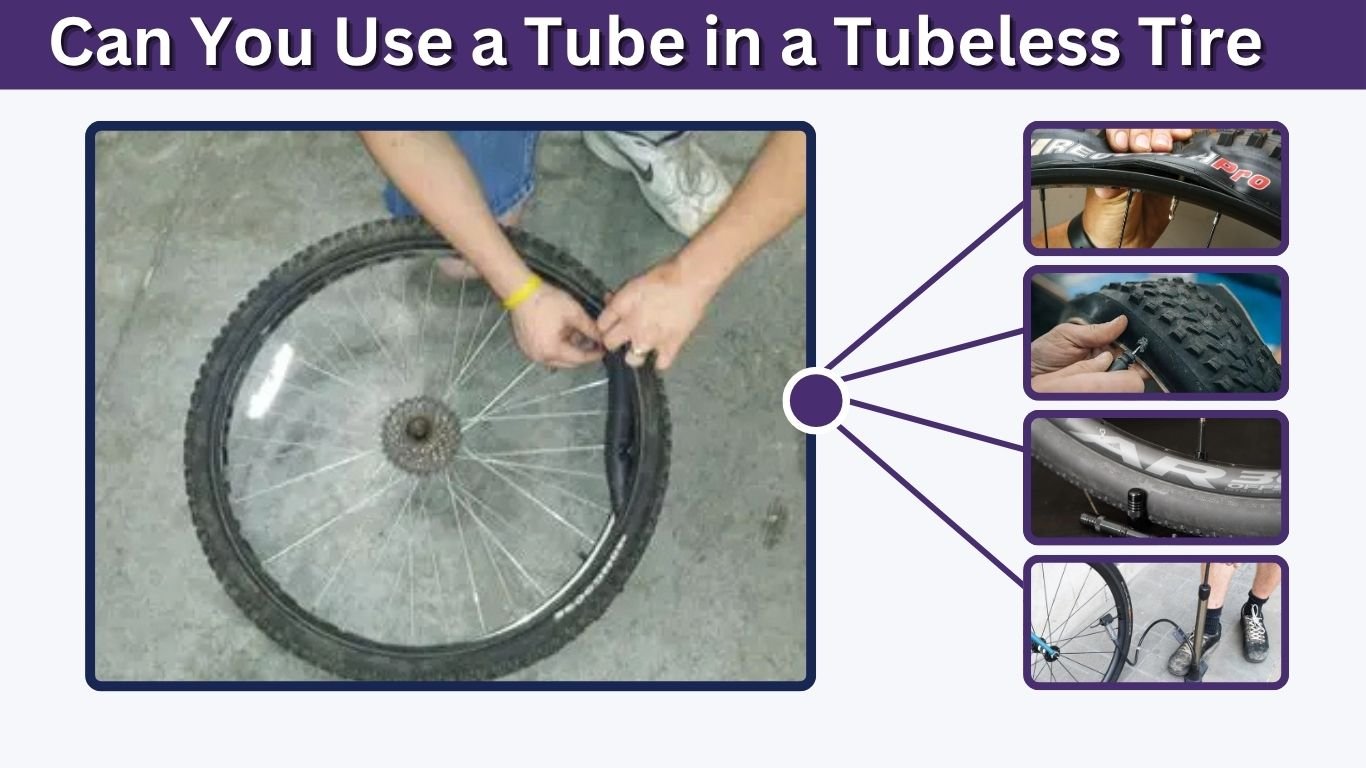
Yes, you can use a tube in a tubeless tire in many cases, and riders often do this as an emergency repair. A tubeless tire is designed to hold air without an inner tube, but that does not always mean tubes are impossible. The key is knowing when it is safe, when it is useful, and when it may cause problems.
What Does a Tubeless Tire Mean?
A tubeless tire is designed to seal directly against the rim without needing an inner tube. Instead of a tube holding the air, the tire bead, rim, valve, rim tape, and sealant work together to create an airtight system.
Tubeless tires are common on bicycles, motorcycles, mountain bikes, road bikes, gravel bikes, and some cars. The exact setup varies by vehicle, but the basic idea is the same: fewer puncture problems, lower pressure options, and better sealing for small holes.
Tubeless vs Tube-Type Tires
A tube-type tire needs an inner tube to hold air. The tire itself gives structure and grip, while the tube stores the air pressure. A tubeless tire is built to hold air inside the tire casing itself.
Here is a simple comparison:
| Feature | Tubeless Tire | Tube-Type Tire |
|---|---|---|
| Holds air without tube | Yes | No |
| Uses sealant | Often, especially bicycles | Usually no |
| Puncture repair | Sealant or plug | Patch or replace tube |
| Emergency tube use | Often possible | Required |
| Setup difficulty | Usually higher | Usually easier |
Tubeless tires are more advanced, but tube-type tires are still simple and reliable.
Can You Use a Tube in a Tubeless Tire?
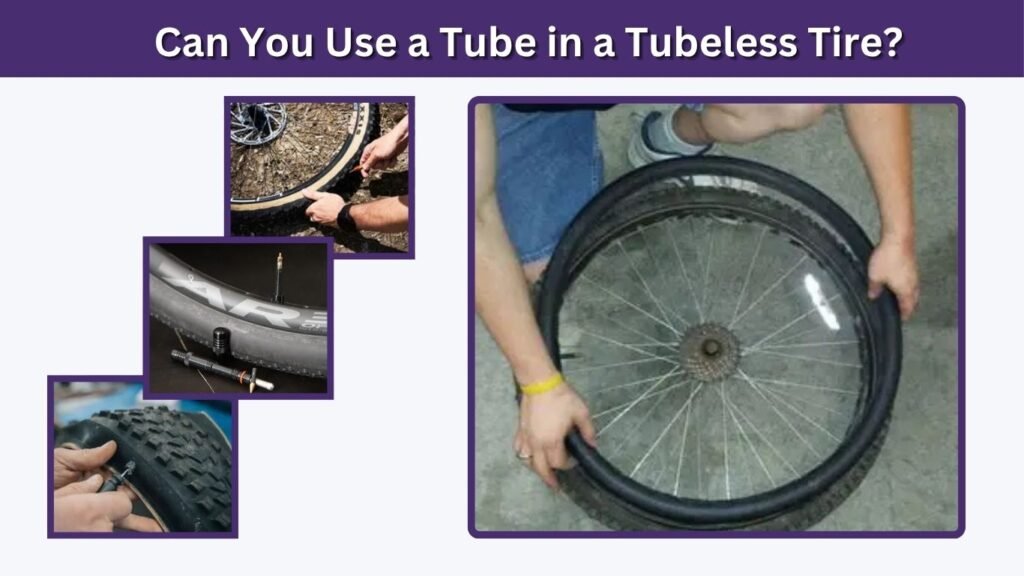
Yes, in most bicycle and motorcycle cases, you can use a tube in a tubeless tire. This is especially useful when the tubeless setup fails, the tire has a large puncture, the sealant has dried out, or the rim tape is damaged.
For bicycles, installing a tube in a tubeless tire is a common roadside fix. If sealant cannot close the hole and a plug does not work, a spare inner tube can help you finish the ride.
For motorcycles, using a tube in a tubeless tire may also be possible, but you must be more careful. Motorcycle tires handle higher loads, heat, and speed, so tire and rim compatibility matters more.
When Using a Tube Makes Sense
A tube can be useful in a tubeless tire when:
- The puncture is too large for sealant
- A tubeless plug does not hold air
- The tire bead will not seal properly
- The tubeless valve is damaged
- The rim tape is leaking
- You need a temporary emergency repair
In these cases, the tube acts as a backup air chamber inside the tubeless tire.
Can Tubeless Tires Be Used With Tubes Permanently?
Tubeless tires can be used with tubes, but it is usually better as a temporary or backup solution rather than the ideal long-term setup. A tubeless tire is designed to work best without a tube, especially when paired with a tubeless-ready rim and sealant.
However, some riders choose to run tubes inside tubeless-ready tires for convenience. This can work if the tire fits the rim properly and the tube is the correct size.
Why It May Not Be Ideal Long Term
Using tubes in tubeless tires can reduce some of the benefits of going tubeless. You lose automatic puncture sealing, lower-pressure performance, and protection from pinch flats.
Possible downsides include:
- More chance of pinch flats compared with true tubeless
- Extra weight from the tube
- Less comfort at lower tire pressure
- No automatic sealing from tubeless sealant
- More heat buildup in some high-speed applications
For bicycles, these issues are usually manageable. For motorcycles, long-term tube use in a tubeless tire should be checked against the tire and rim manufacturer’s guidance.
Can You Use Inner Tubes in Tubeless Bike Tires?
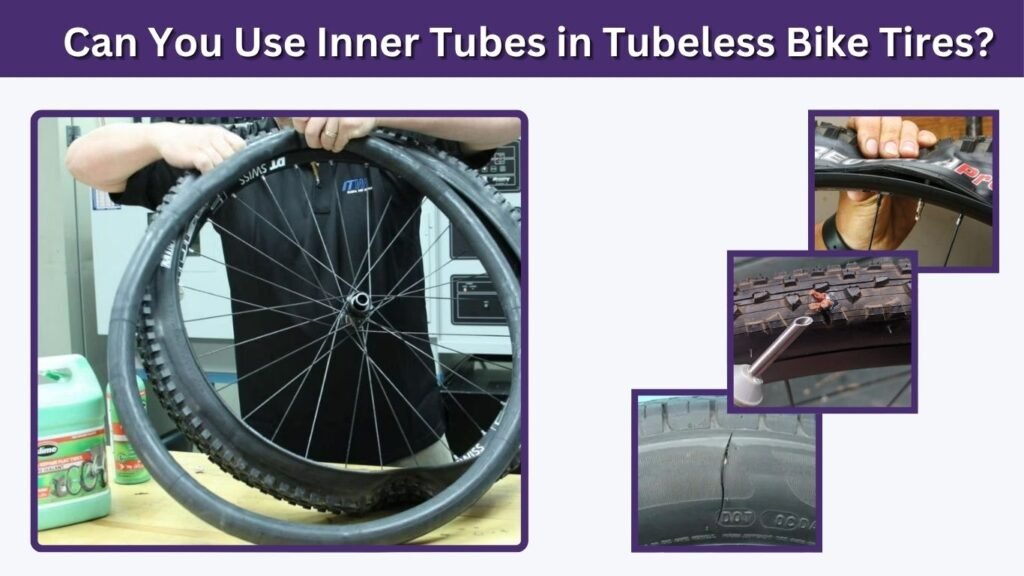
Yes, you can use inner tubes in tubeless bike tires. Many cyclists carry a spare tube even when riding tubeless because it is one of the most reliable emergency fixes.
If a tubeless bike tire gets a large cut, the sealant may spray out without sealing the hole. A tubeless plug may work, but if the damage is too big, putting in a tube may be the fastest way to get home.
What to Check Before Installing a Tube
Before putting a tube in a tubeless bike tire, check the tire carefully. This step is important because the object that caused the puncture may still be stuck in the tire.
Check for:
- Thorns inside the tire casing
- Glass pieces
- Sharp metal or wire
- Damaged rim tape
- Large sidewall cuts
- Sealant clumps or dried sealant
If you install a tube without removing the sharp object, the new tube may puncture immediately.
How to Put a Tube in a Tubeless Tire
Putting a tube in a tubeless tire is similar to changing a regular inner tube, but there are a few extra steps because of the tubeless valve and sealant.
First, deflate the tire completely. Then break one side of the tire bead away from the rim. Remove the tubeless valve from the rim before inserting the tube.
Basic Steps
Follow these steps for a bicycle tubeless tire:
- Remove the wheel from the bike.
- Let all air out of the tire.
- Break one side of the tire bead loose.
- Remove the tubeless valve from the rim.
- Check the inside of the tire for sharp objects.
- Wipe away excess sealant if needed.
- Insert the correct-size inner tube.
- Seat the tire bead back onto the rim.
- Inflate slowly and check that the tire sits evenly.
- Reinstall the wheel and test carefully.
This repair can be messy because tubeless sealant may leak out while you work.
Can You Use Tubeless Tires on Tube Rims?
This depends on the rim and tire type. A tubeless tire can often be used with a tube on a standard clincher bicycle rim, as long as the tire and rim sizes match. In that case, the tube holds the air, so the rim does not need to seal air perfectly.
However, using a tubeless tire as a true tubeless setup on a non-tubeless rim is different. That may not be safe or reliable because the rim may not hold the tire bead securely without a tube.
Tubeless Tire With Tube vs Tubeless Setup
A tubeless tire with a tube is not the same as a full tubeless setup. The tube is doing the air-holding work. The tire is only acting as the outer casing.
A full tubeless setup needs:
- Tubeless-ready tire
- Tubeless-compatible rim
- Proper rim tape
- Tubeless valve
- Sealant
- Correct installation pressure
Without these parts, the tire may leak air or fail to seat safely.
Can You Use a Tubeless Tire on a Spoked Rim?
You can use a tubeless tire on some spoked rims, but the answer depends on the rim design. Traditional spoked rims have spoke holes that pass through the rim bed, which can leak air in a tubeless setup.
For bicycles, tubeless rim tape seals the spoke holes and allows the system to hold air. For motorcycles, some spoked wheels are designed to be tubeless, while others require tubes.
Why Spoked Rims Are Different
Spoked rims can be tricky because every spoke hole is a possible air leak. If the rim is not sealed properly, air will escape even if the tire is tubeless.
Some adventure bikes and motorcycles use tubeless-compatible spoked rims. Others use tubeless tires with tubes because the rim itself is not airtight.
How to Use a Tubeless Tire Repair Kit
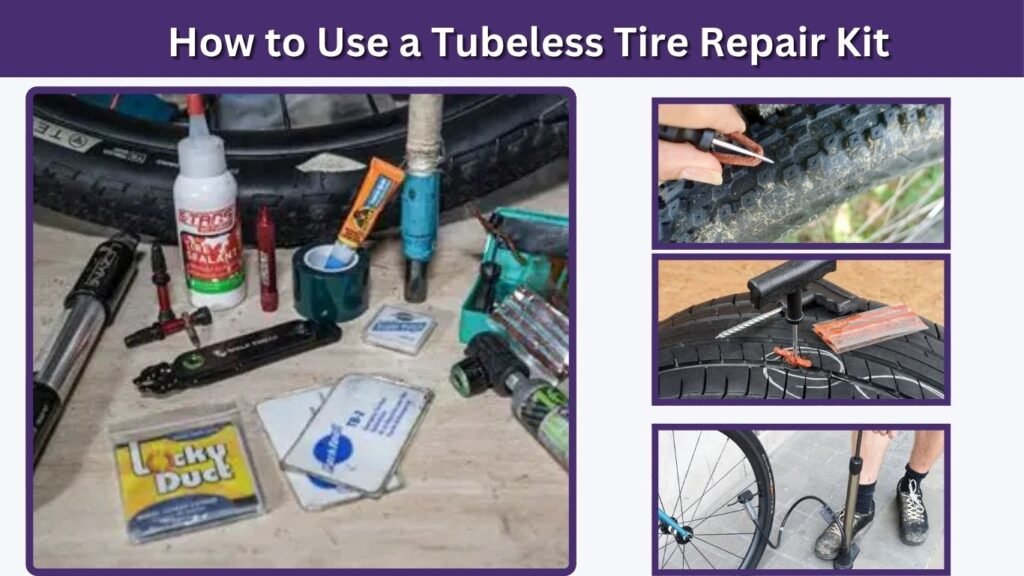
A tubeless tire repair kit is used to fix punctures that are too large for sealant alone. These kits often include plugs, also called bacon strips, a plug insertion tool, and sometimes a reamer.
For bicycle tires, tubeless plugs are small rubber strips pushed into the puncture. For motorcycle and car tires, repair kits may be larger and may include different plug tools.
How to Use Tubeless Plugs
The basic process is simple:
- Find the puncture.
- Rotate the hole to an easy working position.
- Leave some air in the tire if possible.
- Insert a plug into the tool.
- Push the plug into the puncture.
- Pull the tool out, leaving the plug in place.
- Add air and check for leaks.
- Trim excess plug material if needed.
After plugging the tire, spin the wheel so sealant can help seal around the plug.
How Much Tubeless Sealant Should You Use?
The right amount of tubeless sealant depends on tire size, tire volume, and manufacturer recommendations. Road bike tires need less sealant than mountain bike or gravel tires because they are smaller.
Too little sealant may not seal punctures properly. Too much sealant adds weight and can make a mess, but it is usually less harmful than running too little.
General Sealant Amounts
As a rough guide:
- Road bike tires: 30–60 ml
- Gravel bike tires: 60–90 ml
- Mountain bike tires: 90–120 ml
- Fat bike tires: 120 ml or more
- Motorcycle tires: follow the product and tire manufacturer’s instructions
Sealant dries out over time, so check it regularly. Many bicycle riders refresh sealant every two to six months.
Can You Use CO2 With Tubeless Tires?
Yes, you can use CO2 with tubeless tires, especially for emergency inflation on the road or trail. CO2 cartridges are useful because they inflate a tire quickly and can help reseat a bead in some cases.
However, some sealants may not work as well after CO2 use, especially if the cold gas affects the sealant. After using CO2, it is smart to deflate and reinflate with regular air when you get home.
When CO2 Is Helpful
CO2 is helpful when:
- You need fast emergency inflation
- A mini pump is too slow
- The tire needs a quick air blast
- You are trying to finish a ride after a repair
For regular maintenance, a floor pump or compressor is usually better.
Can You Use Slime or Fix-a-Flat on Tubeless Tires?
Some tire sealants are made for tubeless tires, but not every product is suitable for every tire type. Bicycle tubeless systems usually work best with bicycle-specific tubeless sealant. Automotive products like Fix-a-Flat may not be ideal for bike tires.
Slime makes different formulas for tubes and tubeless tires. Tube sealant and tubeless sealant are not always interchangeable, so check the label carefully before using it.
Use the Right Product
Before using any sealant, make sure it matches:
- Bicycle, motorcycle, car, or ATV use
- Tube or tubeless application
- Tire pressure range
- Valve type
- Manufacturer recommendations
Using the wrong sealant can clog valves, fail to seal punctures, or make future repairs harder.
Why Use Tubeless Tires?
Riders use tubeless tires because they reduce many common puncture problems. Small holes from thorns or sharp debris can seal automatically while riding. This is one of the biggest reasons mountain bikers, gravel riders, and road cyclists switch to tubeless.
Tubeless tires can also improve comfort and grip. Since there is no inner tube to pinch, riders can often use lower tire pressure without getting pinch flats.
Main Benefits
Tubeless tires are useful because they offer:
- Better puncture protection
- Fewer pinch flats
- More grip at lower pressure
- Smoother ride quality
- Better control on rough terrain
The tradeoff is that tubeless setups require more maintenance, sealant checks, and sometimes more effort during installation.
FAQs
Can you use a tube in a tubeless tire?
Yes, you can use a tube in many tubeless tires, especially as an emergency repair. For bicycles, this is common when sealant or plugs cannot fix a puncture. Always remove sharp objects and the tubeless valve before installing the tube.
Can tubeless ready tires be used with tubes?
Yes, tubeless ready tires can usually be used with tubes. The tube holds the air, while the tire works like a normal outer casing. This can be useful if you are not ready to run a full tubeless setup.
Is it safe to use a tube in a tubeless tyre?
It is generally safe for bicycles when the tube and tire are the correct size and installed properly. For motorcycles or high-speed vehicles, check manufacturer guidance because heat, speed, rim type, and load can affect safety.
Can you use a tubeless repair kit instead of a tube?
Yes, a tubeless repair kit can often fix punctures without installing a tube. Plugs work well for holes that sealant cannot close. If the cut is too large or the tire sidewall is badly damaged, a tube may still be needed.
Can you use tubes on tubeless rims?
Yes, tubes can usually be used on tubeless rims if the tire and tube fit correctly. A tubeless rim can still hold a regular tire-and-tube setup. Just make sure the valve hole, tire size, and tube type match.