
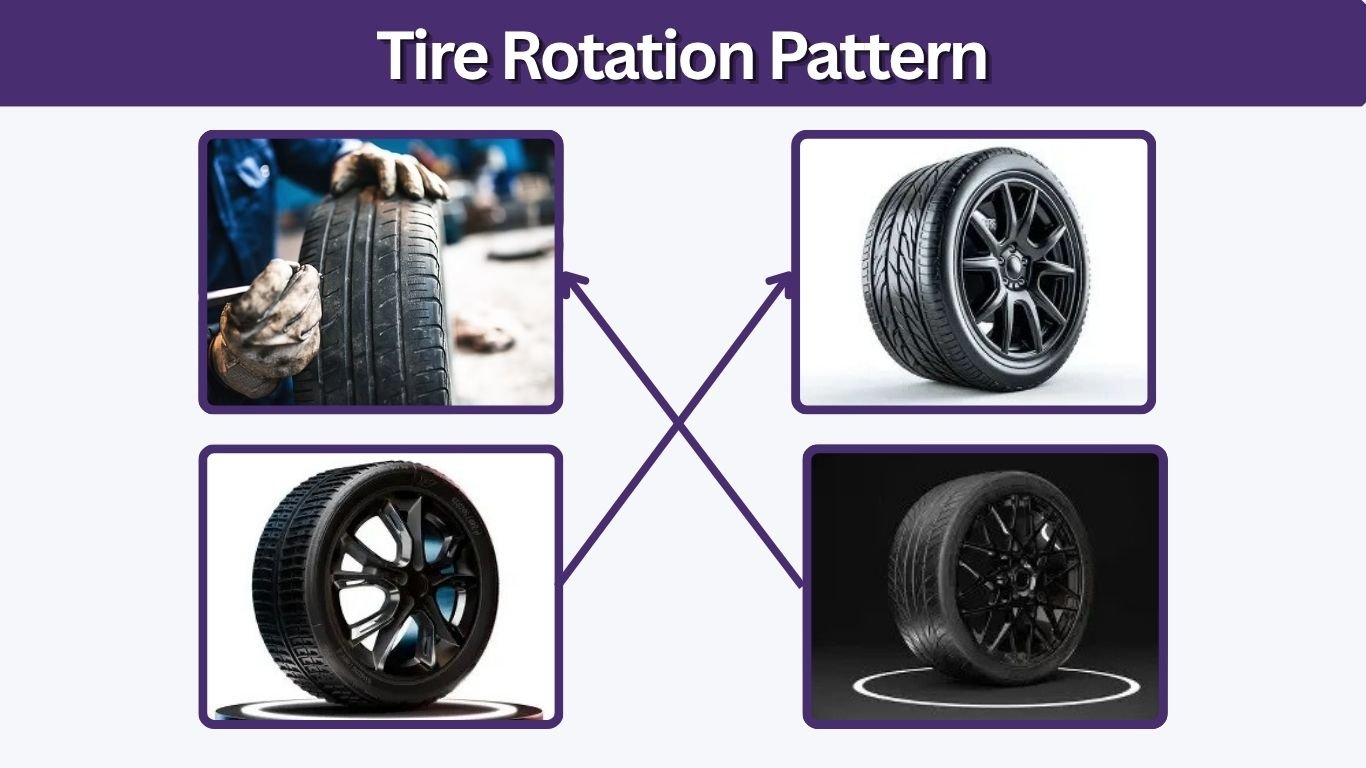
A tire rotation pattern determines where each tire moves during routine maintenance. The correct pattern depends on the vehicle’s drivetrain, tire tread design, wheel sizes, and whether a matching full-size spare is included. Regular rotation helps distribute tread wear, maintain balanced handling, and extend tire life. However, the vehicle owner’s manual should always take priority over a general rotation diagram.
What Is a Tire Rotation Pattern?
A tire rotation pattern is a planned method of moving tires between wheel positions. Front and rear tires experience different loads because of steering, braking, acceleration, cornering, and vehicle weight distribution.
Front tires commonly experience greater steering and braking forces. On front-wheel-drive vehicles, they also transfer engine power to the road, which can make them wear faster. Rotation moves each tire through different positions so the set wears more evenly.
Wheel Position Abbreviations
The following abbreviations make rotation patterns easier to understand:
- LF: Left front
- RF: Right front
- LR: Left rear
- RR: Right rear
Front-Wheel-Drive Tire Rotation Pattern
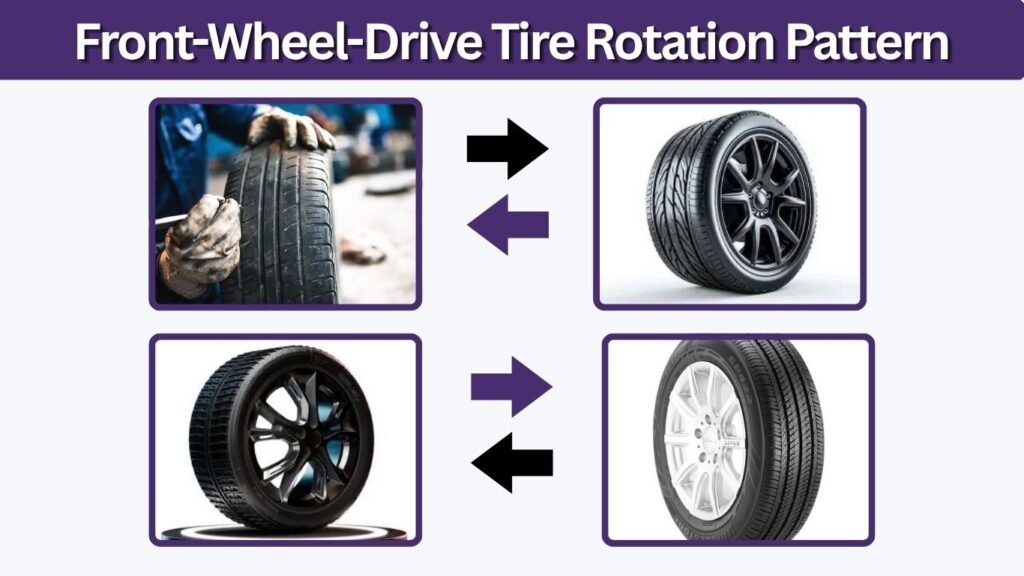
The most common pattern for a front-wheel-drive vehicle with four same-size, non-directional tires is the forward-cross pattern. The front tires move straight back, while the rear tires cross to the opposite sides at the front.
Forward-Cross Pattern
- LF moves to LR
- RF moves to RR
- LR moves to RF
- RR moves to LF
This pattern places the less-worn rear tires on the front axle while changing their sides. It is commonly recommended because front-wheel-drive vehicles place acceleration, steering, and much of the braking load on the front tires.
Can FWD Tires Use an X Pattern?
Some front-wheel-drive vehicles with four identical, non-directional tires can use an X pattern. In this pattern, every tire moves diagonally:
- LF moves to RR
- RF moves to LR
- LR moves to RF
- RR moves to LF
Although an X pattern may be acceptable, the forward-cross pattern is generally the more familiar choice for FWD vehicles. Follow the vehicle or tire manufacturer’s recommendation when one is provided.
Rear-Wheel-Drive Tire Rotation Pattern
Rear-wheel-drive vehicles commonly use the rearward-cross pattern. The rear tires move straight forward, while the front tires cross to the opposite sides at the rear.
Rearward-Cross Pattern
- LR moves to LF
- RR moves to RF
- LF moves to RR
- RF moves to LR
The rear wheels transfer engine power to the road, while the front wheels manage steering. The rearward-cross method helps distribute the different wear produced by these responsibilities.
AWD and 4×4 Tire Rotation Pattern
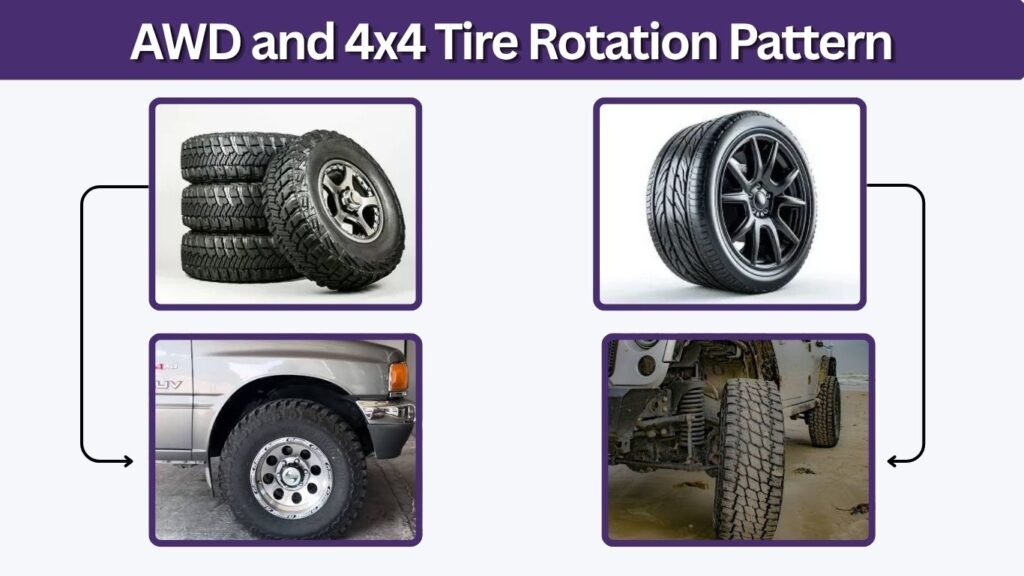
AWD and four-wheel-drive vehicles require especially consistent tread depth because all four wheels participate in delivering power. Large differences in tire circumference or tread depth may affect traction balance and place additional stress on drivetrain components.
A rearward-cross or full crisscross pattern is commonly used for same-size, non-directional AWD and 4WD tires. However, drivetrain designs differ, so the owner’s manual should determine the final pattern.
Common AWD and 4WD Pattern
A frequently used pattern is:
- Rear tires move straight to the front.
- Front tires cross to the opposite rear positions.
Some manufacturers may specify an X pattern instead. AWD owners should also avoid mixing tire sizes, constructions, or significantly different wear levels unless the vehicle manufacturer specifically permits it.
Directional Tire Rotation Pattern
Directional tires have a tread pattern designed to rotate in one direction. An arrow on the sidewall identifies the required direction of travel.
These tires normally remain on the same side of the vehicle:
- LF switches with LR
- RF switches with RR
Moving a directional tire diagonally would make it rotate backward unless it were removed from the wheel and remounted correctly. For routine rotation, use a straight front-to-rear pattern.
Asymmetric and Staggered Tire Rotation
Asymmetric tires have separate inner and outer tread sections. The sidewall is usually marked “inside” and “outside.” Many same-size asymmetric tires can be crossed during rotation, provided the outward-facing side remains correctly positioned after the wheel is installed.
A staggered setup uses different tire or wheel sizes on the front and rear axles. Because a wider rear tire cannot normally move to the front, rotation may be limited to side-to-side movement. When staggered tires are also directional, routine rotation may be impossible without removing and remounting them.
| Tire configuration | Typical rotation |
|---|---|
| FWD, non-directional | Forward cross |
| RWD, non-directional | Rearward cross |
| AWD or 4WD | Rearward cross or specified crisscross |
| Directional tires | Front to rear on the same side |
| Staggered, non-directional | Side to side when permitted |
| Staggered and directional | Often cannot be routinely rotated |
Five-Tire Rotation Pattern
A five-tire rotation includes the spare so that all five tires wear gradually. It is commonly used on Jeeps, 4×4 trucks, and SUVs carrying a matching full-size spare.
The spare must match the road tires in size, construction, tread type, and load rating. Temporary spares and non-matching full-size spares must not be included.
How a Five-Tire Rotation Works
One common method inserts the spare into the right-rear position. The tire that would otherwise move into the right-rear position becomes the new spare.
Five-tire patterns can vary by vehicle, especially when directional tires or specialized 4×4 configurations are used. The owner’s manual should therefore be checked before moving the spare into service.
Including a matching spare offers several benefits:
- All five tires develop similar tread wear.
- The spare remains usable rather than aging unused.
- Each tire spends part of its life away from the road.
- The usable life of the full set may be extended.
Dually Tire Rotation Pattern
A dually truck has two rear tires on each side, creating six road-tire positions. Rotation may be affected by wheel design, tire construction, load use, and whether the inner and outer rear wheels are interchangeable.
There is no single pattern suitable for every dually. Some vehicles move front tires to outer-rear positions, outer tires inward, and inner tires forward. Others have wheel or tire restrictions that prevent this arrangement. Follow the truck manufacturer’s procedure or use a qualified commercial tire technician.
How Often Should You Rotate Tires?
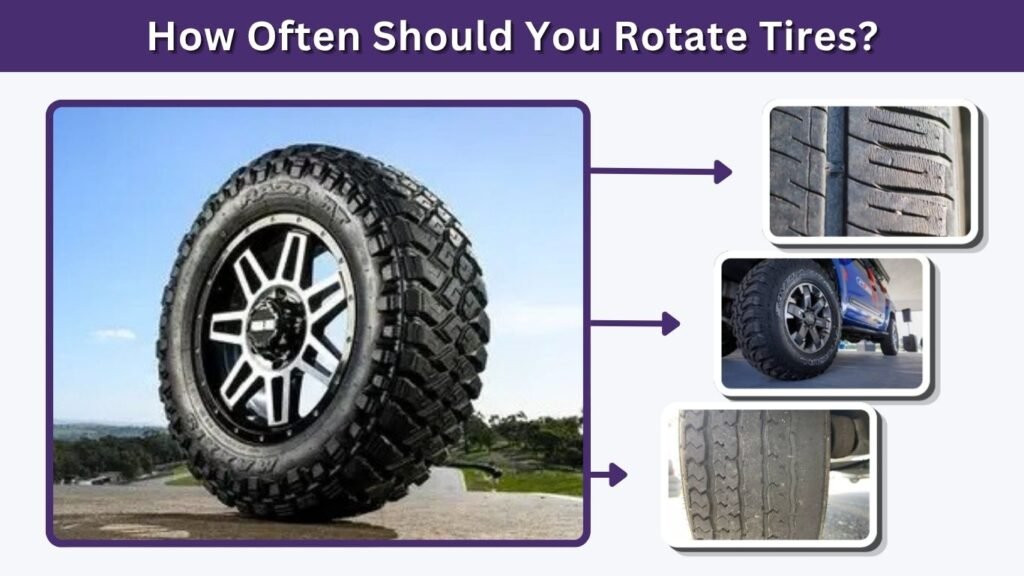
The vehicle manufacturer’s schedule is the best guide. A common general interval is approximately every 5,000 to 8,000 miles, although tire warranties and specialized vehicles may require different intervals. Michelin gives a general range of 6,000 to 8,000 miles, while other tire manufacturers publish intervals based on tire type and application.
Rotate sooner when you notice:
- Uneven tread wear
- Increased road noise
- Changes in handling
- One axle wearing faster
- Feathering or irregular tread edges
Uneven wear can also indicate incorrect inflation, wheel misalignment, imbalance, worn suspension parts, or another mechanical problem. Rotation alone will not correct the underlying fault.
Important Checks After Tire Rotation
Tire pressure requirements may differ between the front and rear axles. After rotating, adjust every tire to the pressure specified for its new position on the vehicle placard or in the owner’s manual.
Check that directional arrows face correctly, asymmetric sidewall markings remain properly positioned, and all wheels are installed according to the vehicle manufacturer’s instructions. A tire-pressure monitoring system may also need to relearn the new wheel locations.
FAQs
What is the most common tire rotation pattern?
The most common pattern depends on the drivetrain. FWD vehicles generally use forward cross, while RWD vehicles commonly use rearward cross. AWD and 4WD vehicles may use rearward cross or another crisscross pattern specified by the manufacturer.
Can radial tires be rotated from side to side?
Most modern non-directional radial tires can be crossed from one side to the other. Older advice that radial tires must remain on the same side generally does not apply to modern designs. Directional tires are the major exception because they must maintain their intended rotation direction.
Can I rotate only the front and rear tires?
Yes. Straight front-to-rear rotation is required for many directional tires. It may also be specified for certain vehicle configurations. Non-directional tires often benefit from a cross pattern because it changes both the axle and side position.
Should AWD tires be rotated more frequently?
AWD vehicles benefit from consistent rotation because similar tread depth and rolling circumference across all four tires support balanced traction and drivetrain operation. Follow the interval in the owner’s manual and inspect tread depth regularly.
Should the best tires be placed on the front or rear?
When only two tires are replaced, tire manufacturers commonly recommend installing the newer or deeper-tread pair on the rear axle. Better rear traction helps reduce the risk of the vehicle losing rear-end stability on wet roads. Rotation should not move a significantly better pair away from the rear without professional guidance.