
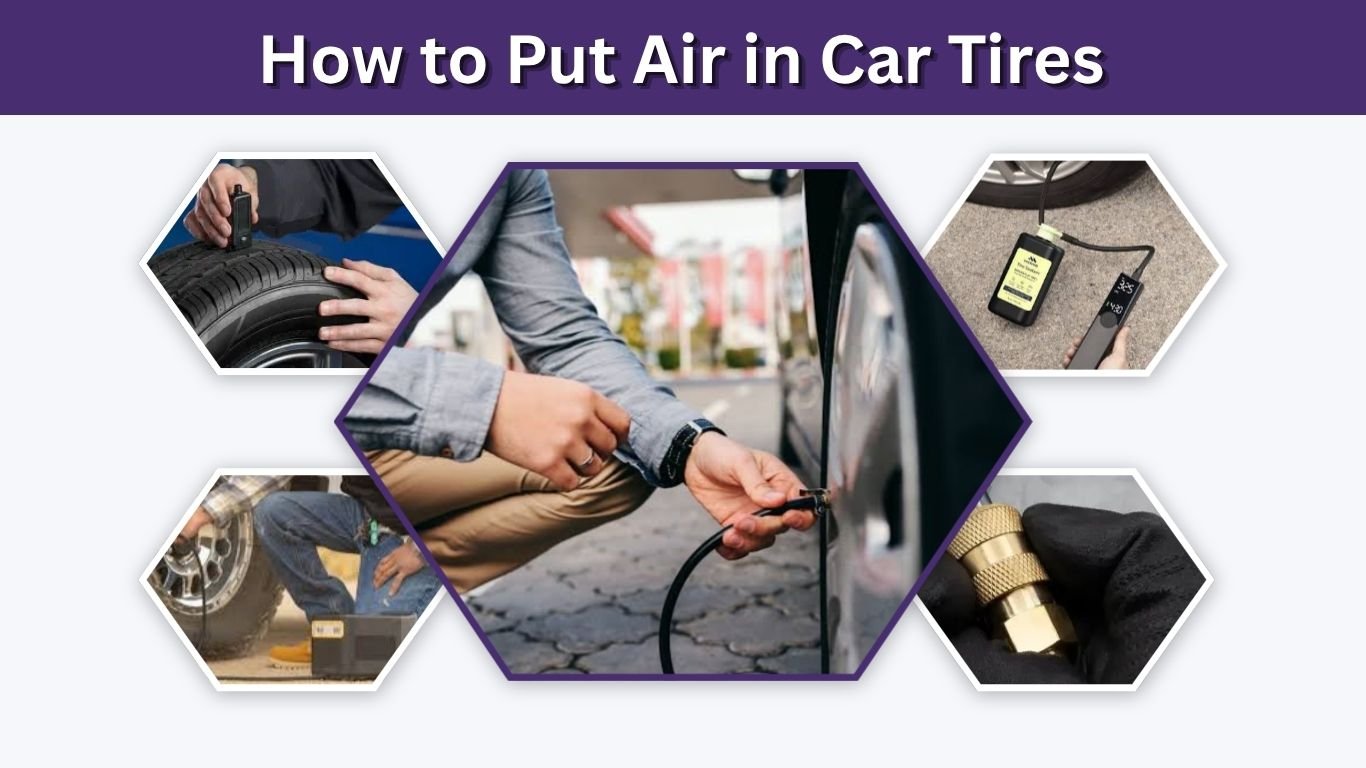
Putting air in your car tires is a simple maintenance task that improves handling, tire life, and driving safety. You only need a tire-pressure gauge and access to an air compressor, either at home or at a gas station. The most important rule is to use the pressure recommended by your vehicle manufacturer—not the maximum pressure printed on the tire. This guide explains how to check, inflate, and safely release air from car tires.
What You Need to Put Air in Car Tires
You do not need professional equipment to inflate a tire. However, having a reliable pressure gauge makes the process safer and more accurate.
Essential Tools
- Tire-pressure gauge
- Portable air compressor or gas-station air pump
- Vehicle owner’s manual
- Gloves, if desired
- Valve-stem caps
Digital gauges are generally easy to read, while pencil-style and dial gauges also work when properly maintained. Some portable compressors include an automatic shutoff that stops inflation when the selected pressure is reached.
How Much Air Should You Put in Car Tires?
The correct pressure depends on your vehicle, tire size, and axle configuration. Many passenger vehicles use pressures somewhere around 30–35 PSI, but you should never assume that this range is correct for your particular car.
Look for the recommended cold tire pressure in one of these locations:
- The label inside the driver’s door or door frame
- The vehicle owner’s manual
- Occasionally, inside the fuel-filler door or glove compartment
Use the pressure shown on the vehicle label rather than the number molded onto the tire sidewall. The sidewall number normally identifies the tire’s maximum permitted pressure under specified conditions, not the everyday pressure recommended for your vehicle.
The front and rear tires may require different pressures. Follow the separate front and rear specifications when they are provided.
| Pressure reading | What to do |
| Below the recommended PSI | Add air gradually |
| At the recommended PSI | Replace the valve cap |
| Above the recommended PSI | Release a small amount of air |
| Pressure keeps dropping | Have the tire inspected |
Check Tire Pressure While the Tires Are Cold
For the most accurate measurement, check the tires before driving or after the vehicle has been parked for at least three hours. Driving warms the tires and temporarily increases their internal pressure.
Do not automatically release air simply because a recently driven tire reads higher than the door-label pressure. Allow it to cool and check it again. Michelin also advises against reducing pressure based only on a hot-tire reading.
How to Put Air in Car Tires Step by Step
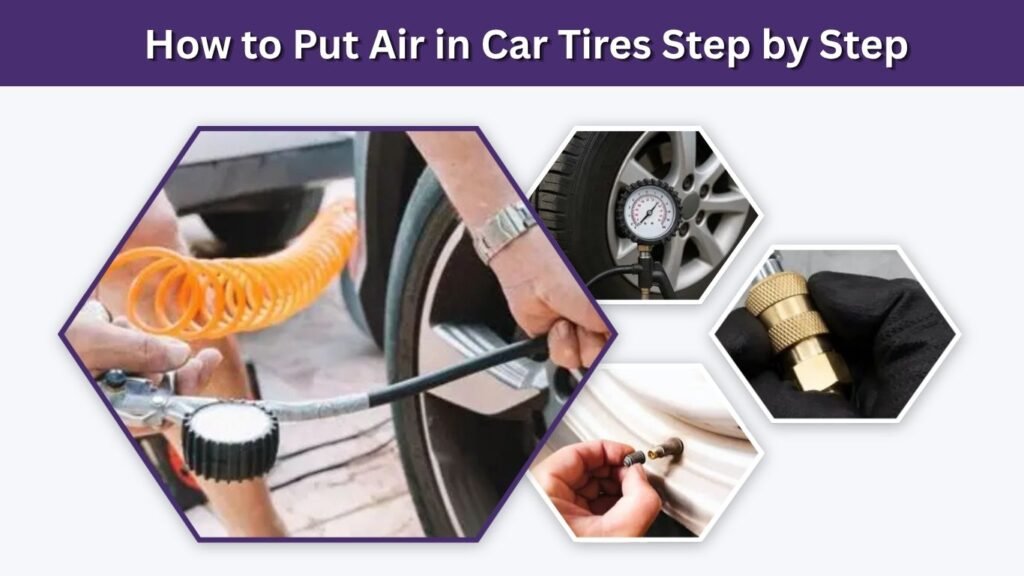
Park on a level surface away from moving traffic. Apply the parking brake and switch off the engine before beginning.
1. Find the Recommended Tire Pressure
Open the driver’s door and locate the tire-information label. Record the recommended PSI for the front and rear tires.
Remember that the label shows cold tire pressure. It may also provide separate instructions for a spare tire.
2. Remove the Valve-Stem Cap
Find the small valve stem extending from the wheel. Unscrew its cap by turning it counterclockwise.
Place the cap in your pocket or somewhere secure so it does not roll away. The cap helps protect the valve from dirt and moisture.
3. Measure the Existing Pressure
Push the tire-pressure gauge firmly and evenly onto the valve stem. A brief hiss may occur as the gauge connects, but continuous hissing usually means the gauge is not seated correctly.
Read the measurement and compare it with the manufacturer’s recommendation.
For example, when the recommended pressure is 33 PSI and the gauge shows 29 PSI, the tire needs approximately four additional PSI.
4. Connect the Air Hose
Press the compressor’s air-hose connector firmly over the valve stem. Depending on the pump, you may need to hold the connector in place or lock it using a small lever.
Add air in short bursts rather than continuously filling the tire for a long period. This reduces the risk of overinflation.
5. Recheck the Pressure
Disconnect the hose and measure the pressure again with your gauge.
Continue adding small amounts of air until the tire reaches the recommended PSI. When using an automatic portable compressor, select the desired pressure and allow the unit to stop automatically, but verify the result with a separate gauge when possible.
6. Replace the Valve Cap
Once the pressure is correct, screw the valve cap back onto the stem. Tighten it by hand without forcing it.
Repeat the process for every tire. Check the spare tire as well when your vehicle carries one. NHTSA recommends checking all tires at least monthly because tires can naturally lose pressure over time.
How to Put Air in Car Tires at a Gas Station
Gas-station pumps may be free, coin-operated, card-operated, or activated by an attendant. Before driving to the pump, check the recommended pressure on your door label.
Using a Gas-Station Air Pump
- Park close enough for the hose to reach all four tires.
- Set the pump to the required PSI when it has a digital control.
- Remove the valve cap from the first tire.
- Attach the hose securely to the valve stem.
- Add air until the pump signals that the selected pressure has been reached.
- Check the pressure with your own gauge.
- Adjust it if necessary and replace the cap.
- Repeat for the remaining tires.
Because driving to the station warms the tires, their readings may be higher than they would be when completely cold. When a tire is significantly underinflated, NHTSA advises inflating it to the vehicle’s recommended cold pressure and then checking it again later when the tire has cooled.
How to Use a Portable Air Pump for Car Tires
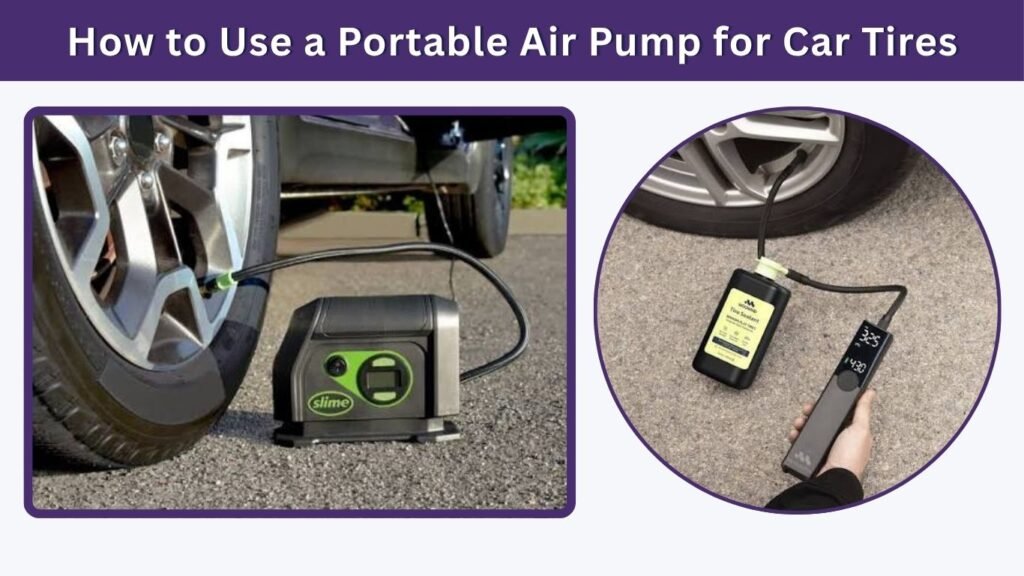
Portable inflators are useful for filling tires at home or during an emergency. Some connect to a 12-volt vehicle socket, while others use rechargeable batteries.
Portable Pump Instructions
Start by parking safely and reading the inflator’s operating instructions. Connect the power cable or battery, attach the hose to the valve stem, and select the recommended PSI.
Turn on the compressor and monitor the pressure. Small portable units may become hot during extended operation, so follow the manufacturer’s duty-cycle and cooling instructions. Stop the pump when the correct pressure is reached, disconnect it, and confirm the result with a gauge.
Never leave an operating compressor unattended.
How to Let Air Out of a Car Tire
You may need to release air when a cold tire is genuinely overinflated. First, confirm the pressure using an accurate gauge.
Remove the valve cap and press the small metal pin inside the valve stem with the release button on your gauge or a suitable blunt tool. Release air for only one or two seconds at a time, then measure the pressure again.
Continue until the tire reaches the vehicle manufacturer’s recommended cold pressure. NHTSA describes gradual release through the valve stem as the proper way to correct an overinflated tire.
Do not intentionally deflate a properly inflated tire, and never remove the valve core unless you have appropriate repair equipment and training.
How to Know When a Car Tire Needs Air
A tire may need air when:
- The tire-pressure warning light appears
- The tire looks lower than the others
- Steering or handling feels unusual
- The pressure gauge shows a low reading
- The vehicle has been parked for a long period
- Outdoor temperatures have changed significantly
Visual inspection alone is unreliable, especially with modern radial tires. A tire may be underinflated without appearing obviously flat. NHTSA also notes that tire-pressure monitoring systems usually warn only after a tire has become significantly underinflated, so manual monthly checks remain important.
Common Tire Inflation Mistakes
Using the Sidewall Pressure
Do not treat the maximum pressure printed on the tire as the normal target. Always follow the vehicle’s tire-information label unless the vehicle or tire manufacturer gives different instructions for a special application.
Checking Only One Tire
Pressure loss may affect several tires. Check all four tires and the spare rather than filling only the tire that appears low.
Overinflating the Tire
Too much pressure can affect ride comfort, traction, and tread wear. Release excess air gradually and recheck with a gauge.
Ignoring Repeated Pressure Loss
A tire that repeatedly loses air may have a puncture, leaking valve, damaged wheel, or poor seal between the tire and rim. These possible leak points require inspection rather than repeated inflation alone.
Do not drive normally on a tire with a visible bulge, exposed cords, severe sidewall damage, or rapid air loss. Install the spare when it is safe to do so or contact roadside assistance.
FAQs
How often should I put air in my car tires?
Check the pressure at least once a month and before long journeys. You may not need to add air every time, but regular measurements help detect gradual pressure loss, temperature-related changes, and possible leaks before they become serious.
Can I put air in warm car tires?
Yes, particularly when a tire is dangerously low. Inflate it to the vehicle’s recommended pressure and check it again after the tires have cooled. Do not release air merely because a warm tire reads slightly above the cold-pressure specification.
Can I inflate a car tire without a pump?
You need a source of compressed air, such as a portable inflator, gas-station pump, workshop compressor, or roadside service vehicle. A hand or foot pump with the correct connector may work, but filling a car tire this way can require considerable effort.
Why does my tire-pressure light remain on after adding air?
One or more tires may still be below the required pressure, or the spare may contain a sensor. Some vehicles also require a short drive or TPMS reset procedure. Consult the owner’s manual, and have the system inspected if the warning remains on.
What should I do if a tire will not hold air?
Avoid repeatedly driving on it. Inspect for visible damage and arrange professional service. A puncture, damaged valve, cracked wheel, bead leak, or sidewall failure may prevent the tire from maintaining pressure, and some types of damage cannot be safely repaired.