
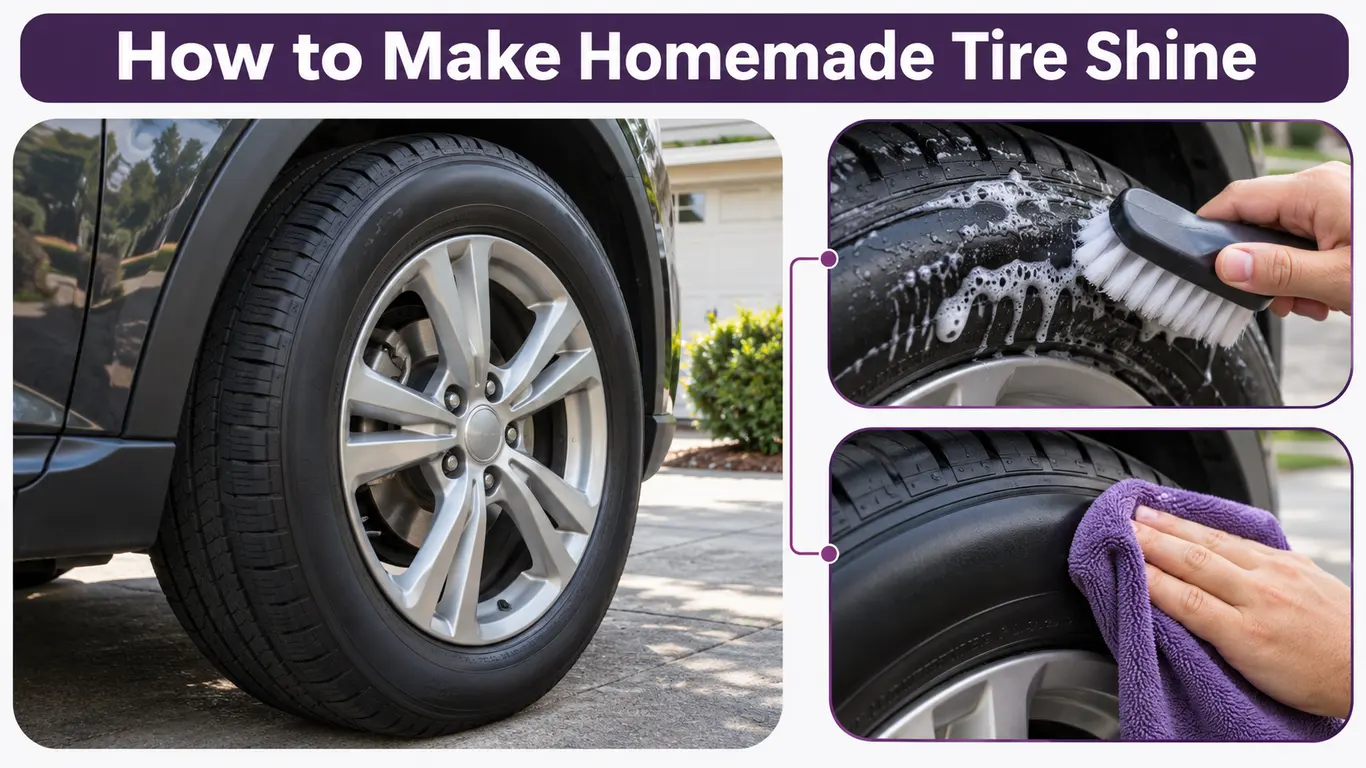
If your tires look dull after a wash, a homemade tire shine recipe can sound like an easy fix. Many recipes use glycerin, baby oil, or cooking oil, but those ingredients can leave a film and make it harder to control where the product ends up. A better at-home approach is to clean the sidewalls with mild soap and water, rinse them thoroughly, and dry them for an even, natural black finish. Here’s how to get that look and what to use if you want a glossier finish.
Can You Make Homemade Tire Shine?
You can make a simple tire-cleaning solution with mild dish soap and water. It removes the dirt and residue that make rubber look dull, and it rinses away after use. The result is usually matte or subtly satin, depending on the tire. A dressing stays on the sidewall to change how it reflects light, which is why a washed tire looks different from a dressed one.
What Tire Manufacturers Recommend
Michelin recommends plain soap and water or a non-petroleum-based tire cleaner and cautions that petroleum-based cleaners can affect protective compounds in the rubber. Continental’s tire storage guidance also recommends detergent, water, and a brush. A simple wash follows that advice and gives you a clean surface to assess before you decide how much gloss you want.
Why Clean Tires Sometimes Look Better Without Dressing
A sidewall can look gray because fine dust settles into its texture or because dried soap leaves streaks. An uneven coat of old dressing can create shiny patches next to dull ones. Washing and drying the tire gives the sidewall a more uniform color. Look at the dry tire from a few feet away before deciding whether it needs any more work.
What You Need to Restore a Black Tire Finish
Most of the supplies are already in a kitchen or garage. Use a dedicated brush and towel so grit from the tire stays off your paintwork and wheel finish. The goal is to lift dirt with light agitation and plenty of rinse water. A small amount of soap is enough for ordinary road film, and a fresh bucket helps if the tires are especially dirty.

- Mild liquid dish soap. Use a small squirt of plain hand-dishwashing liquid.
- A bucket of water. Use it to dilute the soap and wet the brush.
- A nylon brush. Choose medium bristles for ordinary black sidewalls and softer bristles for raised white lettering.
- A hose or second bucket. Set aside clean water for rinsing the tire and brush.
- A microfiber towel. Use a dedicated towel to dry the sidewalls and wipe away trapped rinse water around lettering.
How to Get a Clean, Even Tire Finish at Home
Park on a level surface and let the tires and wheels cool. Shade gives you more time to work before the soap dries on the sidewall. Clean one tire at a time so you can rinse each one as soon as you finish brushing. If the car is muddy, start with a thorough rinse to wash away the loose grit.

1. Rinse the Sidewall
Wet the tire from top to bottom and pay attention to the shoulder, where mud can collect around the edge of the tread. Give dried mud time to soften before you brush. When the runoff is mostly clear, you can see which spots need more attention.
2. Mix the Soap and Water
Add a small squirt of mild dish soap to your bucket of water and stir gently. The mix only needs to be lightly sudsy. Too much soap makes rinsing take longer and can leave streaks when it dries. Dip the brush in the bucket and shake off the excess before you start.
3. Scrub the Sidewall in Small Sections
Work around the tire using short strokes and moderate pressure. Brush around raised letters and molded patterns, where a quick wipe can miss dirt. Rinse the brush if it picks up grit. For a stubborn patch, apply fresh soapy water and make a second pass with the brush.
4. Rinse Until the Suds Are Gone
Rinse the tire from top to bottom. Check the lower sidewall and the area where the rubber meets the wheel for pockets of suds. Run clean water over those spots until it flows away clear. If you can still feel a slippery soap film on the sidewall, rinse it again.
5. Dry and Check the Finish
Blot the tire with a dedicated microfiber towel or let it air-dry. Judge the color once the rubber is fully dry because water temporarily makes it look darker. If an even brown tint remains after washing, it could be tire blooming, which can occur as protective compounds migrate to the surface. A second wash can help remove leftover grime. Persistent color alone is a poor reason to scrub harder.
Homemade Tire Shine Ingredients to Skip
Many online recipes focus on how glossy a tire looks immediately after application. A finish also needs to stay where you put it and hold up to dust, rain, and repeated driving. Household ingredients vary in concentration and additives, making their results hard to predict. Keep oils, polishes, and any other slippery coatings away from the tread and brake components.
- Baby oil and mineral oil. These can leave an oily film. Some are petroleum-derived, which makes them a poor choice given Michelin’s guidance.
- Vegetable oil and olive oil. Kitchen oils can leave a greasy coating that picks up dust and may transfer onto the wheel or bodywork.
- Glycerin and water. A diluted mix may darken the sidewall temporarily. Its finish and residue depend on the formula and how heavily you apply it.
- Furniture polish and multipurpose sprays. These can contain waxes, oils, or solvents. Keep them away from the tire, especially near the tread.
- Sugar water and other sweet mixtures. These can dry to a sticky residue and collect dirt on the sidewall.
How to Get More Gloss on Tire Sidewalls
If you want a wet look after the rubber dries, choose a water-based dressing labeled for automotive tire sidewalls and follow its directions. Products vary in their finish and drying time, so check the label for application details. A thin coat gives you more control over coverage, especially near the wheel and the shoulder of the tire.

Apply a Thin Coat With an Applicator
Start with a clean, dry tire. If the label permits, put a small amount of product on a foam applicator and spread it across the visible sidewall. Work slowly around the wheel and stop before the tread. Follow the label for drying or buffing, and wipe up any drips before driving.
Keep the Finish Even
If the tire looks streaky, check for missed spots and excess product near the lettering. Heavy application can leave residue that slings onto nearby bodywork when the wheel turns. Let the first coat set according to the directions before deciding whether you want more gloss. A single thin coat often gives a more even appearance.
FAQs
Can You Use Vaseline as Homemade Tire Shine?
Skip petroleum jelly on tires. It can leave a thick, greasy film that holds dust and is difficult to spread evenly. For a clean black appearance, wash and dry the sidewalls. If you want extra gloss, use a dressing labeled for automotive tire sidewalls and follow the application directions.
Does Glycerin Make Tires Shine?
Glycerin can make a sidewall look darker or glossier temporarily, but a homemade mix can leave uneven residue as it dries or gets wet. If you want a consistent finish, start with a thorough wash. Then decide whether the dry rubber looks good as it is or needs a sidewall dressing.
Can You Use Dish Soap as Tire Shine?
Mild dish soap helps remove the road film that makes tires look dull. Dilute it in water, brush the sidewall, and rinse until the suds are gone. Let the rubber dry before checking the finish. A washed tire usually looks matte or satin once the water has evaporated.
How Long Does a Homemade Tire Finish Last?
The clean appearance lasts until dust, road spray, or mud builds up again. The time varies with the roads you drive on, the weather, and where you park. If the tires are lightly dusty, try a water rinse first. Save the brush and mild soapy water for visible grime.
Can You Put Tire Shine on the Tread?
Keep tire dressing on the visible sidewall. The tread needs clean contact with the road, and a slippery coating can reduce grip. Apply the dressing carefully near the shoulder, where the sidewall meets the tread. If product gets on the tread, clean it off before driving.