
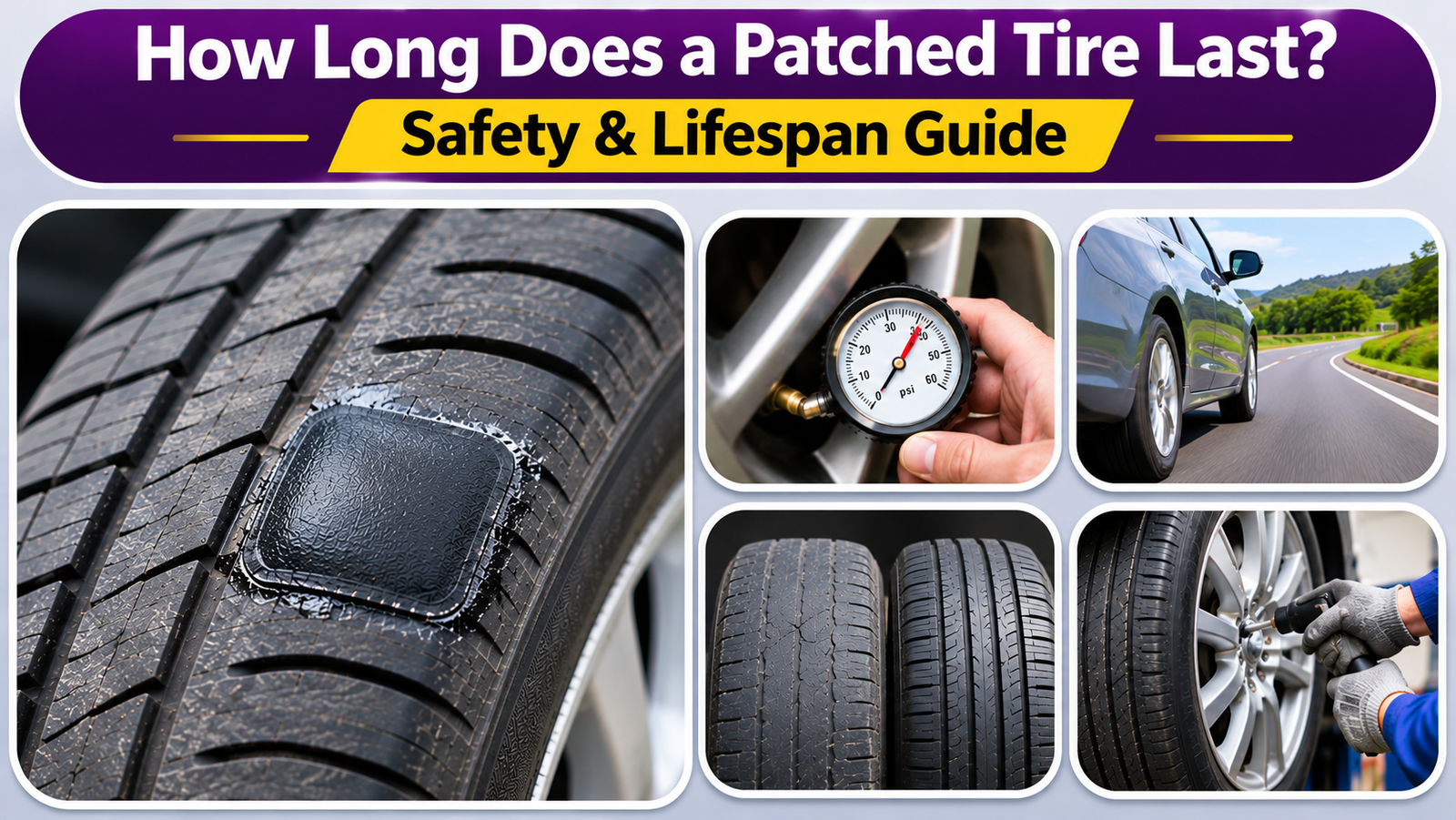
A patched tire can last for the remaining usable life of the tire when the puncture is repaired correctly by a professional. Unlike temporary tire plugs, a properly installed combination patch-and-plug repair can provide a durable solution for thousands of miles. However, the actual lifespan depends on the puncture location, tire condition, repair quality, and driving habits. Understanding how long does a patched tire last helps drivers decide whether repairing a damaged tire is safe or replacing it is the better option. This guide explains tire patch durability, safety considerations, and maintenance tips.
How Long Does a Patched Tire Last on Average?
A professionally repaired tire can remain usable until its tread wears out or the tire reaches the end of its safe service life. There is no fixed mileage or expiration date for a properly installed tire patch. A correct repair can provide long-lasting performance without requiring early replacement simply because the tire was punctured.
How Many Miles Can a Patched Tire Last?
A properly patched tire may provide thousands or even tens of thousands of additional miles, depending on how much usable tread remains. For example, a relatively new tire repaired correctly may continue serving for several years under normal driving conditions.
However, mileage cannot be guaranteed because tire quality, inflation pressure, road conditions, and maintenance influence overall durability. A tire with significant tread wear may need replacement much sooner, regardless of repair quality.
Can a Patched Tire Last for Years?
Yes, a properly patched tire can last for several years if it remains structurally sound and meets the manufacturer’s service recommendations. The repair itself does not automatically create a shorter replacement schedule.
Nevertheless, tire aging continues after repair. Rubber deterioration, environmental exposure, and existing wear may eventually make replacement necessary even when the patched area remains sealed.
What Factors Affect How Long a Patched Tire Lasts?
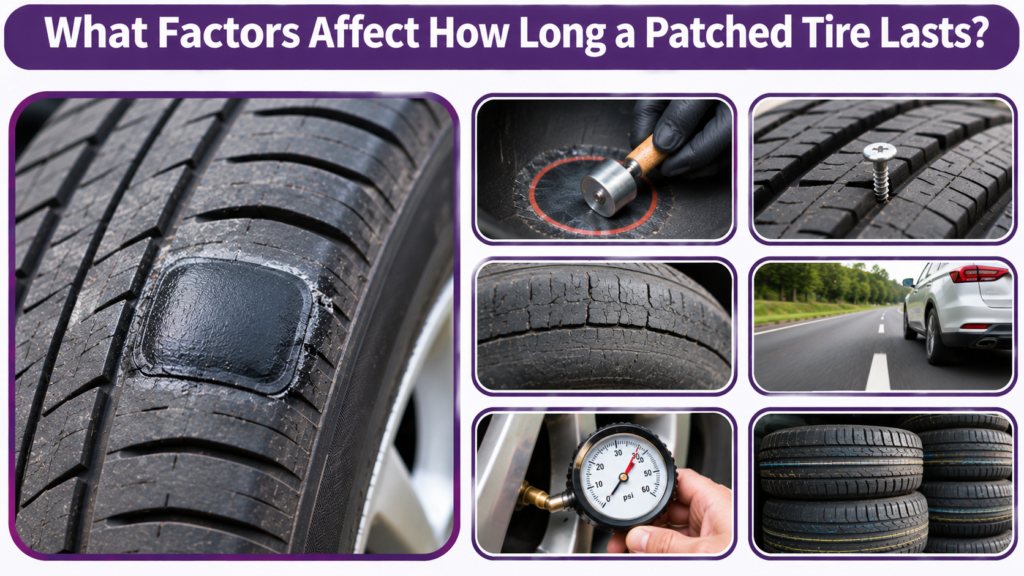
Several factors determine whether a repaired tire remains reliable over time. The condition of the tire before repair is particularly important because a patch cannot restore damaged internal structures. Repair methods, driving conditions, and maintenance also influence the tire’s remaining usable lifespan.
1. Quality of the Tire Patch
Professional repair quality directly affects durability. Proper repairs involve removing the tire from the wheel, inspecting internal damage, preparing the puncture, and installing a combination patch-and-plug unit.
An incorrectly installed patch may fail to maintain an airtight seal or protect the damaged area from moisture. Professional installation significantly reduces these risks.
2. Location and Size of the Puncture
Punctures in the designated central tread repair area are generally more suitable for permanent repairs. For passenger and light truck tires, industry guidelines limit repairable punctures to approximately 1/4 inch (6 mm) in diameter.
Damage involving the shoulder or sidewall should not be repaired using standard puncture-repair procedures. Such damage can affect the tire’s structural integrity and make replacement necessary.
3. Tire Age and Overall Condition
An older tire with worn tread, cracks, or internal damage may have limited remaining service life even after a successful repair. A patch seals a puncture but cannot reverse age-related rubber deterioration.
Tire manufacturers recommend inspecting aging tires regularly. Replacement decisions should consider tread depth, manufacturing date, visible damage, and professional inspection findings.
4. Driving Habits and Road Conditions
Aggressive acceleration, hard braking, frequent pothole impacts, and overloaded vehicles contribute to tire wear. These conditions may shorten the overall lifespan of a patched tire just as they would an undamaged tire.
Maintaining moderate driving habits and avoiding unnecessary road hazards helps protect the entire tire. Proper inflation is especially important for preventing excessive heat buildup.
Is It Safe to Drive on a Patched Tire?
Yes, driving on a properly repaired tire is generally safe when the tire meets established repair guidelines and has no additional structural damage. Professional patch-and-plug repairs are designed to restore an airtight seal and protect the puncture channel. However, not every damaged tire qualifies for repair.
When Is a Patched Tire Safe?
A patched tire is generally considered suitable for continued service when it meets these conditions:
- The puncture is within the designated tread repair area.
- The puncture diameter does not exceed 1/4 inch (6 mm).
- The tire has been removed and inspected internally.
- A proper combination patch-and-plug repair has been installed.
- No structural damage, overlapping repairs, or excessive tread wear is present.
These conditions help determine whether repair is appropriate. Manufacturer-specific restrictions may also apply, particularly to certain high-performance or run-flat tires.
Can You Drive on the Highway With a Patched Tire?
A correctly repaired tire may be used for ordinary highway driving, provided the tire manufacturer permits the repair and the tire remains in safe condition. Drivers should continue following the vehicle’s inflation, loading, and operating recommendations.
However, a tire repaired with an emergency plug alone should not be treated as permanently repaired. A professional inspection and proper internal repair are necessary before relying on it for continued highway use.
Tire Patch vs. Tire Plug: Which Lasts Longer?
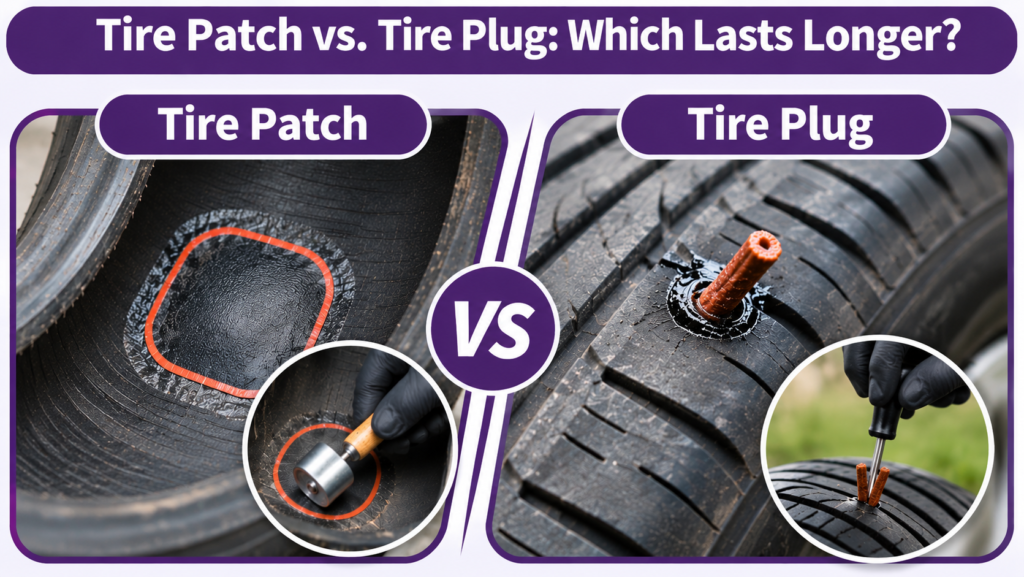
Tire patches and plugs are commonly used to address punctures, but their functions differ. A patch seals the inner liner, while a plug fills the puncture channel. Industry-recommended permanent repair combines both functions rather than relying on either method separately.
Tire Patch
A tire patch is applied to the inner surface of the tire after preparation. Its purpose is to restore the airtight inner liner and prevent air from escaping through the damaged area.
However, an inside patch alone does not fill the puncture channel. Without the appropriate filler, moisture may enter the tire structure and contribute to internal deterioration.
Tire Plug
A tire plug fills the puncture opening, often from the outside. Emergency plug kits can sometimes help temporarily restore inflation after a small tread puncture.
However, an external plug alone does not provide the complete internal seal and inspection required for a permanent repair. It should not be relied upon as a long-term substitute for professional repair.
Combination Patch-and-Plug Repair
A combination repair provides both puncture-channel filling and inner-liner sealing. The tire must be removed from the wheel so a technician can inspect the damage and install the repair correctly.
This method is the industry-recommended approach for eligible passenger tire punctures. When properly performed, it can remain effective throughout the tire’s remaining usable life.
How to Tell if a Tire Patch Is Failing
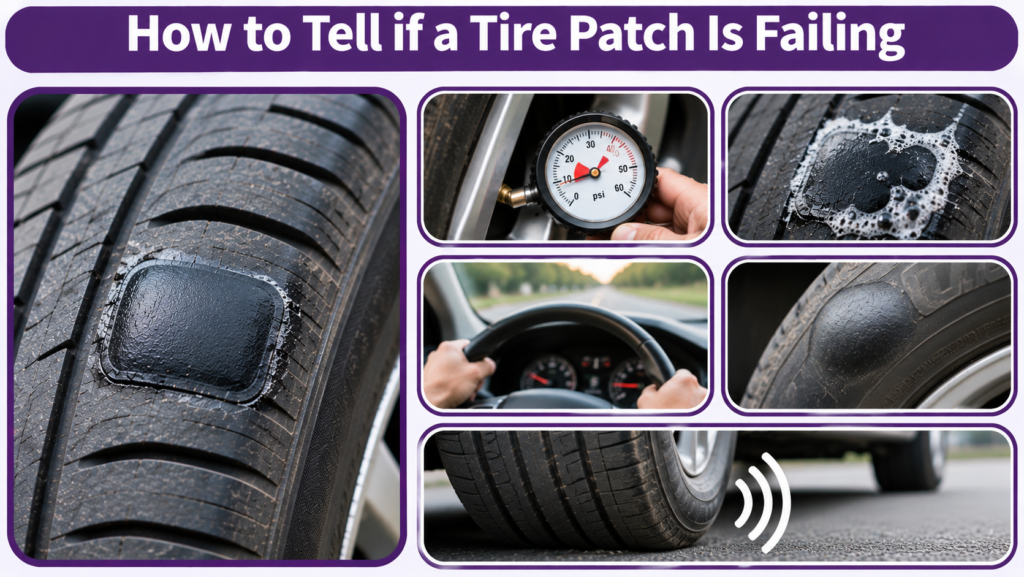
Although professionally repaired tires can remain reliable for years, problems may develop from improper installation, additional punctures, or normal deterioration. Recognizing warning signs helps drivers address potential failures before they become serious safety concerns.
Common Signs of Tire Patch Failure
- Repeated air pressure loss: The repaired tire requires frequent inflation despite no obvious new puncture.
- Visible air bubbles: Bubbles appear around the puncture during a soapy-water leak inspection.
- Unusual vibrations: New vibrations may indicate tire damage, imbalance, or another mechanical problem.
- Bulges or deformities: Visible swelling can indicate structural damage requiring immediate replacement.
- Unusual tire noise: New thumping or irregular noises may suggest damage that needs professional inspection.
Not every symptom indicates patch failure specifically. A qualified technician should inspect the tire to determine the actual cause.
What Should You Do if a Patch Starts Leaking?
If your patched tire begins losing pressure, avoid continuing normal driving until the cause has been identified. Repeatedly adding air without addressing the leak may allow dangerous underinflation.
Have the tire inspected by a professional. A tire with a failed or improper previous repair may require replacement rather than another repair over the same damaged area.
How to Make a Patched Tire Last Longer
Maintaining a patched tire properly can help preserve its remaining usable life. Regular inspections and basic tire care reduce the likelihood of premature wear, overheating, and unnoticed pressure loss. The following maintenance practices are particularly useful after a puncture repair.
1. Maintain Proper Tire Pressure
Check tire pressure regularly, preferably when the tires are cold. Use the pressure recommended on the vehicle’s tire information placard rather than the maximum pressure printed on the tire sidewall.
Correct inflation helps distribute the load evenly and reduces excessive heat. It also makes unexpected pressure changes easier to notice.
2. Inspect the Tire Regularly
Examine the repaired tire for new damage, irregular wear, embedded objects, or visible deterioration. Pay attention to changes in handling or repeated pressure warnings.
Even when the patched area appears normal externally, an internal inspection may be necessary if symptoms develop.
3. Rotate Your Tires as Recommended
Routine tire rotation helps distribute tread wear across the vehicle’s tires. Follow the vehicle manufacturer’s recommended rotation schedule and any applicable tire restrictions.
Even wear helps maximize the remaining life of a patched tire. Rotation does not repair damage, however, and cannot make an unsafe tire suitable for continued use.
4. Avoid Overloading and Severe Impacts
Excessive vehicle loads increase tire stress and operating temperatures. Repeated impacts against potholes, curbs, and road debris may also cause internal damage.
Stay within the vehicle’s specified load limits and drive carefully on damaged roads. These habits benefit both repaired and unrepaired tires.
When Should You Replace a Patched Tire?
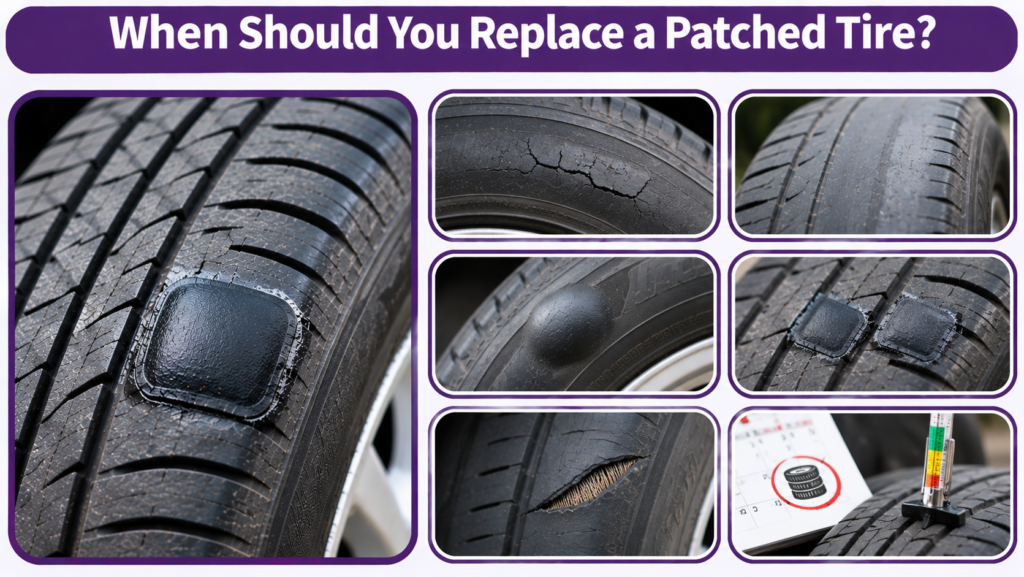
A patched tire does not necessarily need replacement because a certain number of months or miles have passed. Replacement becomes necessary when tire damage, wear, aging, or repair limitations make continued use unsafe. Professional inspection is essential whenever the tire’s condition is uncertain.
Situations That Require Tire Replacement
Replacement is generally appropriate when:
- The puncture affects the tire’s sidewall or shoulder.
- The puncture exceeds the recommended repairable size.
- The tire has internal damage from driving while flat.
- Existing repairs overlap or the previous repair was improper.
- The tread reaches the minimum safe replacement depth.
- Cracks, bulges, exposed cords, or structural separation appear.
For passenger vehicles in many U.S. jurisdictions, 2/32 inch is the legal minimum tread depth, but replacement may be advisable earlier for wet-weather traction.
Should You Replace a Tire After One Patch?
Not necessarily. A single properly repaired puncture does not automatically require tire replacement. If the damage falls within approved limits and the rest of the tire is healthy, continued use may be reasonable.
However, if the tire is already heavily worn or has hidden internal damage, replacing it may be the safer and more economical decision.
Frequently Asked Questions
1. Can a Patched Tire Last 20,000 Miles?
Yes, a professionally patched tire may last another 20,000 miles if sufficient tread remains and the repair meets proper safety standards. However, this mileage is not guaranteed. Tire condition, age, driving habits, and maintenance determine its remaining service life.
2. How Long Does a Patched Tire Last Before Leaking?
A correctly installed combination patch-and-plug repair should remain airtight throughout the tire’s remaining usable life. There is no normal schedule for it to begin leaking. If pressure loss develops, a professional should inspect the repair and surrounding tire.
3. Can You Patch the Same Tire Twice?
A tire may be eligible for more than one repair if each puncture meets industry guidelines, existing repairs do not overlap, and the manufacturer permits additional repairs. A technician must inspect the tire before determining whether another repair is safe.
4. Is a Patched Tire as Good as a New Tire?
A properly repaired tire can provide reliable continued service, but it is not identical to a new tire. It retains its existing tread wear, age, and service history. Some manufacturers also impose operating restrictions after repairs.
5. Can a Patched Tire Suddenly Blow Out?
A properly repaired and maintained tire is not expected to fail simply because it has been patched. However, improper repairs, hidden structural damage, severe underinflation, or additional road hazards can cause tire failure. Regular inspections and professional repairs reduce these risks.