
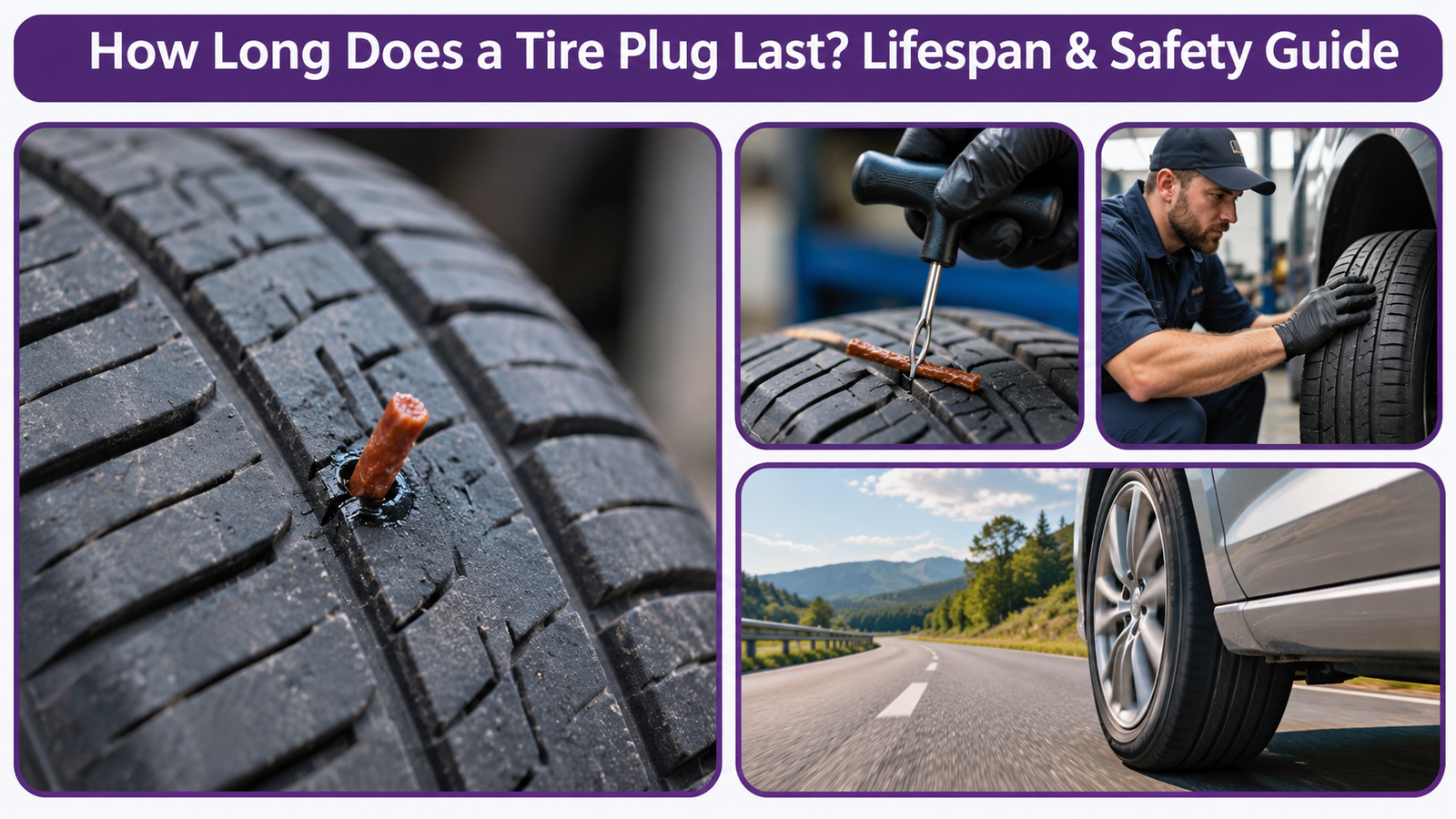
A flat tire caused by a nail or sharp object can be frustrating, especially when you need a quick solution. Tire plugs are commonly used to seal small punctures and temporarily restore tire pressure without removing the tire from the wheel. But how long does a tire plug last, and can you safely continue driving with one? The answer depends on the repair method, tire condition, puncture location, and driving habits. Understanding tire plug durability helps you avoid unexpected air leaks and make safer maintenance decisions.
How Long Does a Tire Plug Last?
A tire plug can sometimes remain airtight for months or even thousands of miles, but there is no guaranteed lifespan for an external plug. Some plugs fail quickly, while others appear to hold much longer. However, an external plug alone is considered a temporary emergency repair rather than a reliable permanent solution.
The safest approach is to have the tire professionally inspected and repaired as soon as possible. A properly installed combination patch-plug repair may last for the remaining usable life of the tire, provided the tire meets repair requirements.
Temporary Tire Plug Lifespan
Temporary tire plugs are designed to seal small punctures until a professional repair becomes available. They are commonly installed from outside the tire using a rubber repair strip and insertion tool.
Although these plugs may hold air for an extended period, their durability cannot be predicted accurately. Drivers should use them only to reach a tire repair facility rather than treating them as a long-term repair.
Permanent Tire Repair Lifespan
A professionally installed combination patch-plug repair is designed to provide a lasting solution for an eligible puncture. The repair fills the puncture channel and seals the tire’s inner liner to prevent air and moisture from entering.
When performed correctly on a repairable tire, this type of repair can remain effective throughout the tire’s remaining service life. Regular tire inspections and proper inflation are still necessary.
What Factors Affect How Long a Tire Plug Lasts?
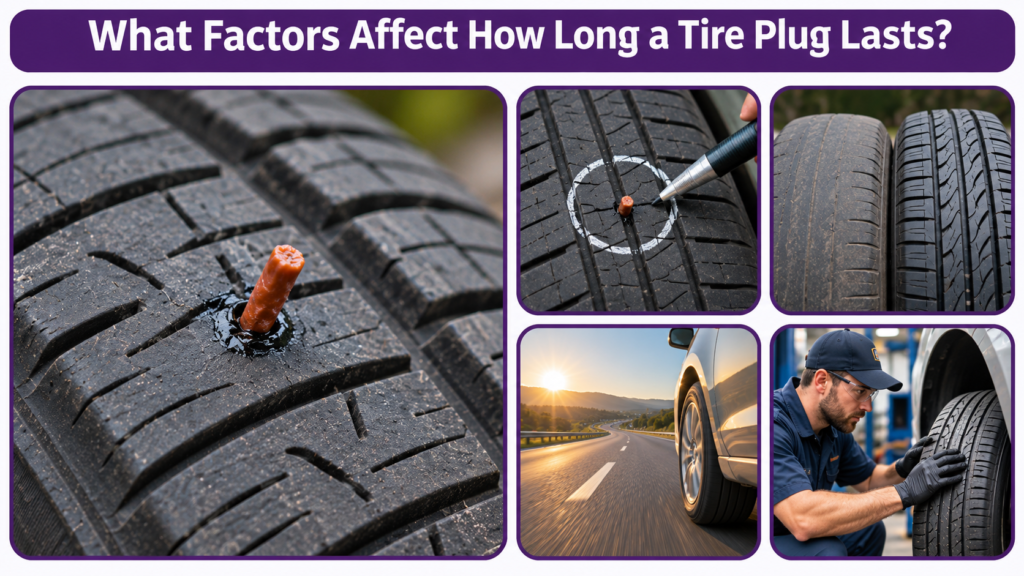
Several factors influence whether a tire plug maintains an airtight seal or begins leaking. The size and position of the puncture, installation quality, and condition of the tire can all affect repair reliability. Even when a temporary plug appears secure, hidden internal damage may still exist.
1. Size and Location of the Puncture
Small punctures in the central tread area are generally more suitable for professional repair than larger holes. Industry guidelines for passenger and light-truck tires generally limit repairs to punctures no greater than 1/4 inch (6 mm) in diameter.
Damage in the shoulder or sidewall cannot be safely repaired using standard puncture repair methods. These areas experience significant flexing and stress during driving.
2. Quality of the Tire Plug
The materials used in a tire plug influence its ability to seal the puncture temporarily. Poor-quality plugs may lose their seal or deteriorate under demanding driving conditions.
However, even high-quality external plugs cannot replace a complete internal inspection and proper patch-plug repair. Material quality alone does not establish long-term safety.
3. Tire Condition and Age
Older tires with worn tread, cracking, or structural damage may not be suitable for repair. A plug cannot restore the strength of damaged tire components or reverse deterioration caused by aging.
Before repairing a puncture, a technician should evaluate the tire’s tread depth, overall condition, and any damage from driving while underinflated.
4. Driving Conditions and Tire Pressure
Highway driving, heavy loads, rough surfaces, and excessive heat place additional stress on tires. These conditions may expose weaknesses in an incomplete puncture repair.
Incorrect tire pressure can also increase heat buildup and tire flexing. Maintaining the vehicle manufacturer’s recommended pressure is important, but it does not make a temporary plug permanent.
Is It Safe to Drive With a Plugged Tire?
Driving with a plugged tire depends on the type of repair and its condition. A temporary external plug may allow a driver to move the vehicle to a nearby repair shop, but it should not be relied upon for routine driving. A properly repaired tire, by contrast, can generally return to normal service after professional inspection.
A tire that has been operated while significantly underinflated may have internal damage that is invisible from the outside. This is why removing the tire from the wheel is an essential part of a complete repair.
Can You Drive on the Highway With a Tire Plug?
Highway driving on a temporary external plug is not recommended because the repair may fail without warning. Higher speeds generate additional heat and increase the consequences of sudden air loss.
If an emergency plug has been installed, drive cautiously only as far as necessary to reach professional service. Avoid unnecessary highway travel and follow the emergency repair kit’s instructions.
Can You Drive Long Distances With a Plugged Tire?
Long-distance travel should not be planned around an external tire plug. Even when pressure remains stable, that does not prove the tire’s internal structure is undamaged or that the plug will continue sealing.
Before beginning a road trip, have the tire examined by a qualified technician. A suitable tire can receive an approved combination repair, while an unsuitable one should be replaced.
Tire Plug vs. Patch: Which Lasts Longer?
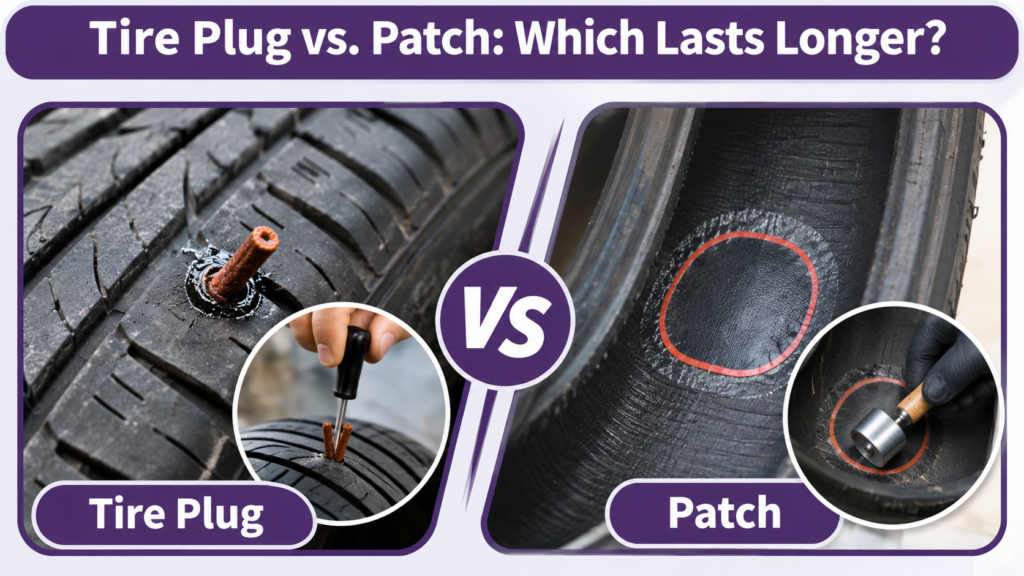
Tire plugs and patches are frequently discussed as alternative puncture repairs, but neither an external plug alone nor an internal patch alone meets recommended industry standards for a complete repair. Both the puncture channel and inner liner need proper sealing.
A combination patch-plug provides both functions and is the preferred method for a repairable puncture. Understanding these differences helps drivers choose a safer solution rather than relying on convenience.
| Repair Method | Expected Durability | Recommended Use |
|---|---|---|
| External tire plug | Unpredictable | Temporary emergency use |
| Internal patch alone | Not an acceptable complete repair | Not recommended by itself |
| Combination patch-plug | Potentially the remaining tire life | Professional permanent repair |
Why a Combination Patch-Plug Is Better
A combination repair uses a rubber stem to fill the puncture channel and an attached patch to seal the inner liner. This prevents air leakage and reduces the possibility of moisture reaching internal tire components.
Because installation requires removing the tire from the wheel, technicians can also identify hidden damage before approving the repair. This inspection is essential to determine whether continued use is safe.
Signs That a Tire Plug Is Failing
A temporary tire plug may stop sealing effectively because of movement, deterioration, or damage around the puncture. Some problems develop gradually, while others appear unexpectedly. Identifying warning signs early can reduce the risk of driving with dangerously low tire pressure.
Watch for the following symptoms:
- Repeated pressure loss: The tire frequently needs additional air.
- Tire pressure warning light: The monitoring system indicates low pressure.
- Hissing sounds: Air may be escaping near the puncture.
- Visible damage: Cracking, separation, or damage appears near the repair.
- Bubbling during inspection: A soap-and-water test reveals escaping air.
- Unusual handling: The vehicle pulls, vibrates, or feels unstable because of a tire problem.
These symptoms do not always mean the plug itself has failed. However, they indicate that the tire needs prompt inspection before further normal driving.
When Should You Replace a Plugged Tire?
Not every punctured tire can be repaired safely. Although small injuries in the central tread may qualify for a permanent repair, damage elsewhere can compromise structural integrity. Continuing to use an unsuitable tire creates unnecessary safety risks.
A qualified technician should inspect the tire and recommend replacement when repair requirements cannot be met.
Situations Where Tire Replacement Is Necessary
Replacement is generally required when:
- The puncture is in the sidewall or shoulder area.
- The puncture exceeds 1/4 inch (6 mm) in diameter.
- The tire has structural damage from driving while flat.
- The tread is worn to the minimum allowable depth.
- Existing repairs overlap or the tire contains an improper previous repair.
Tires with visible bulges, exposed cords, or severe cracking should also be removed from service. Installing another plug does not correct underlying structural damage.
How to Make a Tire Repair Last Longer
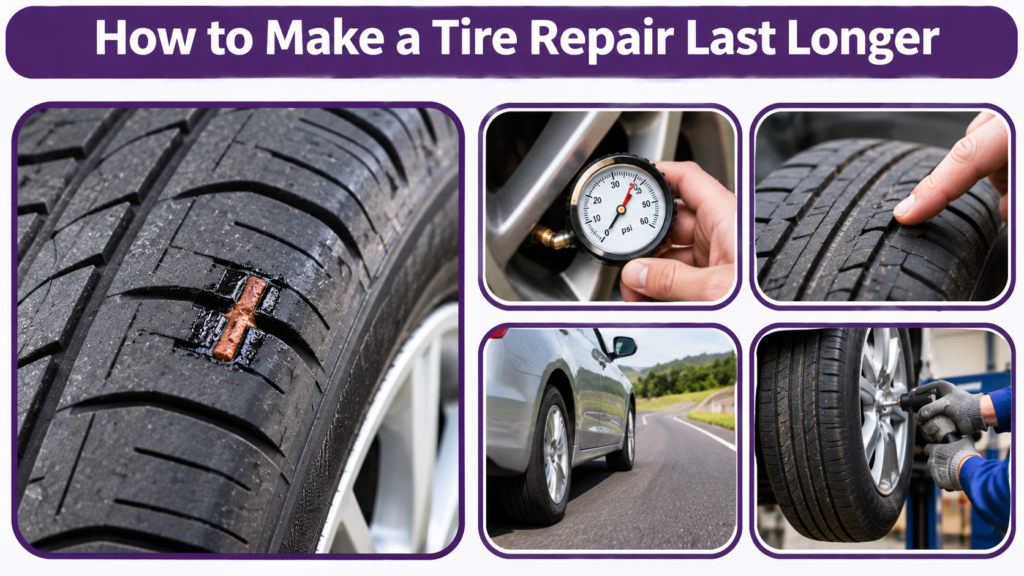
The most effective way to obtain a lasting puncture repair is to use an approved professional procedure instead of relying on an external plug. Once repaired, proper tire maintenance helps protect the tire’s remaining service life.
Following these practices can reduce avoidable tire damage:
- Choose professional repair: Have the tire removed, inspected, and repaired using an appropriate combination patch-plug.
- Maintain correct pressure: Check inflation regularly using the vehicle manufacturer’s specifications.
- Inspect tire condition: Look for unusual tread wear, cracks, bulges, and embedded objects.
- Avoid overloading: Stay within the vehicle’s load and tire capacity limits.
- Monitor tire pressure warnings: Investigate repeated pressure loss instead of continually adding air.
These practices support tire safety and durability, but they cannot extend the reliable lifespan of an improperly installed plug. Any questionable repair should be evaluated professionally.
Common Mistakes to Avoid With Tire Plugs
Many drivers assume that a tire is permanently repaired once it stops losing air. Unfortunately, a successful temporary seal does not establish that the tire is structurally sound or that it meets accepted repair standards.
Avoid these common mistakes:
- Treating a temporary plug as permanent: An external plug is intended for emergency use until proper service is available.
- Plugging sidewall damage: Sidewall punctures are not suitable for standard tire repairs.
- Ignoring slow leaks: Continuing to drive with insufficient pressure can cause additional internal damage.
- Repairing without internal inspection: Hidden damage may remain undetected when the tire stays mounted.
- Replugging a failed repair: Repeatedly inserting plugs can worsen an already unsuitable puncture.
Correct repair decisions should always prioritize the condition of the tire rather than the apparent convenience of a quick fix.
Frequently Asked Questions
1. Can a Tire Plug Last for Years?
An external tire plug might remain airtight for years in some circumstances, but that does not make it a safe permanent repair. Its lifespan is unpredictable, and internal tire damage may remain hidden. A professional combination patch-plug is the appropriate long-term solution.
2. How Many Miles Can You Drive on a Tire Plug?
There is no guaranteed mileage limit for a temporary external plug. Some hold for thousands of miles, while others fail much sooner. It should only be used to reach a professional repair shop, not for extended daily driving.
3. Can a Tire Plug Fall Out While Driving?
Yes, an external tire plug can loosen, lose its seal, or fail while driving. Tire movement, heat, and puncture conditions may contribute to failure. If air pressure decreases or the vehicle handles abnormally, stop safely and have the tire inspected.
4. Is a Plugged Tire as Good as a New Tire?
A properly repaired tire can provide reliable service for its remaining usable life, but a repair does not make an old tire new. Existing tread wear, age, and damage still matter. A temporary external plug is not equivalent to a professional repair.
5. Should I Replace My Tire After Plugging It?
Not necessarily. A small puncture within the repairable tread area may qualify for a professional combination patch-plug repair. However, sidewall damage, excessive puncture size, internal damage, or an improper previous repair can make tire replacement necessary.