
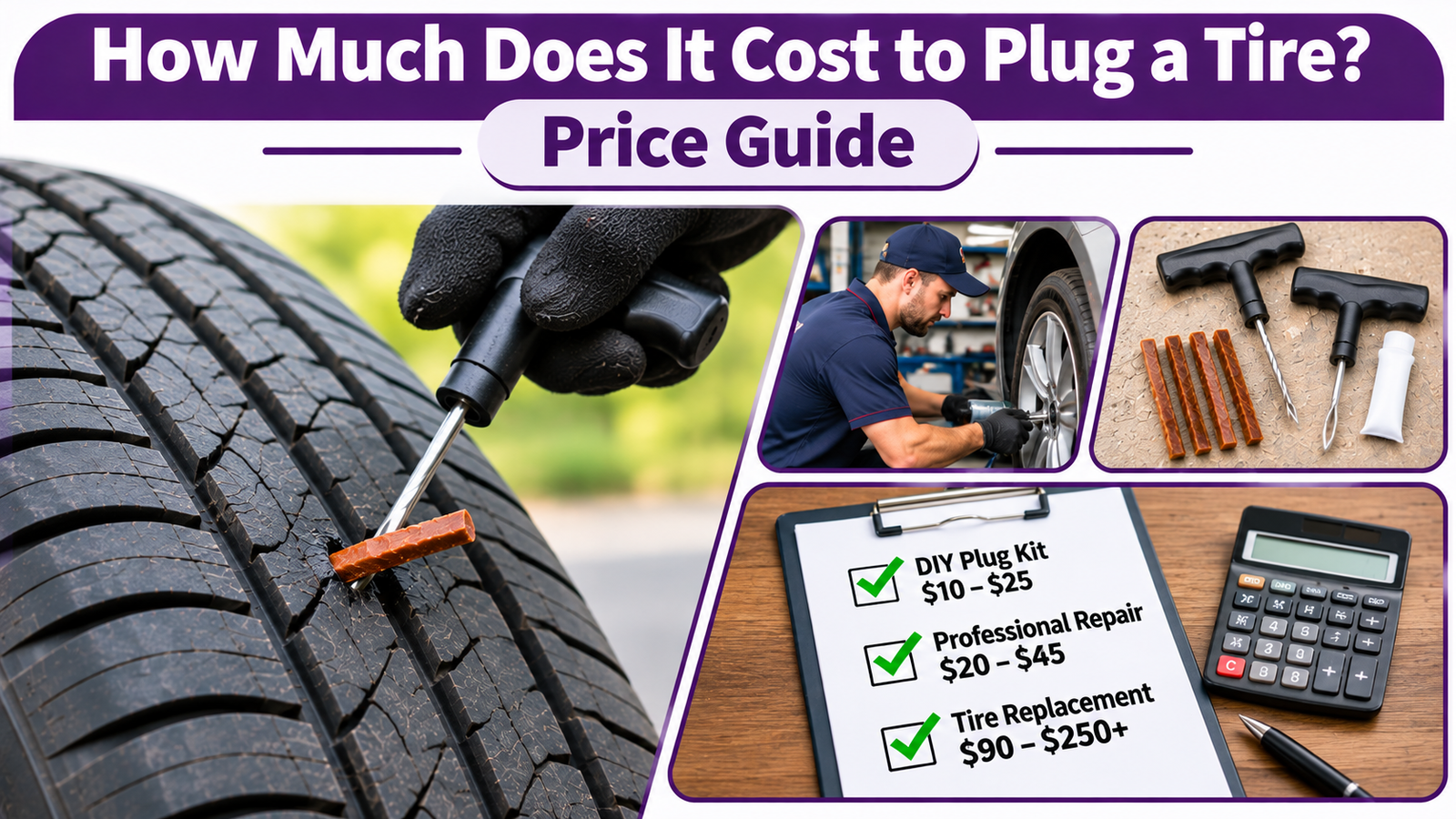
A nail or screw in your tire can be frustrating, especially when you are unsure whether to repair or replace it. Fortunately, fixing a small puncture is often affordable. But how much does it cost to plug a tire? In the United States, a professional tire puncture repair typically costs around $20 to $45, while a basic DIY tire plug kit costs approximately $10 to $25. The final price depends on the damage, tire type, and repair shop. Understanding these costs helps you choose a practical, safe solution without spending more than necessary.
How Much Does It Cost to Plug a Tire?
The cost of plugging a tire depends primarily on whether you use an emergency DIY kit or visit a professional tire shop. While a simple external plug costs very little, professional repair includes removing the tire, inspecting the damage, and installing an approved internal patch-plug combination.
For most everyday passenger vehicles, puncture repairs are relatively inexpensive compared with buying a replacement tire.
Average Tire Plug and Repair Costs
| Type of repair | Estimated U.S. cost |
|---|---|
| DIY tire plug kit | $10–$25 |
| Professional patch-plug repair | $20–$45 |
| Specialty tire repair | $40–$75 |
| Mobile tire service call-out | $30–$75 extra |
| Replacement passenger tire | $90–$250+ |
These are approximate prices, not guaranteed shop quotes. Some shops charge additional fees for mounting, balancing, or special tire equipment.
Important: An external string plug is only an emergency measure. A permanent passenger tire repair requires a professional internal inspection and a combination patch-plug.
What Factors Affect the Cost of Plugging a Tire?
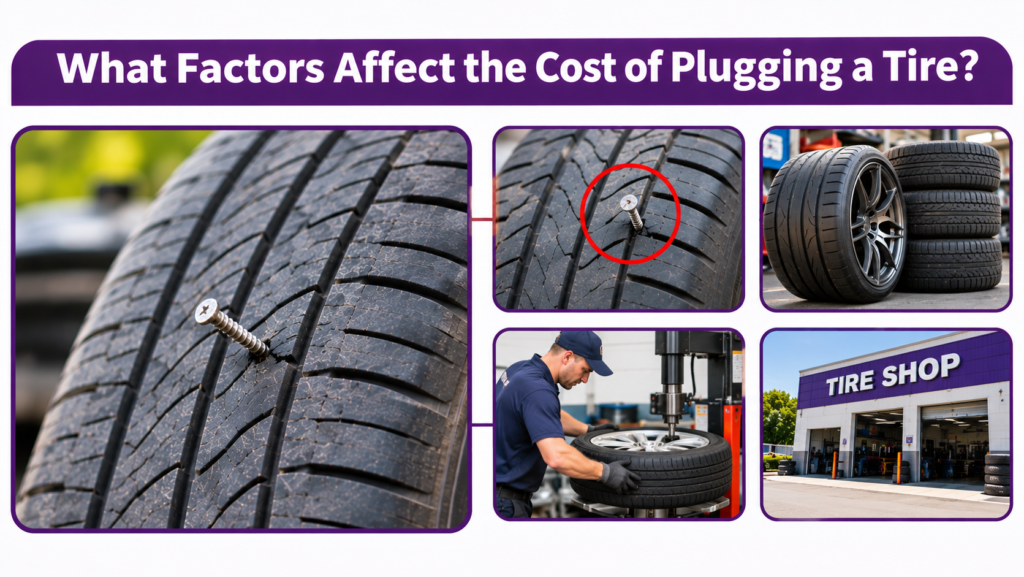
Not every punctured tire requires the same amount of work. Some repairs take relatively little time, while others involve additional inspection, specialized equipment, or replacement parts. Several factors influence the final repair bill, including the puncture location, tire construction, and service provider.
1. Location of the Puncture
A small puncture in the central tread area is generally easier to repair than damage near the tire’s edge.
Sidewall and shoulder punctures are not considered safely repairable. If the damage extends into these areas, you will usually need to purchase a replacement tire instead of paying for a plug.
2. Size and Severity of the Damage
A small nail or screw puncture may qualify for professional repair if its diameter does not exceed 1/4 inch (6 mm).
Larger holes, cuts, bulges, and internal structural damage generally require tire replacement. Driving with a significantly underinflated tire can also cause hidden damage.
3. Type of Tire
Standard passenger vehicle tires are usually less expensive to service than certain specialty tires.
Run-flat tires, low-profile performance tires, and tires requiring special mounting equipment may increase repair costs. Some tire manufacturers also restrict whether particular models can be repaired.
4. Tire Repair Shop and Location
Repair costs vary across cities, states, and service providers.
Independent tire shops may charge different labor rates than dealerships or national automotive chains. Shops in areas with higher operating costs may also charge more for the same repair.
How Much Does It Cost to Plug a Tire Yourself?
Using a DIY tire plug kit is one of the least expensive ways to temporarily seal a small puncture. Basic kits generally cost $10 to $25 and include rubber plug strips, an insertion tool, and a reamer.
However, additional equipment may be necessary, and an external plug is not a substitute for a complete professional repair.
Tools and Their Estimated Costs
- Tire plug kit: $10–$25
- Pliers: $5–$15
- Portable air compressor: $25–$50
- Tire pressure gauge: $5–$15
- Soapy water: Usually available at home for leak detection.
If you already own the necessary tools, your immediate expense may be minimal.
Is DIY Tire Plugging Worth It?
A DIY plug kit can be useful for roadside emergencies involving a small tread puncture in a tubeless tire.
However, an external plug cannot identify internal damage or completely seal the tire’s inner liner. It should only be used as a temporary emergency measure until professional service is available.
Do not attempt to plug sidewall damage, large punctures, or tires that have been driven flat.
Tire Plug vs. Patch: Which Costs More?
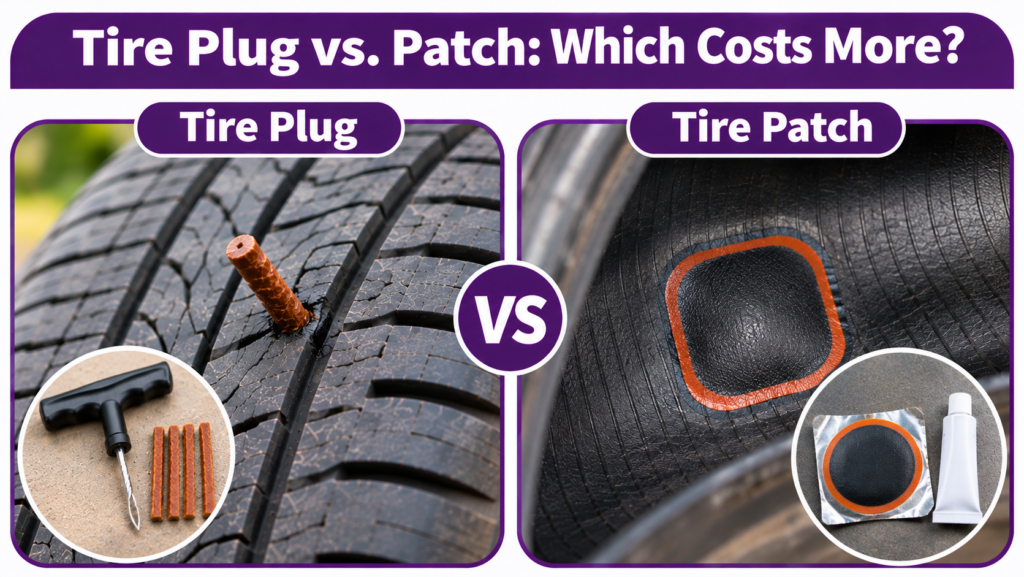
Tire plugs and patches are often discussed as separate repair methods, but they perform different functions. An external plug fills the puncture channel, while an internal patch seals the inner liner. For a permanent passenger tire repair, both functions are necessary.
Tire Plug Cost
A basic string-style tire plug kit costs approximately $10–$25.
Although this method is convenient for an emergency, an external plug alone is not considered a proper permanent repair.
Tire Patch-Plug Cost
A professional combination patch-plug repair usually costs around $20–$45 for a standard passenger tire.
The technician removes the tire from the wheel, examines its internal condition, fills the puncture channel, and seals the inner liner.
This method is the recommended approach when the tire meets repairability requirements.
Where Can You Get a Tire Plugged for Free?
Some tire retailers offer free puncture repair services for qualifying tires. These offers can help drivers avoid unnecessary expenses, especially when the damage is minor.
However, free services may depend on the retailer’s policies, available equipment, and whether the tire can be safely repaired.
Places That May Offer Free Tire Repairs
- Discount Tire: Offers complimentary flat tire repair for qualifying tires at participating U.S. locations.
- Tire warranty providers: Certain road-hazard protection plans include puncture repair.
- Tire dealerships: Some retailers provide free repairs for tires purchased from their stores.
- Membership programs: Selected automotive or retail memberships may include tire repair benefits.
Before visiting, contact the shop to verify its current repair policy and eligibility requirements.
When Is a Tire Too Damaged to Plug?
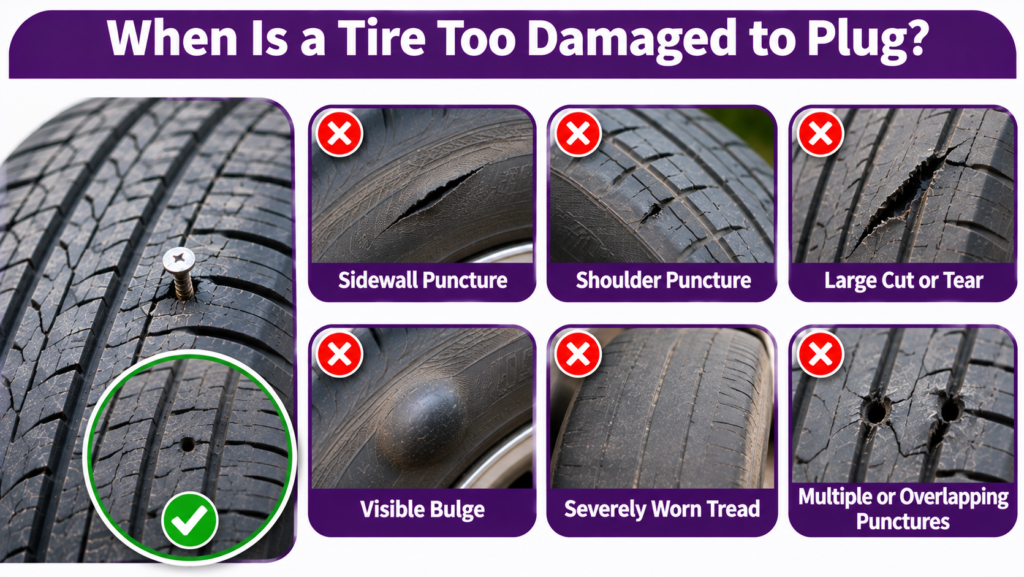
Although a small puncture may be inexpensive to fix, not every tire can be safely repaired. The location and severity of the damage determine whether the tire can return to service.
Repairing an unsuitable tire may lead to air loss or structural failure, even when the plug initially appears to hold pressure.
Signs You Need a New Tire Instead
- Sidewall puncture: Damage to the sidewall cannot be safely repaired.
- Shoulder puncture: Holes near the outer tread edges fall outside the approved repair area.
- Large puncture: Damage greater than 1/4 inch (6 mm) generally requires replacement.
- Severely worn tread: Tires with tread depth at or below 2/32 inch need replacement.
- Visible bulges: Bulges can indicate structural damage.
- Overlapping punctures: Repair areas that overlap are not acceptable.
- Internal damage: Driving on a flat tire can permanently damage its internal structure.
A trained technician should inspect the tire internally before deciding whether repair is possible.
How to Save Money on Tire Puncture Repairs
Repairing a puncture promptly can help prevent additional tire damage and avoid more expensive replacement costs. Regular tire maintenance also reduces the risk of driving on an underinflated tire.
Before paying for a repair, compare available services and understand what the quoted price includes.
Tips to Reduce Tire Repair Costs
- Check tire warranties: Road-hazard coverage may include puncture repairs.
- Compare local shops: Ask about the total price for an internal combination repair.
- Look for free repair programs: Some tire retailers provide complimentary service.
- Maintain correct tire pressure: Proper inflation helps prevent additional damage after pressure loss.
- Avoid driving on a flat tire: Driving with little or no air can destroy an otherwise repairable tire.
- Ask about additional fees: Confirm whether mounting, balancing, and inspection are included.
Choosing a qualified repair shop is more important than finding the lowest advertised price.
FAQs
1. How Much Does It Cost to Plug a Tire With a Nail in It?
A professional repair for a small nail puncture generally costs around $20–$45 in the United States. The exact price depends on the tire and shop. If the nail puncture is in the central tread and meets repair requirements, a professional combination patch-plug may be possible.
2. How Much Does Walmart Charge to Plug a Tire?
Walmart Auto Care Centers have commonly advertised tire puncture repairs for around $15, although pricing and availability can vary by location. Eligible Walmart+ memberships may include complimentary puncture repair. Check with your local Auto Care Center to confirm the current price, service availability, and conditions.
3. Is It Cheaper to Plug a Tire or Replace It?
Repairing an eligible puncture is usually much cheaper than replacing the tire. Professional repairs often cost $20–$45, while replacement tires may cost $90–$250 or more. However, replacing the tire is necessary when the puncture location, size, or internal damage makes a safe repair impossible.
4. How Long Does a Tire Plug Last?
An external string plug may hold air for a period of time, but it has no guaranteed safe service life and should only be considered an emergency measure. A properly installed professional combination patch-plug repair can potentially last for the tire’s remaining usable life, provided the tire stays in good condition.
5. Can You Drive on a Tire After Plugging It?
An externally plugged tire should not be considered permanently repaired. If an emergency plug holds pressure, limit driving to what is necessary to reach professional service safely. A technician should remove the tire, inspect it internally, and determine whether a complete patch-plug repair or replacement is required.