
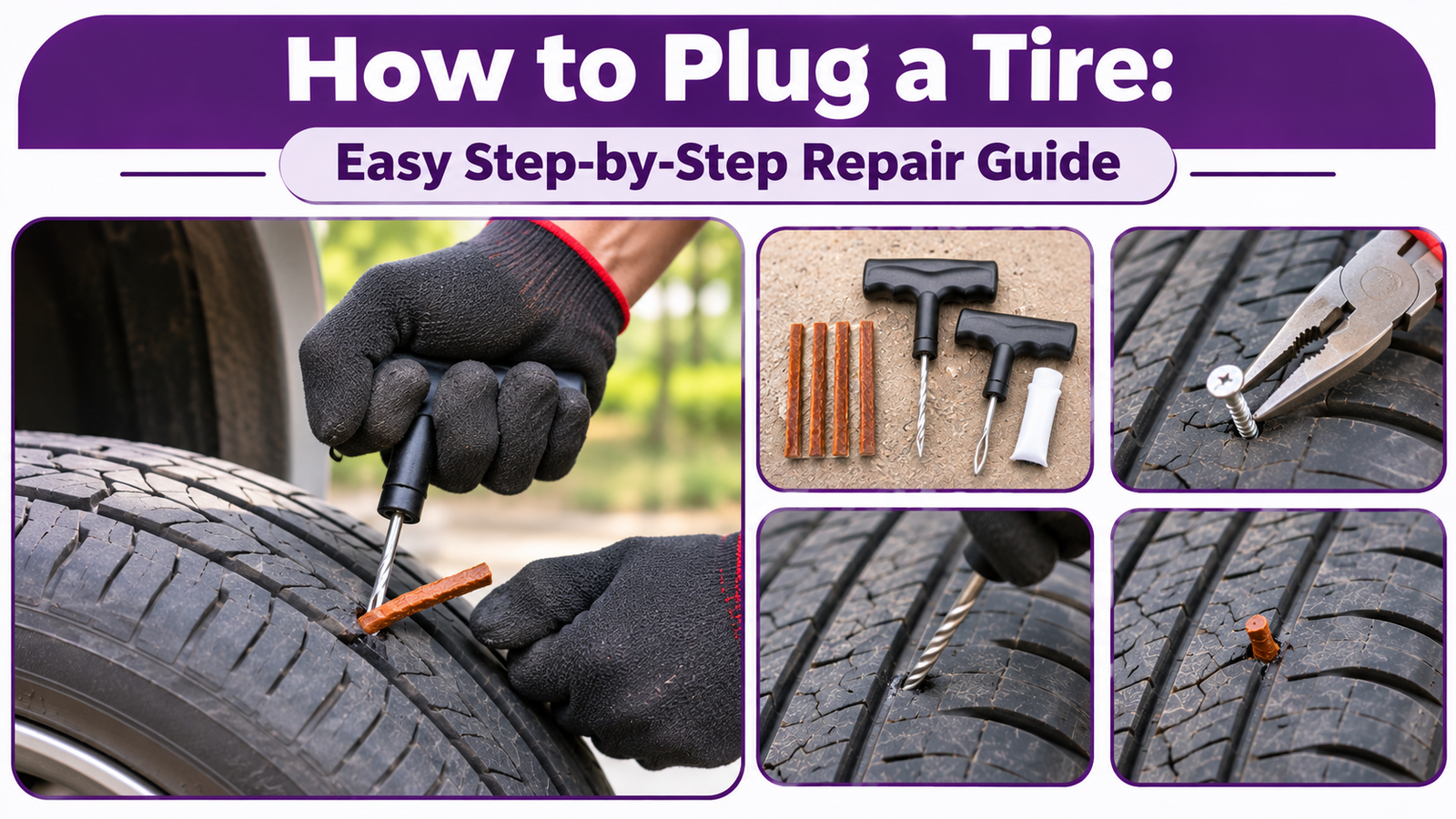
A small nail or screw can puncture your tire and cause a slow air leak, leaving you wondering whether you need a replacement. Learning how to plug a tire can help you handle a minor puncture during an emergency. A tire plug kit provides a temporary way to seal certain tread punctures without removing the tire from the rim. However, not every puncture is repairable, and an external plug is not considered a permanent repair. This guide explains the tools, steps, safety precautions, and professional repair options.
What Is a Tire Plug and How Does It Work?
A tire plug is a flexible rubber-based repair material designed to fill a small puncture in a tubeless tire. Most emergency tire plug kits contain sticky rubber strips that fit tightly inside the damaged opening. These strips help reduce air leakage until the tire can receive a professional inspection.
Tire plugs are commonly used for punctures caused by nails, screws, or other small, sharp objects.
How a Tire Plug Seals a Puncture
A tire plug fills the channel created by a sharp object. The flexible repair material compresses against the surrounding rubber, helping prevent pressurized air from escaping.
Some kits also include rubber cement or a compatible lubricant to assist installation.
However, an externally inserted plug cannot seal the tire’s inner liner properly or reveal hidden internal damage. A professional repair requires both a puncture-filling stem and an internal patch.
When Can You Plug a Tire?
An emergency plug may be appropriate when:
- The puncture is located in the central tread area.
- The hole is no larger than 1/4 inch (6 mm).
- The tire has not been driven while flat.
- There are no visible cuts, bulges, or serious structural defects.
- The tire has sufficient remaining tread.
The tire must still be inspected internally before it can be confirmed repairable. Sidewall and shoulder punctures should never be plugged.
Tools Needed to Plug a Tire
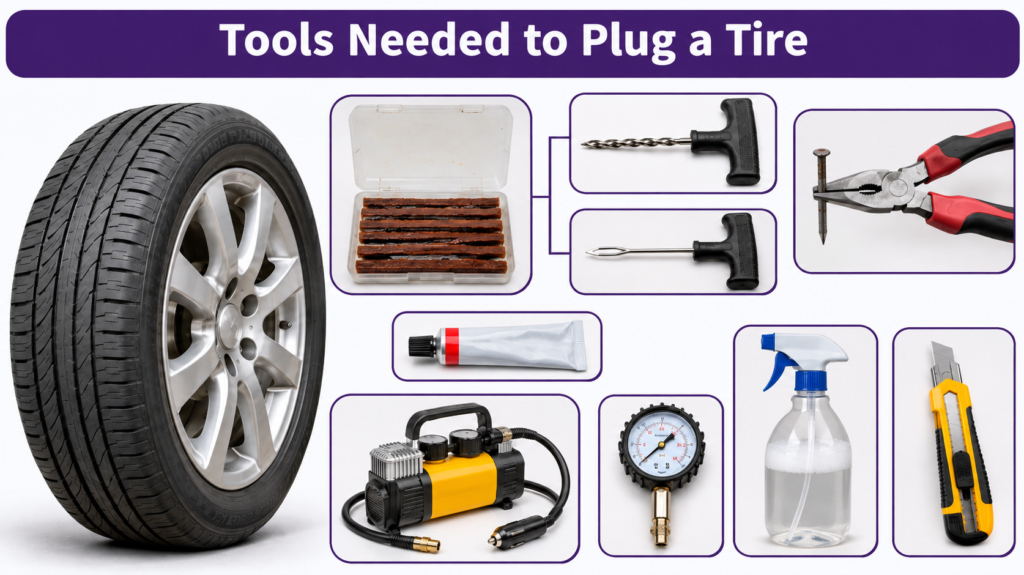
Before attempting an emergency tire plug repair, gather the necessary tools and supplies. Having everything ready makes the process easier and reduces the chance of damaging the tire further. Most automotive stores sell tire plug kits containing the basic repair tools, although you may need to purchase an air compressor separately.
Essential Tire Plug Repair Tools
- Tire plug kit: Contains rubber repair strips for temporarily sealing punctures.
- Reamer tool: Cleans and prepares the puncture channel.
- Insertion tool: Holds and pushes the plug into the hole.
- Pliers: Help remove nails, screws, or other embedded objects.
- Rubber cement: Used when required by the kit manufacturer.
- Air compressor: Restores the correct tire pressure.
- Tire pressure gauge: Checks inflation pressure after repair.
- Soapy water: Helps identify and check air leaks.
- Utility knife: Trims excess plug material.
Wear gloves and safety glasses when handling sharp objects and repair tools.
How to Plug a Tire Step by Step
Plugging a tire with a string-style repair kit involves locating the puncture, preparing the hole, inserting the rubber plug, and checking for leaks. These steps describe an emergency repair for a tubeless passenger vehicle tire, not a permanent roadworthy repair. Follow your kit manufacturer’s instructions and arrange professional service as soon as possible.
Step 1: Park Your Vehicle Safely
Move your vehicle to a safe, level location away from traffic. Turn off the engine, engage the parking brake, and activate the hazard lights when necessary.
Avoid working beside moving traffic or beneath an improperly supported vehicle. If the tire is completely flat, use a spare tire or roadside assistance rather than driving on it.
Step 2: Locate the Tire Puncture
Inspect the tread carefully for nails, screws, or other embedded objects.
If the damage is difficult to locate, spray soapy water across the suspected area. Escaping air will create small bubbles around the leak.
Mark the puncture location and verify that it is within the central tread. Do not proceed with an external plug if the damage is near the shoulder or sidewall.
Step 3: Remove the Nail or Screw
Use pliers to grip the embedded object and carefully pull it out.
If the tire still holds air, keep the object in place until your repair materials are ready. Removing it may cause rapid pressure loss.
Observe the puncture angle and approximate size. If the hole is unusually large or the internal damage is uncertain, seek professional assistance.
Step 4: Prepare the Puncture Hole
Insert the reamer tool supplied with your tire plug kit into the puncture channel.
Move it carefully according to the kit instructions to prepare the opening for the repair strip. Avoid enlarging the hole unnecessarily or changing its original direction.
If the tool requires excessive force or the puncture cannot be prepared correctly, stop rather than causing additional damage.
Step 5: Insert the Tire Plug
Thread a rubber repair strip through the insertion tool, positioning it approximately halfway through the eye.
Apply rubber cement if your repair kit requires it.
Push the loaded tool into the prepared puncture until the plug is seated at the depth specified by the manufacturer, leaving a small portion visible outside.
Withdraw the insertion tool carefully so the rubber strip remains inside the puncture.
Step 6: Trim the Excess Plug
Once the plug is seated, inspect the exposed rubber material.
Use a utility knife or suitable cutting tool to trim the excess according to the kit instructions. Avoid cutting into the surrounding tire tread.
Do not pull on the installed plug or attempt to remove it after insertion.
Step 7: Inflate and Check for Leaks
Use an air compressor to inflate the tire to the vehicle manufacturer’s recommended cold tire pressure, usually listed on the driver’s door-jamb placard.
Spray soapy water over the plugged area and check for bubbles.
If air continues escaping, the temporary repair has failed. Do not rely on another improvised plug. Have the vehicle transported for professional tire service if it cannot safely be driven.
Even if the plug holds pressure, a tire technician must inspect and properly repair or replace the tire.
When Should You Not Plug a Tire?
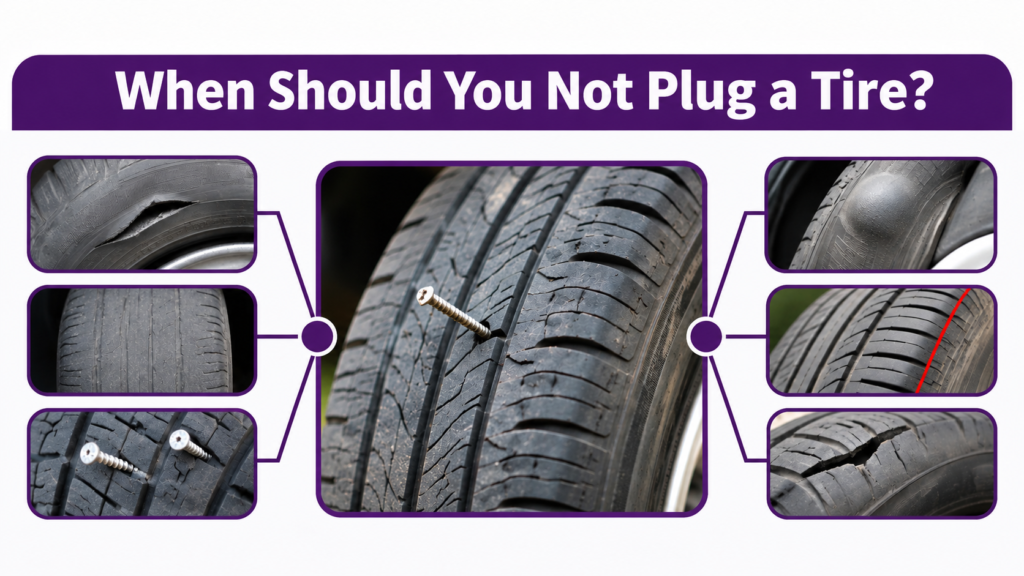
Although tire plugs can temporarily seal some punctures, certain types of damage make repair unsafe. Tire construction includes steel belts, reinforcing cords, and an air-sealing inner liner. Damage to these components may not be visible from outside, especially after driving with low tire pressure.
Tire Damage That Cannot Be Safely Plugged
- Sidewall punctures: The flexible sidewall experiences significant bending during driving.
- Shoulder damage: Punctures near the tread edges are outside the approved repair area.
- Large punctures: Holes exceeding 1/4 inch (6 mm) are generally not repairable using standard passenger tire procedures.
- Tire bulges: These may indicate internal structural damage.
- Severely worn tread: Tires at or below 2/32 inch of tread depth require replacement.
- Run-flat damage: Special manufacturer restrictions may apply, particularly after driving without pressure.
- Overlapping repairs: Multiple punctures cannot be repaired if their repair areas overlap.
When there is uncertainty about structural damage, have the tire examined by a qualified professional.
Tire Plug vs. Tire Patch: What’s the Difference?
Tire plugs and patches serve different purposes in puncture repair. A plug fills the damaged channel, while an internal patch seals the inner liner. Understanding this difference is important because neither an external plug nor an internal patch alone meets the recommended standard for a complete passenger tire puncture repair.
Tire Plug
A string plug can be inserted from outside a mounted tubeless tire using a repair kit.
It is relatively quick and convenient during an emergency. However, it cannot reveal internal damage or provide a complete permanent seal.
Tire Patch
A tire patch is installed against the inner liner after the tire has been removed from the wheel.
It seals the inner surface but does not necessarily fill the entire puncture channel.
For a proper permanent repair, a technician uses both a rubber stem and an internal patch, often supplied together as a combination patch-plug unit.
How Long Does a Tire Plug Last?
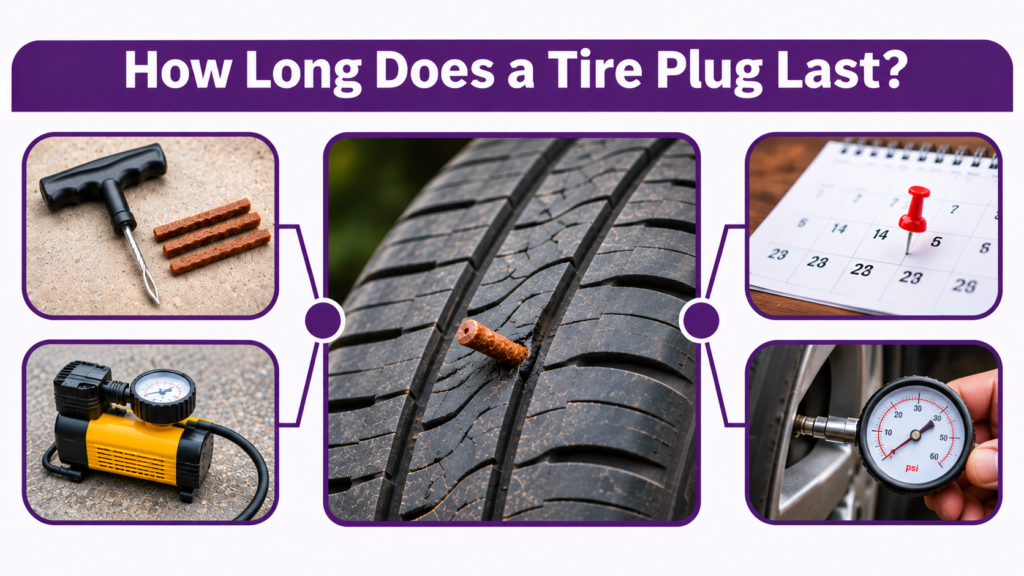
The lifespan of an external tire plug varies depending on the puncture, repair materials, tire condition, and driving environment.
Some temporary plugs may appear to hold air for extended periods. However, that does not establish that the tire is structurally safe or permanently repaired.
An external string plug should only be treated as an emergency measure until professional service is available.
How to Make a Tire Repair Safer
Check tire pressure after any puncture repair and watch for recurring air loss.
Avoid unnecessary driving on a temporarily plugged tire. Arrange for the tire to be removed from the rim and inspected internally.
If the tire qualifies for repair, a technician can install an approved combination patch-plug. Otherwise, replacement is necessary.
FAQs
1. Can You Plug a Tire Without Taking It Off?
Yes, an external string plug can be inserted into a mounted tubeless tire as a temporary emergency measure. However, a tire must be removed from the rim for a proper internal inspection and permanent combination patch-plug repair. An outside-only plug should not be considered a complete repair.
2. Can You Plug a Tire With a Nail in It?
A small nail puncture in the central tread may be suitable for temporary plugging, provided the tire has not suffered additional damage. The puncture should be no larger than 1/4 inch (6 mm). A technician must inspect the tire internally before determining whether it can be permanently repaired.
3. How Much Does It Cost to Plug a Tire?
A basic DIY tire plug kit commonly costs around $5–$20 in the United States, depending on its contents and quality. Professional puncture repairs often cost approximately $20–$50 or more. Prices vary by location, tire type, and shop, and replacement costs significantly more.
4. Is It Safe to Drive on a Plugged Tire?
An externally plugged tire should not be treated as permanently repaired. A temporary plug may hold air, but hidden internal damage or an incomplete seal can create safety risks. Avoid unnecessary driving and arrange professional inspection promptly. A correctly completed internal combination repair is a different procedure.
5. Is It Better to Plug or Patch a Tire?
Neither a plug alone nor a patch alone is the recommended permanent repair for a punctured passenger tire. A properly installed combination patch-plug fills the puncture channel and seals the inner liner. A qualified technician should inspect the tire and determine whether that repair is appropriate.