
A tire that smells like burning rubber can be alarming, especially when the odor appears after driving or suddenly becomes stronger. The smell may come from overheated tires, dragging brakes, wheel alignment problems, or rubber components rubbing against hot surfaces. Sometimes, the odor comes from another part of the vehicle rather than the tires themselves. Understanding why your tire smells like burning rubber can help you identify potential problems before they lead to expensive repairs or unsafe driving conditions. This guide explains the common causes, warning signs, and practical solutions.
Why Does My Tire Smell Like Burning Rubber?
A burning rubber smell around your tires usually indicates excessive heat, friction, or contact between rubber and another surface. The odor may become noticeable after highway driving, hard braking, or parking your vehicle.
However, not every burning smell comes directly from the tire. Brake pads, belts, hoses, and other components can produce similar odors when overheated.
Common Causes of Burning Rubber Smell
- Overheated tires: Excessive friction, incorrect inflation, or heavy loads can contribute to tire overheating.
- Dragging brakes: A stuck brake caliper can generate substantial heat near the wheel.
- Tire rubbing: Incorrect tire sizes or damaged suspension components may allow tires to contact surrounding parts.
- Wheel alignment problems: Severe misalignment can increase tire scrubbing and heat.
- Burning rubber belts: A slipping engine belt can produce an odor that resembles a burning tire.
- Oil or fluid leaks: Fluids contacting hot components may create a burning smell.
- Parking brake problems: A parking brake that does not release completely can overheat the rear brakes.
If the smell is strong, persistent, or accompanied by smoke, stop driving in a safe location and have the vehicle inspected.
7 Common Reasons Your Tire Smells Like Burning Rubber
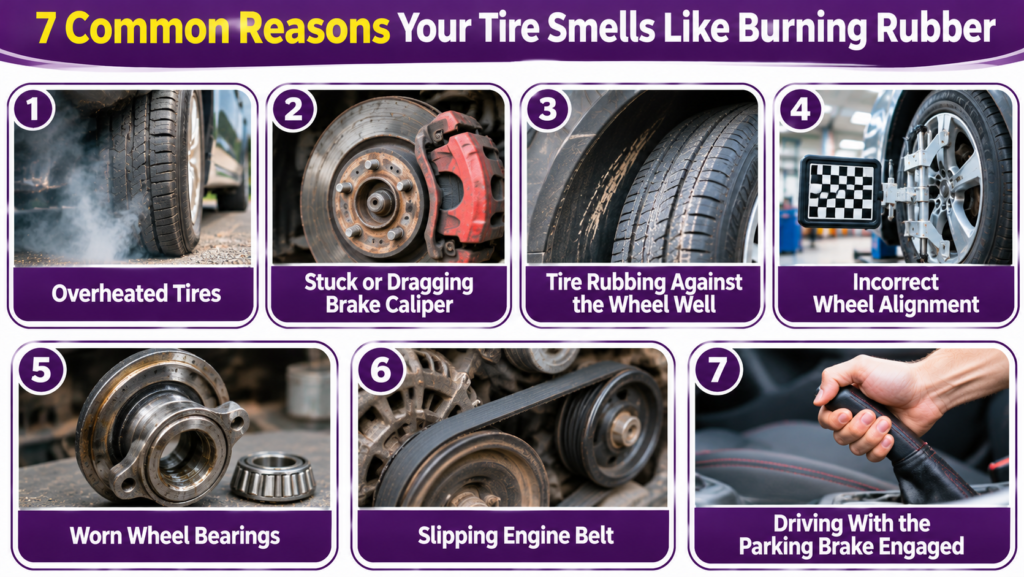
A burning smell can develop for several reasons. Identifying when the odor occurs and where it seems strongest can help narrow down the possible cause.
1. Overheated Tires
Tires generate heat as they roll because their rubber and internal materials repeatedly flex. Excessive heat can develop when tires are underinflated, overloaded, damaged, or operated beyond their intended limits.
An overheated tire may produce a noticeable rubber odor, particularly after extended driving.
Check the tire pressure when the tires are cold and inspect for visible damage. If you suspect severe overheating, do not continue driving until the tire has been professionally evaluated.
2. Stuck or Dragging Brake Caliper
A sticking brake caliper is a common cause of burning smells near a wheel. When the brake pads remain pressed against the rotor, friction generates excessive heat.
The smell may resemble burning rubber, although the brake components are actually responsible.
You might notice unusually hot wheels, reduced acceleration, or the vehicle pulling to one side. A dragging brake requires prompt mechanical attention.
3. Tire Rubbing Against the Wheel Well
A tire may rub against the wheel well, fender liner, or suspension components if the tire size is incorrect or the vehicle has damaged or modified suspension parts.
This rubbing creates friction and can wear away the tire’s rubber surface.
The problem may become more noticeable when turning sharply, driving over bumps, or carrying additional weight.
Look for unusual wear marks around the tire and wheel well. Avoid driving if the tire is contacting another component.
4. Incorrect Wheel Alignment
Severe wheel alignment problems can cause tires to scrub against the road instead of rolling in their intended direction.
This increases friction and can accelerate tire wear. In some cases, the additional friction may contribute to heat and an unpleasant rubber smell.
Other warning signs include uneven tread wear, poor steering response, and the vehicle pulling to one side.
5. Worn Wheel Bearings
Damaged wheel bearings can create excessive friction and heat around the wheel assembly.
Although a worn bearing does not normally cause the tire itself to burn, severe bearing failure may generate overheating and unusual odors.
Common symptoms include humming, grinding, vibration, and changes in noise when turning.
A suspected wheel bearing problem should be inspected promptly because continued operation can create serious safety risks.
6. Slipping Engine Belt
A slipping serpentine belt or another rubber drive belt can produce a strong burning rubber smell.
The odor may travel from the engine compartment toward the wheels, making it seem as though the tires are responsible.
Belt problems may also produce squealing sounds, especially during acceleration or when accessories engage.
A mechanic can inspect the belt, pulleys, and tensioner to identify the problem.
7. Driving With the Parking Brake Engaged
Driving while the parking brake is partially engaged can cause excessive friction and heat in the rear brakes.
The resulting smell may be mistaken for burning rubber coming from the rear tires.
Other symptoms can include sluggish acceleration, reduced fuel efficiency, and unusual heat around the rear wheels.
Ensure the parking brake is fully released before driving. If it remains engaged or does not release properly, have the braking system inspected.
Why Does My Tire Smell Like Burning Rubber After Driving?
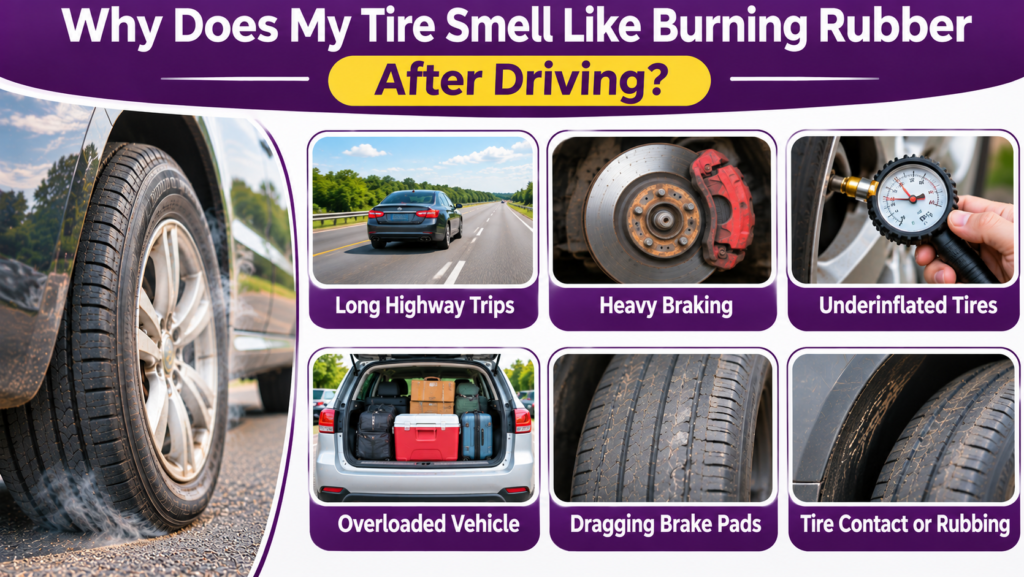
A burning smell that appears immediately after driving often relates to heat generated during vehicle operation. Tires, brakes, and nearby mechanical components can become hot under certain conditions.
Possible Reasons After Driving
- Long highway trips: Extended driving can increase tire temperature, especially with improper inflation or excessive loads.
- Heavy braking: Repeated braking on steep roads may overheat brake components.
- Underinflated tires: Excessive sidewall flexing generates additional heat.
- Overloaded vehicles: Extra weight increases the demands placed on tires and brakes.
- Dragging brake pads: Continuous friction can create a strong burning odor.
- Tire contact: Rubbing against bodywork or suspension parts can become worse during driving.
A persistent burning smell is not normal. If it develops repeatedly after driving, arrange a professional inspection rather than assuming the tires are simply hot.
Why Does My Front or Rear Tire Smell Like Burning Rubber?
The location of the odor can provide useful clues about the affected components. Front and rear wheels experience different loads and braking conditions, depending on the vehicle.
Burning Rubber Smell From Front Tire
A burning smell near a front wheel may result from a sticking brake caliper, tire rubbing, or excessive friction.
Front brakes typically perform a large proportion of the braking work, making them particularly important to inspect when overheating is suspected.
The odor may also come from the engine compartment.
Burning Rubber Smell From Rear Tire
A burning smell near a rear wheel can indicate a dragging parking brake, sticking rear brake caliper, or tire rubbing against nearby components.
On some vehicles, rear brake hardware may remain partially engaged because of damaged cables or adjustment problems.
If the smell is accompanied by smoke or excessive heat, stop driving and request professional assistance.
How to Fix a Tire That Smells Like Burning Rubber
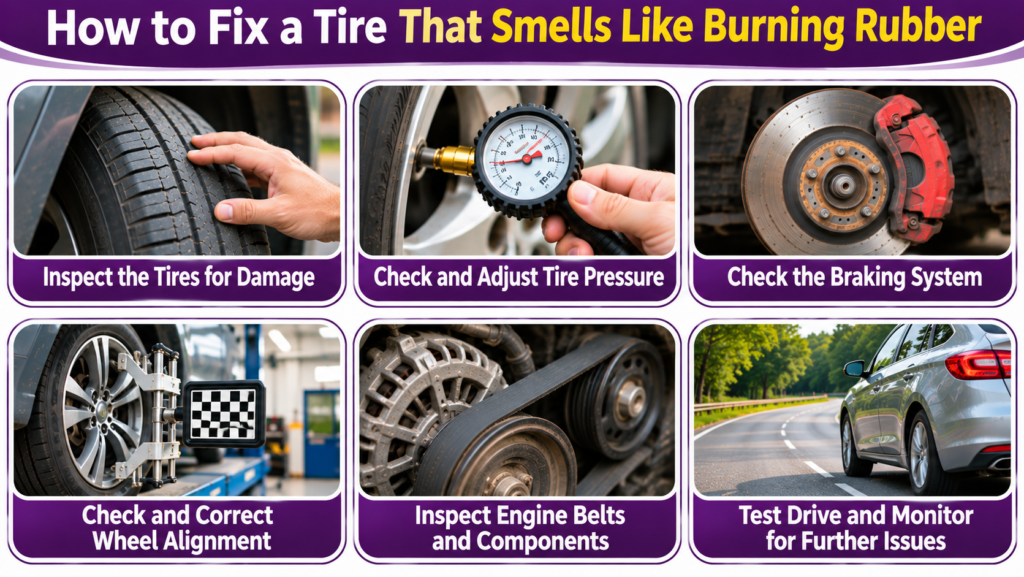
Fixing a burning rubber smell depends on identifying the exact source. Replacing the tire will not solve the problem if overheated brakes or a slipping engine belt are responsible.
Steps to Identify and Fix the Problem
- Stop safely: If the smell is strong, pull over somewhere safe and turn off the engine.
- Check for smoke: Look for smoke or visible damage without approaching dangerously hot components.
- Inspect the tires: Check for bulges, cuts, rubbing marks, and unusual tread wear.
- Check tire pressure: Once the tires are cold, compare their pressure with the vehicle manufacturer’s recommendations.
- Inspect the braking system: Have a mechanic check for sticking calipers, dragging pads, and parking brake problems.
- Check wheel alignment: Correct alignment issues contributing to excessive tire scrubbing.
- Inspect belts and hoses: Look for damaged engine belts or rubber components contacting hot surfaces.
Avoid touching hot wheels, brake rotors, or other heated parts. If a tire appears damaged or overheated, arrange professional assistance rather than driving farther.
Is It Safe to Drive With a Burning Rubber Smell?
Driving with an unexplained burning rubber smell can be dangerous. The odor may indicate excessive tire heat, brake failure, or mechanical friction.
If a tire is overheating because of underinflation or structural damage, continued driving increases the risk of tire failure.
Dragging brakes can also reduce braking effectiveness and damage surrounding components.
When the odor is accompanied by smoke, vibration, unusual noises, or steering problems, stop immediately in a safe place. If you see flames or heavy smoke, leave the vehicle and contact emergency services.
FAQs
1. Why Does My Car Smell Like Burning Rubber but the Tires Look Fine?
A burning rubber smell can originate from components other than the tires. Common possibilities include a slipping serpentine belt, overheating brakes, damaged hoses, or fluid contacting hot engine parts. Even when the tires appear normal, a persistent burning odor requires mechanical inspection.
2. Can Low Tire Pressure Cause a Burning Rubber Smell?
Yes. Underinflated tires flex excessively while rolling, which generates additional heat. Severe underinflation can lead to overheating, internal tire damage, and potentially tire failure. Always check pressure when the tires are cold and maintain the manufacturer’s recommended inflation levels.
3. Why Does My Tire Smell Like Burning Rubber After Braking?
A burning odor after braking often indicates overheated brake components rather than the tire itself. Repeated hard braking, dragging calipers, or a partially engaged parking brake can generate excessive heat. Persistent odors, smoke, or reduced braking performance require prompt inspection.
4. Can New Tires Smell Like Burning Rubber?
New tires may have a noticeable rubber or manufacturing-related odor, particularly when first installed. However, a strong burning smell after driving is not something to ignore. Incorrect installation, tire rubbing, brake problems, or other mechanical issues should be ruled out.
5. Why Does Only One Tire Smell Like Burning Rubber?
A burning odor concentrated near one wheel may indicate a stuck brake caliper, tire rubbing, bearing damage, or another localized mechanical problem. Check for visible damage without touching hot components. If the odor continues, avoid driving until a qualified mechanic identifies the cause.