
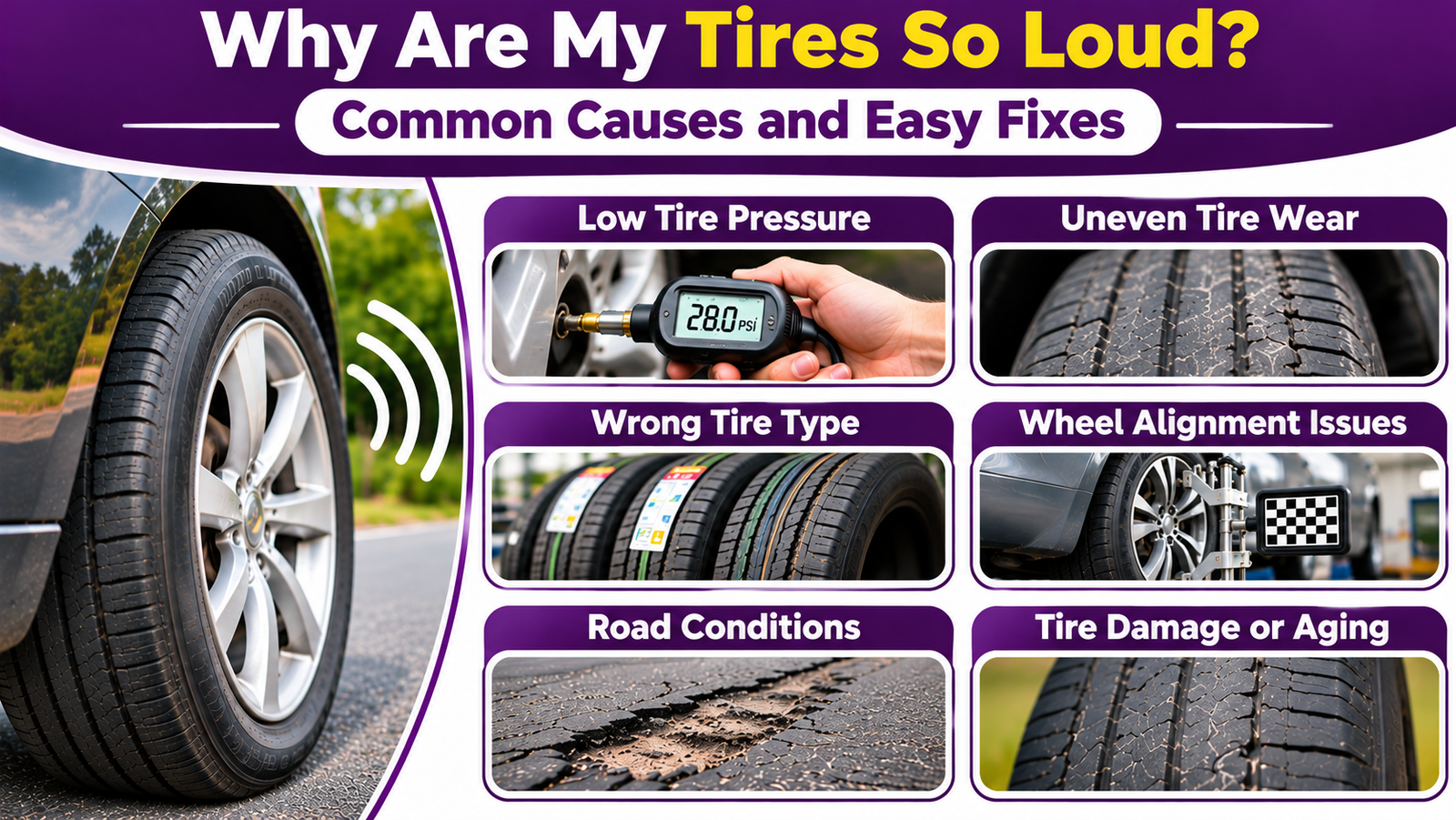
Loud tire noise can turn a comfortable drive into a frustrating experience. If you are wondering, “Why are my tires so loud?” the problem could involve tire tread patterns, uneven wear, road surfaces, or incorrect tire pressure. Sometimes, the noise becomes noticeable after installing new tires or driving at highway speeds. Although some road noise is normal, excessive humming, roaring, or thumping may indicate a problem. Understanding the reasons behind noisy tires can help you identify the cause, improve driving comfort, and prevent costly repairs.
Why Are My Tires So Loud While Driving?
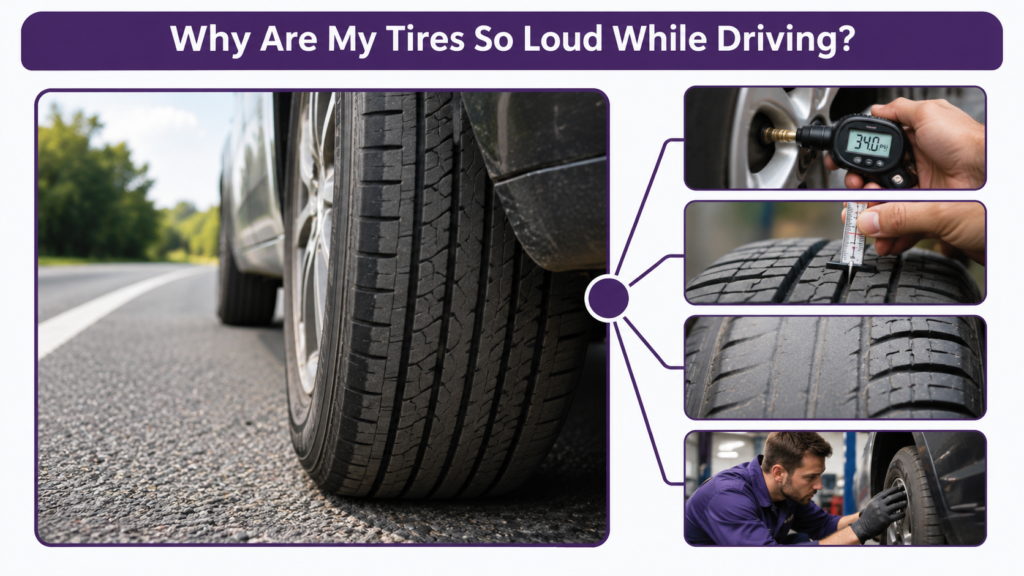
Tires naturally produce noise when their rubber tread contacts the road. However, excessive noise often results from uneven wear, aggressive tread designs, incorrect inflation, or mechanical problems. The sound may become louder as your vehicle accelerates or travels over rough pavement.
Common Reasons Your Tires Make Loud Noise
- Aggressive tread patterns: Tires with large tread blocks and deep grooves often create more road noise.
- Uneven tire wear: Cupping, feathering, and irregular wear can produce humming or thumping sounds.
- Incorrect tire pressure: Underinflated or overinflated tires may generate additional noise.
- Rough road surfaces: Concrete, gravel, and coarse asphalt can increase tire noise.
- Wheel alignment problems: Improper alignment causes uneven tread wear and additional vibration.
- Worn suspension components: Weak shocks or struts can contribute to tire cupping and noise.
- Wheel bearing problems: A failing wheel bearing can sound similar to a noisy tire.
Identifying the exact cause is important because tire noise does not always mean the tires themselves are defective.
Why Are My Tires So Loud on the Highway?
Highway driving often makes tire noise more noticeable because the tires rotate faster and interact with the road more frequently. Air movement around the tread grooves also contributes to sound.
Why Tire Noise Increases at High Speeds
At higher speeds, tire tread blocks repeatedly strike the pavement, creating vibrations that travel into the vehicle cabin. Tires with aggressive tread patterns can produce a steady humming or roaring sound.
Road texture also matters. Driving on rough concrete may produce significantly more noise than driving on smooth asphalt.
If your tires suddenly become louder at highway speeds, inspect them for uneven wear and damage. A wheel bearing problem may also produce a humming or growling noise that increases with speed.
Why Are My New Tires So Loud?
Installing new tires does not always make your vehicle quieter. Some new tires produce more road noise than the previous set because of their tread design, rubber compound, or construction.
Common Reasons New Tires Make Noise
- Different tread design: New all-terrain or performance tires may be louder than touring tires.
- Deeper tread grooves: Fresh tread can produce different sound frequencies than worn tread.
- Tire construction: Stiffer sidewalls and certain tread compounds can transmit more vibration.
- Incorrect inflation: Tire pressure outside the manufacturer’s recommended range can affect noise.
- Installation problems: Incorrect mounting, imbalance, or wheel-related issues may create vibrations.
- Tire mismatch: Using tires with different tread designs or wear levels can affect driving characteristics.
New tires may change their sound slightly during initial use. However, persistent thumping, strong vibration, or unusually loud humming should not be dismissed as normal break-in noise.
Different Types of Loud Tire Noise and Their Causes
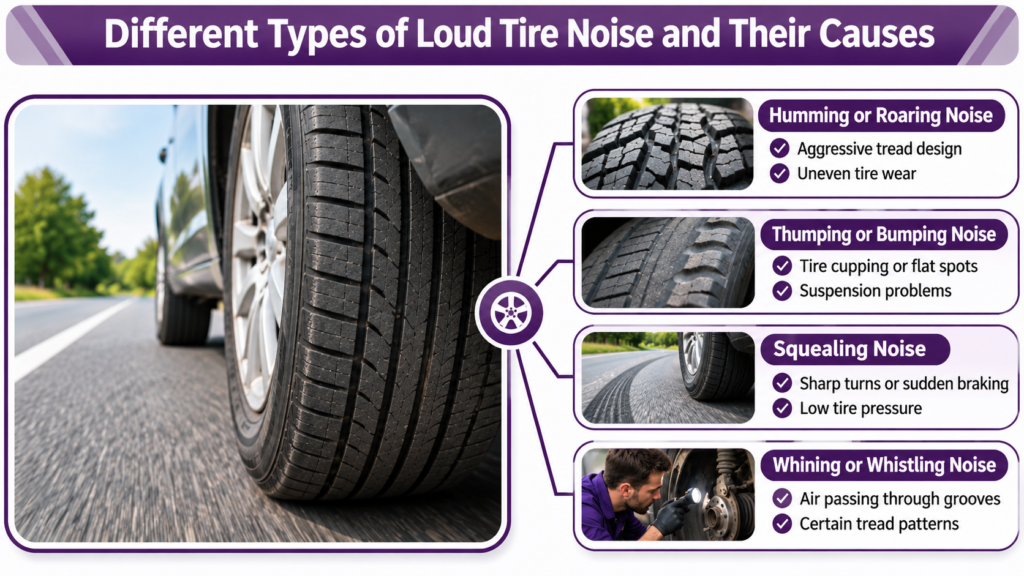
Not every tire-related sound indicates the same problem. Paying attention to the type of noise can help narrow down possible causes before inspecting the vehicle.
Humming or Roaring Noise
A continuous humming or roaring sound often comes from aggressive tread patterns or uneven tire wear. The noise usually becomes louder as vehicle speed increases.
However, worn wheel bearings can produce similar sounds. If the humming changes while turning, have the wheel bearings inspected.
Thumping or Bumping Noise
A repeated thumping sound may indicate tire cupping, a flat spot, tread separation, or another tire defect.
The sound may occur at regular intervals and become faster as the wheels rotate. A damaged tire can create a serious safety risk, especially at highway speeds.
Squealing Noise
Tire squealing commonly occurs during sharp turns, sudden acceleration, or hard braking. It happens when the tires approach or exceed their available grip.
Incorrect tire pressure, alignment problems, and worn tread may also contribute to squealing during normal driving.
Whining or Whistling Noise
Some tire tread patterns produce a high-pitched whine as air moves through their grooves. This is particularly noticeable with certain off-road and performance tires.
However, whining noises can also originate from drivetrain components, so the location and driving conditions should be checked.
How to Tell if Tire Noise Is Caused by Uneven Wear
Uneven tire wear is one of the most common reasons tires become progressively louder. As the tread develops irregular surfaces, it creates vibrations and repeated contact noises.
Signs of Uneven Tire Wear
- Cupping: Scalloped dips around the tread that may cause roaring or thumping.
- Feathering: Tread blocks develop uneven edges, often associated with alignment problems.
- One-sided wear: The inner or outer tire shoulder wears faster than the opposite side.
- Center wear: Excessive wear along the center may be associated with overinflation.
- Shoulder wear: Wear along both edges can indicate chronic underinflation.
- Flat spots: Localized tread wear can create repeated thumping and vibration.
Inspect your tires regularly for unusual tread patterns. A professional inspection can determine whether alignment, suspension, or inflation problems are responsible.
How to Make Loud Tires Quieter
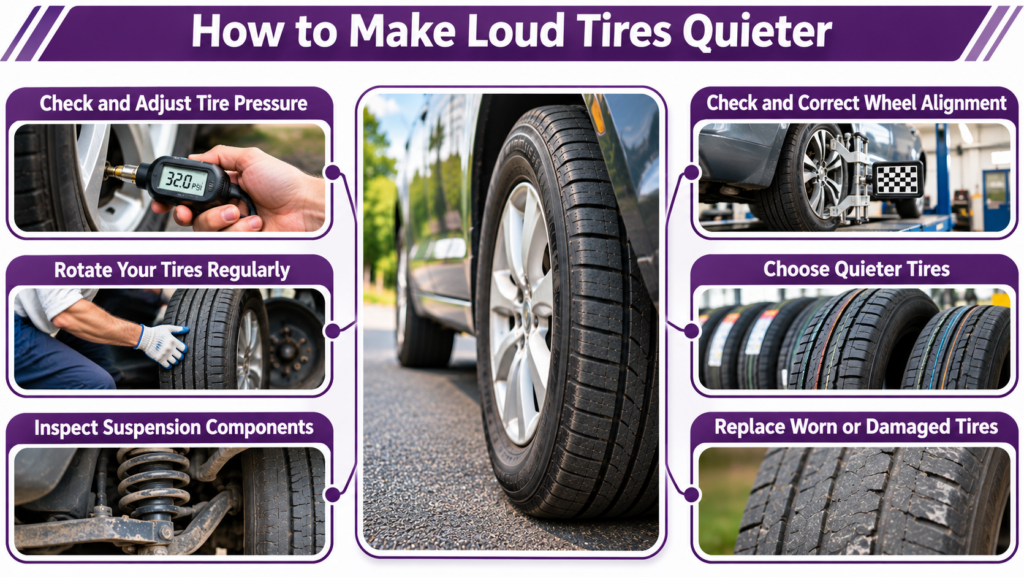
Reducing tire noise starts with identifying the underlying cause. Some problems require simple maintenance, while others may require replacing worn tires or repairing vehicle components.
1. Check and Adjust Tire Pressure
Use a reliable tire pressure gauge to check each tire while it is cold. Inflate the tires according to the vehicle manufacturer’s recommended pressure, usually found on the driver’s door-jamb label.
Avoid using the maximum pressure printed on the tire sidewall as your normal inflation target.
2. Rotate Your Tires Regularly
Tire rotation can help distribute wear more evenly and reduce the likelihood of irregular tread patterns.
Follow the manufacturer’s recommended rotation schedule and pattern. Rotation may not eliminate noise from tires that already have severe cupping or feathering.
3. Inspect Wheel Alignment
Incorrect wheel alignment can cause uneven tire wear, steering problems, and additional road noise.
Have the alignment checked if your vehicle pulls to one side, the steering wheel is off-center, or the tires show irregular wear.
4. Choose Quiet Tires
When replacing your tires, consider touring or comfort-oriented models designed for reduced road noise.
These tires commonly feature optimized tread patterns and designs that limit vibration. Tire noise ratings and independent comparisons can help you select quieter options.
5. Inspect Suspension Components
Worn shocks, struts, bushings, or other suspension components may allow excessive wheel movement and contribute to irregular tire wear.
Repairing the underlying suspension problem can help prevent new tires from developing the same noise.
When Should You Worry About Loud Tire Noise?
Some tire noise is normal, especially on rough pavement or with all-terrain tires. However, sudden changes in noise should never be ignored.
Warning Signs That Need Immediate Attention
- A sudden, loud thumping or flapping sound while driving.
- Strong steering-wheel vibration that increases with speed.
- Visible tire bulges, cracks, or exposed cords.
- A humming or grinding noise that becomes progressively louder.
- Unusual steering behavior or difficulty maintaining control.
- A tire that repeatedly loses air pressure.
If you suspect serious tire damage, slow down safely and stop driving until the tire is inspected. Continuing to drive on a damaged tire increases the risk of tire failure.
FAQs
1. Why Are My Tires So Loud All of a Sudden?
Suddenly loud tires may indicate tire damage, uneven wear, incorrect pressure, or a wheel bearing problem. Check for visible damage and pressure loss. If the noise is accompanied by vibration, thumping, or steering difficulties, stop driving safely and arrange an inspection.
2. Why Are My Tires So Loud After Rotation?
Tires may sound louder after rotation because existing uneven wear patterns now contact the road differently. Minor sound changes can occur, but persistent thumping or vibration should be checked. Incorrect wheel installation, imbalance, or a damaged tire may also be responsible.
3. Do Cheap Tires Make More Noise?
Some budget tires produce more noise because they use less refined tread designs or noise-reduction technology. However, price alone does not determine noise levels. Certain affordable touring tires can be relatively quiet, while expensive off-road tires may naturally produce substantial road noise.
4. Why Do My Tires Hum When I Drive?
Tire humming can result from uneven tread wear, aggressive tread patterns, or rough pavement. Wheel bearings can create a similar sound. If the humming increases with speed or changes during turns, a mechanic should inspect the tires, bearings, and related components.
5. Will New Tires Make My Car Quieter?
New tires can reduce road noise when replacing worn or unevenly worn tires, especially if you choose models designed for comfortable, quiet driving. However, new tires will not fix noise caused by worn wheel bearings, suspension problems, or other mechanical issues.