
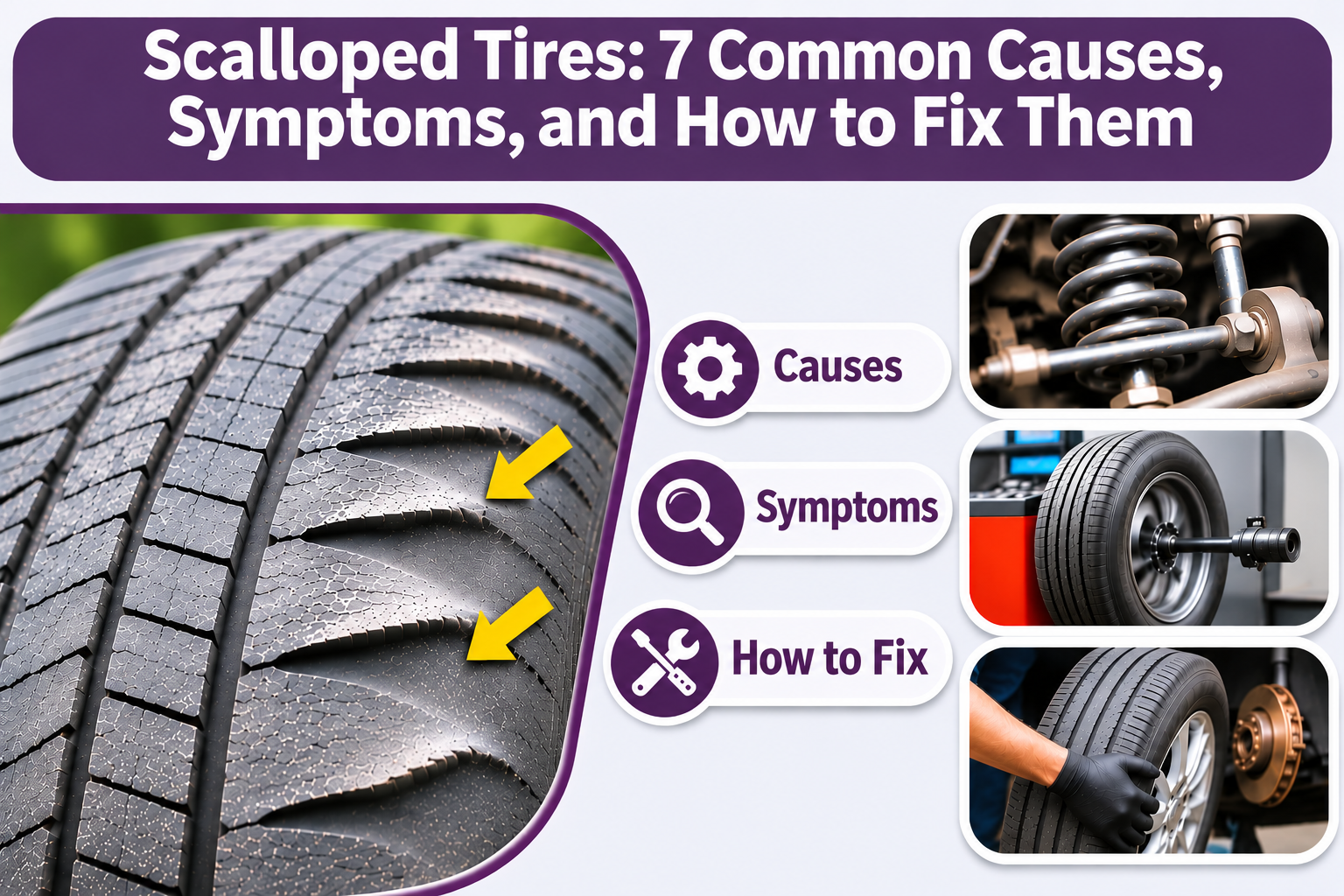
Scalloped tires are a common type of uneven tire wear that can cause road noise, vibrations, and reduced driving comfort. Also known as tire cupping, this condition creates irregular dips or worn patches across the tire tread. The most common causes include worn shock absorbers, unbalanced wheels, suspension problems, and incorrect wheel alignment. If ignored, scalloped tire wear can shorten tire lifespan and affect vehicle handling. Understanding what causes scalloped tires, how to recognize the symptoms, and how to fix the underlying problems can help you maintain safer and more comfortable driving conditions.
What Are Scalloped Tires?
Scalloped tires develop uneven, scooped-out patches around the circumference of the tire tread. Instead of wearing smoothly, certain sections lose more rubber than others, creating a repeating pattern of high and low spots.
This condition is commonly called tire cupping. The worn areas may appear several inches apart, producing a wavy or scalloped surface.
Scalloping often occurs when a tire cannot maintain consistent contact with the road. Problems with suspension components, wheel balance, or alignment can cause uneven forces that gradually wear away sections of the tread.
According to Bridgestone, tire cupping is a recognizable form of irregular tread wear that can develop from several mechanical and maintenance problems.
What Do Scalloped Tires Look Like?
Scalloped tires have noticeable depressions or worn patches along the tread. Some areas remain relatively high while neighboring sections become unusually low.
Common characteristics include:
- Repeated dips or scooped-out sections around the tread.
- Uneven tread depth across different areas.
- Alternating high and low spots on the tire surface.
- A wavy appearance along the tread.
- Rough or uneven texture when touched.
Scalloping may develop on the inner shoulder, outer shoulder, or central tread area, depending on the contributing mechanical problem.
What Causes Scalloped Tires? 7 Common Causes
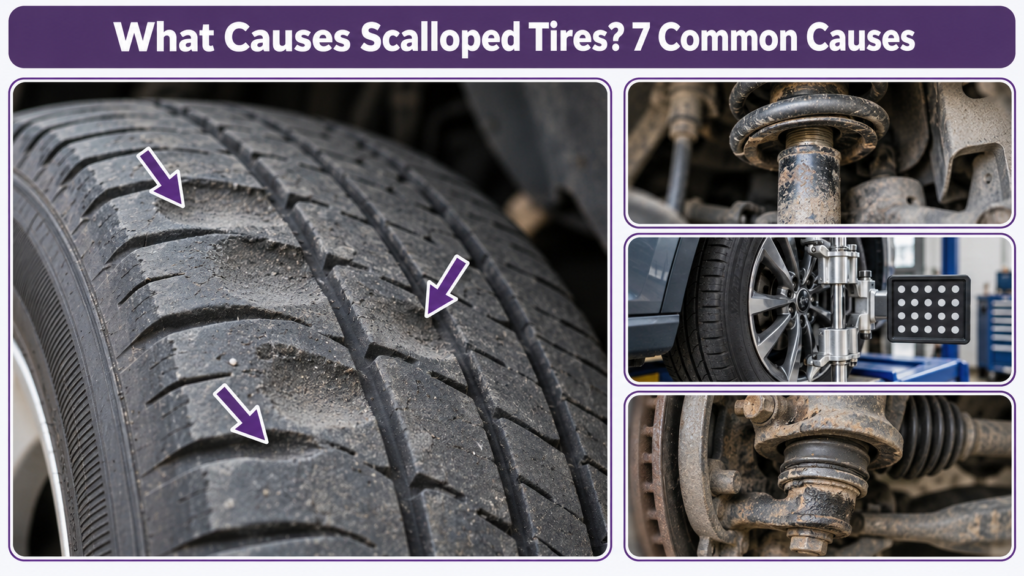
Scalloped tire wear usually develops because the tire experiences inconsistent contact or uneven loading against the road. Several mechanical and maintenance problems can contribute to this condition.
Identifying the exact cause is important because replacing the damaged tire without repairing the underlying problem may allow the same wear pattern to develop again.
1. Worn Shock Absorbers
Worn shock absorbers are among the most common causes of scalloped tire wear.
Shock absorbers control suspension movement and help keep the tires firmly against the road surface.
When shocks become worn, they cannot control bouncing effectively. Excessive wheel movement can cause repeated changes in the force applied to the tread.
Over time, these irregular forces may create alternating high and low areas around the tire.
Drivers may also notice excessive bouncing, unstable handling, or increased body movement over bumps.
Replacing worn shock absorbers can help restore suspension control and prevent continued uneven wear.
2. Damaged or Worn Struts
Struts perform an important role in supporting and controlling vehicle suspension movement.
When struts deteriorate, the wheels may move excessively over uneven road surfaces. This can create inconsistent pressure between the tire and pavement.
The resulting wear may appear as repeated scalloped patches around the tire circumference.
Common signs of worn struts include poor ride control, excessive bouncing, unusual suspension noises, and uneven tire wear.
A professional suspension inspection can determine whether strut replacement is necessary.
3. Unbalanced Tires and Wheels
Wheel imbalance occurs when the tire and wheel assembly has uneven weight distribution.
At higher speeds, this imbalance can create vibration and repeated changes in the forces acting on the tire.
Over time, these forces may contribute to scalloped tire wear.
Drivers often notice vibrations through the steering wheel, seats, or vehicle body.
A technician can perform wheel balancing using specialized equipment to identify and correct the imbalance.
Balancing wheels is particularly important after installing new tires or when unexplained vibrations develop.
4. Incorrect Wheel Alignment
Improper wheel alignment can contribute to scalloped tires by changing how the tread contacts the road.
Wheel alignment includes three important angles:
- Camber: The inward or outward tilt of the wheel.
- Toe: The direction the wheels point relative to the vehicle.
- Caster: The forward or backward tilt of the steering axis.
When these angles fall outside manufacturer specifications, tires may experience uneven loading or sideways scrubbing.
Although incorrect alignment is more strongly associated with feathering and one-sided wear, it can contribute to scalloping when combined with other mechanical problems.
A professional alignment inspection helps identify these issues.
5. Worn Suspension Components
Suspension systems contain several components that maintain wheel position and stability.
Worn ball joints, control arm bushings, and other suspension parts can allow unwanted wheel movement.
This movement changes how the tire contacts the pavement, potentially contributing to uneven tread wear.
Common warning signs include knocking sounds, loose steering response, and unusual tire movement.
Repairing damaged suspension components helps maintain consistent wheel positioning and improves overall handling.
6. Improper Tire Pressure
Incorrect tire pressure can contribute to irregular tread wear and may worsen existing scalloping.
Underinflated tires generally experience greater wear along their shoulders, while excessive inflation can accelerate wear near the center.
Improper pressure also changes tire flexibility and the way forces are distributed across the tread.
Although pressure problems alone do not always produce classic scalloping, they can contribute to abnormal wear when combined with other issues.
Check tire pressure regularly and follow the vehicle manufacturer’s recommended cold inflation pressure.
7. Loose or Worn Wheel Bearings
Wheel bearings allow the wheels to rotate smoothly while maintaining proper support.
When a wheel bearing becomes excessively worn, it may develop looseness that affects wheel stability.
Significant movement can contribute to irregular tire wear, including scalloped patterns.
Common symptoms include humming or grinding noises, vibration, and looseness detected during inspection.
Because bearing problems can affect vehicle safety, suspected damage should be inspected promptly by a qualified mechanic.
Common Symptoms of Scalloped Tires
Scalloped tire wear can produce several warning signs before the condition becomes severe.
Recognizing these symptoms early can help prevent additional tire damage and identify mechanical problems.
Unusual Tire Noise
One of the most noticeable symptoms is increased road noise.
Scalloped tires often create a rhythmic humming, roaring, or thumping sound as irregular tread sections contact the pavement.
The noise may become louder as vehicle speed increases.
Steering Wheel or Vehicle Vibration
Uneven tread surfaces can create vibrations while driving.
Depending on which tires are affected, drivers may feel vibration through the steering wheel, seat, or vehicle floor.
However, vibration can also result from wheel imbalance or other mechanical problems, so inspection is important.
Uneven Tread Wear
Visible tread depressions are a key indicator of scalloping.
When examining the tire, you may notice alternating worn and less-worn sections around its circumference.
A tread depth gauge can help identify significant differences between these areas.
Reduced Driving Comfort
Scalloped tires may produce a rougher ride because the tread no longer rolls against the pavement as evenly.
In severe cases, the vehicle may feel less stable or predictable.
Scalloped Tires vs. Cupped Tires vs. Feathered Tires
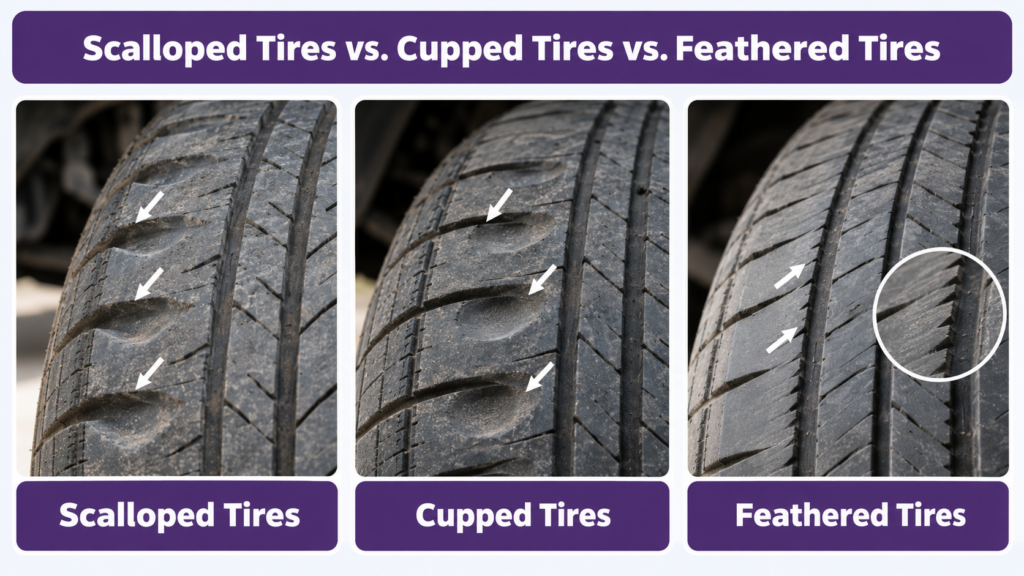
Different tire wear patterns may look similar, but they often indicate different mechanical problems.
Scalloped tires and cupped tires refer to essentially the same type of irregular wear. Feathering is a separate pattern, usually associated with incorrect toe alignment.
| Tire wear pattern | Appearance | Common causes |
|---|---|---|
| Scalloping | Repeated dips or uneven patches | Worn shocks, imbalance, suspension problems |
| Cupping | Scooped-out tread sections | Suspension or wheel balance problems |
| Feathering | Sharp and smooth edges across tread ribs | Incorrect toe alignment |
| Center wear | Excessive wear in the middle | Overinflation |
| Shoulder wear | Excessive wear along both edges | Underinflation |
| One-sided wear | One shoulder wears faster | Camber or toe misalignment |
Correctly identifying the wear pattern helps determine which vehicle components require inspection.
How to Fix Scalloped Tires
Fixing scalloped tires requires identifying and correcting the mechanical problem that created the uneven wear.
Although the worn rubber cannot be restored, repairing the underlying cause can prevent further damage to replacement tires.
Inspect the Suspension System
Begin with a professional inspection of the shocks, struts, ball joints, bushings, and other suspension components.
Replace worn or damaged parts as recommended.
This is especially important when the vehicle experiences excessive bouncing or unstable handling.
Balance the Wheels
Wheel balancing helps correct uneven weight distribution in the tire and wheel assembly.
A technician uses balancing equipment to identify heavy spots and installs appropriate balancing weights.
Proper balancing can reduce vibration and help prevent future irregular wear.
Check Wheel Alignment
Incorrect wheel alignment should be corrected according to the vehicle manufacturer’s specifications.
A technician measures toe, camber, and caster and adjusts the applicable settings.
Alignment is especially important after replacing worn steering or suspension components.
Replace Severely Scalloped Tires
Scalloped tread wear cannot be reversed because rubber has already been removed.
Mildly affected tires may remain serviceable if they have sufficient tread depth and no structural damage.
However, severely scalloped tires can continue producing excessive noise and vibration even after mechanical repairs.
A tire professional should evaluate tread depth, wear severity, and overall condition before determining whether replacement is necessary.
Are Scalloped Tires Dangerous to Drive On?
Scalloped tires can become a safety concern, particularly when uneven wear is severe or the underlying suspension problem remains unresolved.
Irregular tread contact can affect ride quality, traction, and vehicle stability. Excessively worn tread can also reduce performance on wet roads.
Additionally, worn shocks or suspension components may negatively affect braking and handling.
Not every mildly scalloped tire requires immediate replacement. However, tires showing exposed cords, structural damage, insufficient tread depth, or severe irregular wear should not remain in service.
Have the vehicle inspected promptly if scalloping is accompanied by strong vibration, unstable steering, or unusual mechanical noises.
How to Prevent Scalloped Tire Wear
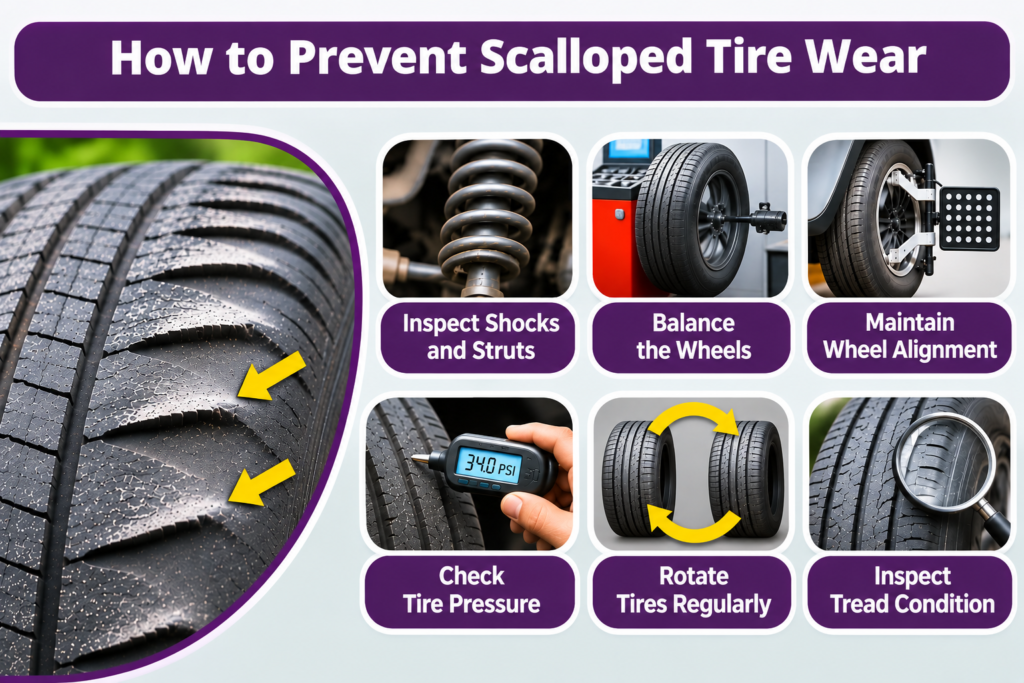
Regular vehicle maintenance is the most effective way to reduce the risk of scalloped tires.
Preventive care helps maintain consistent tire contact with the road and reduces unnecessary stress on suspension components.
Essential Prevention Tips
- Inspect shocks and struts: Replace worn components when necessary.
- Balance wheels: Check wheel balance when vibrations develop or new tires are installed.
- Maintain wheel alignment: Correct alignment problems before abnormal wear becomes severe.
- Rotate tires regularly: Follow the vehicle manufacturer’s recommended rotation schedule.
- Check tire pressure: Measure cold tire pressure at least once a month.
- Inspect tread condition: Look for uneven patches, depressions, and unusual wear.
- Avoid severe road impacts: Drive carefully around potholes and damaged road surfaces.
Regular tire inspections can reveal developing problems before significant rubber loss occurs.
Frequently Asked Questions
Can Scalloped Tires Be Fixed?
The mechanical cause of scalloped tire wear can often be corrected through suspension repairs, wheel balancing, or alignment. However, the existing worn tread cannot be restored. Mildly scalloped tires may remain usable after inspection, while severely affected tires usually require replacement.
What Do Scalloped Tires Sound Like?
Scalloped tires commonly produce humming, roaring, or rhythmic thumping noises. These sounds may become louder as vehicle speed increases. However, similar noises can result from wheel bearings or other mechanical problems, so a professional inspection is recommended.
Can Bad Shocks Cause Scalloped Tires?
Yes. Worn shock absorbers can allow excessive wheel movement, creating inconsistent tire contact with the pavement. Over time, this movement may produce repeated dips across the tread. Replacing worn shocks can help prevent additional scalloped wear.
Can Scalloped Tires Cause Vibration?
Yes. Uneven tread surfaces can contribute to steering wheel or vehicle vibration. However, vibration may also indicate wheel imbalance, damaged suspension parts, or other problems. A tire and suspension inspection can help identify the underlying cause.
Do Scalloped Tires Need to Be Replaced?
Not all scalloped tires require immediate replacement. Tires with mild wear may remain serviceable after the mechanical cause is repaired. However, severe scalloping, insufficient tread depth, or structural damage can make tire replacement necessary for safe driving.