
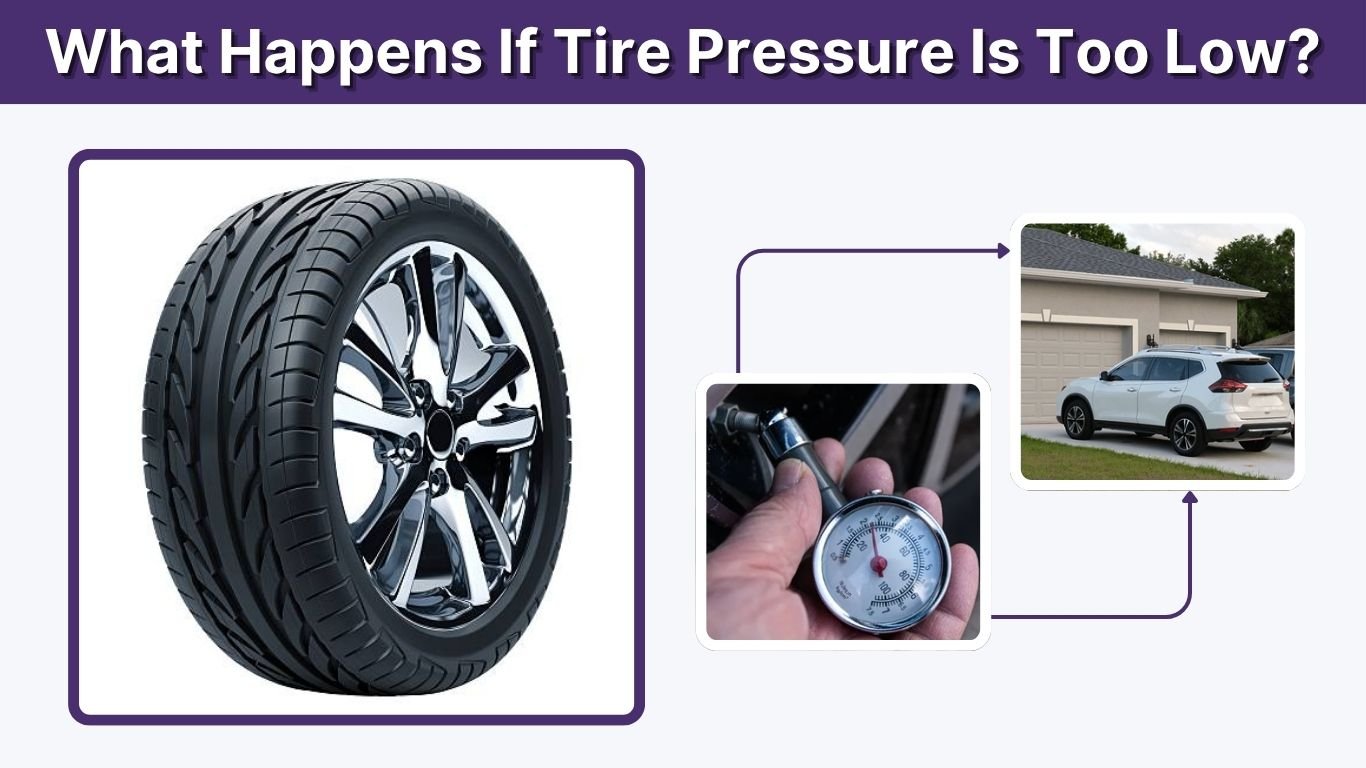
Have you ever noticed your car feeling harder to steer or a tire pressure warning appearing on your dashboard? Low tire pressure might seem like a minor problem, but it can affect your vehicle’s safety, performance, and fuel efficiency. Underinflated tires create more resistance, wear out faster, and increase the risk of tire damage or failure. Understanding what happens if tire pressure is too low can help you recognize early warning signs, prevent expensive repairs, and maintain safer driving conditions on the road.
What Happens If Tire Pressure Is Too Low?
When tire pressure falls below the manufacturer’s recommended level, the tire cannot support the vehicle’s weight as efficiently as intended. Its sidewalls flex more, generating additional heat and changing how the tire contacts the road. These effects can reduce driving performance, accelerate wear, and increase the risk of tire failure.
Reduced Vehicle Handling and Stability
Low tire pressure changes how tires respond to steering inputs. Underinflated tires flex excessively, making the vehicle feel less responsive, especially during cornering or sudden lane changes.
Drivers may notice sluggish steering, reduced stability, or a tendency for the vehicle to pull toward one side when one tire is significantly underinflated.
These handling problems become particularly dangerous during emergency maneuvers or when traveling at higher speeds.
Increased Risk of Tire Blowouts
One serious consequence of insufficient tire pressure is increased heat buildup inside the tire.
As an underinflated tire rotates, its sidewalls bend repeatedly. Excessive flexing generates heat, which can damage the tire’s internal structure.
Under severe conditions, this damage may lead to tread separation or a sudden tire failure.
The danger increases during prolonged highway driving, hot weather, or when carrying heavy loads.
Longer Braking Distances
Underinflated tires can negatively affect braking performance by changing the tire’s shape and contact with the road.
Significant underinflation may reduce available traction and increase stopping distances, particularly on wet surfaces.
This means drivers may have less control when braking suddenly to avoid an obstacle.
Maintaining proper pressure helps tires provide the braking and handling performance intended by the manufacturer.
7 Common Effects of Driving With Low Tire Pressure
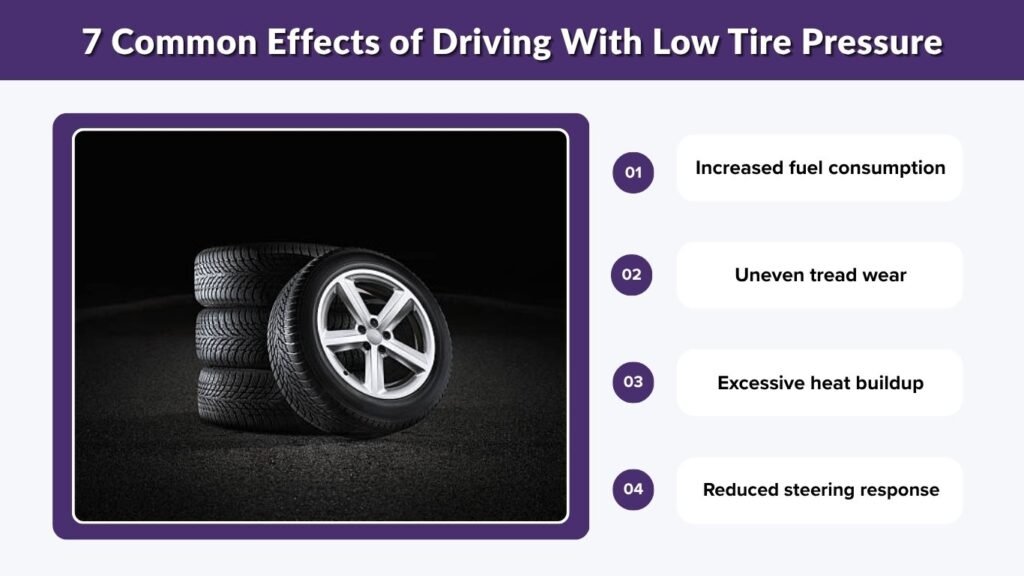
Low tire pressure affects more than the appearance of your tires. It influences fuel consumption, durability, handling, and overall driving safety. Although mild underinflation may not produce immediate symptoms, continued driving with insufficient pressure can gradually damage tires and increase maintenance expenses.
Main Problems Caused by Underinflated Tires
- 1. Increased fuel consumption: Low pressure increases rolling resistance, forcing the engine to use more energy to move the vehicle.
- 2. Uneven tread wear: Underinflated tires often wear faster along both outer shoulders because their shape changes under load.
- 3. Excessive heat buildup: Increased sidewall flexing generates heat that may weaken internal tire components.
- 4. Reduced steering response: Soft tires can make steering feel less precise, especially when turning.
- 5. Higher tire failure risk: Severe underinflation may contribute to structural damage, tread separation, or blowouts.
- 6. Reduced tire lifespan: Excessive wear and internal damage can require tire replacement earlier than expected.
- 7. Poorer driving stability: Incorrect inflation can make vehicle handling less predictable during braking and cornering.
The severity of these problems depends on how low the pressure is, how long the vehicle is driven, its speed, and its load.
How Can You Tell If Your Tire Pressure Is Too Low?
Low tire pressure is not always visually obvious. Modern radial tires can appear normal even when significantly underinflated. Understanding the warning signs helps drivers identify potential problems before excessive wear or damage develops.
Common Signs of Low Tire Pressure
Several symptoms may indicate insufficient tire pressure:
- Dashboard warning light: The Tire Pressure Monitoring System (TPMS) may illuminate when pressure becomes significantly low.
- Sluggish steering: The vehicle may respond more slowly during turns.
- Vehicle pulling sideways: Unequal tire pressures can contribute to the vehicle drifting toward one side.
- Visible tire deformation: A severely underinflated tire may look flatter than the others.
- Uneven shoulder wear: Both outer edges of the tread may wear faster than the center.
These symptoms can also have other mechanical causes. Checking pressure with a reliable gauge is the most dependable way to confirm underinflation.
Can Tire Pressure Be Low Without a Warning Light?
Yes. A tire can be underinflated without activating the dashboard warning system.
Many TPMS systems are designed to detect significant pressure loss rather than small deviations from the recommended PSI.
Therefore, the absence of a warning light does not guarantee that every tire has the correct pressure.
Monthly manual pressure checks remain important, even when your vehicle has electronic monitoring.
How Low Is Too Low for Tire Pressure?
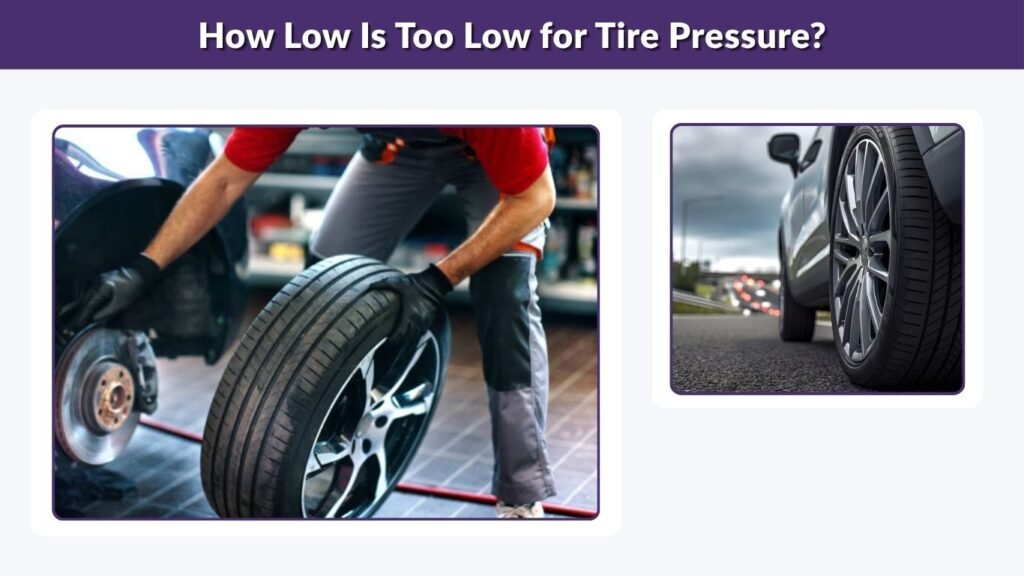
The definition of low tire pressure depends on the vehicle and its manufacturer-recommended PSI. Passenger cars, SUVs, and trucks may require different pressures depending on tire size, load capacity, and vehicle design. There is no single PSI value that is safe for every vehicle.
Understanding Recommended Tire Pressure
Many passenger vehicles have recommended cold tire pressures somewhere around 30–35 PSI, although actual requirements vary considerably.
The correct pressure appears on the tire information label inside the driver’s door area or in the owner’s manual.
For example, if the manufacturer recommends 35 PSI and your gauge shows 30 PSI, the tire is 5 PSI below its intended pressure.
That difference should be corrected rather than ignored.
Never use the maximum pressure printed on the tire sidewall as your normal inflation target.
Is It Safe to Drive With Very Low Tire Pressure?
Driving with significantly low tire pressure is unsafe, especially over long distances or at highway speeds.
A severely underinflated tire may experience excessive deformation and overheating, increasing the possibility of internal damage.
If a tire looks visibly flat, is rapidly losing air, or the vehicle becomes difficult to control, stop in a safe location.
Do not continue driving on a flat or severely underinflated tire. Arrange roadside assistance or use an appropriate spare if needed.
What Should You Do If Your Tire Pressure Is Too Low?
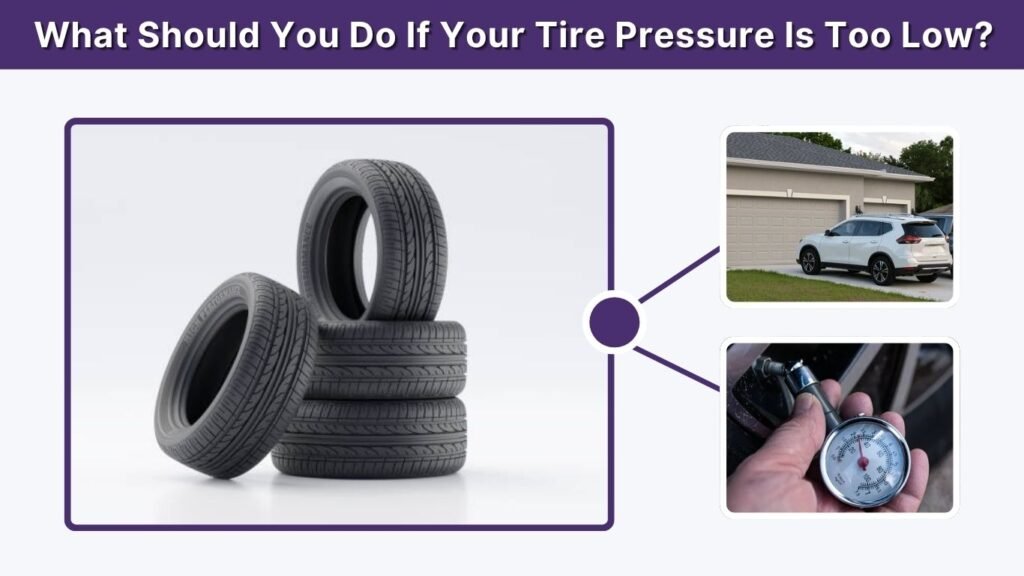
When tire pressure falls below the recommended level, correcting it promptly helps prevent further damage. The appropriate response depends on how much pressure has been lost and whether the tire has a puncture or another mechanical problem.
Steps to Fix Low Tire Pressure
Follow these steps to restore proper inflation:
- Park safely: Choose a level location away from moving traffic.
- Find the correct PSI: Check the driver’s doorjamb label or vehicle owner’s manual.
- Measure the pressure: Use an accurate tire pressure gauge, preferably before driving.
- Inspect the tire: Look for visible punctures, cuts, bulges, and other damage.
- Inflate the tire: Add air until it reaches the manufacturer’s recommended cold pressure.
- Check all tires: Measure each tire because more than one may be underinflated.
- Monitor the pressure: Recheck after inflation to identify recurring air loss.
For the most accurate measurement, tires should be cold, meaning the vehicle has been parked for at least three hours.
What If the Warning Light Appears While Driving?
If your low tire pressure warning illuminates, reduce speed smoothly and find a safe place to stop.
Inspect the tires and measure their pressure when possible.
If a tire is only moderately low and has no signs of damage, it may be possible to reach a nearby air pump cautiously. However, a flat or severely underinflated tire should not be driven on.
If the warning remains after correcting inflation, consult the owner’s manual or have the TPMS inspected.
How to Prevent Low Tire Pressure Problems
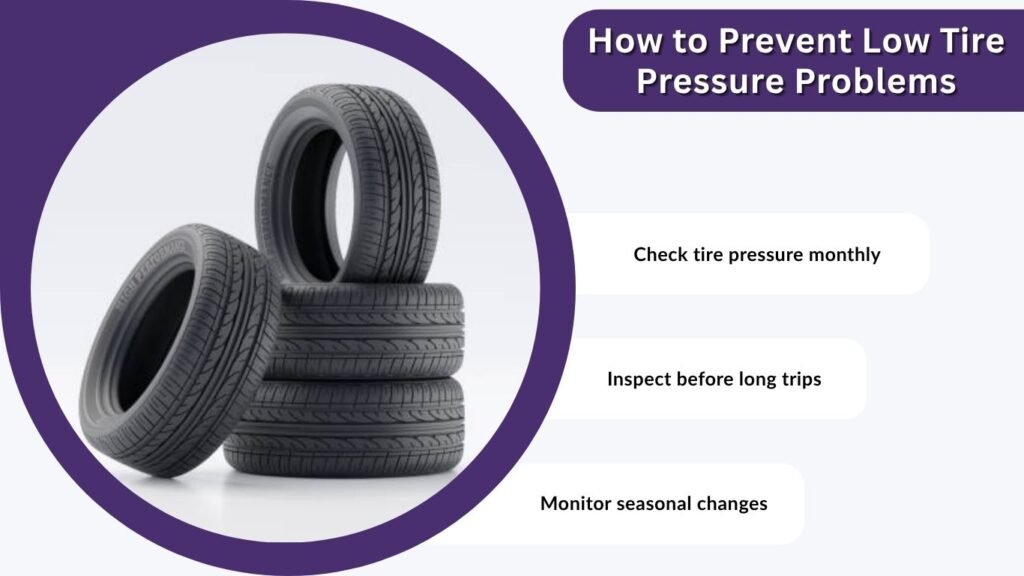
Preventing underinflation requires regular maintenance rather than waiting for warning lights or noticeable changes in driving performance. Tire pressure naturally varies with temperature and gradually decreases over time, making routine inspections essential for vehicle safety.
Essential Tire Maintenance Tips
- Check tire pressure monthly: Use a reliable gauge before the tires become warm from driving.
- Inspect before long trips: Confirm correct inflation and examine tires for damage.
- Monitor seasonal changes: Cold temperatures can temporarily reduce tire pressure.
- Maintain recommended PSI: Follow the manufacturer’s specifications for your vehicle.
- Investigate repeated pressure loss: Have punctures, valve stems, and wheel seals professionally inspected when necessary.
Why Does My Tire Pressure Keep Getting Low?
Repeated pressure loss can occur because of temperature fluctuations, gradual air permeation, punctures, or damaged valve components.
If all four tires lose similar amounts of pressure during a temperature drop, colder weather may explain the change.
However, if one tire repeatedly loses air faster than the others, a slow leak is more likely.
A professional tire inspection can identify the cause and determine whether repair or replacement is necessary.
FAQs
1. What Happens If You Drive With Low Tire Pressure?
Driving with low tire pressure can reduce vehicle stability, increase fuel consumption, accelerate tread wear, and raise the risk of tire failure.
2. Can Low Tire Pressure Damage Your Car?
Low pressure primarily damages tires, but the resulting handling problems can also affect overall vehicle safety. Severe tire failure may cause additional vehicle damage.
3. Does Low Tire Pressure Affect Gas Mileage?
Yes. Underinflated tires create more rolling resistance, meaning the engine must work harder and consume more fuel to maintain speed.
4. Can Low Tire Pressure Cause a Blowout?
Yes. Severe underinflation can cause excessive sidewall flexing and heat buildup, increasing the risk of structural tire failure or a blowout.
5. How Often Should You Check Tire Pressure?
Check tire pressure at least once a month and before long trips. Additional checks are useful after major temperature changes.