
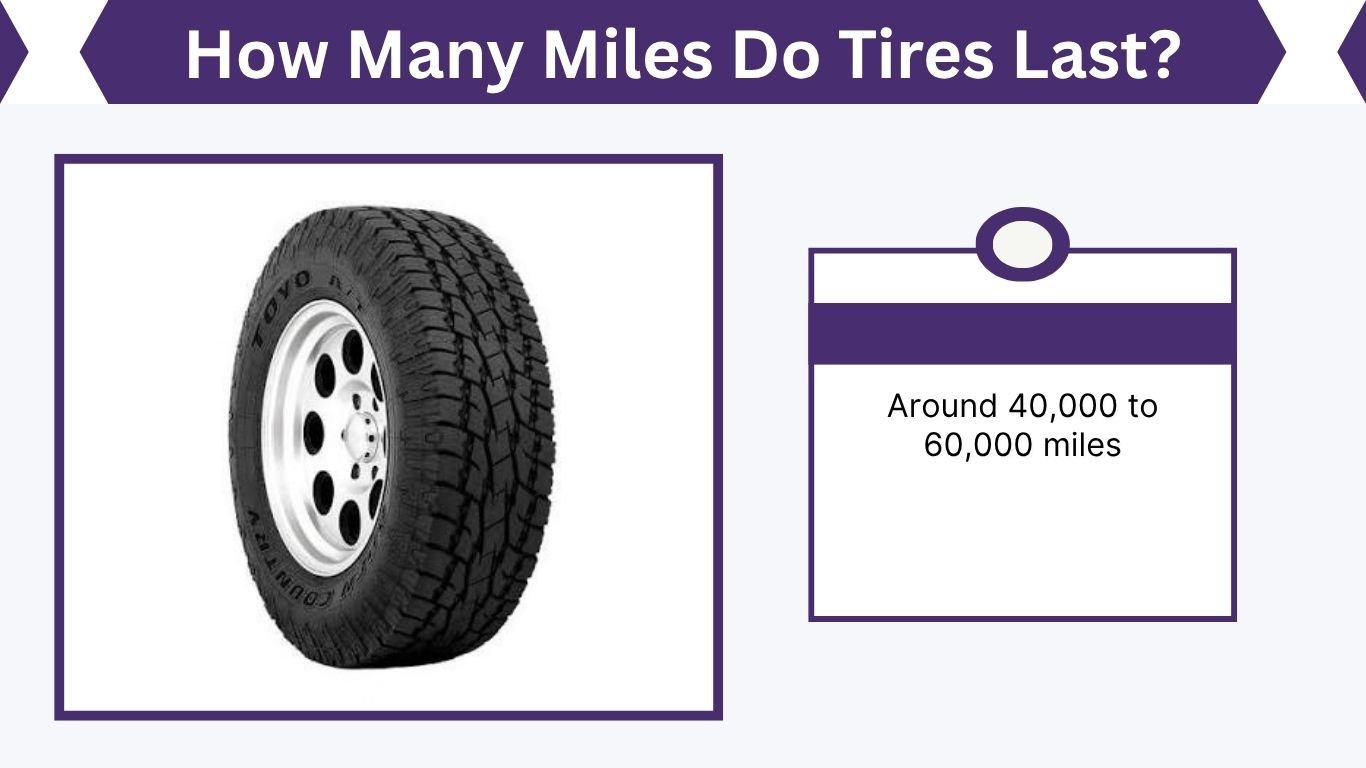
How many miles do tires last? Most passenger-car tires typically last around 40,000 to 60,000 miles, although some premium touring tires may reach 70,000 miles or more under favorable conditions. Tire type, rubber compound, driving habits, road conditions, vehicle weight, inflation pressure, and maintenance all affect how quickly tires wear. Mileage alone also does not determine whether a tire is safe. Understanding tread depth, tire age, alignment, rotation schedules, and visible damage can help you know when replacement is necessary.
How Many Miles Do Tires Last on Average?
The average tire can provide tens of thousands of miles of service, but there is no single mileage figure that applies to every vehicle. Standard passenger tires generally last longer than performance tires, while aggressive off-road or winter tires may wear differently. Manufacturer treadwear warranties can provide a useful reference, but real-world mileage depends heavily on vehicle and driving conditions.
Average Tire Mileage
For many passenger vehicles, a practical lifespan range is:
- Standard passenger tires: 40,000–60,000 miles
- Touring tires: 50,000–80,000 miles
- All-season tires: 40,000–70,000 miles
- Performance tires: 20,000–40,000 miles
- Summer performance tires: 20,000–40,000 miles
- Winter tires: approximately 20,000–40,000 miles of winter use
- All-terrain tires: 40,000–60,000 miles
- Mud-terrain tires: 30,000–50,000 miles
These figures should be treated as general estimates rather than guaranteed replacement intervals.
How Many Miles Do New Tires Last?
Brand-new tires commonly last somewhere around 40,000 to 60,000 miles when properly maintained. However, some models come with treadwear warranties of 70,000 or even 80,000 miles.
A high mileage warranty does not mean every driver will achieve that figure. Frequent highway driving on smooth roads can be easier on tires than repeated hard acceleration, aggressive cornering, potholes, and stop-and-go city driving.
How Many Miles Do Car Tires Usually Last?
Most everyday car tires fall into roughly the 40,000-to-60,000-mile range. A driver covering 12,000 miles annually could therefore use a set for approximately three to five years.
Tire condition should still be inspected regularly because age-related rubber deterioration can occur even when the vehicle is driven very little.
Tire Lifespan by Tire Type
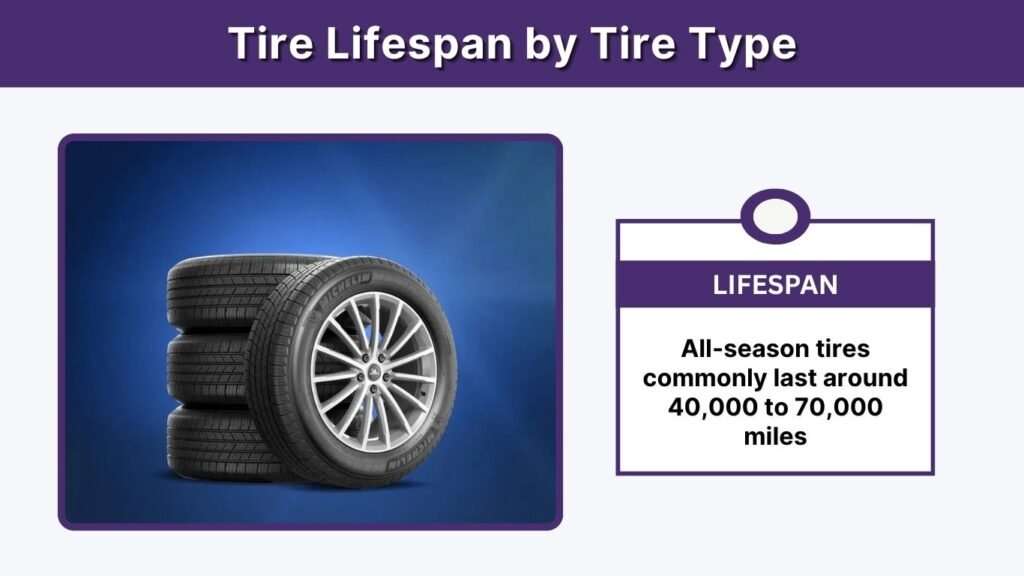
Different tire designs prioritize different characteristics. Touring tires emphasize longevity and comfort, while performance tires prioritize grip. Winter tires use softer compounds for cold weather, and all-terrain tires require stronger tread patterns for unpaved surfaces. These design differences explain why tire mileage can vary substantially even between tires fitted to similar vehicles.
How Many Miles Do All-Season Tires Last?
All-season tires commonly last around 40,000 to 70,000 miles. Some long-wearing touring all-season models can exceed this range when used under ideal conditions.
They are popular because they balance tread life, comfort, wet-road performance, and moderate cold-weather capability.
How Many Miles Do Winter Tires Last?
Winter tires often provide around 20,000 to 40,000 miles of actual winter driving. Their rubber compounds are designed to stay flexible at low temperatures.
Using winter tires during warm weather can cause them to wear considerably faster because softer winter compounds are not optimized for hot pavement.
How Many Miles Do Run-Flat Tires Last?
Run-flat tires can have a normal usable tread life comparable to conventional tires, often somewhere around 30,000 to 50,000 miles, depending on the model.
The term “run-flat” refers primarily to the tire’s ability to continue traveling for a limited distance after losing air pressure. It does not mean the tire itself lasts longer before normal tread replacement.
How Many Miles Do All-Terrain Tires Last?
Quality all-terrain tires often last approximately 40,000 to 60,000 miles. Highway-focused all-terrain tires may last longer, while tires frequently used on rocky trails, gravel, mud, or rough terrain may wear faster.
What Determines How Long Tires Last?
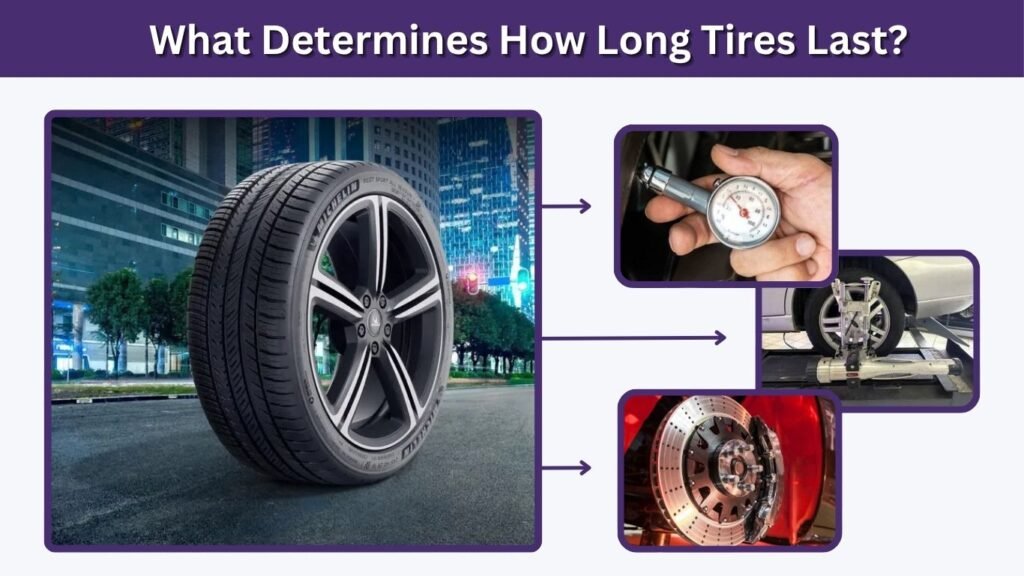
Tire lifespan is strongly influenced by how the vehicle is driven and maintained. Two drivers using the same tire model can receive dramatically different mileage. Maintaining proper pressure, correcting alignment problems, rotating the tires, and driving smoothly can help the tread wear evenly and increase the usable lifespan of the entire set.
Tire Pressure
Underinflated tires create additional heat and increase wear around the tire’s outer shoulders. Overinflated tires can concentrate wear near the center of the tread.
Check tire pressure regularly and use the vehicle manufacturer’s recommended pressure rather than relying on the maximum pressure printed on the tire sidewall.
Wheel Alignment
Poor alignment can destroy otherwise healthy tires surprisingly quickly. Common signs include excessive wear on one edge of the tread, vehicle pulling, or an off-center steering wheel.
Correcting alignment problems early may prevent thousands of miles of unnecessary tread loss.
Driving Habits
Tires generally wear faster when drivers regularly:
- Accelerate aggressively
- Brake hard
- Take corners at high speeds
- Drive at excessive speeds
- Carry heavy loads
- Frequently travel on rough roads
Smoother acceleration, controlled braking, and moderate cornering reduce stress on the tread.
Tire Rotation
Tires on different axle positions do not normally wear at identical rates. Front tires may experience increased wear because of steering and braking forces.
Regular rotation helps distribute wear among all four tires. Many vehicles and tire manufacturers recommend rotation at intervals somewhere around 5,000 to 8,000 miles, although the vehicle owner’s manual should be followed.
How Long Do Tires Last by Vehicle Type?
Vehicle weight, drivetrain, suspension design, power output, and usage can significantly affect tire life. A lightweight commuter car may place far less stress on its tires than a powerful electric vehicle, heavy SUV, pickup truck, or commercial vehicle. Tire models should therefore be matched to the vehicle’s load capacity and intended driving environment.
How Many Miles Do SUV Tires Last?
SUV tires commonly last around 40,000 to 60,000 miles, with highway-oriented models sometimes lasting considerably longer.
Large SUVs are heavier than many passenger cars, meaning tire pressure, rotation, and alignment become particularly important for avoiding premature wear.
How Many Miles Do Truck Tires Last?
Light-truck tires commonly last around 40,000 to 70,000 miles under normal road conditions. Heavy towing, commercial use, construction sites, and off-road driving can shorten that lifespan.
Heavy-duty commercial and semi-truck tires are very different because their service life depends on axle position, loads, maintenance programs, and whether the casing is eventually retreaded.
How Many Miles Do EV and Tesla Tires Last?
Electric vehicles can sometimes wear tires faster because they are relatively heavy and can deliver immediate torque. Depending on the vehicle, tire type, driving style, alignment, and rotation schedule, EV tire life may fall around 25,000 to 50,000 miles.
Drivers who frequently use strong acceleration may experience substantially faster wear.
Signs Your Tires Need Replacement
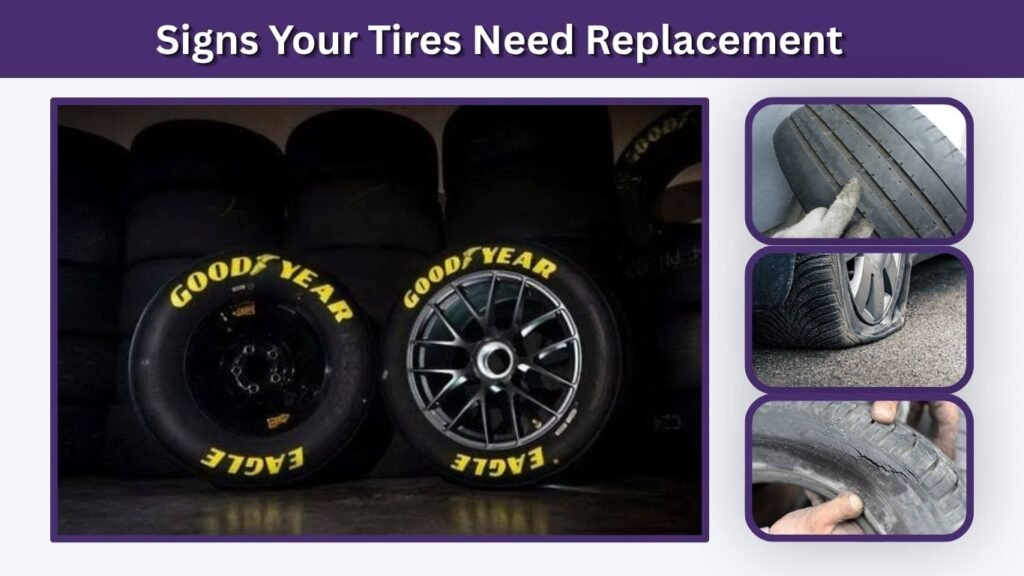
A tire should not automatically remain in service simply because it has not reached an expected mileage figure. Tire damage, insufficient tread depth, cracking, irregular wear, and aging can make replacement necessary much earlier. Inspecting the tires routinely allows problems to be identified before traction, braking, handling, or structural integrity becomes seriously compromised.
Check the Tread Depth
Watch for these warning signs:
- Tread reaches the built-in wear bars
- Tread depth approaches 2/32 inch
- One side is significantly more worn
- Bald areas appear across the tread
- Tires repeatedly lose pressure
- Cracks appear in the rubber
- Bulges or bubbles develop in the sidewall
Once tread becomes too shallow, wet-weather traction and resistance to hydroplaning can deteriorate significantly.
Uneven Tire Wear
Uneven wear may indicate improper inflation, poor wheel alignment, worn suspension parts, or delayed tire rotation.
Replacing the tire without correcting the underlying issue can cause the new tire to develop the same wear pattern.
Vibration While Driving
Persistent vibration can result from tire imbalance, irregular tread wear, bent wheels, suspension problems, or internal tire damage.
A vehicle that suddenly begins vibrating should be inspected rather than driven until the tire reaches an estimated mileage limit.
Can You Make Tires Last Longer?
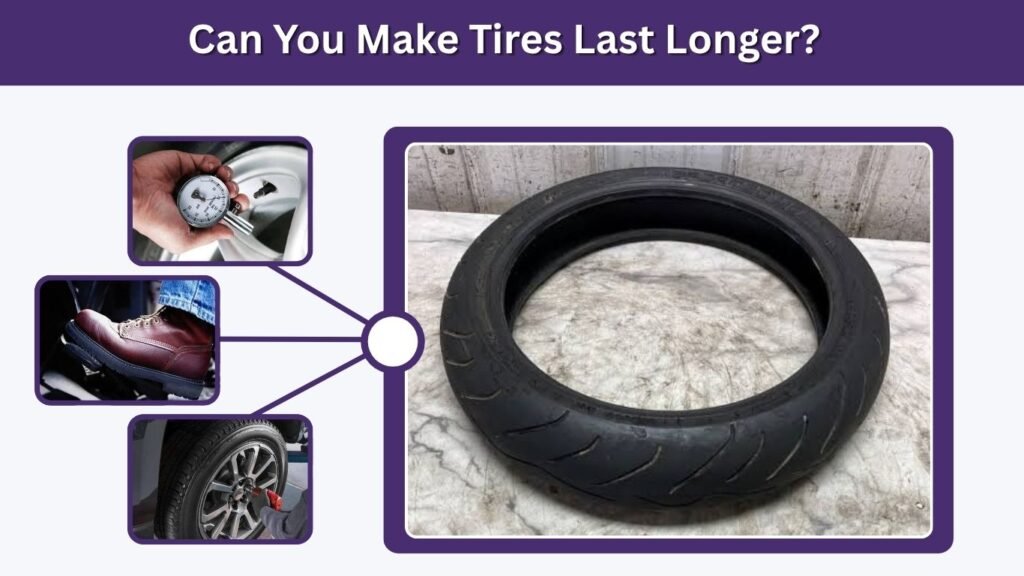
Good tire maintenance can make a significant difference in total mileage. Drivers cannot prevent normal tread wear, but they can prevent many forms of premature wear. Regular pressure checks, rotations, inspections, and alignment corrections also improve predictable handling and give you a better chance of receiving the intended service life from your tires.
Follow a Tire Maintenance Routine
To extend tire life:
- Check tire pressure at least monthly
- Rotate tires according to manufacturer recommendations
- Have alignment checked when uneven wear appears
- Keep wheels properly balanced
- Avoid aggressive acceleration and braking
- Inspect tread and sidewalls regularly
- Avoid unnecessary overloading
- Repair suspension problems promptly
Maintaining all four tires as a complete system is usually more effective than focusing only on whichever tire appears most worn.
Consider Both Mileage and Age
A vehicle that is rarely driven may have tires with plenty of remaining tread but aging rubber. Heat, sunlight, oxygen, storage conditions, and environmental exposure gradually affect tire materials.
For that reason, drivers should consider tire age alongside mileage and have older tires professionally inspected rather than assuming deep tread automatically means they are safe.
How Often Should You Replace Your Tires?
There is no universal replacement mileage. Many drivers replace tires somewhere between 40,000 and 60,000 miles, but the correct timing depends on tire condition, tread depth, age, manufacturer guidance, and vehicle use. Performance tires may require replacement considerably sooner, while premium touring tires can sometimes provide substantially greater mileage.
Do Not Depend on Mileage Alone
Mileage estimates are useful for budgeting and planning, but physical condition is more important. A tire with only 25,000 miles may require immediate replacement if it has serious damage or extreme uneven wear.
Conversely, a well-maintained tire may remain usable beyond 50,000 miles if its tread, structure, and overall condition remain within acceptable limits.
Check the Manufacturer’s Warranty
Many tire manufacturers provide mileage warranties ranging from approximately 30,000 to 80,000 miles depending on the tire model.
The warranty gives you an indication of expected tread life under specified conditions, but it should not be interpreted as a promise that every tire will remain safe until that exact mileage.
FAQs
1. How many miles do most tires last?
Most passenger-car tires last approximately 40,000 to 60,000 miles. Premium touring tires may reach 70,000 miles or more, while performance tires may wear out much sooner.
2. How many miles do good tires last?
High-quality tires commonly provide around 50,000 to 70,000 miles when properly maintained. Some long-life touring tires are designed for even higher mileage, depending on the manufacturer’s specifications.
3. How many miles do cheap tires last?
Budget tires vary considerably in quality, but some may provide approximately 30,000 to 50,000 miles. Price alone does not determine longevity, so treadwear rating, warranty, construction, and maintenance should also be considered.
4. Can tires last 100,000 miles?
Reaching 100,000 miles on one set of passenger tires is unusual. Certain tires are designed for very high tread life, but most everyday tires require replacement well before reaching 100,000 miles.
5. Should I replace tires after 50,000 miles?
Not automatically. At 50,000 miles, inspect tread depth, uneven wear, cracking, sidewall damage, tire age, and overall condition. Some tires may need replacement earlier, while others may still have usable tread beyond 50,000 miles.