
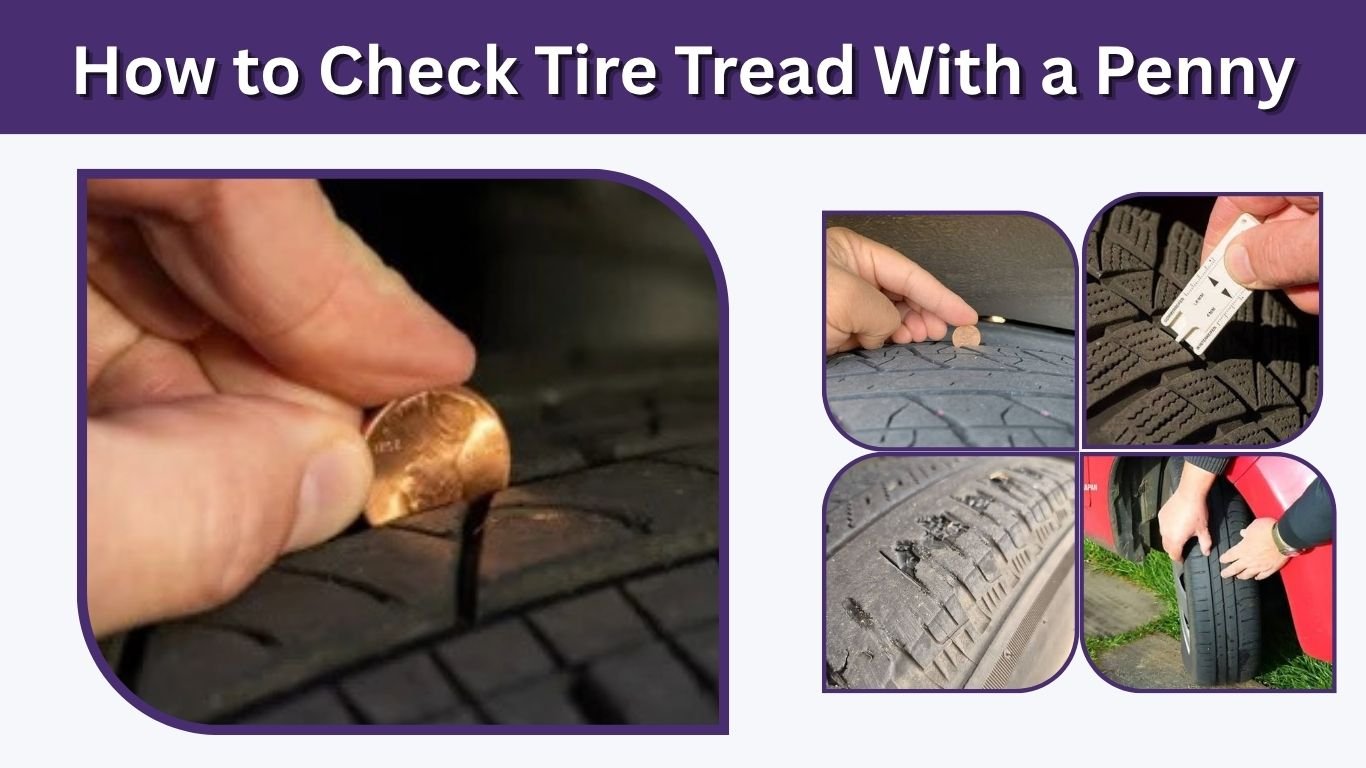
Knowing how to check tire tread with a penny gives you a quick way to estimate whether your tires are becoming dangerously worn. The traditional penny test uses Abraham Lincoln’s head as a simple reference for approximately 2/32 inch of tread depth. Although it cannot replace an accurate tread-depth gauge or professional inspection, it can help you recognize severely worn tires in seconds. This guide explains how to perform the penny test correctly, understand the results, check for uneven wear, and know when further inspection is needed.
What Is the Penny Test for Tire Tread?
The penny test is a quick method commonly used to estimate whether a tire has approximately 2/32 inch of tread remaining. It requires only a U.S. penny and can be performed without removing the tire. However, it is best considered a basic screening test rather than a precise measurement of overall tire condition.
Why Tire Tread Depth Matters
Tire tread contains grooves that help maintain contact with the road and channel water away from the tire’s contact area. As tread becomes shallower, the tire generally becomes less capable of dealing with wet roads and standing water.
Tread depth is only one part of tire safety. Cracking, bulges, punctures, age, and uneven wear can also indicate that a tire needs professional inspection.
What the Penny Measures
The traditional method uses the distance between the edge of a U.S. penny and the top of Abraham Lincoln’s head as an approximate reference.
If the tread reaches part of Lincoln’s head when the penny is inserted correctly, there is generally more than approximately 2/32 inch of tread in that location. If the entire head remains visible, tread is likely around or below that level.
How to Check Tire Tread With a Penny
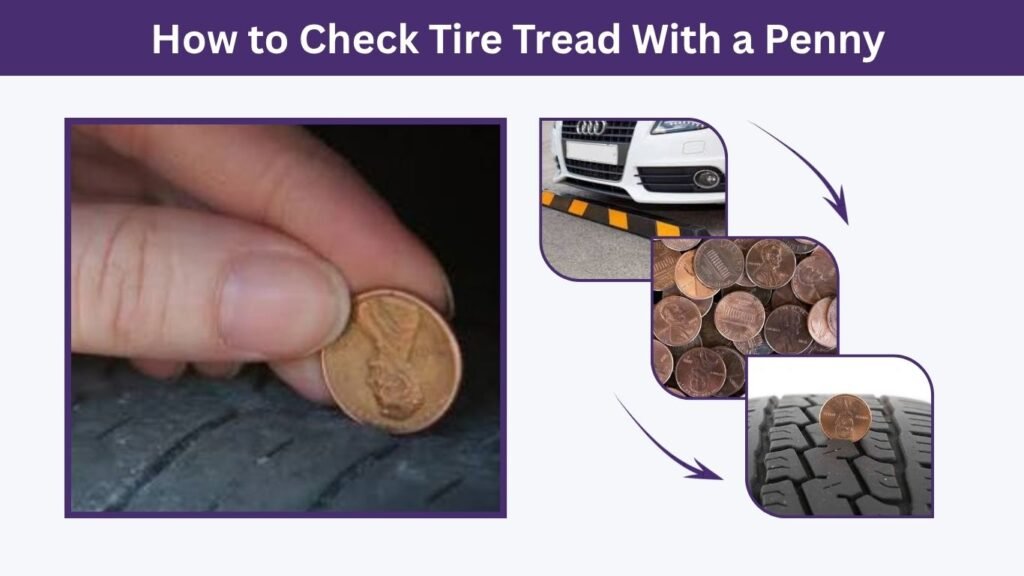
Performing the penny test takes only a few moments. For a more useful result, do not check just one groove in one location. Tires can wear differently across the center, inner edge, and outer edge, so testing several areas around each tire provides a better picture of overall tread condition.
Step-by-Step Penny Test
Follow these steps:
- Park the vehicle on a level, safe surface.
- Apply the parking brake.
- Take a standard U.S. penny.
- Turn the penny so Lincoln’s head points downward.
- Insert the penny into a main tread groove.
- Look at the top of Lincoln’s head.
- Repeat the test in several grooves.
- Check different locations around the tire.
- Repeat the process on all four tires.
Checking every tire is important because front and rear tires may wear at different rates.
Insert Lincoln’s Head Down
The orientation of the penny matters. Insert it with Abraham Lincoln’s head pointing toward the tire rather than away from it.
Push the penny into one of the major tread grooves until the edge reaches the bottom of the groove.
Do not simply place the penny on top of the tread blocks, because that will not provide a meaningful tread-depth estimate.
Check Several Parts of the Tire
Measure near the inner tread, center tread, and outer tread. Repeat the test at several points around the circumference.
One area may appear acceptable while another is severely worn.
Uneven measurements can also indicate issues such as improper tire pressure, wheel alignment problems, worn suspension components, or another mechanical condition that should be investigated.
How to Read the Penny Test Results
Understanding the result is simple, but the penny test should not be interpreted as proof that a tire is completely safe. It mainly helps identify tread that has reached a very low level. Tires may need attention before reaching this point depending on weather, driving conditions, damage, and manufacturer recommendations.
If Part of Lincoln’s Head Is Covered
If the tread covers part of Lincoln’s head, the groove you measured is generally deeper than approximately 2/32 inch.
That does not automatically mean the tire is in ideal condition. Check several locations, inspect the tire for damage, and consider using a proper tread-depth gauge for a more precise measurement.
If Lincoln’s Entire Head Is Visible
If you can see the entire top of Lincoln’s head while the penny is fully inserted into the groove, the tread is likely approximately 2/32 inch or less at that location.
At this level, the tire is severely worn and should be professionally evaluated for replacement.
Do not rely on another deeper part of the tire to justify continued use if one important tread area is excessively worn.
What Does 2/32-Inch Tire Tread Mean?
Tire tread depth in the United States is commonly expressed in thirty-seconds of an inch. New passenger tires frequently begin with substantially more tread than 2/32 inch, although exact original depth varies by tire design. By the time tread reaches around 2/32 inch, the grooves have become very shallow and wet-weather performance can be significantly reduced.
Tread Wear Indicator Bars
Modern tires include built-in tread wear indicators molded into their main grooves. These small raised bars become level with the surrounding tread when the tire reaches its designed wear limit.
Check several wear indicators around the tire.
If the tread surface is level with the wear bars, the tire has reached the point where replacement should be considered immediately according to applicable tire guidance.
Why Waiting for the Minimum Can Be Risky
The penny test identifies very low tread, but tire performance can decline before the tread reaches that level.
Shallow tread has less space to move water away from the tire, which can reduce wet-road traction. Drivers who regularly encounter heavy rain, snow, or other challenging conditions may want tires evaluated well before reaching the minimum tread depth.
How to Check Tire Tread Without a Penny
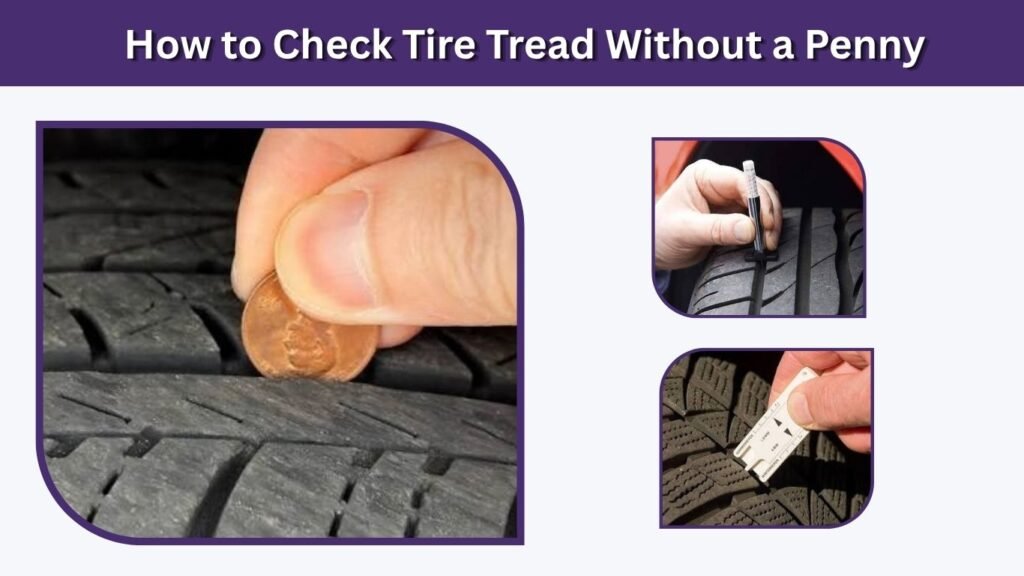
A penny is convenient, but other methods can provide more detailed information. A dedicated tread-depth gauge is inexpensive and provides an actual numerical measurement rather than a simple pass-or-fail estimate. Your tire’s built-in tread wear bars can also help identify excessive wear without requiring any separate measuring tool.
Use a Tread-Depth Gauge
A tire tread-depth gauge measures the groove directly.
To use one, place its measuring probe into a main tread groove and press the base flat against the surrounding tread blocks. Read the measurement and repeat it across multiple areas of the tire.
Digital versions can make the measurement easier to read.
Check the Wear Bars
Look inside the major tread grooves for small horizontal bars connecting adjacent tread blocks.
As the tread wears down, these indicators become increasingly noticeable. When the tread surface becomes level with a wear bar, the tire is at its designed wear limit in that location.
Signs Tire Tread Is Wearing Unevenly

Checking tire tread is not only about finding the lowest measurement. The pattern of wear can reveal information about how the tire is operating. Uneven wear may reduce tire life and sometimes indicates an underlying issue with inflation, alignment, suspension, or rotation practices.
Common Tread Wear Patterns
Watch for:
- Excessive wear in the center of the tread
- Heavy wear along both outer edges
- Greater wear on only one edge
- Irregular high and low spots
- Scalloped or cupped tread
- One tire wearing much faster than the others
- Exposed tread wear indicators
A tire shop or mechanic can help determine why unusual wear is occurring.
Center and Edge Wear
Excessive center wear can sometimes be associated with inflation or vehicle-specific loading conditions, while unusual wear along both shoulders may also be related to pressure, load, or use.
Wear concentrated on only the inner or outer edge may indicate alignment or suspension concerns.
Rather than diagnosing the cause only from appearance, have persistent uneven wear professionally inspected.
When Should You Check Tire Tread?
Checking tread regularly makes it easier to notice gradual wear before it becomes severe. It is also useful before long trips, after noticing handling changes, and when inspecting tire pressure. Combining tread checks with routine visual inspections can help you catch damage or abnormal wear earlier.
Good Times to Inspect Your Tires
Consider checking tire tread:
- During routine tire-pressure checks
- Before a long road trip
- Before periods of heavy rain or winter weather
- After a tire rotation
- When steering or handling feels different
- When you notice uneven tire wear
- After hitting a major pothole or road hazard
Regular inspection takes only a few minutes.
Other Signs a Tire May Need Replacement
Adequate tread depth does not guarantee that a tire is safe. Tires can develop structural or age-related problems even when tread remains. Inspecting the entire tire helps identify problems that the penny test cannot reveal.
Look Beyond Tread Depth
Pay attention to:
- Sidewall bulges
- Deep cracks
- Cuts or exposed internal material
- Repeated air-pressure loss
- Unusual vibration
- Visible tire deformation
- Embedded objects
- Severe uneven tread wear
A bulge, exposed structural material, or other significant damage should be evaluated promptly.
Common Penny Test Mistakes
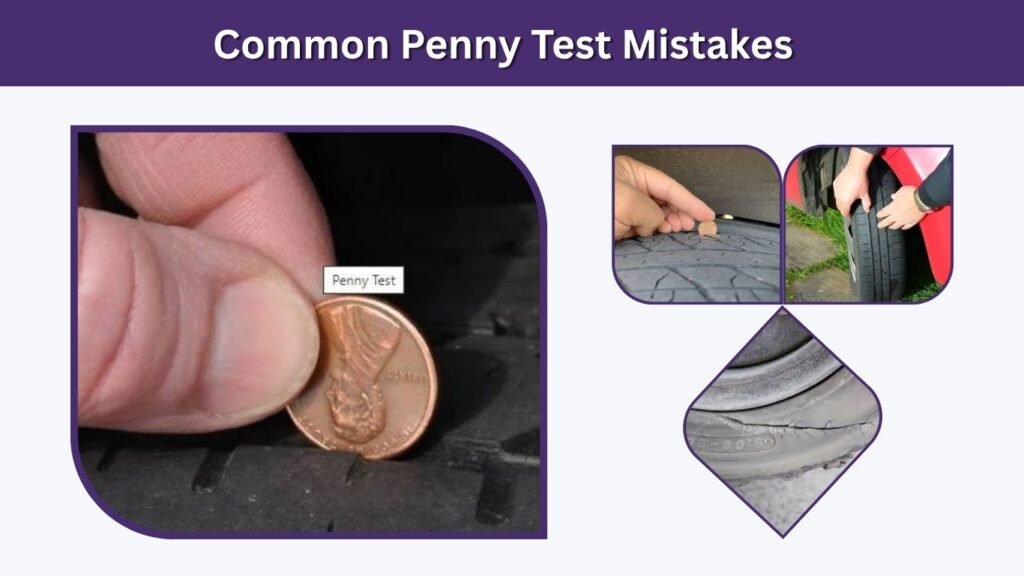
The penny test is straightforward, but incorrect technique can create misleading results. The most common problems involve inserting the penny backward, checking only one location, or treating the test as a complete tire inspection.
Mistakes to Avoid
Avoid these errors:
- Putting Lincoln’s head upward
- Checking only one tread groove
- Testing only one tire
- Ignoring the inner edge of the tread
- Measuring on top of a tread block
- Assuming deeper than 2/32 inch means perfect condition
- Ignoring cracks, bulges, or other damage
- Using the penny test instead of investigating abnormal wear
For accuracy, use a tread-depth gauge whenever you need an actual measurement.
FAQs
1. Which way should Lincoln’s head face during the penny test?
Insert the penny into the tread groove with Lincoln’s head pointing downward toward the tire. If part of his head disappears behind the tread, the groove is generally deeper than approximately 2/32 inch. If his entire head remains visible, the tread is likely around or below that level.
2. Is the penny test accurate for tire tread?
The penny test is useful as a quick estimate but is not a precision measurement. A tread-depth gauge provides a more accurate reading and allows you to compare different parts of the tire numerically.
3. Should I check every tire with a penny?
Yes. Tires can wear at different rates depending on their position, alignment, inflation, drivetrain layout, and rotation history. Check all four tires and measure several areas across each tread.
4. Can a tire be unsafe even if it passes the penny test?
Yes. A tire may have sufficient tread in one area but still have cracking, bulges, punctures, uneven wear, structural damage, or excessive age. The penny test evaluates only approximate tread depth at the point being checked.
5. What can I use if I do not have a penny?
Use the tire’s built-in tread wear indicators or a dedicated tread-depth gauge. A gauge is the better option when you need an accurate measurement rather than a simple visual estimate.