
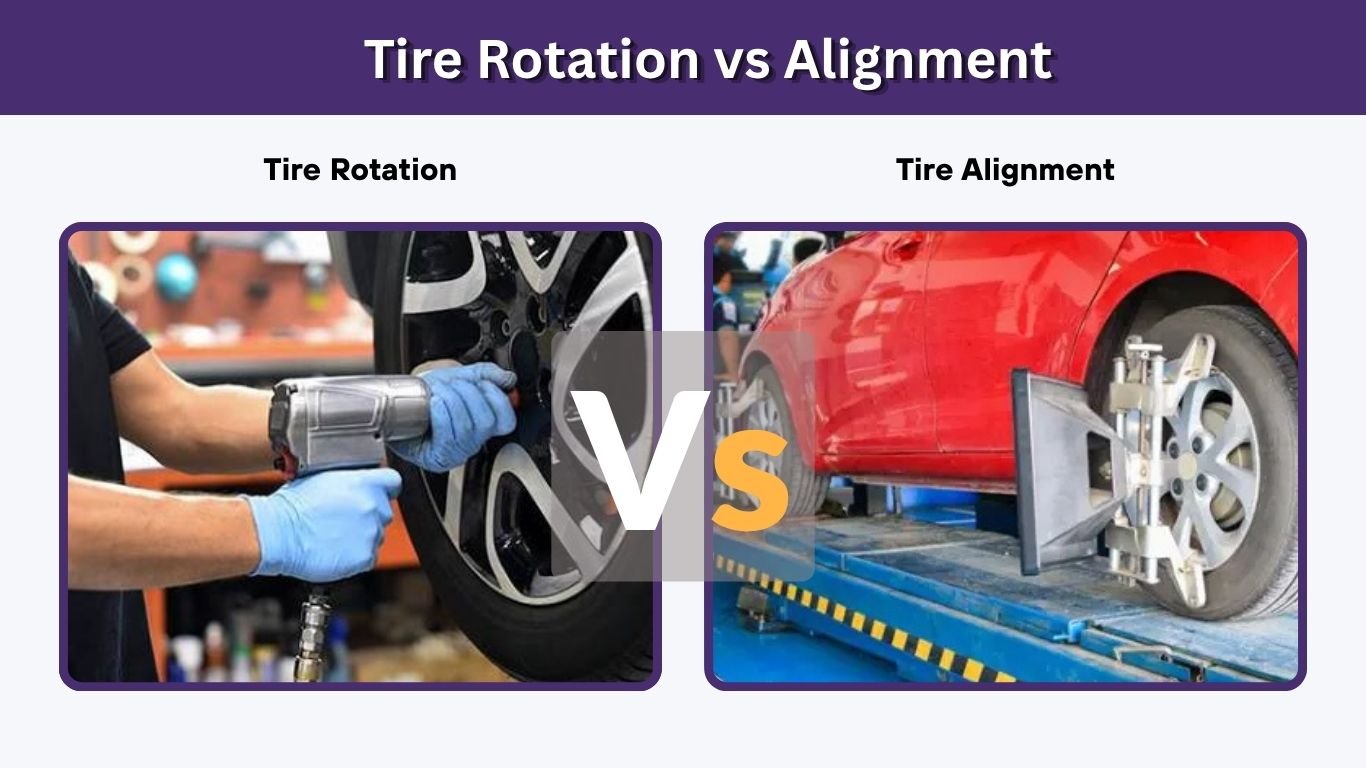
Tire rotation and wheel alignment are two different maintenance services that help your tires last longer and keep your vehicle driving safely. A tire rotation changes the position of the tires, while an alignment adjusts the angles of the wheels. Although both services affect tire wear, they solve different problems and are not automatically performed together.
Tire Rotation vs Alignment: Quick Comparison
The main difference is that tire rotation moves the tires to different positions, whereas wheel alignment corrects how the wheels contact the road.
| Feature | Tire Rotation | Wheel Alignment |
| Main purpose | Promotes even tire wear | Corrects wheel angles |
| What technicians adjust | Tire positions | Suspension and steering angles |
| Helps with | Uneven wear between front and rear tires | Pulling, crooked steering and edge wear |
| Typical frequency | Every 5,000–8,000 miles | When symptoms appear or after suspension work |
| Service time | Usually relatively quick | Usually takes longer |
| Cost level | Generally lower | Generally higher |
What Is a Tire Rotation?
A tire rotation involves moving each tire from its current position to another position on the vehicle. For example, the front tires may move to the rear while the rear tires move to the front.
The exact rotation pattern depends on the vehicle, drivetrain, tire design and whether the front and rear tires are the same size.
Why Tire Rotation Is Important
Front and rear tires do not normally wear at the same rate. On many vehicles, the front tires experience additional wear because they handle steering, braking and a significant portion of the vehicle’s weight.
Rotating the tires regularly distributes this wear more evenly. It can help:
- Extend the usable life of all four tires
- Maintain consistent handling
- Reduce irregular tread wear
- Improve traction across the vehicle
- Protect a tire manufacturer’s treadwear warranty
Common Tire Rotation Patterns
Common patterns include front-to-rear, rearward cross, forward cross and X-pattern rotation. Directional tires are normally moved from front to rear on the same side because they are designed to rotate in only one direction.
Vehicles with different-sized front and rear tires may have limited rotation options. Always follow the vehicle manufacturer’s recommendations.
What Is Wheel Alignment?
Wheel alignment is the process of adjusting the suspension angles that control how the wheels sit relative to the road and each other. The technician uses specialized equipment to measure and correct these angles according to the manufacturer’s specifications.
The service is often called tire alignment, but the tires themselves are not adjusted. The changes are made to components in the steering and suspension system.
The Three Main Alignment Angles
Camber describes whether the top of the wheel tilts inward or outward when viewed from the front.
Toe describes whether the fronts of the tires point toward or away from each other when viewed from above.
Caster relates to the steering axis angle and affects steering stability, cornering and the steering wheel’s ability to return to the center.
Incorrect alignment can cause rapid tire wear even when the tires are rotated regularly.
Is Tire Rotation the Same as Alignment?
No, a tire rotation is not the same as an alignment. During rotation, the tires are removed and installed in different positions. During alignment, the technician measures and adjusts the vehicle’s suspension geometry.
Rotation manages normal differences in tire wear. Alignment corrects improper wheel angles that may cause handling problems and abnormal wear.
Completing one service does not automatically complete the other.
Does Tire Rotation Include Alignment?
A standard tire rotation usually does not include a wheel alignment. They are separate services requiring different equipment and procedures.
Some tire shops may inspect tread wear or perform a basic alignment check during rotation. However, an inspection is not the same as a complete alignment. Ask the service provider exactly what is included before approving the work.
Similarly, an alignment service does not normally include tire rotation unless it is specifically listed in the service package.
Do You Need an Alignment After Rotating Tires?
You do not normally need an alignment after every tire rotation. Simply moving properly installed tires should not change the vehicle’s suspension angles.
However, alignment may be recommended if the technician notices unusual tread wear or if the vehicle already shows alignment-related symptoms.
Consider checking the alignment when:
- The vehicle pulls to one side
- The steering wheel is crooked while driving straight
- The inner or outer tire edges wear rapidly
- Steering feels unstable or unusually loose
- You recently hit a pothole or curb
- Suspension or steering parts were replaced
- New tires are being installed
If the vehicle feels different immediately after rotation, tire pressure, installation, balancing and existing wear patterns should also be checked.
Can Tire Rotation Affect Alignment?
A correctly performed tire rotation does not normally change wheel alignment. Alignment angles are controlled by the suspension and steering components rather than the tires’ positions.
However, rotating unevenly worn tires may make an existing alignment problem more noticeable. A vehicle may begin pulling or feel different because a worn tire has moved to another position.
This does not necessarily mean the rotation caused the problem. The service may have revealed tire wear, pressure differences, wheel imbalance or an alignment issue that was already present.
Tire Rotation and Alignment Cost
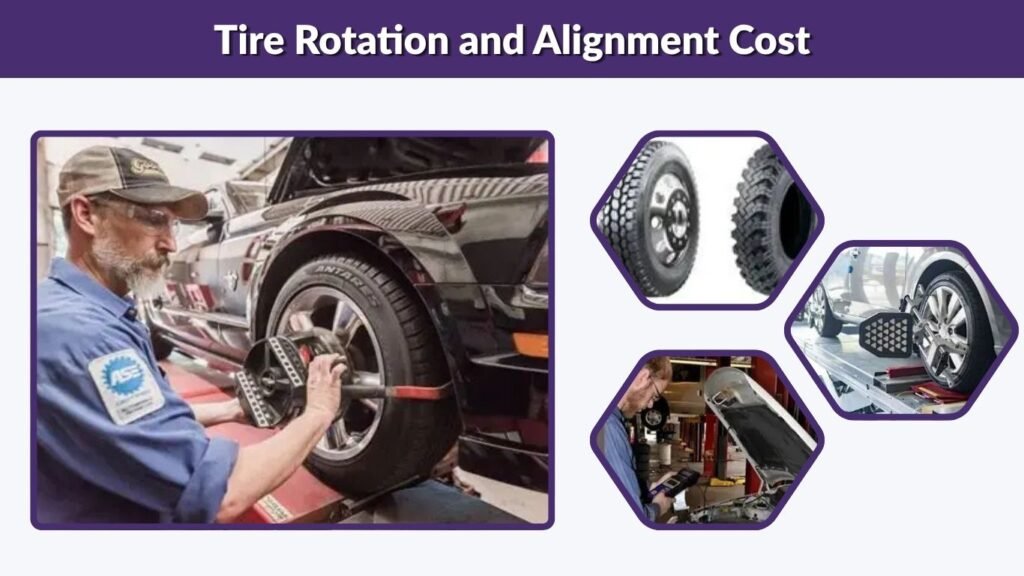
Tire rotation generally costs less because it requires less time and equipment. Some tire retailers include free rotations when you purchase a set of tires from them.
Wheel alignment usually costs more because the vehicle must be placed on an alignment rack, measured with specialized sensors and adjusted by a trained technician.
The final price can depend on:
- Vehicle type
- Local labor rates
- Two-wheel or four-wheel alignment
- Suspension condition
- Required adjustments
- Tire-shop membership or service package
- Whether rotation is included with a tire purchase
A low advertised alignment price may cover only the basic adjustment. Worn tie rods, control arms or other suspension parts may need repair before the vehicle can be aligned correctly.
Tire Rotation vs Balancing vs Alignment
Rotation, balancing and alignment are commonly confused, but each service has a different purpose.
| Service | What It Does | Common Warning Sign |
| Tire rotation | Moves tires between positions | Uneven front-to-rear wear |
| Wheel balancing | Corrects uneven weight around the tire and wheel | Vibration at certain speeds |
| Wheel alignment | Corrects suspension angles | Pulling or edge wear |
Balancing involves adding small weights to the wheel so it rotates smoothly. Alignment changes the wheel angles. Rotation only changes where each tire is installed.
A vehicle may need one, two or all three services depending on its symptoms and maintenance history.
How Often Should You Rotate Your Tires?
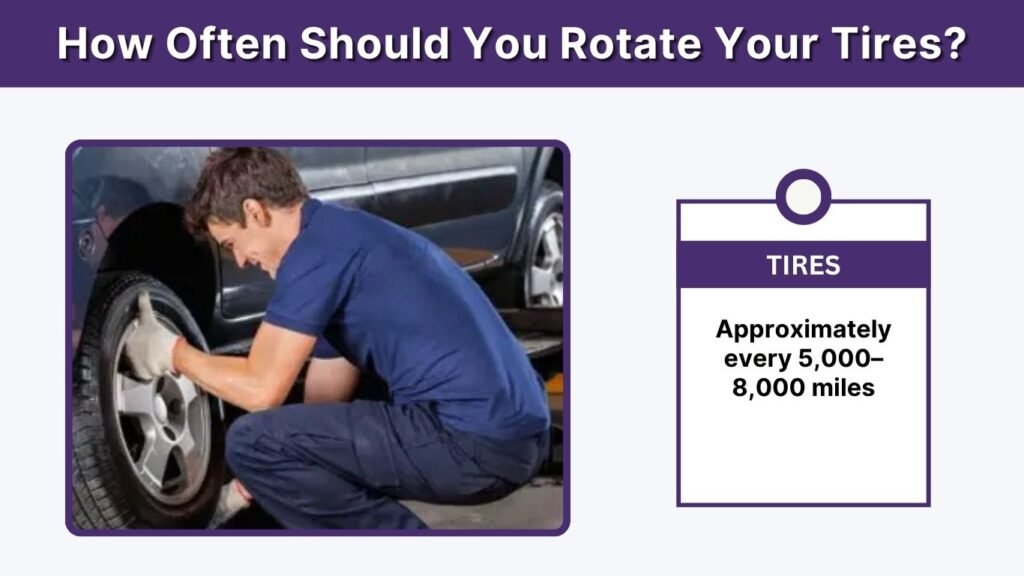
Many vehicles need tire rotation approximately every 5,000–8,000 miles, although the correct interval can vary. A convenient approach is to rotate the tires during scheduled oil changes when the timing matches.
Follow the schedule in the owner’s manual and consider the tire manufacturer’s warranty requirements. Vehicles used for towing, frequent city driving or rough-road travel may need more frequent inspections.
How Often Should You Get a Wheel Alignment?
Wheel alignment does not always follow a fixed schedule. It should be checked when symptoms appear, after a strong impact or after certain steering and suspension repairs.
An alignment inspection may also be helpful when installing new tires. Correct alignment protects the new tread from premature edge wear and helps the vehicle track properly.
Which Service Does Your Vehicle Need?
Choose tire rotation when the tires have reached their recommended rotation interval and there are no major steering symptoms.
Choose alignment when the vehicle pulls, the steering wheel is off-center or the tires show rapid wear along one edge.
Request balancing when the steering wheel, seat or floor vibrates at particular speeds.
When symptoms overlap, ask for a complete tire, wheel, steering and suspension inspection rather than guessing which service is needed.
FAQs
Does rotating tires fix an alignment problem?
No. Rotating the tires may redistribute wear, but it does not change the suspension angles. If the vehicle pulls, has an off-center steering wheel or develops edge wear, a proper alignment inspection is necessary.
Should alignment be done before or after tire rotation?
Either service can technically be performed first. However, shops often inspect or rotate the tires before completing the alignment. The important point is ensuring the tires are properly inflated and the suspension is in good condition before final alignment measurements.
Are tires rotated during an alignment?
Not usually. Alignment and rotation are separate services. The technician may remove or reposition a tire during related repairs, but a complete four-tire rotation is not automatically included unless the service package specifically mentions it.
Can a bad alignment damage new tires?
Yes. Incorrect alignment can cause rapid wear along the inner or outer tread edges. A severely misaligned vehicle may noticeably damage new tires within a relatively short driving period, making an alignment check valuable before or during tire replacement.
Can you rotate tires after an alignment?
Yes. Rotating properly sized and installed tires after an alignment should not change the suspension settings. However, uneven tire wear or incorrect tire pressure may affect how the vehicle feels, even when the alignment measurements remain correct.