
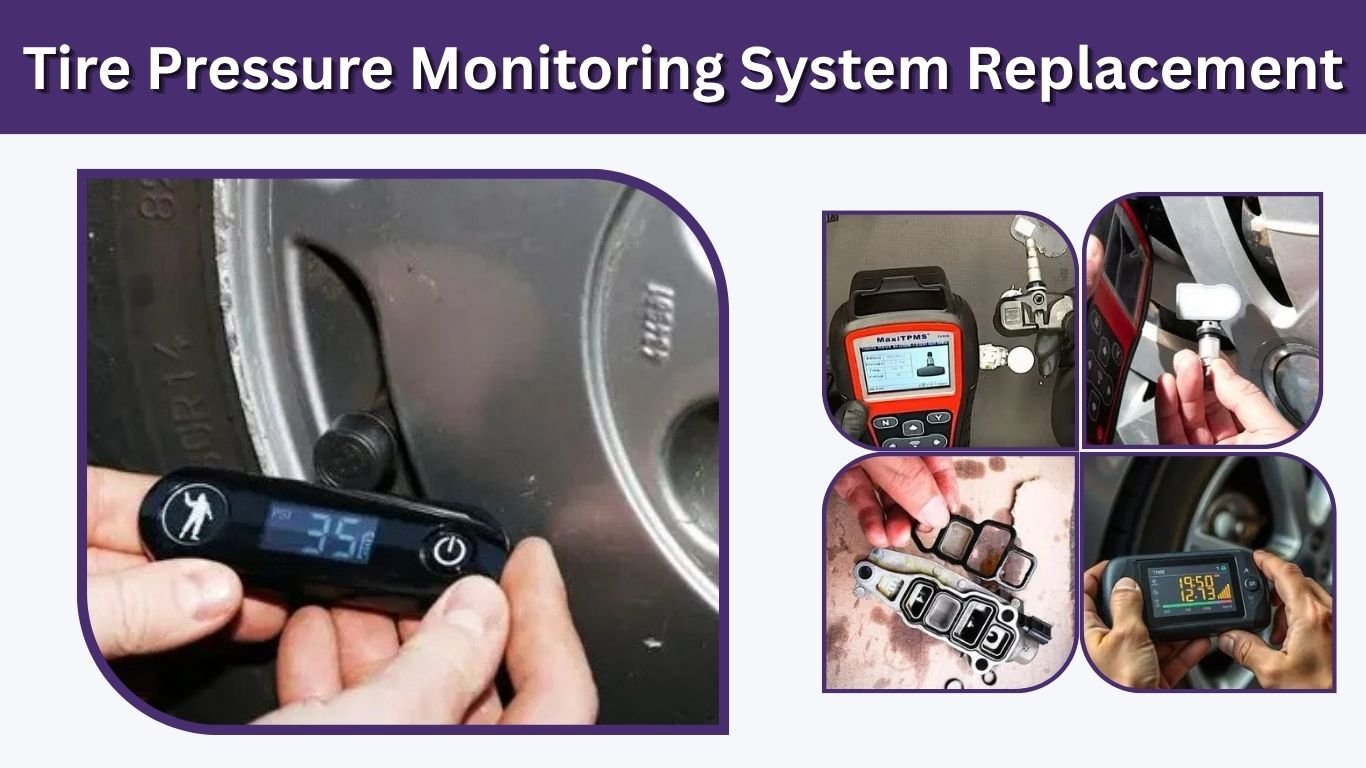
A tire pressure monitoring system helps alert you when one or more tires become significantly underinflated. When a sensor fails, its battery dies, or the valve stem becomes damaged, the warning system may stop working correctly. Tire pressure monitoring system replacement usually involves removing the tire, replacing the faulty sensor, and programming the new component to communicate with the vehicle. This guide explains when replacement is necessary, how the process works, and how much you may need to pay.
What Is a Tire Pressure Monitoring System?
A tire pressure monitoring system, commonly called TPMS, monitors tire inflation and warns the driver when pressure falls below an acceptable level.
There are two main types:
Direct TPMS
A direct system uses electronic sensors installed inside the wheels. Each sensor measures tire pressure and transmits the information to the vehicle’s computer.
Indirect TPMS
An indirect system does not normally use pressure sensors inside the tires. Instead, it compares wheel-speed information from the anti-lock braking system. An underinflated tire has a different rolling diameter and may rotate at a different speed.
Most TPMS sensor replacement services involve direct systems because their wheel-mounted sensors contain batteries and electronic components.
When Should TPMS Sensors Be Replaced?
A TPMS sensor does not require replacement simply because the low-pressure warning appears. First, check and correct the tire pressure using the recommended PSI printed on the driver’s doorjamb or in the owner’s manual.
Replacement may be necessary when:
- The TPMS light flashes and then stays illuminated
- A diagnostic scan identifies a failed sensor
- The sensor does not communicate with the vehicle
- The valve stem is cracked, corroded, or leaking
- A sensor was damaged during tire installation
- The internal sensor battery has died
- The wheels have incompatible or missing sensors
A TPMS light that flashes for approximately 60–90 seconds before remaining on generally indicates a system malfunction rather than ordinary low tire pressure.
TPMS Battery Replacement
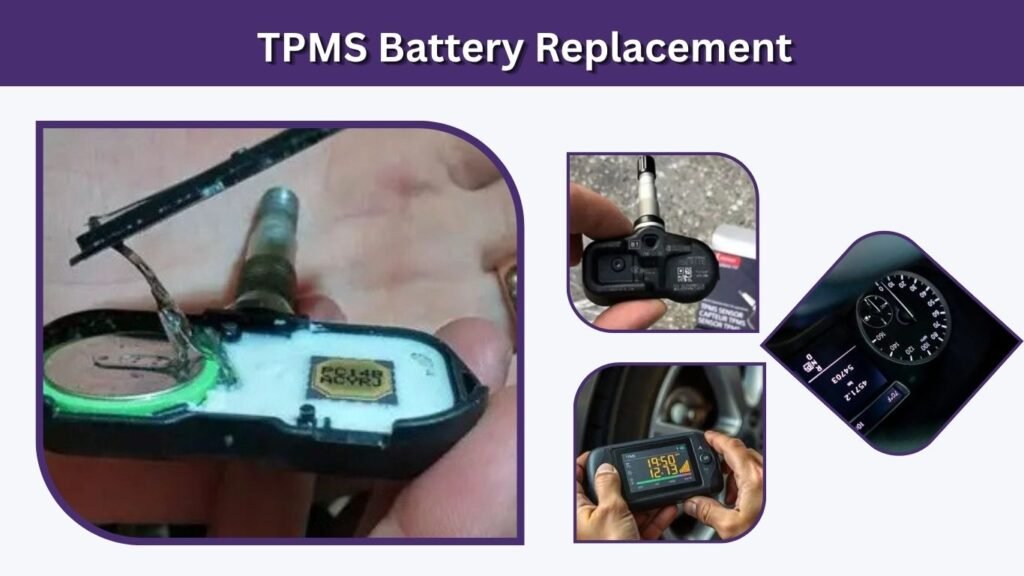
Direct TPMS sensors contain small internal batteries that power their pressure-monitoring and transmitting functions. These batteries are generally sealed inside the sensor housing.
Because the batteries are not normally designed to be opened or replaced separately, the entire sensor is usually replaced when its battery dies.
How Long Do TPMS Batteries Last?
Battery life depends on:
- Sensor design
- Driving frequency
- Temperature
- Mileage
- Transmission activity
- Road and weather conditions
Many sensors last several years, but there is no universal replacement interval. When one older sensor fails from battery depletion, the remaining sensors may be approaching the end of their service lives as well.
You can replace only the failed sensor. However, replacing multiple aging sensors during the same tire service may reduce future labor costs because the tires already need to be removed.
Can You Replace a TPMS Battery Yourself?
Replacing only the internal battery is generally not recommended. Opening a sealed sensor may damage its casing and moisture protection. A complete compatible replacement sensor is usually the safer and more reliable solution.
External motorcycle, trailer, RV, and aftermarket TPMS units may use replaceable coin-cell batteries. Check the manufacturer’s instructions before replacing those batteries.
How to Replace a Tire Pressure Monitoring System Sensor
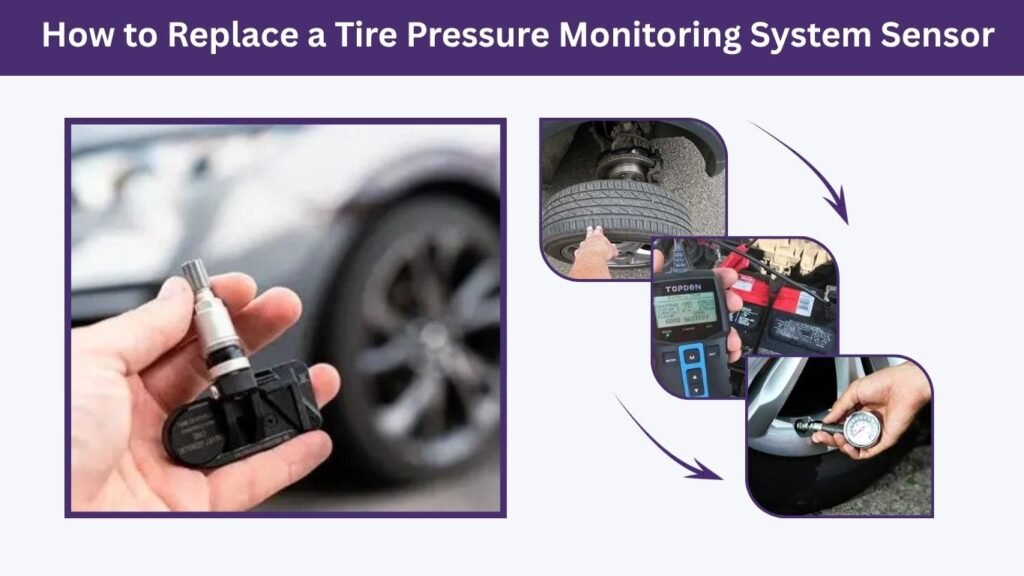
Replacing an internal TPMS sensor requires tire-service equipment. The sensor is normally attached to the valve stem or secured inside the wheel.
1. Identify the Faulty Sensor
A technician uses a TPMS scan tool to activate each sensor and check:
- Sensor identification number
- Tire pressure
- Temperature
- Battery status
- Communication signal
This confirms whether the problem is a dead sensor, damaged valve, incorrect pressure, or vehicle communication fault.
2. Remove the Wheel
The vehicle is lifted safely, and the affected wheel is removed.
3. Deflate and Separate the Tire
The tire is completely deflated. A tire machine is then used to break the bead away from the wheel near the sensor.
Special care is required because improper bead-breaking tool placement can damage the sensor.
4. Remove the Old Sensor
Depending on the design, the technician removes a retaining nut, screw, rubber valve stem, or mounting band. The old sensor and related sealing components are discarded.
5. Install the New Sensor
A compatible replacement sensor is installed using new service parts, which may include:
- Valve core
- Valve cap
- Rubber seal
- Washer
- Retaining nut
- Valve stem
The retaining nut must be tightened to the correct specification. Overtightening can damage the sensor or wheel.
6. Reinstall and Inflate the Tire
The tire bead is reseated, and the tire is inflated to the vehicle manufacturer’s recommended cold pressure. Use the doorjamb label—not the maximum pressure printed on the tire’s sidewall—to determine the correct PSI.
7. Program or Relearn the Sensor
Many replacement sensors must be programmed or registered with the vehicle. The procedure may involve:
- A TPMS scan tool
- An onboard relearn mode
- Driving for a specified distance
- Connecting a diagnostic tool
- Entering each sensor identification number
The exact process depends on the vehicle’s make, model, and year.
Tire Pressure Monitoring System Replacement Cost
The total replacement cost depends on the vehicle, sensor type, labor rate, and programming requirements.
The bill may include:
- Replacement TPMS sensor
- Valve-stem service kit
- Tire removal and installation
- Wheel balancing
- Sensor programming
- TPMS relearn service
- Diagnostic testing
Replacing one sensor is usually less expensive than replacing the complete set. Luxury vehicles, unusual sensor designs, and manufacturer-specific sensors may cost more.
Request an itemized estimate before approving the work. Confirm whether the quoted amount includes installation, programming, balancing, and disposal fees.
Should You Replace All TPMS Sensors at Once?
You do not always need to replace all four sensors when one fails.
Replacing only the faulty sensor may be appropriate when:
- The vehicle is relatively new
- The failure resulted from physical damage
- Other sensors have strong signals
- Sensor batteries are still healthy
Replacing all sensors may be worth considering when:
- The sensors are the same age
- One battery has already died
- Several sensors communicate intermittently
- You are installing a new set of tires
- Labor would be expensive to repeat later
A technician can test all sensors before you decide.
Replacing Tires With TPMS Sensors
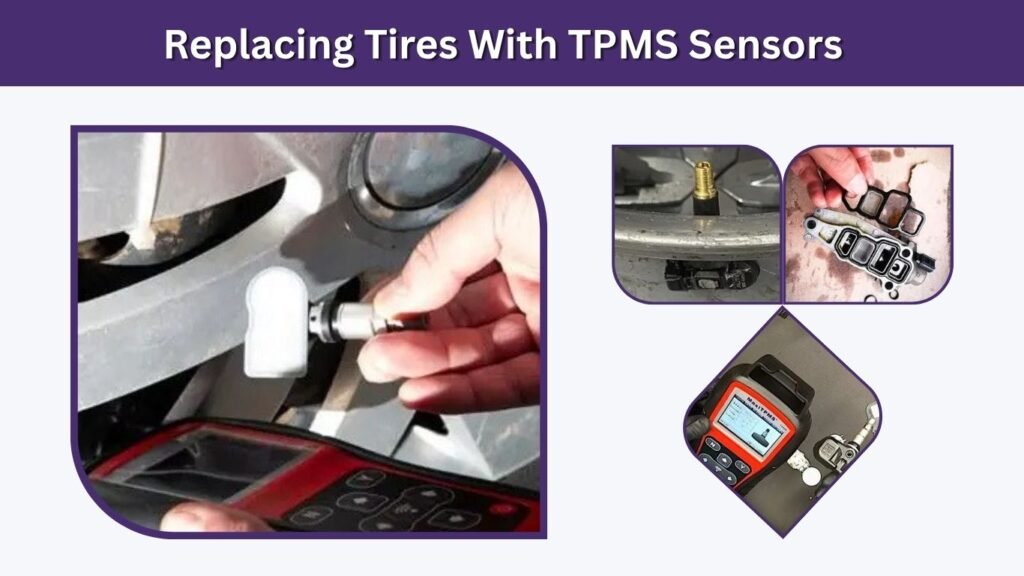
Having TPMS does not prevent normal tire replacement. However, the technician must avoid damaging the sensors while removing and installing the tires.
During tire replacement, ask the shop to:
- Test every sensor
- Inspect the valve stems
- Replace worn seals and service parts
- Verify sensor compatibility
- Perform the required relearn procedure
- Confirm that the warning light turns off
Rubber valve-stem sensors may need a new valve assembly, while metal clamp-in sensors often require new seals, washers, valve cores, and retaining nuts.
Can You Drive With a Failed TPMS Sensor?
A failed sensor does not necessarily make the tire lose air. However, you may no longer receive an automatic warning when that tire becomes underinflated.
Until the system is repaired:
- Check every tire with an accurate pressure gauge
- Check pressure when the tires are cold
- Inspect the tires before longer trips
- Repair visible punctures or leaks promptly
TPMS is a safety aid, not a replacement for monthly manual pressure checks. NHTSA recommends checking all tires regularly because the warning system may activate only after a tire is already significantly underinflated.
Why Is the TPMS Light Still On After Replacement?
The warning may remain illuminated if:
- The new sensor was not programmed
- The vehicle relearn process was incomplete
- The wrong sensor frequency was installed
- Another wheel has a failed sensor
- Tire pressure is still incorrect
- The spare tire contains a monitored sensor
- The vehicle’s TPMS receiver has a fault
Start by checking every tire’s cold pressure. Then repeat the vehicle-specific relearn procedure. If the light flashes before staying on, have the system scanned for stored fault codes.
FAQs
Can a tire shop replace a TPMS sensor?
Yes. Most tire shops can remove the tire, install a compatible sensor, program it, and perform the necessary relearn procedure.
Do TPMS sensors need replacement with every tire change?
No. Working sensors can normally remain in place. However, their valve-stem seals and related service components should be inspected or replaced when necessary.
Can I replace one TPMS sensor instead of all four?
Yes. A single failed sensor can usually be replaced. Replacing all four may make sense when they are equally old and their batteries are nearing the end of their useful lives.
Does a new TPMS sensor need programming?
Many sensors require programming, registration, or a relearn procedure. Some are preprogrammed but still need to be connected to the vehicle.
Is a flashing TPMS light different from a solid light?
Yes. A solid light usually indicates significantly low tire pressure. A flashing light that later remains illuminated commonly indicates a malfunction involving a sensor or another part of the monitoring system.