
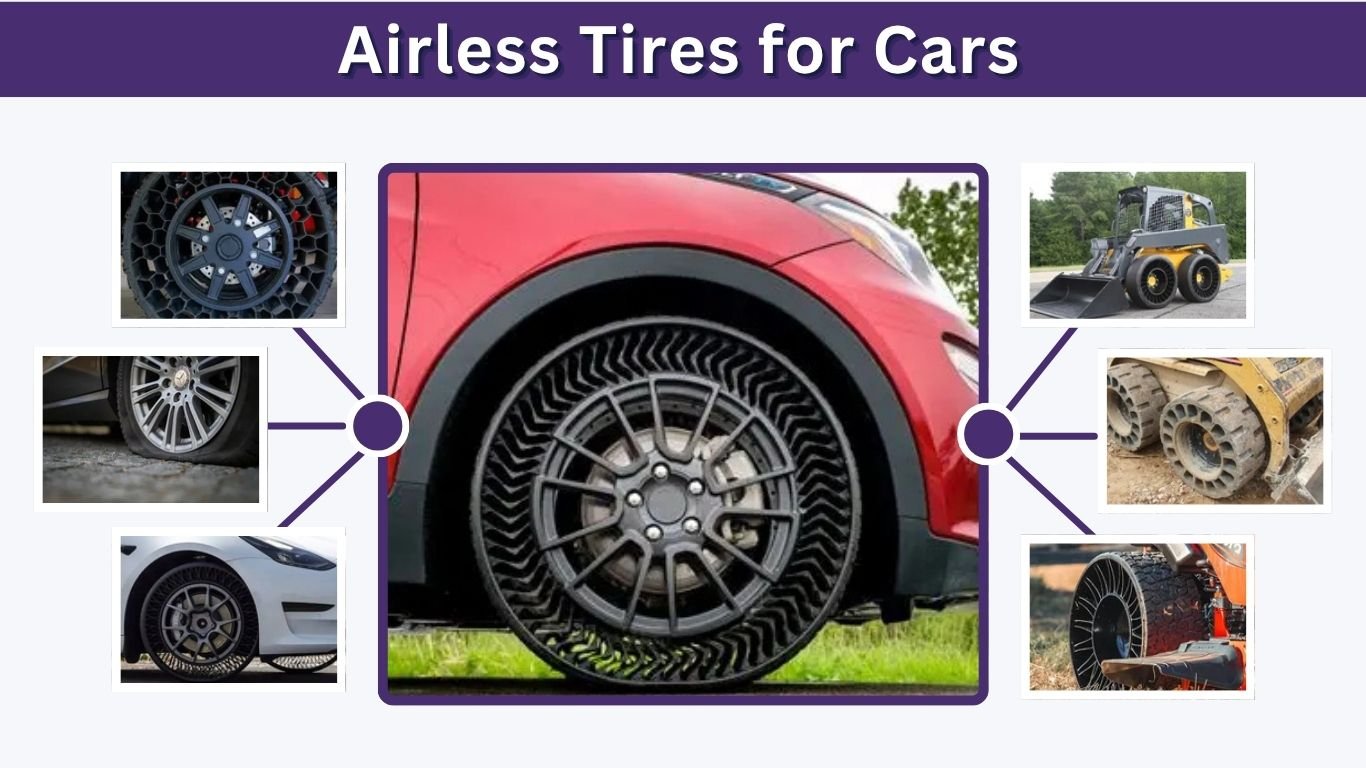
Airless tires for cars promise an end to pressure checks, roadside punctures, and sudden blowouts caused by lost air. Manufacturers such as Michelin, Bridgestone, and Goodyear have demonstrated working versions, creating understandable interest among drivers. However, the technology has not yet become a normal replacement-tire option. As of July 2026, airless passenger-car tires remain primarily prototypes, limited fleet trials, or exploratory projects rather than products most drivers can purchase from a local tire shop.
What Are Airless Tires for Cars?
Airless tires, also called non-pneumatic tires, support a vehicle without compressed air. Instead of an enclosed air chamber, they commonly use flexible spokes or a load-bearing composite structure between the wheel and tread. The structure bends as the tire travels over bumps and then returns to its original shape.
How Airless Tires Support a Car
A conventional tire depends on inflation pressure to maintain its shape and carry the vehicle’s weight. An airless tire transfers that load through engineered spokes or flexible composite materials.
Michelin Uptis, for example, combines an aluminum wheel with a flexible structure made from glass-fiber-reinforced plastic. Bridgestone’s AirFree design uses spoke-shaped thermoplastic resin instead of compressed air.
Are Airless Tires Completely Puncture-Proof?
They cannot suffer a traditional flat caused by air escaping through a nail hole because they contain no pressurized air. However, “puncture-proof” does not mean indestructible. The tread can still wear down, and the supporting structure or wheel may be damaged by severe impacts, improper use, or road debris.
Are Airless Tires Available for Cars?
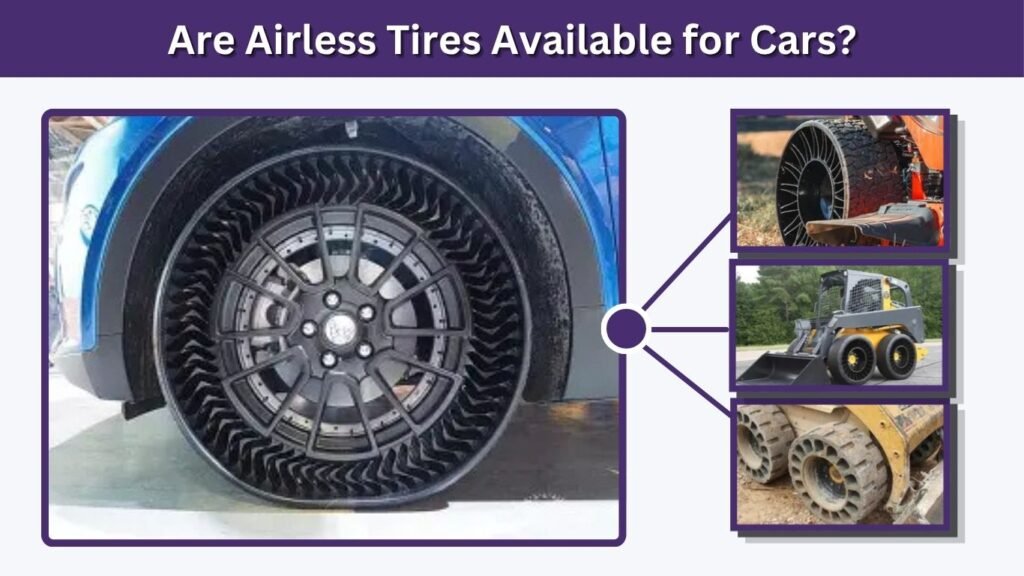
Airless tires are not generally available as replacement tires for ordinary passenger cars. Manufacturer materials still describe Michelin Uptis as a prototype, Bridgestone AirFree as an exploratory business, and Goodyear’s non-pneumatic products as technology being tested in specialized applications such as autonomous shuttles.
Some airless tires are commercially available for equipment such as:
- Zero-turn lawn mowers
- Skid-steer loaders
- ATVs and UTVs
- Construction equipment
- Truck-mounted forklifts
These products are designed for specific machines and should not be installed on passenger cars. Michelin’s current Tweel catalog focuses on turf, construction, utility, and material-handling applications rather than highway passenger vehicles.
Michelin Airless Tires for Cars
Michelin is the manufacturer most closely associated with passenger-car airless tires. However, two different Michelin technologies—Uptis and Tweel—are frequently confused in online searches. They have different intended applications and are not interchangeable.
Michelin Uptis
Uptis stands for Unique Puncture-Proof Tire System. It is an assembled tire-and-wheel solution developed for passenger vehicles. Michelin introduced it publicly in 2019 and later tested it in real-world delivery fleets.
DHL vehicles in Singapore and La Poste delivery vans in France have participated in trials. These fleet programs help Michelin evaluate the tires under repeated braking, frequent stops, damaged roads, curbs, and other demanding conditions.
Michelin Tweel
Michelin Tweel is already sold, but not as a standard tire for family cars, sedans, or SUVs. Current versions are designed for vehicles such as mowers, skid steers, UTVs and specialized commercial equipment.
Therefore, a Tweel advertised online should not be mistaken for a Michelin airless tire that can be fitted to a Honda Accord, Nissan Murano, Hyundai Veloster, or another passenger car.
Airless Tires for Cars: Price and Cost
There is no confirmed retail price for Michelin Uptis or another mass-market airless passenger-car tire. Michelin previously stated that Uptis pricing had not been set and would depend on the vehicle application and production volume. Current manufacturer pages continue to identify Uptis as a prototype rather than listing an MSRP or consumer ordering option.
| Common price question | Current answer |
| How much are airless tires for cars? | No standard consumer price has been announced. |
| Can I buy four Michelin Uptis tires? | Not through normal passenger-tire retail channels. |
| Are Tweel prices relevant to car tires? | No. Commercial Tweel products serve different vehicles and applications. |
| Will airless tires cost more? | Early products may carry a premium, but final pricing remains unknown. |
Be cautious with online listings using phrases such as “airless car tires for sale.” Many are actually tires for remote-controlled cars, lawn equipment, utility vehicles, wheelchairs, or industrial machinery.
Advantages of Airless Car Tires
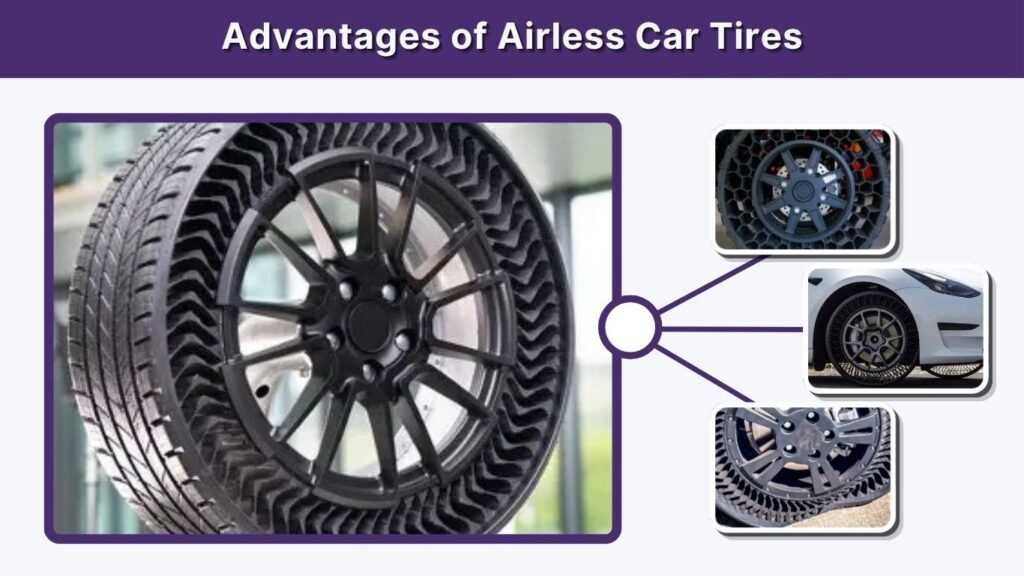
The greatest benefits involve reliability and reduced maintenance. These advantages could be especially valuable for delivery fleets, autonomous vehicles, and drivers who regularly travel through areas with sharp debris or poor roads.
Main Benefits
- No pressure-related flats: Nails cannot release air that is not present.
- No routine inflation: Drivers would not need to adjust tire pressure.
- Less fleet downtime: Vehicles would be less likely to stop working because of punctures.
- Potentially less waste: Fewer tires may be discarded prematurely following irreparable punctures.
- Consistent supporting structure: Performance would not change because of underinflation.
Michelin highlights reduced puncture-related downtime and premature tire disposal as major goals of Uptis development.
Disadvantages and Current Limitations
Airless tires solve pressure-loss problems, but manufacturers must still deliver the comfort, traction, durability, quietness, and affordability drivers expect from modern pneumatic tires.
Possible Limitations
- Very limited sizes and vehicle compatibility
- No established passenger-car retail price
- Few trained installers or service centers
- Damage may require replacing an integrated wheel-and-tire assembly
- The tread can still wear and require replacement
- Snow, mud, stones, and debris must be considered in open-spoke designs
- Vehicle suspension may require tuning for the tire’s specific characteristics
The prolonged prototype and fleet-testing stage suggests that successful mass adoption requires more than simply eliminating air. Manufacturers must validate each design for different vehicles, speeds, climates, loads, and road conditions.
Airless vs. Conventional and Run-Flat Tires
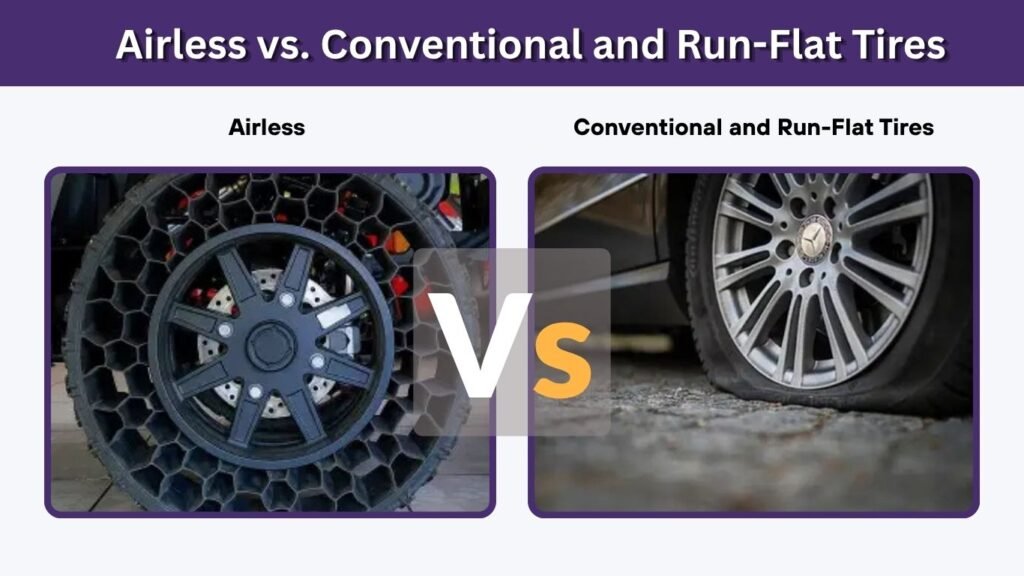
Airless tires should not be confused with run-flat tires. Run-flats still contain air, but their reinforced sidewalls can temporarily support the vehicle after pressure is lost. They allow limited travel to a safer location or tire shop, subject to the manufacturer’s speed and distance restrictions.
| Feature | Airless tire | Conventional tire | Run-flat tire |
| Uses compressed air | No | Yes | Yes |
| Can lose inflation pressure | No | Yes | Yes |
| Pressure checks required | No | Yes | Yes |
| Available for most cars | Not yet | Yes | Available for selected cars |
| Driving after a puncture | No air loss occurs | Usually limited or unsafe | Limited distance and speed |
| Typical consumer price | Not established | Widely available | Usually higher than standard tires |
For drivers who want extra puncture protection now, commercially available alternatives include run-flat tires and self-sealing tires. Michelin Selfseal, for example, is designed to seal many tread punctures caused by nails or screws up to approximately 6 millimeters.
When Will Airless Tires Be Available for Cars?
No major manufacturer has confirmed a new universal retail release date for airless passenger-car tires. Michelin and General Motors originally discussed introducing Uptis on passenger models as early as 2024, but Michelin’s current materials still call it a prototype.
The first broader applications may involve commercial fleets rather than individual buyers. Fleet vehicles provide predictable routes, centralized maintenance, high mileage, and measurable costs from puncture-related downtime. Michelin’s partnerships with DHL and La Poste support this likely path toward gradual commercialization.
FAQs
Can I buy airless tires for my car?
Airless passenger-car tires are not generally available through normal tire retailers. Products advertised online are often made for lawn equipment, construction machinery, utility vehicles, or remote-controlled cars. Check the manufacturer’s approved applications before purchasing any non-pneumatic tire.
How much are Michelin airless tires for cars?
Michelin has not published a consumer retail price for Uptis. The company previously explained that pricing would depend on the application and production volume. Because Uptis remains a prototype and fleet-trial product, advertised consumer prices should be treated cautiously.
Does Michelin make airless tires for passenger cars?
Michelin has developed Uptis specifically as an airless tire-and-wheel prototype for passenger vehicles. It has been tested on public roads and delivery vans. However, it should not be confused with Michelin Tweel products currently sold for mowers, construction equipment, UTVs, and other specialized vehicles.
Are airless tires legal for highway use?
Legality depends on the product’s certification, market, vehicle application, and local regulations. An airless tire designed for a mower or skid steer is not suitable for highway driving. Only install tire-and-wheel assemblies officially approved for your exact passenger vehicle and intended road use.
Will airless tires replace conventional car tires?
They may eventually become useful for fleets and selected passenger vehicles, but complete replacement is uncertain. Pneumatic tires are affordable, widely serviceable, and available in thousands of sizes. Airless designs must match their comfort, traction, efficiency, weather performance, and cost before achieving widespread adoption.