
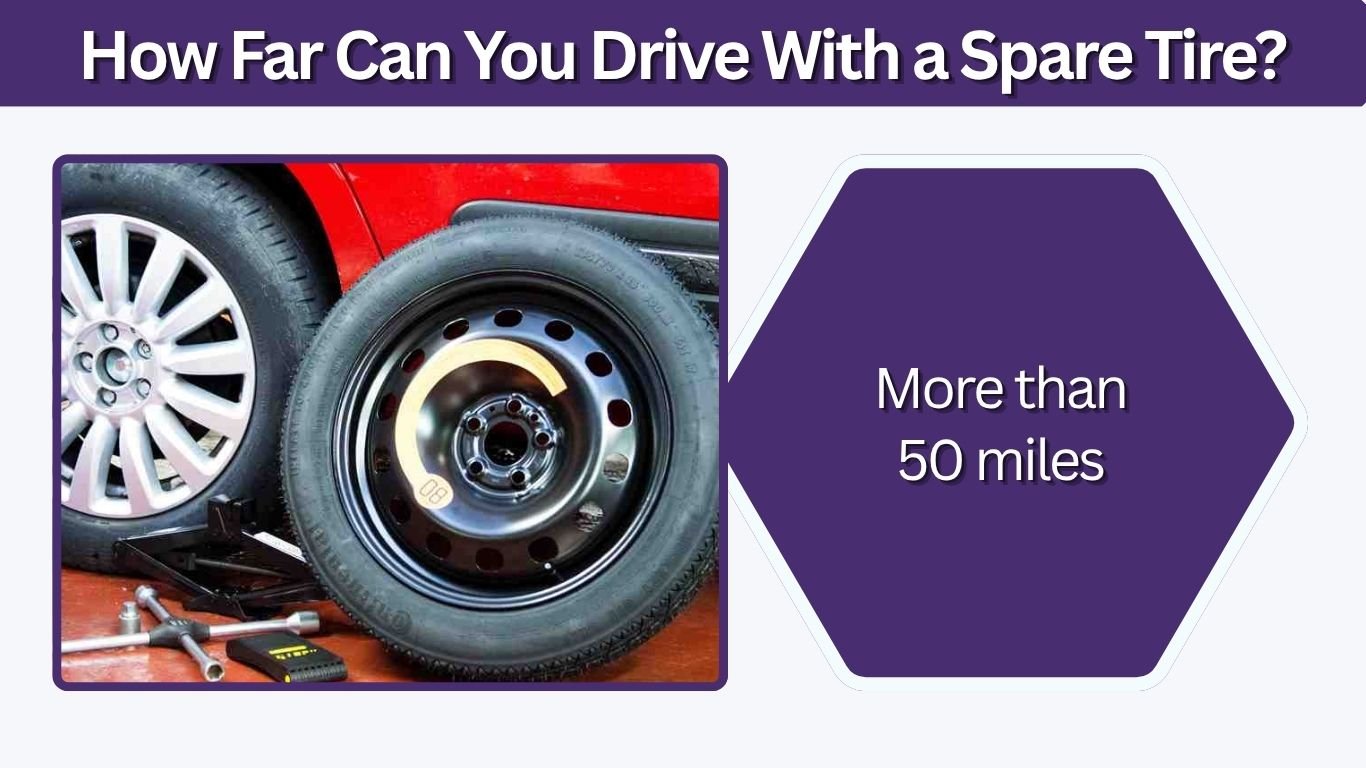
A spare tire is designed to help you get out of trouble, not to replace your regular tire for everyday driving. In most cases, you should drive no more than 50 miles on a temporary or donut spare tire and keep your speed under 50 mph. This is often called the “50/50 rule.” AAA gives the same basic warning: do not drive over 50 mph or more than 50 miles with a donut-type spare tire.
However, the exact answer depends on what type of spare tire your vehicle has. Some cars have a small temporary spare, some have a full-size spare, and some newer vehicles do not have a spare tire at all.
Quick Answer: How Far Can You Drive With a Spare Tire?
For a donut spare tire, the safest answer is usually:
- Drive up to 50 miles
- Stay under 50 mph
- Go directly to a tire shop or safe repair location
- Avoid highways, sharp turns, hard braking, and long trips
Some manufacturers may allow slightly more distance, such as 50 to 70 miles, but temporary spares are still not made for normal driving. AutoZone notes that most manufacturers recommend only about 50 to 70 miles on a temporary spare.
Why You Should Not Drive Far on a Donut Spare Tire
A donut spare is smaller, lighter, and narrower than your normal tire. It is built for emergency use only. Because of its size and construction, it does not offer the same traction, braking ability, or handling.
Driving too far on a donut spare can cause several problems. Your car may pull to one side, take longer to stop, or feel unstable during turns. It can also put extra strain on parts such as the transmission, differential, suspension, and anti-lock braking system. AAA warns that driving long distances on a spare can potentially damage other car parts, including the transmission.
Donut Spare vs. Full-Size Spare Tire
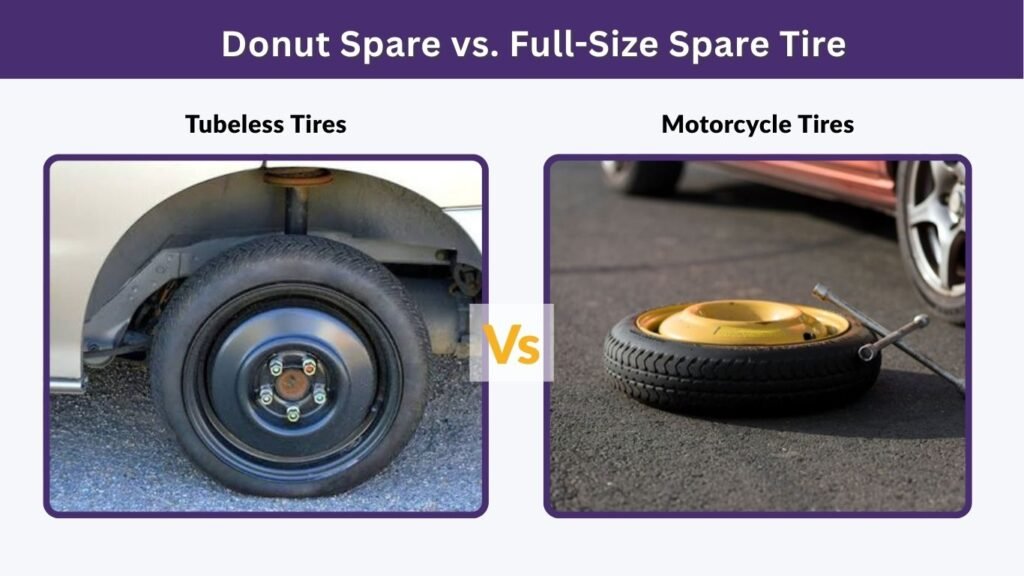
Not all spare tires are the same. Before you decide how far to drive, check what type of spare is in your vehicle.
Donut Spare Tire
A donut spare, also called a temporary spare, is the small tire often stored under the trunk floor. It is easy to carry and saves space, but it is not strong enough for long-distance driving. Use it only to reach the nearest repair shop.
Full-Size Spare Tire
A full-size spare looks like a normal tire and may match the other tires on your car. If it is properly inflated, in good condition, and the same size as your other tires, you may be able to drive on it like a regular tire for a short period. However, you should still repair or replace the damaged tire as soon as possible.
Run-Flat Tires or Tire Repair Kits
Some newer vehicles do not come with a spare tire. Instead, they may include run-flat tires or a tire repair kit. Run-flat tires can usually be driven for a limited distance after losing pressure, but the limit depends on the tire and vehicle. Always check the owner’s manual.
How Fast Can You Drive on a Spare Tire?
With a temporary spare tire, you should usually stay below 50 mph. Driving faster than this can overheat the spare, reduce control, and increase the chance of tire failure. Kelley Blue Book also recommends the 50/50 rule: less than 50 miles and under 50 mph for a temporary emergency spare.
Even if traffic is moving faster, do not try to keep up. Use hazard lights if needed, stay in the right lane, and avoid aggressive driving.
Can You Drive on the Highway With a Spare Tire?
You can drive on the highway with a spare tire only if there is no safer option, but it is not ideal. Highways involve higher speeds, longer distances, and more heat buildup. A donut spare is not designed for that kind of driving.
If you must use the highway, keep your speed low, stay in the slow lane, and exit as soon as possible. The goal is to reach a repair shop, gas station, parking lot, or safer road—not to finish your full trip.
What Happens If You Drive Too Long on a Spare Tire?
Driving too long on a spare tire can lead to poor handling, uneven braking, tire blowout, and damage to your vehicle. The spare may also wear out quickly because it has less tread and a lighter design than a regular tire.
You should stop driving immediately if you notice vibration, pulling, grinding, burning smells, warning lights, or the spare tire looking low or damaged.
Safety Tips Before Driving on a Spare Tire
Before driving, make sure the spare tire is properly inflated. Many drivers forget to check the spare because it is hidden in the trunk. NHTSA’s tire safety guidance emphasizes checking tire pressure and inspecting tires as part of regular vehicle safety.
Also make sure the lug nuts are tight, the damaged tire is safely stored, and your jack and tools are back in the car. Drive slowly and plan the shortest safe route to a tire shop.
When Should You Replace the Spare Tire?
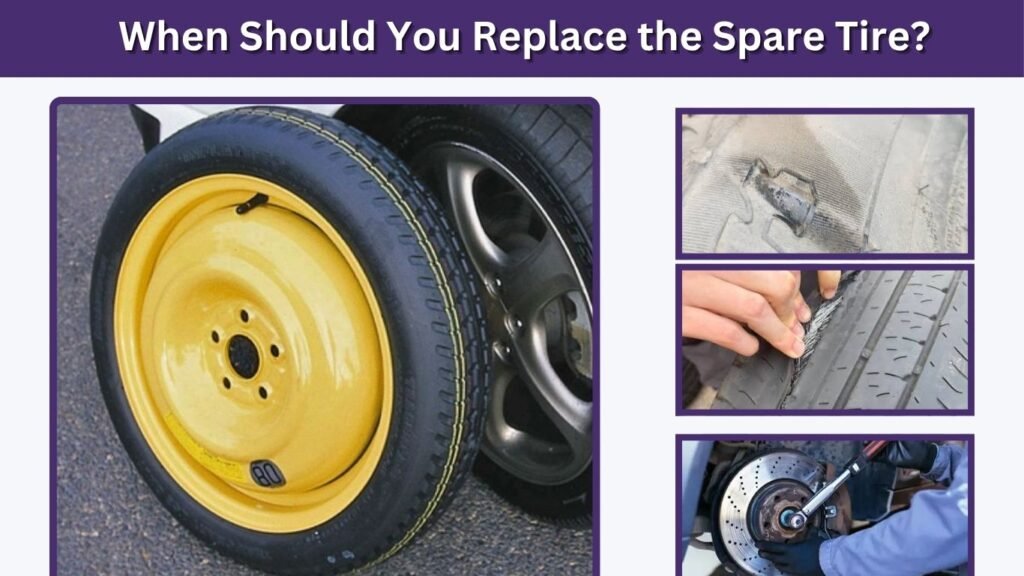
You should replace a spare tire if it is cracked, flat, worn, more than several years old, or has already been used for a long distance. Even unused spare tires can age because rubber breaks down over time.
Check the tire sidewall for the DOT date code or ask a mechanic to inspect it. A spare that looks fine may still be unsafe if it is old or underinflated.
FAQs
1. Can I drive 100 miles on a spare tire?
You should not drive 100 miles on a donut spare unless it is an emergency and there is no safer option. Most temporary spares are meant for about 50 miles.
2. Can I drive 70 mph on a spare tire?
No. With a temporary spare, stay under 50 mph. Driving 70 mph can overheat the spare and make your car harder to control.
3. Is a full-size spare better than a donut spare?
Yes. A full-size spare is stronger and closer to a normal tire. However, it still needs proper air pressure, good tread, and the correct size.
4. Can I use a spare tire for a week?
A donut spare should not be used for a week. It is only for short emergency driving. Replace or repair the regular tire as soon as possible.
5. Why does my car feel different with a spare tire?
Your car may feel different because a temporary spare is smaller and narrower than your regular tire. This affects balance, traction, braking, and steering.