
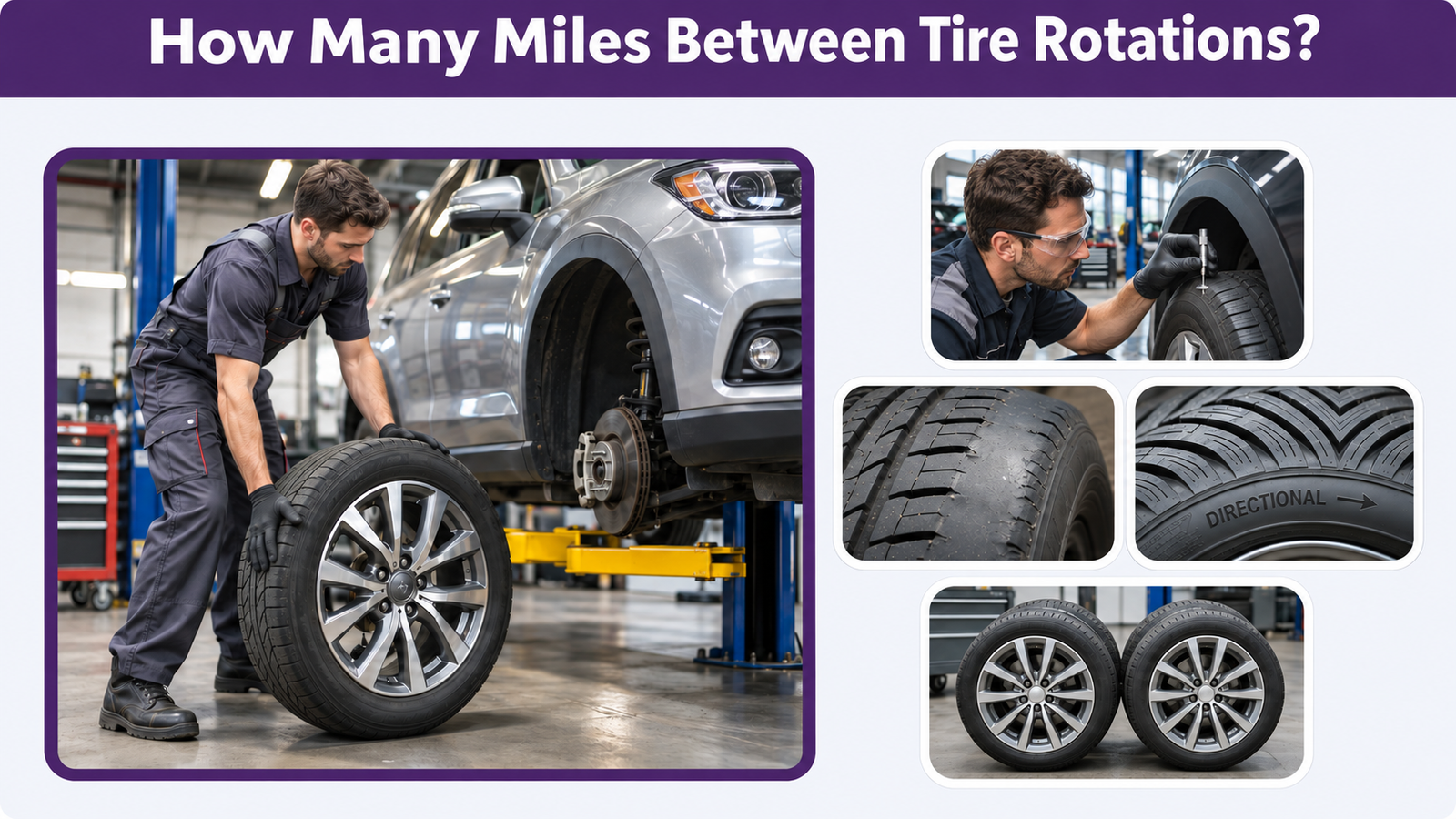
Most vehicles that allow routine tire rotation should have their tires rotated every 5,000 to 8,000 miles. Your owner’s manual gives the interval for your specific vehicle, and 5,000 miles is a practical starting point if it gives no mileage recommendation. How you drive and whether your front and rear tires are the same size also matter. If you’ve just bought new tires or lost track of your last rotation, a quick tread check can help you decide when to book your next service.
What Is the Recommended Tire Rotation Interval?
Start with the maintenance schedule for your vehicle’s year and model. Some manufacturers give a fixed mileage, while others include tire rotation in a service reminder. Check the rotation pattern and any restrictions, especially if your car has different tire sizes front and rear. If you bought replacement tires with a treadwear warranty, look for rotation and recordkeeping requirements in the warranty paperwork too.
| Your situation | When to rotate |
|---|---|
| Your manual specifies every 5,000 miles | Add 5,000 miles to the odometer reading at your last rotation. |
| Your manual specifies every 7,500 miles | Use 7,500 miles as your regular interval and check the tread sooner if wear looks uneven. |
| Your manual gives no mileage interval and permits rotation | Use 5,000 miles as a starting point. |
| You just installed four new tires | Count the first rotation interval from the installation mileage. |
| You bought a used car without service records | Have all four tires inspected and ask whether rotation is appropriate. Record the mileage if the shop rotates them. |
For example, if your last rotation was at 40,000 miles and your interval is 5,000 miles, your next one is due at 45,000 miles. Keep the service receipt or record the odometer reading in your phone. Doing that takes a few seconds and gives you a clear starting point even if you switch shops.
Why Do Tires Need to Be Rotated?
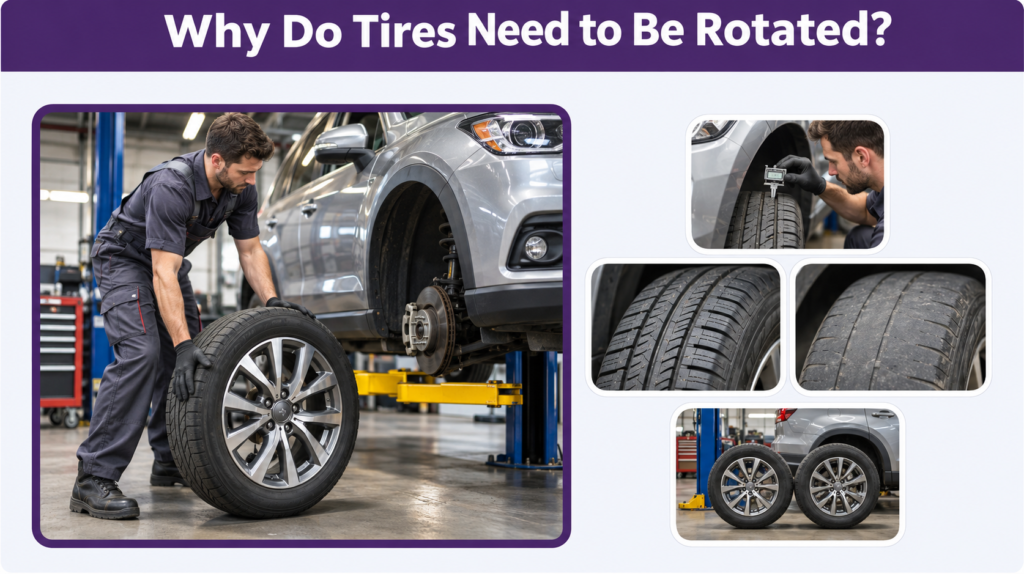
Tires wear at different rates because each wheel position does a different share of the work. The front tires handle steering and typically take on more load during braking. On a front-wheel-drive car, they also deliver engine power to the road. Moving tires between compatible positions lets them share those demands over time and can help the set wear more evenly.
How Front and Rear Tire Wear Can Differ
On a front-wheel-drive vehicle, the front tires often lose tread faster than the rears. They do more work every time you accelerate, turn, or brake. A rear-wheel-drive vehicle puts acceleration loads on the rear tires, so the wear pattern may differ depending on the vehicle and how you drive.
With all-wheel drive, check whether your manufacturer specifies an allowable difference in tread depth across the set. If one tire wears much faster than the others or needs replacement after a puncture, that specification can help the shop determine which replacement options are suitable for your vehicle.
When Should You Rotate Your Tires Sooner?
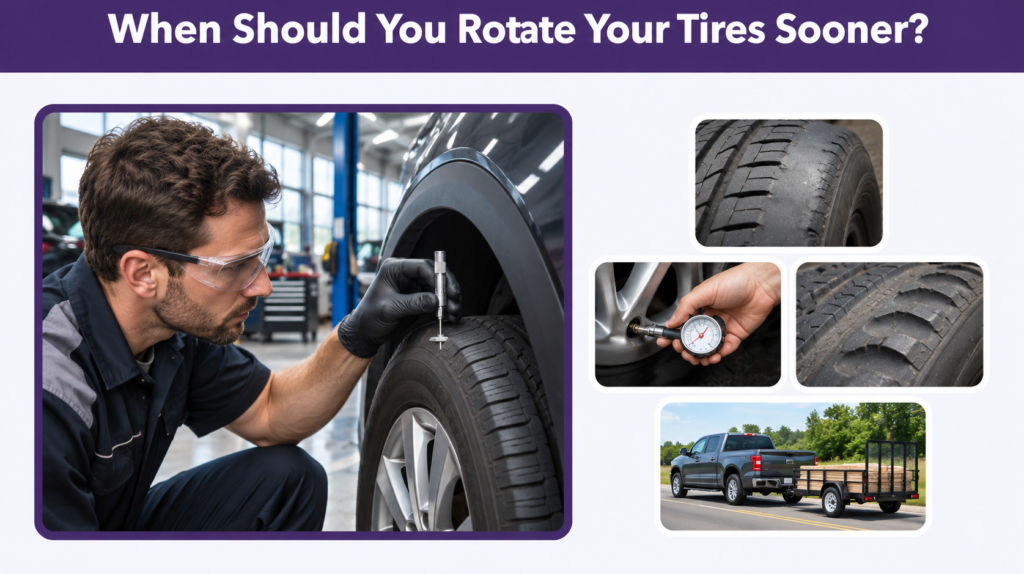
Use your regular mileage interval for routine service and check the tires between appointments. A car that spends most of its time cruising on the highway may wear its tires differently from the same model used for city deliveries. Frequent towing, heavy hauling, and off-road driving can also justify earlier tread checks or a shorter interval when the vehicle manufacturer recommends one.
Signs Your Tires Need an Early Inspection
- The front tires look noticeably more worn than the rears. Ask the shop to measure all four tires and check whether the difference calls for an earlier rotation.
- One edge is wearing faster than the rest of the tread. Have the alignment and tire pressures checked. Moving the tire to another position won’t correct the cause.
- You see scalloped patches or feel a new vibration. Ask the shop to check for tire damage, balance issues, or worn suspension parts.
- One tire keeps losing air. Have it inspected for a leak or damage before continuing with routine rotation.
Driving Habits That Can Speed Up Wear
Stop-and-go driving puts repeated braking and acceleration loads on the tires. Frequent sharp turns, quick starts, and hard braking can also make wear show up sooner. If your daily route involves congested streets or repeated short trips, compare front and rear tread depth before the next scheduled rotation.
If you regularly tow a trailer or carry heavy loads, check the maintenance schedule for those conditions. Also check the cold tire pressure guidance for your vehicle and load. A technician can compare tread depth across each tire and help you tell whether a difference is related to the wheel position or a problem that needs attention.
Can You Rotate Every Type of Tire?
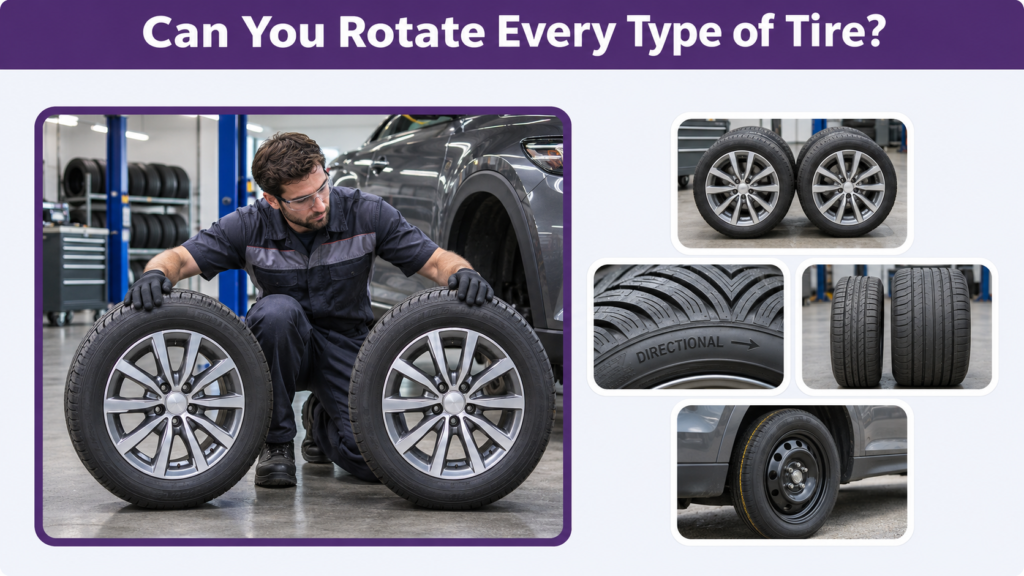
The rotation pattern depends on tire size, wheel fitment, and whether the tread is directional. Two cars with the same drivetrain can require different patterns because they have different tire setups. Check the owner’s manual before swapping positions. If your car has aftermarket wheels or tires, confirm that the installed setup still allows the pattern shown in the manual.
- Same-size, non-directional tires. Depending on the vehicle, these often allow a pattern that moves some tires across to the opposite side.
- Directional tires. Look for an arrow on the sidewall. With matching sizes front and rear, mounted directional tires typically move front to rear on the same side so they keep rolling in the specified direction.
- Staggered tires. With different sizes front and rear, a front-to-rear swap is generally unavailable. A side-to-side swap may be possible if the manufacturer permits it and the tires and wheels are compatible.
- Temporary spare tires. Leave a compact spare out of the rotation. A matching full-size spare can join a five-tire rotation if the manufacturer specifies a pattern for it.
Should You Rotate Tires at Every Oil Change?
Combining the two services is convenient when they come due at about the same mileage. If you change your oil every 5,000 miles and your tires also need rotation every 5,000 miles, book both for the same visit. If your oil changes are due every 10,000 miles but your tires are due at 5,000, schedule a rotation between oil changes.
During the appointment, ask for the tread depth at each wheel position and have the pressures adjusted to the vehicle’s specifications. Some vehicles call for different pressures front and rear, so a tire may need a pressure adjustment after it moves. Keep those tread readings with the service receipt so you can see how the tires wear between visits.
FAQs
Tire rotation is easiest to track when you know the last service mileage. If you drive infrequently, buy a used vehicle, or miss a scheduled visit, start with the manufacturer’s schedule and the condition of the tires.
Is 10,000 miles too long between tire rotations?
For many vehicles, yes. If your manual calls for rotation every 5,000 to 7,500 miles, waiting until 10,000 miles puts you past the recommended interval. If you’re already overdue, have the tires inspected and rotated if their condition and fitment allow it.
How soon should I rotate brand-new tires?
Follow the vehicle’s schedule and check the paperwork for your new tires. If your interval is 5,000 miles and the tires went on at 60,000 miles, plan the first rotation at 65,000 miles. Save the installation invoice and rotation receipt if your treadwear warranty requires service records.
Should I rotate my tires every six months if I drive very little?
Check whether your vehicle or tire manufacturer specifies a time limit. Six months is a common guideline and a useful checkpoint for reviewing tread wear and service history. If your schedule lists both mileage and time, follow whichever comes first.
What happens if I never rotate my tires?
The tires in the positions that do more work may wear out sooner, leaving you with a set that has noticeably different tread depths. Regular rotation helps distribute that wear. If one tire is already badly worn, have its condition and the cause checked before moving it.
Is tire rotation the same as wheel alignment?
Tire rotation moves eligible tires to different wheel positions to help even out wear. Wheel alignment adjusts the angles at which the wheels sit and point. If your steering pulls to one side or one edge of a tire wears quickly, ask the shop to check the cause during the visit.