
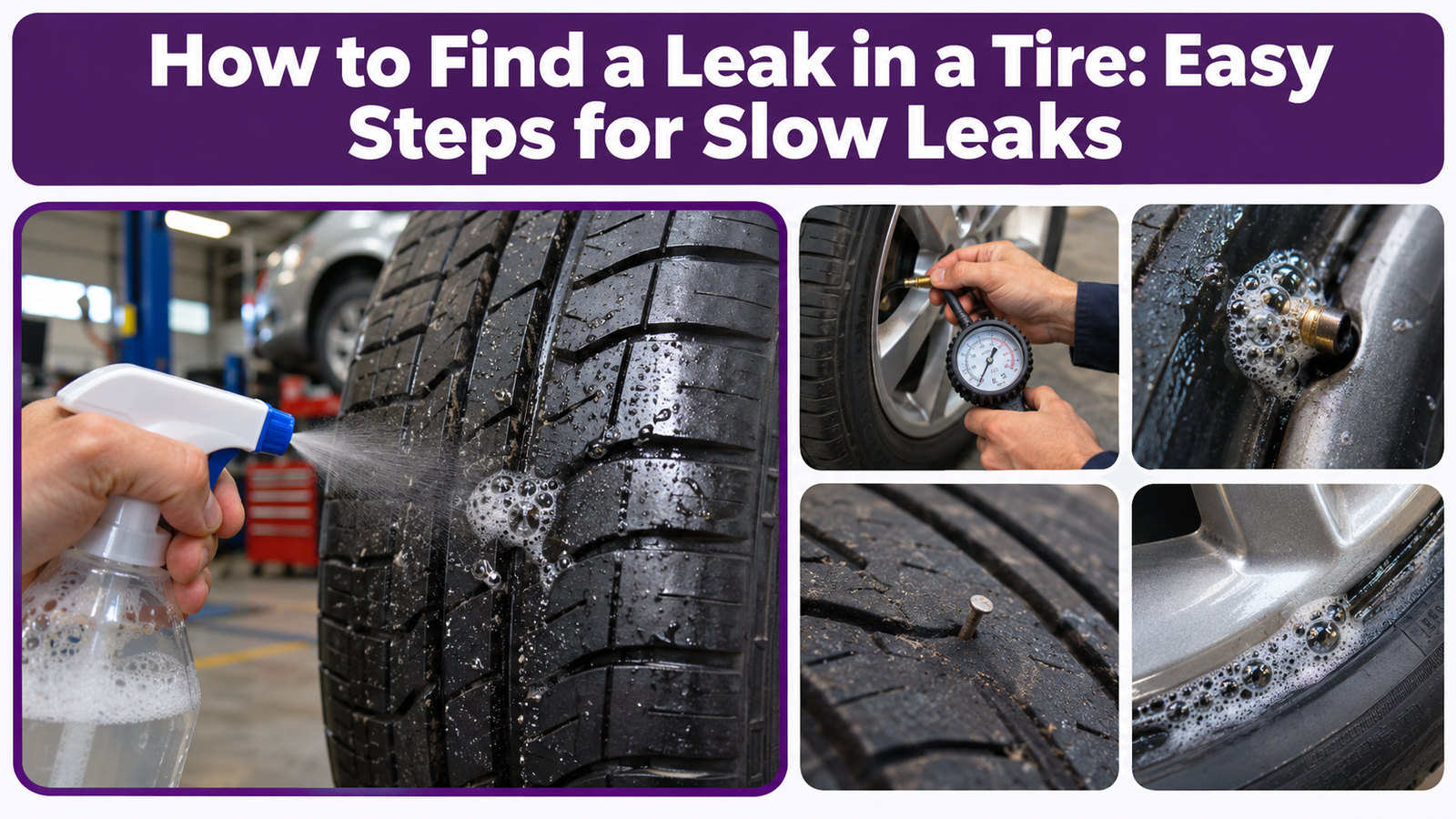
A tire that keeps losing air can be frustrating, especially when there is no visible nail or obvious damage. Fortunately, many leaks are easy to locate using a tire-pressure gauge, a spray bottle, and a little soapy water. The trick is knowing where to look: tiny punctures, damaged valve stems, and leaking wheel seals can all cause similar symptoms. This guide explains how to find a leak in a tire, identify very slow leaks, check car and bike tires, and decide what to do after locating the problem.
How to Find a Leak in a Car Tire
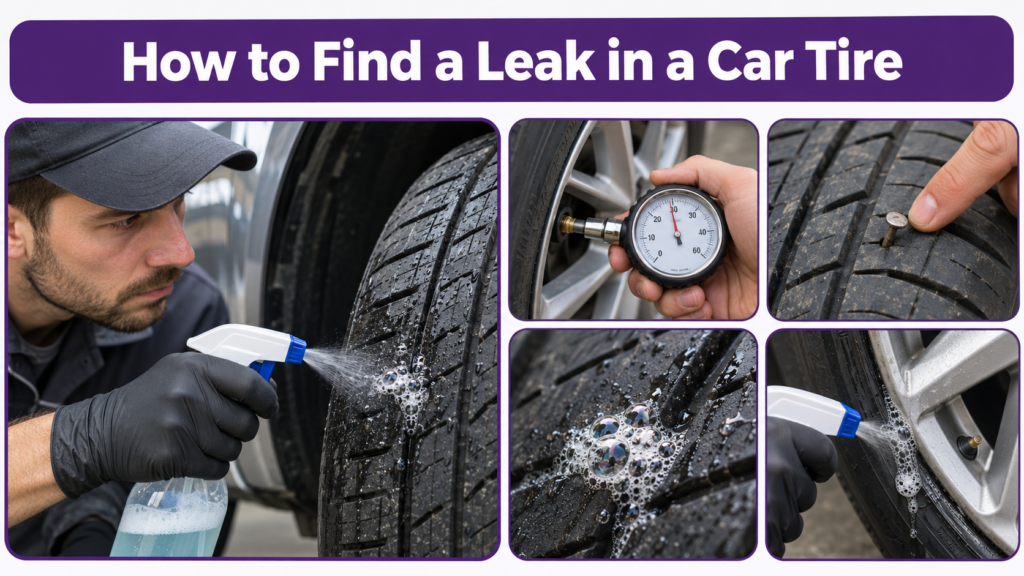
The easiest way to find a tire leak at home is to inspect the inflated tire and spray suspicious areas with soapy water. Escaping air creates growing bubbles that reveal the leak’s location. Work on a parked vehicle in a safe, well-lit area, and do not continue driving on a visibly flat or damaged tire.
Step 1: Check the Tire Pressure
Measure cold pressure with a gauge before driving. Compare it with the recommended pressure on the driver’s door-jamb label or in the owner’s manual, not the maximum pressure marked on the tire sidewall.
If one tire reads consistently low, record its pressure. Inflate it to the recommended cold setting if safe, never beyond the applicable limits.
Step 2: Inspect the Tread and Sidewalls
Look for nails, screws, glass, cracks, cuts, or bulges on the accessible tread and sidewalls. A flashlight may reveal metal objects hidden between tread blocks.
Do not pull out embedded objects; removal can cause rapid air loss. If you find a bulge, exposed cords, or severe damage, arrange professional service.
Step 3: Use Soapy Water to Find the Tire Leak
Mix dish soap with water in a spray bottle. Coat each area and watch for bubbles that grow or repeatedly reform. Random spray foam alone is not proof of a leak.
- Spray the tread, including around embedded objects and between grooves.
- Check the sidewalls and the base of the valve stem.
- Spray the valve opening and the seam where the tire meets the rim.
- Wait a few minutes, watching for steadily forming bubbles.
- Mark any suspected leak with chalk and have it professionally assessed.
A shop can inspect hidden wheel surfaces. Never crawl under a vehicle supported only by a jack.
How to Find a Slow Tire Leak With No Visible Puncture
A slow leak may take days to trigger a pressure warning. Sometimes the tread is intact, but air escapes through the valve assembly or the tire-to-wheel seal. Test these areas individually before assuming you need a new tire.
Test the Valve Stem and Valve Core
Remove the valve cap and apply soapy water. Bubbles at the opening suggest a leaking valve core; bubbles at the stem’s base suggest a faulty stem or seal.
Valve parts can crack or collect dirt. A technician can assess the core, stem, and tire-pressure monitoring components. Avoid tampering with sensor hardware.
Check the Bead and Rim for Air Leaks
The bead seals the tire against the rim. Corrosion, a bent wheel, or trapped debris can break the seal. Spray the visible rim-to-tire seam; recurring bubbles suggest a bead leak.
Bead leaks may require professional cleaning, reseating, or replacing damaged wheel parts. The tire itself may not be punctured.
Firestone Complete Auto Care
Monitor a Very Slow Tire Leak
If bubbles are elusive, record cold pressure at the same time for several days using the same gauge. Account for temperature changes. Persistent unexplained pressure loss needs inspection.
Shops can use immersion tanks and internal inspections to locate hidden leaks.
How to Find a Leak in a Tubeless Tire
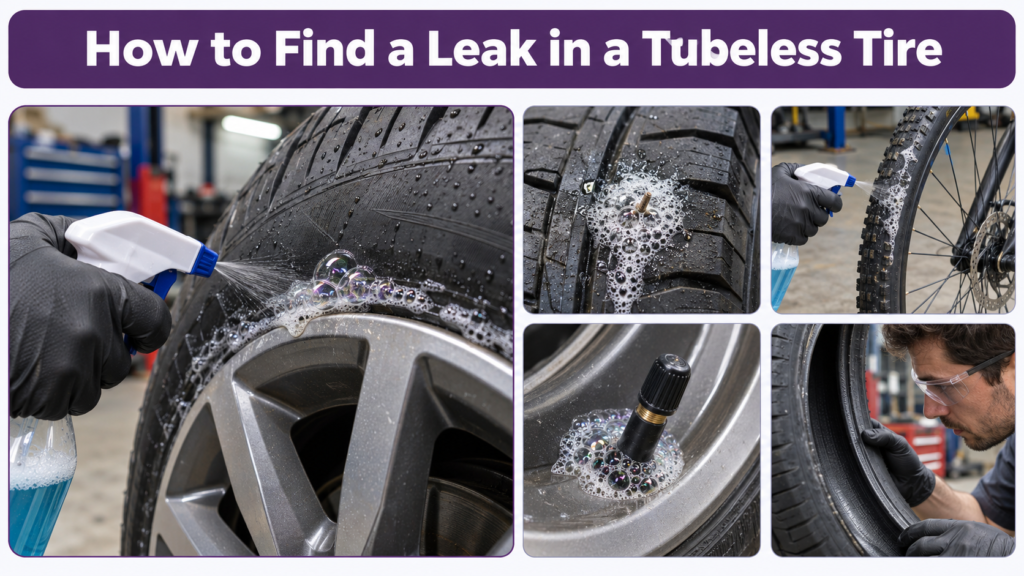
Most car tires are tubeless: the tire and wheel hold air without an inner tube. The tread, valve, and bead can all leak. Tubeless bike tires often contain liquid sealant, which can partially close punctures.
Tubeless Car Tires
Use the same pressure and soapy-water tests, especially at the valve and bead. A small central-tread puncture may be repairable after professional tire removal and internal inspection.
Tubeless Bicycle Tires
Inflate within specified limits and rotate the wheel while spraying the tread, sidewalls, valve, and rim. Sealant marks can reveal a partly sealed puncture. Persistent bubbles suggest checking the sealant, rim tape, valve, or casing.
How to Find a Leak in a Bike Tire With a Tube
For tube-type bicycle tires, locate both the puncture and its cause. A thorn or sharp edge left in the tire can puncture a repaired tube immediately.
Find the Hole in the Inner Tube
- Remove the wheel and carefully take out the inner tube using suitable tire levers.
- Inflate the loose tube enough to give it shape without overstretching it.
- Listen for escaping air and inspect around the valve.
- If necessary, submerge sections of the tube in water and look for a stream of bubbles.
- Mark the hole, dry the tube, and inspect the corresponding tire and rim area.
Check for thorns, glass, or exposed wire before reinstalling the tube. Match the hole to its position in the tire.
What to Do After Finding Where a Tire Is Leaking
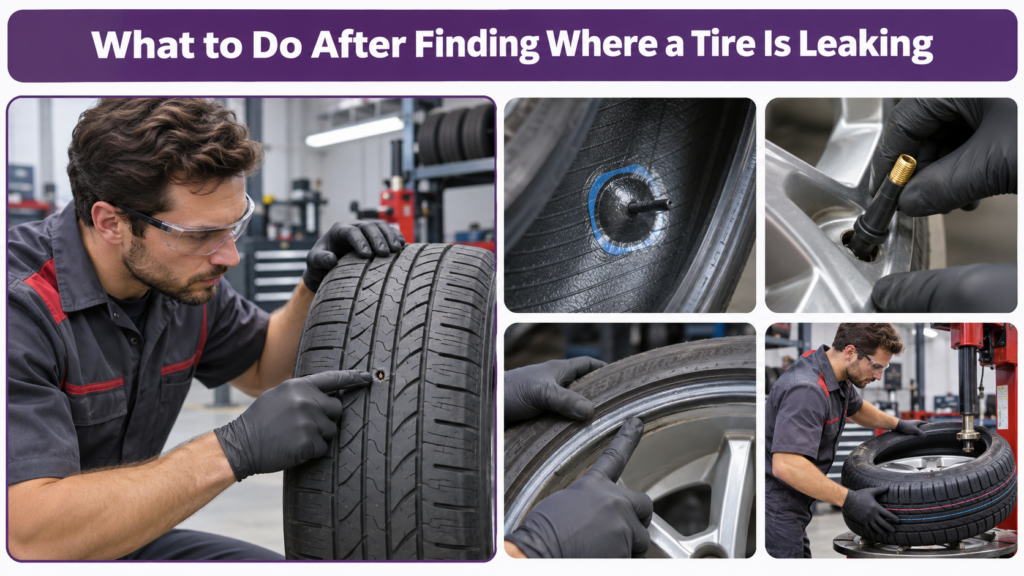
Finding the leak is only the first step. Repairs depend on whether the issue is a puncture, valve, bead seal, or structural damage. Small central-tread punctures may qualify; shoulder and sidewall injuries require replacement under standard U.S. passenger-tire guidance.
Decide Between Repair and Replacement
- Small central-tread puncture: A professional may install an approved combination patch-and-plug after removing and inspecting the tire.
- Leaking valve: The core, stem, seal, or related components may need replacement.
- Leaking bead: The wheel and tire seal need inspection; reseating or wheel repair may be necessary.
- Sidewall damage, bulge, or major puncture: Replace the tire rather than attempting a roadside patch.
U.S. guidelines limit puncture repairs to the approved tread area and injuries no larger than 1/4 inch (6 mm).
Avoid Common Leak-Detection Mistakes
Never use a flame, overinflate a tire to force bubbles, or drive on a severely underinflated tire. Temporary sealants and outside plugs cannot replace proper internal inspection. If the leak remains hidden, visit a tire shop.
FAQs
1. How do you find a very slow leak in a tire?
Measure cold tire pressure for several days with the same gauge. Then spray the tread, valve stem, and bead with soapy water and watch for slowly growing bubbles. A shop can test hidden surfaces if you cannot locate the leak.
2. Can you find a tire leak without taking the tire off?
Yes. Many tread, valve, and visible bead leaks can be detected on the vehicle using soapy water. However, the hidden side of the tire and internal damage require professional access, and an approved puncture repair involves removing the tire from its wheel.
3. What kind of soap is best for finding a tire leak?
Ordinary liquid dish soap mixed with water generally works well. Apply it with a spray bottle or sponge, then watch for bubbles that keep expanding in one place. Rinse away leftover soap after testing to keep the wheel and tire clean.
4. Why is my tire losing air but has no nail?
Possible causes include a leaking valve core, cracked valve stem, corroded rim, poor bead seal, or tiny puncture that is difficult to see. Temperature changes also affect pressure. Repeated unexplained losses should be checked by a tire technician.
5. How do you find a leak in a flat bike tire?
For a tube-type tire, remove the inner tube, inflate it gently, and check for hissing or bubbles under water. For a tubeless bike tire, spray the inflated tire and its valve and rim seals with soapy water. Inspect the tire for debris afterward.