
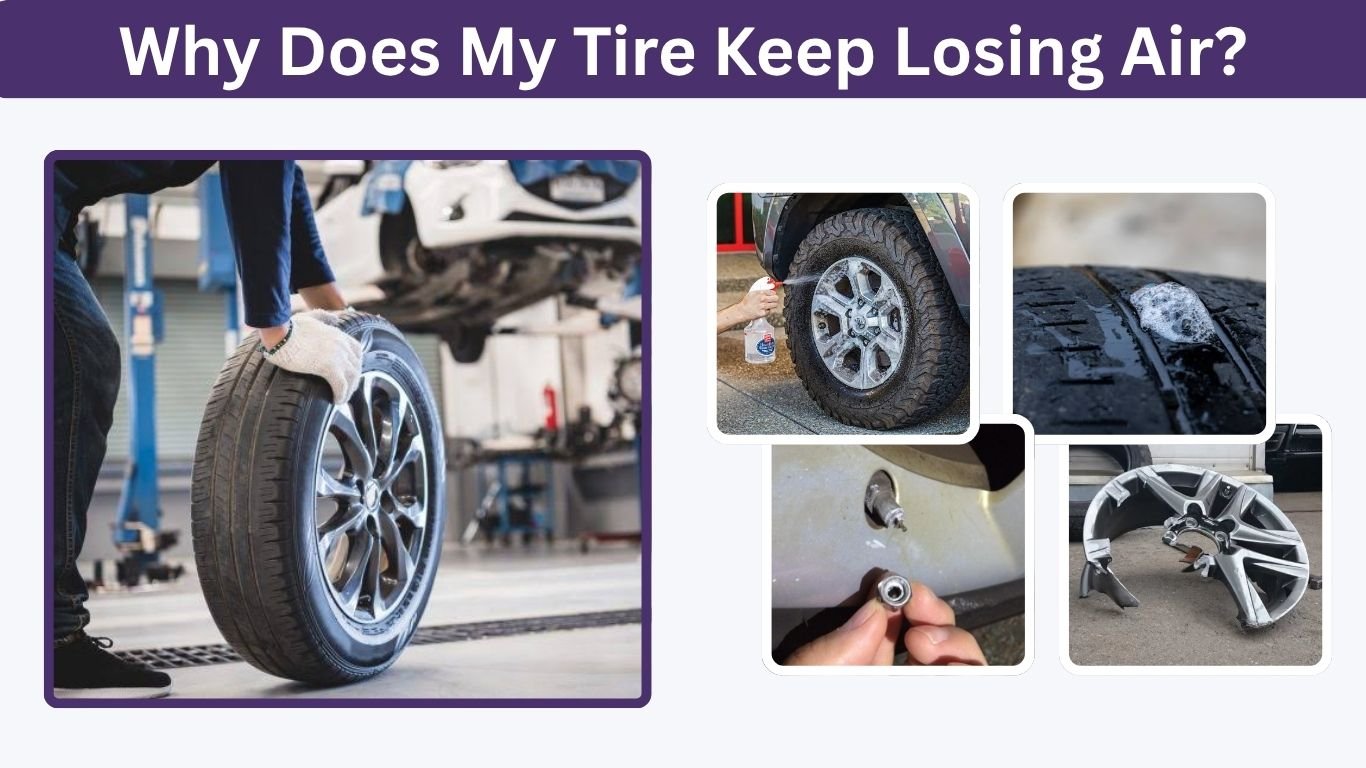
If your tire keeps losing air, you may have a slow leak, a damaged valve stem, or a problem with the wheel rim. Although tires naturally lose some pressure over time, frequent air loss usually indicates something that needs attention. Even a small puncture can gradually reduce tire pressure and affect your vehicle’s safety, handling, and fuel efficiency. Understanding why your tire keeps losing air can help you identify the problem before it becomes serious. This guide explains the common causes, how to find leaks, and the best ways to fix them.
Why Does My Tire Keep Losing Air?
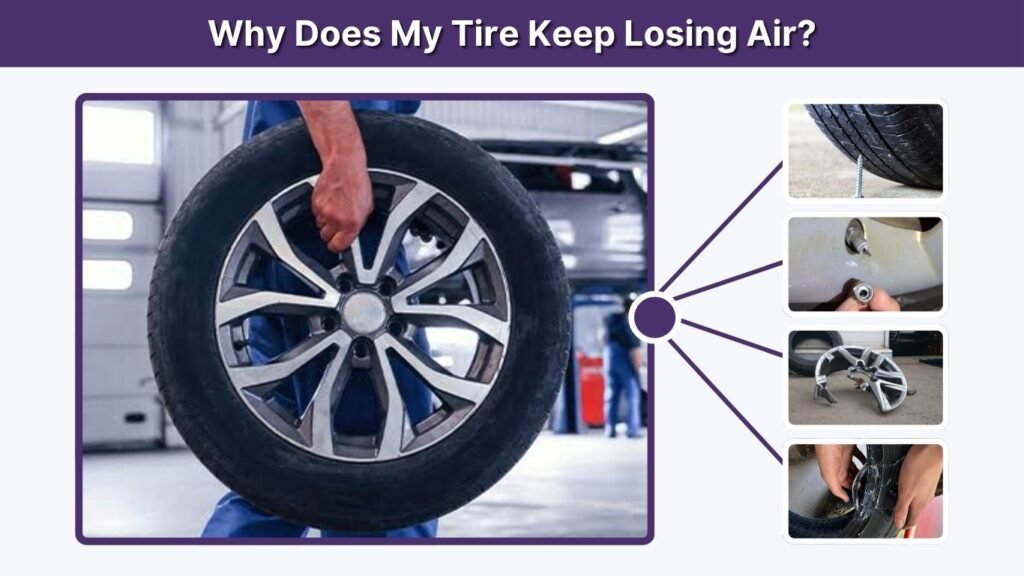
A tire can lose air for several reasons, including punctures, temperature changes, worn rubber, and damaged wheel components. Some problems cause gradual pressure loss over several weeks, while others can leave a tire flat overnight.
Normally, tires may lose around 1–2 PSI of pressure per month. However, needing to refill the same tire every few days often indicates an air leak rather than normal pressure loss.
1. Small Nail or Screw Puncture
One of the most common reasons a tire keeps losing air is a small puncture caused by a nail, screw, or sharp road debris.
Sometimes, the object remains stuck inside the tire, partially blocking the opening. This allows air to escape slowly instead of causing an immediate flat.
You may notice that the tire maintains pressure for a day or two before becoming underinflated again.
Small punctures in the repairable tread area can often be repaired professionally. However, punctures near the shoulder or sidewall generally require tire replacement.
2. Damaged Valve Stem
The valve stem is the small component used to inflate your tire. Over time, its rubber seal can deteriorate, crack, or become damaged.
A loose valve core can also allow air to escape continuously.
Valve stem leaks are particularly common on older tires or wheels that have experienced years of exposure to sunlight, moisture, and changing temperatures.
Fortunately, replacing a damaged valve stem or valve core is usually straightforward and less expensive than replacing an entire tire.
3. Temperature Changes
Cold weather can make tire pressure decrease even when the tire has no puncture.
Generally, tire pressure drops approximately 1 PSI for every 10°F decrease in temperature.
For example, a tire inflated to 35 PSI during warm weather may measure closer to 32 PSI after a significant temperature drop.
This is especially noticeable during seasonal changes or cold mornings.
However, temperature-related pressure loss usually affects multiple tires. If only one tire repeatedly loses significant pressure, a leak is more likely.
4. Bent or Damaged Wheel Rim
A bent wheel rim can prevent the tire from sealing properly against the wheel.
This problem commonly occurs after hitting potholes, curbs, or road debris.
Even minor rim damage can create a small gap where air gradually escapes.
Some wheels may appear normal from the outside while having damage along their inner edges.
A tire technician can inspect the wheel and determine whether it can be repaired safely or requires replacement.
5. Poor Tire Bead Seal
The tire bead is the reinforced edge that sits tightly against the wheel rim. It creates an airtight seal that keeps pressure inside the tire.
When corrosion, dirt, or damage develops around this area, the seal may weaken.
This problem is especially common with aging wheels or vehicles exposed to road salt and moisture.
The tire may require professional removal, rim cleaning, and reseating to restore the seal.
6. Worn or Aging Tires
As tires age, their rubber compounds gradually deteriorate.
Cracks, cuts, and other forms of damage can compromise the tire’s ability to retain air.
Older tires may develop leaks around damaged tread areas or deteriorated sidewalls.
If the tire shows extensive cracking, bulges, or structural damage, replacement is generally safer than attempting repairs.
7. Improper Tire Installation
Sometimes, a tire starts losing air shortly after installation or replacement.
This may happen because the tire bead was not seated correctly, the wheel was not properly cleaned, or a valve component was damaged during installation.
An improperly installed tire may develop a slow leak even when the rubber itself is undamaged.
Returning to the tire shop for an inspection is usually the best solution.
8. Previous Tire Repair Failure
A tire that has already been repaired may develop another leak if the repair was incomplete or damaged.
Temporary external plugs do not provide the same reliability as a properly performed internal combination repair.
If air continues escaping around an old repair, a technician should inspect the puncture and the tire’s internal condition.
9. Cracked or Porous Wheel
Some wheels develop corrosion damage, tiny cracks, or manufacturing defects that allow air to escape.
These problems can be difficult to identify through visual inspection.
Professional leak testing can reveal whether the air is escaping through the wheel itself rather than the tire.
A cracked wheel generally requires replacement rather than an improvised repair.
Why Does My Tire Keep Losing Air but No Hole?
Sometimes, a tire repeatedly loses pressure even though there is no visible nail, screw, or puncture.
This situation can be frustrating because the tire may appear completely normal.
However, air can escape from several hidden locations.
Hidden Causes of Tire Air Loss
- Loose valve core: A poorly sealed valve allows air to escape slowly.
- Bead leakage: Corrosion or dirt prevents the tire from sealing against the rim.
- Invisible puncture: A tiny hole may be difficult to identify without leak testing.
- Rim damage: A bent or cracked wheel can cause pressure loss.
- Temperature changes: Cold temperatures temporarily lower pressure readings.
If no puncture is visible, the tire should be inspected using a leak-detection solution or professional equipment.
Why Does My Tire Keep Losing Air Overnight?
If your tire becomes noticeably underinflated overnight, it probably has a leak rather than ordinary pressure loss.
A puncture, faulty valve stem, or damaged bead seal can allow enough air to escape while the vehicle is parked.
Cold nighttime temperatures can also lower tire pressure, but a large pressure loss in a single tire is not normal.
For example, if your tire drops from 35 PSI to 20 PSI overnight, it requires immediate inspection.
Avoid driving on a severely underinflated tire because it can overheat and suffer internal structural damage.
How to Find a Slow Leak in a Tire
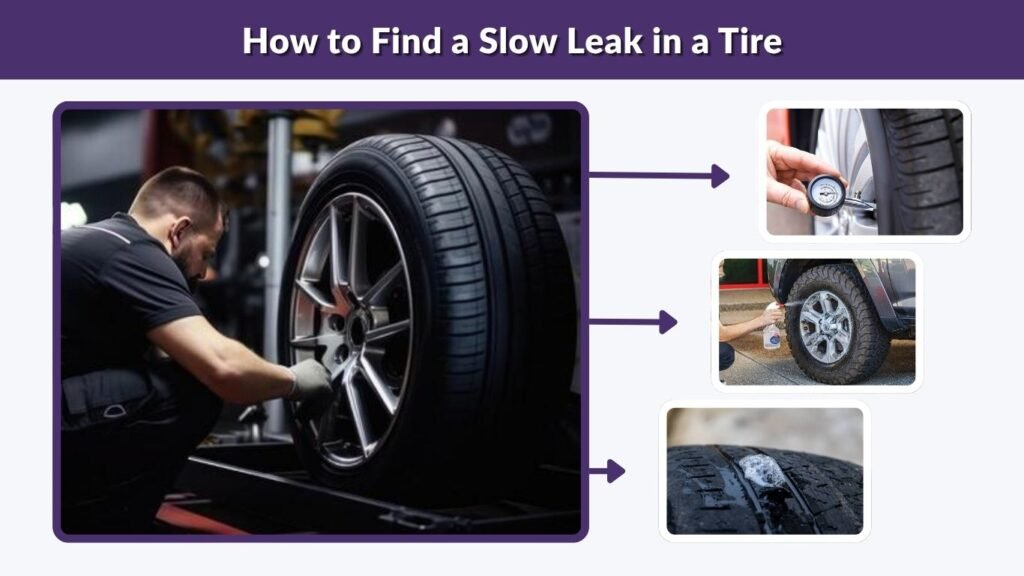
Finding a slow tire leak is often possible with a careful visual inspection and a simple soap-water test.
However, some leaks require professional equipment to locate.
Step-by-Step Tire Leak Detection
- Check tire pressure: Measure the pressure with an accurate tire gauge when the tire is cold.
- Inspect the tread: Look for nails, screws, glass, or visible damage.
- Prepare : Mix mild dish soap with water in a spray bottle.
- Spray the tire: Apply the solution around accessible tread areas, the valve stem, and the rim edges.
- Watch for bubbles: Continuous growing bubbles indicate escaping air.
- Mark the location: Identify the leaking area so a technician can inspect it.
Do not remove an embedded nail or screw before arranging a repair, because removing it may cause faster air loss.
If the leak remains hidden, a tire shop can inspect the tire more thoroughly, including areas that are difficult to access while mounted.
How to Fix a Tire That Keeps Losing Air
The correct repair depends on where the air is escaping and whether the tire has suffered structural damage.
Some problems require inexpensive component replacements, while others make the tire unsafe to reuse.
Common Tire Air Leak Repairs
| Problem | Recommended solution |
|---|---|
| Small repairable tread puncture | Professional internal patch-plug repair |
| Leaking valve stem | Replace the valve stem |
| Loose or damaged valve core | Replace the valve core |
| Corroded bead seating area | Clean and reseal professionally |
| Bent wheel rim | Inspect and repair or replace the wheel |
| Sidewall puncture | Replace the tire |
| Severe cracking or structural damage | Replace the tire |
| Improperly seated tire | Have the tire professionally remounted |
A proper tire repair involves inspecting the inside of the tire for damage. Simply adding air repeatedly does not resolve the underlying problem.
Is It Safe to Drive With a Tire That Keeps Losing Air?
Driving with a leaking tire can be dangerous, particularly when pressure drops significantly.
Underinflated tires generate additional heat because their sidewalls flex excessively during driving.
This can cause accelerated tire wear, reduced steering response, longer stopping distances, and potentially tire failure.
A tire that loses only a small amount of pressure over several weeks may not require the same immediate response as one that becomes flat overnight. However, repeated abnormal air loss should always be investigated.
If your tire is visibly flat, severely underinflated, or has sidewall damage, avoid driving on it. Use a suitable spare tire or roadside assistance instead.
How to Prevent Tires From Losing Air
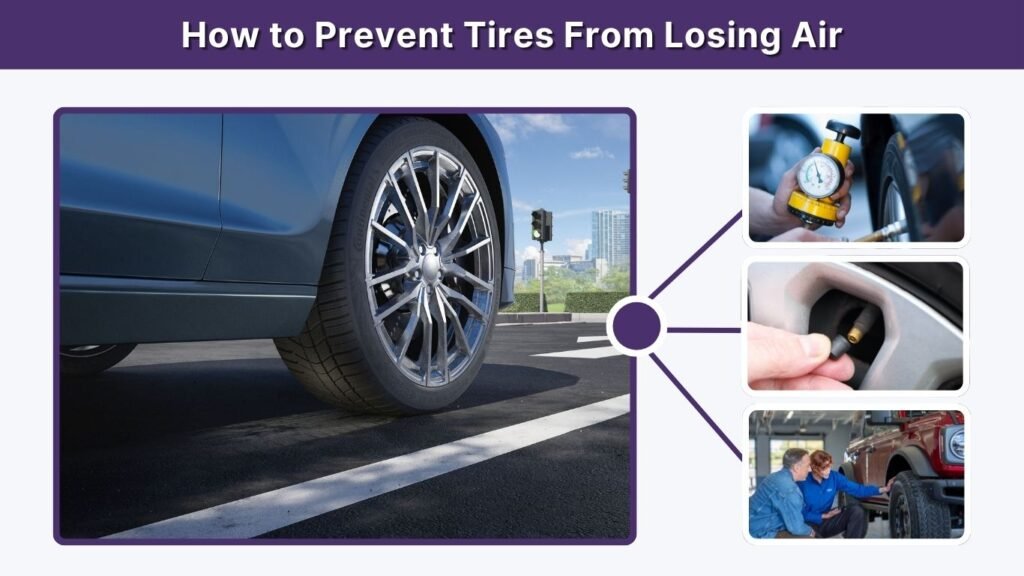
Regular tire maintenance can reduce unexpected pressure loss and help identify damage early.
Although some air loss occurs naturally, proper inspection and inflation practices can extend tire life.
Tire Maintenance Tips
- Check pressure monthly: Measure all tires when they are cold.
- Use the correct PSI: Follow the vehicle manufacturer’s door-jamb tire placard.
- Inspect for damage: Look for cracks, punctures, bulges, and embedded objects.
- Maintain valve caps: Keep protective caps installed to prevent contamination.
- Avoid potholes: Reduce the risk of wheel and sidewall damage.
- Check after repairs: Monitor pressure after a puncture repair or tire installation.
Never use the maximum pressure printed on the tire sidewall as your routine inflation target unless it matches the vehicle manufacturer’s recommendation.
Frequently Asked Questions
Why Does My Tire Keep Losing Air Every Few Days?
A tire losing air every few days usually has a slow leak. Common causes include small punctures, leaking valve stems, or damaged bead seals. A professional inspection can identify the source and determine whether the tire can be repaired safely.
Why Does My Brand-New Tire Keep Losing Air?
A new tire may lose air because of improper installation, a damaged valve stem, or corrosion along the wheel rim. The tire itself may be undamaged. Return to the installation shop for a complete leak inspection and correction.
Can a Tire Lose Air Without a Puncture?
Yes. Tires naturally lose small amounts of pressure over time. Temperature changes, damaged valve stems, corroded wheel rims, and poor bead seals can also cause air loss without punctures. Significant or repeated pressure loss requires inspection.
How Much Air Loss Is Normal for a Tire?
A tire may naturally lose approximately 1–2 PSI per month. Temperature changes can also affect readings. Losing several PSI within a few days, especially in only one tire, is abnormal and may indicate a leak requiring professional attention.
Should I Replace a Tire That Keeps Losing Air?
Not always. Repairable tread punctures and valve leaks can often be fixed without replacing the tire. However, sidewall damage, severe cracking, unsafe puncture locations, or internal structural damage generally require replacement to maintain safe driving conditions.