
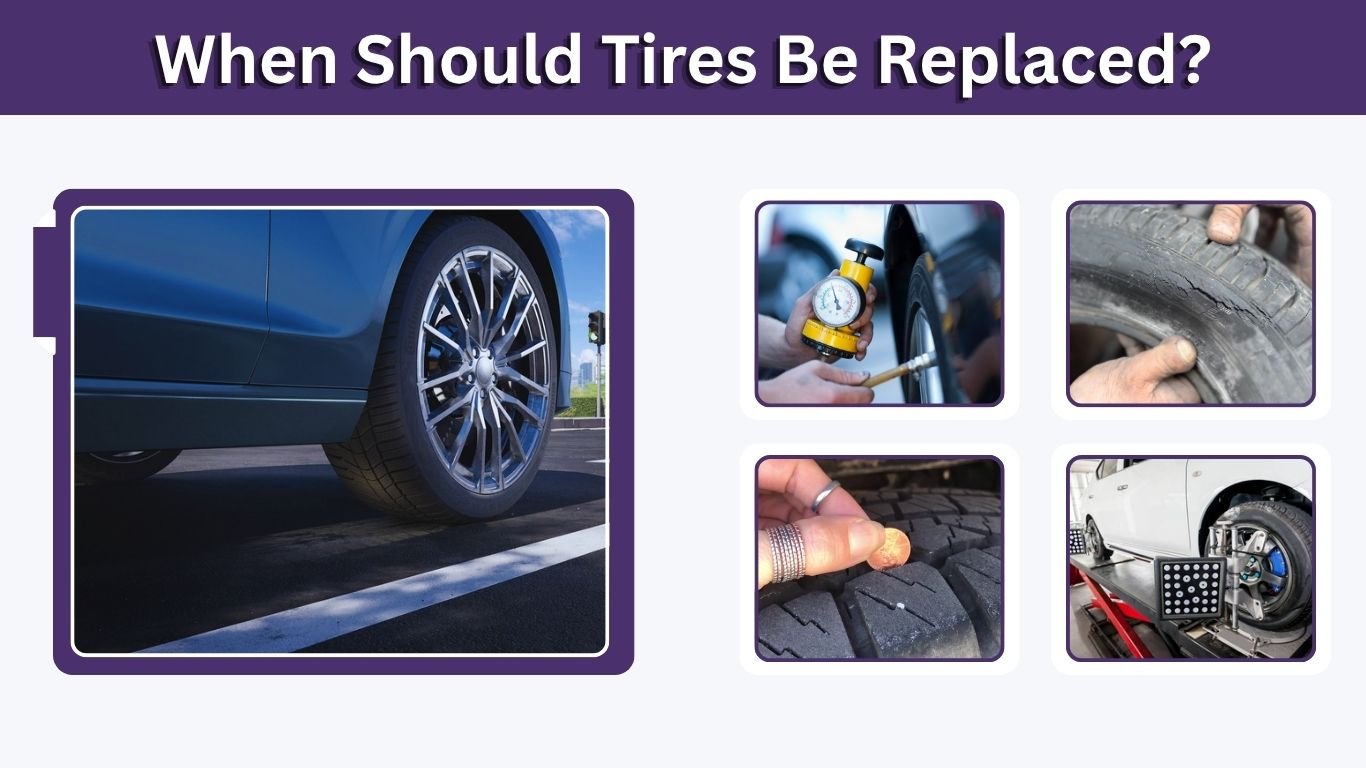
Knowing when tires should be replaced is essential for safe driving, better handling, and reliable braking. Worn or damaged tires can increase stopping distances, reduce traction, and raise the risk of tire failure. However, many drivers are unsure whether to replace their tires based on age, mileage, or tread depth. Generally, tires should be replaced when tread depth reaches 2/32 of an inch, when serious damage occurs, or when they become too old. This guide explains the warning signs, replacement timelines, and simple ways to check your tires.
When Should Tires Be Replaced?
Tires should be replaced when they become excessively worn, damaged, or too old to perform safely. The replacement timeline depends on driving habits, road conditions, tire quality, and maintenance. Even tires with sufficient tread may need replacement because rubber gradually deteriorates.
Tire Replacement Guidelines
- Tread depth: Replace tires at 2/32 inch (1.6 mm) of remaining tread.
- Tire age: Some manufacturers recommend replacement between six and ten years, regardless of tread wear.
- Mileage: Many passenger tires last approximately 40,000–70,000 miles, although actual mileage varies considerably.
- Visible damage: Replace tires with dangerous bulges, exposed cords, or irreparable punctures.
- Performance issues: Reduced traction, unusual vibrations, or recurring air loss require professional inspection.
Drivers should inspect their tires monthly rather than waiting for an obvious problem.
7 Signs Your Tires Need to Be Replaced
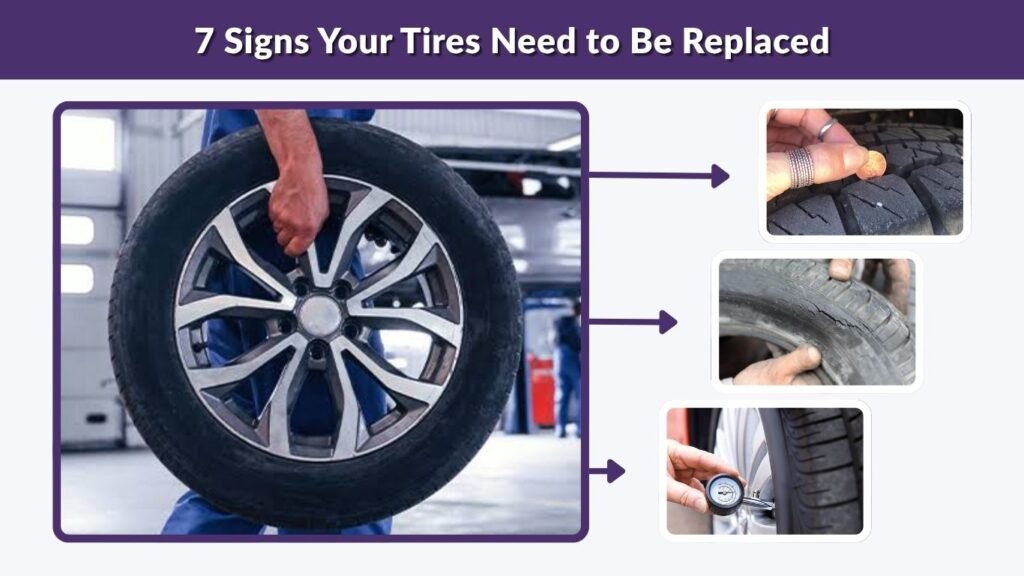
Recognizing tire replacement signs helps prevent unexpected failures. Some warning signs are visible, while others become noticeable through changes in handling, braking, or driving comfort.
1. Low Tire Tread Depth
Tire tread channels water away from the contact area, improving traction on wet roads. As tread wears down, the tire becomes less effective at resisting hydroplaning.
Most passenger tires should be replaced when tread reaches 2/32 inch. However, drivers who frequently travel on wet roads may benefit from replacing tires earlier.
2. Cracks in the Tire Sidewall
Cracks can develop because of aging, sunlight exposure, temperature changes, or environmental conditions.
Small surface cracks do not always mean immediate replacement is necessary. However, deep cracking or cracking accompanied by other deterioration requires professional evaluation.
3. Bulges or Blisters
A bulge on a tire’s sidewall often indicates internal structural damage. This can happen after hitting potholes, curbs, or road debris.
A damaged tire may fail unexpectedly, especially at highway speeds. Tires showing bulges should be removed from service rather than repaired.
4. Uneven Tire Wear
Uneven tread wear indicates that different sections of the tire are wearing at different rates.
Common causes include improper inflation pressure, wheel alignment problems, worn suspension components, and missed tire rotations.
A professional should determine the cause and whether the remaining tread is safe.
5. Excessive Vibration While Driving
Unusual vibrations may indicate tire imbalance, wheel damage, uneven wear, or internal tire problems.
Although vibrations do not automatically mean replacement is necessary, persistent shaking requires inspection. Continuing to drive with a structurally damaged tire can be dangerous.
6. Frequent Tire Pressure Loss
Tires naturally lose small amounts of air over time. However, repeated pressure loss may indicate a puncture, leaking valve, damaged wheel, or deteriorating tire.
Some punctures can be repaired safely, while sidewall damage and certain larger injuries usually require replacement.
7. Reduced Traction on Wet Roads
If your vehicle begins slipping more easily during rain or requires longer distances to stop, worn tread could be responsible.
Reduced wet-weather performance is particularly concerning because insufficient tread increases hydroplaning risks.
Check the tires promptly and consider replacement before reaching the minimum tread depth.
When Should Tires Be Replaced Based on Tread Depth?
Tread depth is one of the most reliable indicators of tire wear. New passenger tires commonly have approximately 8/32 to 11/32 inch of tread, although specifications vary.
As the tread wears, traction and water evacuation generally decrease.
Tire Tread Depth Replacement Chart
| Tread depth | Tire condition | Recommendation |
|---|---|---|
| 10/32 inch | Deep tread | Usually good |
| 8/32 inch | Normal tread | Continue monitoring |
| 6/32 inch | Moderate wear | Inspect regularly |
| 4/32 inch | Reduced wet grip | Consider replacement |
| 3/32 inch | Low tread | Replace soon |
| 2/32 inch | Worn-out tread | Replace immediately |
These guidelines primarily apply to typical passenger tires. Winter tires may need replacement earlier for effective snow traction.
How Often Should Tires Be Replaced Based on Age?
Tire age matters because rubber compounds and internal materials gradually deteriorate. Environmental exposure, storage conditions, temperature, and driving patterns can influence the aging process.
Some manufacturers recommend tire replacement after six to ten years, even when the tread appears acceptable.
Tire Age Recommendations
- Under five years: Continue regular inspections and maintenance.
- Five years or older: Have tires professionally inspected at least annually.
- Six to nine years: Carefully follow manufacturer recommendations and assess condition.
- Ten years: Replace tires as a precaution, including unused spare tires.
To determine tire age, locate the manufacturing date code on the sidewall. For example, a code ending in 2522 indicates production during the 25th week of 2022.
Always follow the vehicle or tire manufacturer’s recommendations when they require earlier replacement.
When Should Tires Be Replaced Based on Mileage?
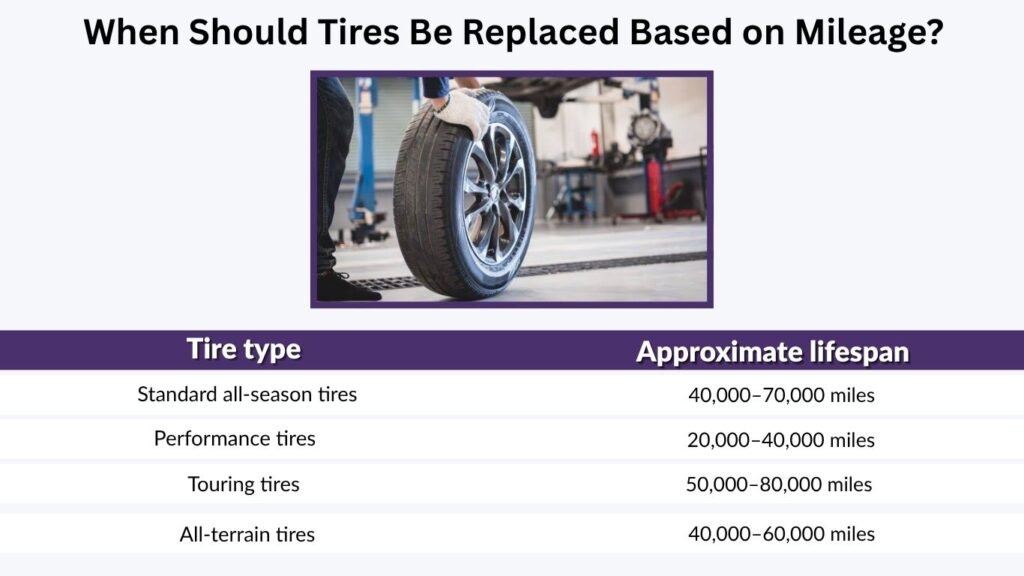
Mileage provides a general estimate of tire lifespan but cannot determine replacement timing by itself. Tire construction, road surfaces, driving habits, and maintenance influence how quickly tread wears.
Average Tire Lifespan by Mileage
| Tire type | Approximate lifespan |
|---|---|
| Standard all-season tires | 40,000–70,000 miles |
| Performance tires | 20,000–40,000 miles |
| Touring tires | 50,000–80,000 miles |
| All-terrain tires | 40,000–60,000 miles |
These are broad estimates, not guaranteed replacement intervals.
Aggressive acceleration, hard braking, improper inflation, and poor alignment may significantly shorten tire life. Regular maintenance helps tires reach their expected mileage.
How to Check Whether Your Tires Need Replacing
Checking tire condition at home is relatively simple. Drivers should examine tread depth, sidewalls, pressure, and wear patterns at least once a month.
Several inspection methods can help identify worn tires before they become dangerous.
Use the Penny Test
The penny test provides a quick approximation of minimum tread depth.
Insert a penny into a tire groove with Abraham Lincoln’s head facing downward. If the top of his head remains visible, the tread is approximately 2/32 inch or less.
Repeat the test across several locations because tire wear may be uneven.
Use a Tire Tread Depth Gauge
A tread depth gauge provides a more accurate measurement than the penny test.
Insert the gauge into the main tread grooves and record the reading. Measure several points around each tire.
If any important section reaches the replacement threshold, have the tire assessed for replacement.
Check the Tread Wear Indicators
Most modern passenger tires contain built-in tread wear indicators.
These small raised bars sit inside the main tread grooves. When the surrounding tread becomes level with the bars, the tire has reached approximately 2/32 inch of remaining tread and requires replacement.
Should You Replace All Four Tires at Once?
Replacing all four tires simultaneously often provides consistent traction, handling, and braking performance. However, replacing every tire is not always necessary.
If only two tires require replacement, new tires are generally installed on the rear axle to improve vehicle stability on wet roads.
All-wheel-drive vehicles may have stricter requirements because significant differences in tire circumference can affect drivetrain components.
Check your vehicle owner’s manual before mixing tires with different tread depths, sizes, or specifications.
How to Make Your Tires Last Longer
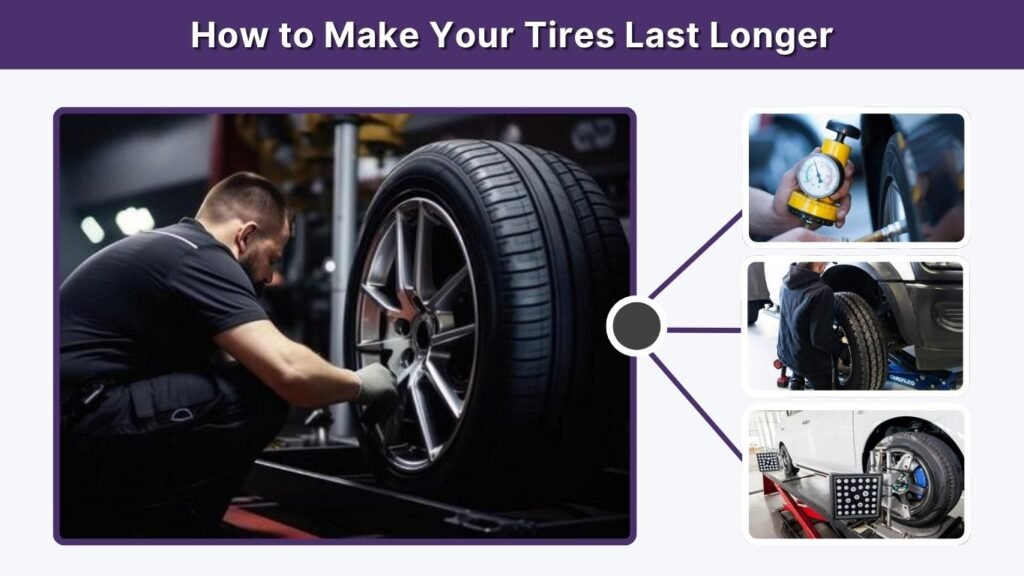
Proper maintenance can extend tire lifespan and reduce unnecessary replacement costs. Simple habits help prevent uneven wear while supporting safer driving.
Maintain Correct Tire Pressure
Use the pressure recommended on the vehicle’s door-jamb label or owner’s manual. Check pressure when tires are cold, preferably monthly.
Underinflation and overinflation can both cause uneven wear.
Rotate Tires Regularly
Many vehicles benefit from tire rotations approximately every 5,000–8,000 miles, depending on manufacturer instructions.
Rotation helps distribute tread wear more evenly.
Check Wheel Alignment
Poor alignment can cause rapid wear along one edge of the tire.
Have alignment inspected when you notice uneven wear, steering problems, or after a significant road impact.
Avoid Aggressive Driving
Hard braking, sudden acceleration, and sharp cornering accelerate tire wear.
Smooth driving habits help preserve tread and improve overall tire performance.
Frequently Asked Questions
1. When should tires be replaced based on tread depth?
Passenger tires should be replaced when tread depth reaches 2/32 inch, approximately 1.6 mm. However, replacing tires around 4/32 inch may improve wet-weather safety, particularly when driving frequently in heavy rain or on slippery roads.
2. Should tires be replaced after five years?
Tires do not automatically require replacement after five years. However, manufacturers such as Michelin recommend professional inspections at least annually after five years of service. Replacement depends on tire condition, tread wear, driving history, and manufacturer guidelines.
3. How do I know if my tires are too old?
Check the tire’s manufacturing date code on its sidewall. The final four digits indicate the production week and year. Tires approaching ten years old deserve particular attention, even if they have adequate tread and appear undamaged.
4. Can I replace only two tires instead of four?
Yes, replacing two tires is often acceptable for vehicles with compatible tire specifications. Generally, the newer tires should be installed on the rear axle. All-wheel-drive vehicles may require closely matched tread depths to protect drivetrain components.
5. Do tires need replacing if they have good tread?
Yes, tires sometimes require replacement despite having good tread. Serious sidewall damage, internal structural problems, irreparable punctures, and advanced aging can make tires unsafe. Tread depth alone cannot determine whether an older tire remains suitable for driving.