
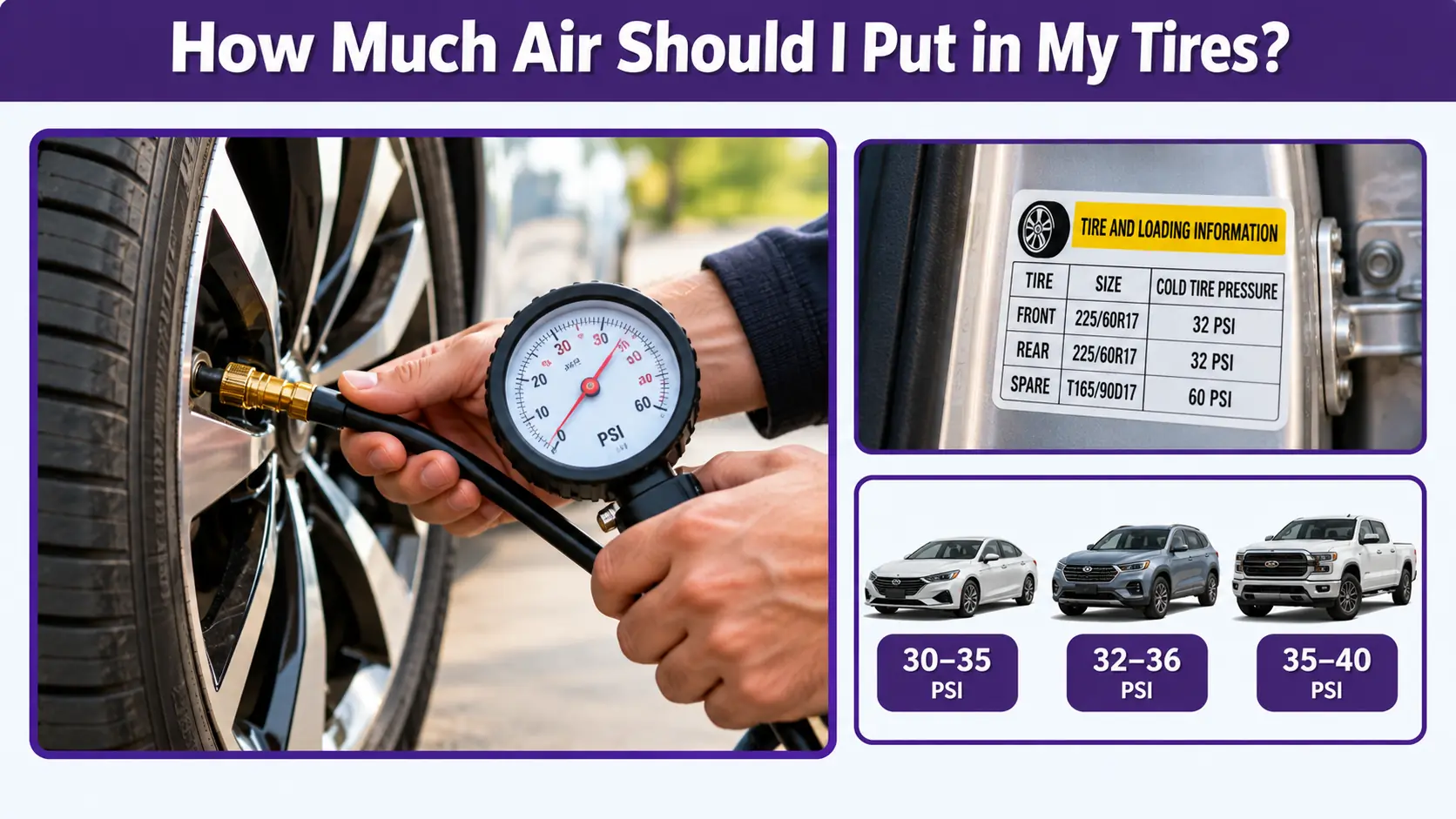
Knowing how much air to put in your tires is essential for safe driving, fuel efficiency, and longer tire life. Most passenger cars recommend around 30–35 PSI, but the correct pressure depends on your vehicle, tire specifications, and driving conditions. Too much or too little air can affect handling, braking, and tire wear. Whether you drive a car, truck, motorcycle, or bicycle, understanding tire pressure helps prevent unnecessary problems. This guide explains how to find the correct PSI, check your tires, and maintain proper inflation.
How Much Air Pressure Should I Put in My Tires?
The amount of air your tires need is measured in pounds per square inch (PSI). Most passenger cars have recommended cold tire pressures around 30–35 PSI, although some vehicles require higher or lower amounts.
The correct PSI depends on the vehicle manufacturer’s specifications rather than the tire’s appearance or size alone.
| Vehicle Type | Tire Pressure Guidance |
| Passenger cars | Often 30–35 PSI |
| SUVs | Follow vehicle door placard |
| Pickup trucks | Depends on tire type and load |
| Motorcycles | Follow motorcycle owner’s manual |
| Bicycles | Depends on tire width, rider, and rim |
| RVs and campers | Depends on tire specifications and load |
| Trailer tires | Follow trailer and tire manufacturer’s guidance |
These are general guidelines, not universal pressure recommendations. Always use the specified cold pressure for your particular vehicle.
Where Can You Find the Correct Tire Pressure?
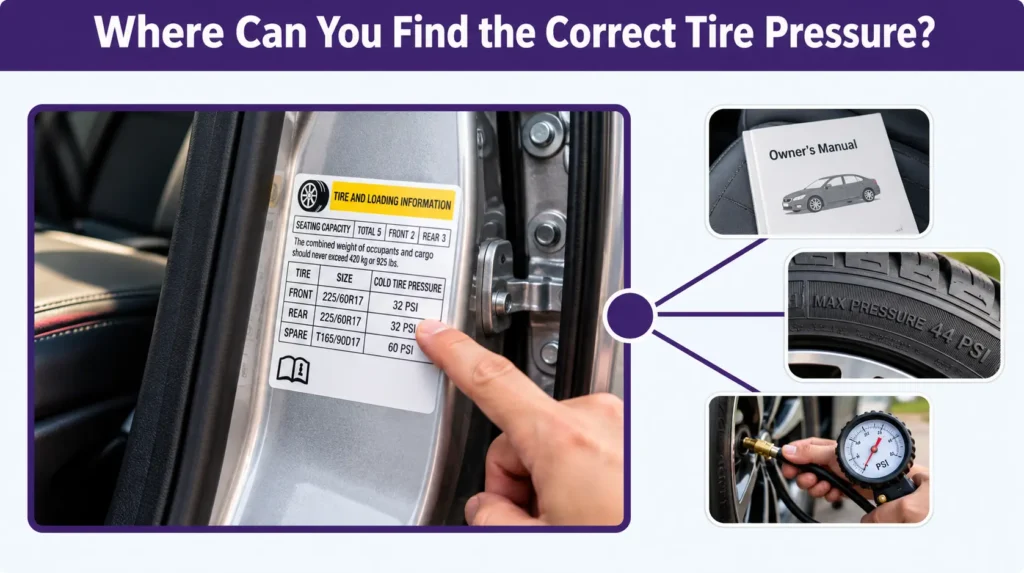
Finding the recommended tire pressure is easier than guessing how much air your tires need. Vehicle manufacturers provide this information to ensure proper handling, braking, and load support.
You can usually find the recommended pressure in three places:
- Driver’s door sticker: Open the driver’s door and look for the tire information label on the doorjamb or door edge.
- Owner’s manual: Check the tire maintenance or vehicle specifications section.
- Manufacturer information: Consult official vehicle documentation or an authorized service provider.
The number printed on your tire’s sidewall usually indicates its maximum cold inflation pressure, not the recommended pressure for your vehicle.
For example, if your vehicle recommends 33 PSI but the tire sidewall displays 44 PSI maximum, you should normally inflate it to 33 PSI when cold.
How Much Air Should I Put in Different Types of Tires?
Different vehicles require different tire pressures because their weights, tire constructions, and operating conditions vary. Using the same PSI for every type of tire can cause poor performance or increase the risk of damage.
How Much Air Should I Put in My Car Tires?
Most everyday passenger cars recommend approximately 30–35 PSI. However, compact cars, sports cars, and luxury vehicles may have different requirements.
Front and rear tire pressures can also differ. Check the driver’s door label before adjusting them.
If your car recommends 32 PSI, inflate the tires to that pressure while they are cold rather than adding air until the tires feel firm.
How Much Air Should I Put in My Truck Tires?
Truck tire pressure depends on vehicle weight, tire construction, and the load being carried.
Light-duty pickups with passenger-type tires may use pressures similar to SUVs, while heavier trucks with LT-rated tires can require substantially higher pressures.
Always follow the truck manufacturer’s recommendations. If you have changed tire sizes or load ratings, consult a qualified tire professional to determine the appropriate inflation pressure.
How Much Air Should I Put in My Bicycle Tires?
Bicycle tire pressure varies considerably depending on tire width, rider weight, and riding surface.
Narrow road bike tires generally require higher pressure than wider mountain bike tires. Mountain bikes often benefit from lower pressures that improve traction on uneven terrain.
Check the tire manufacturer’s pressure guidance and the rim’s maximum pressure rating. Choose a pressure compatible with both, considering rider weight and whether the tires use tubes or a tubeless setup.
How Much Air Should I Put in My Motorcycle Tires?
Motorcycle tire pressure affects handling, stability, and braking performance. The appropriate PSI varies according to motorcycle type, tire specifications, and passenger or luggage load.
Check your motorcycle’s owner’s manual or information plate for the recommended cold pressure.
Some motorcycles specify different pressures when carrying a passenger or additional luggage. Always follow those instructions instead of relying on a general PSI estimate.
How Much Air Should I Put in My Trailer, Camper, or Spare Tires?
Trailer and camper tires require special attention because their inflation pressure is closely related to load capacity.
Many special trailer tires are intended to operate at the specified maximum cold pressure, but you should follow the tire and trailer manufacturers’ instructions and respect wheel pressure limits.
For motorhomes and RVs, actual loaded axle weights and tire load-inflation tables may be needed to determine the correct pressure.
Compact temporary spare tires often require considerably higher pressure than regular passenger tires, sometimes 60 PSI. Check your vehicle’s instructions rather than assuming every spare requires the same amount.
How to Check and Add Air to Your Tires
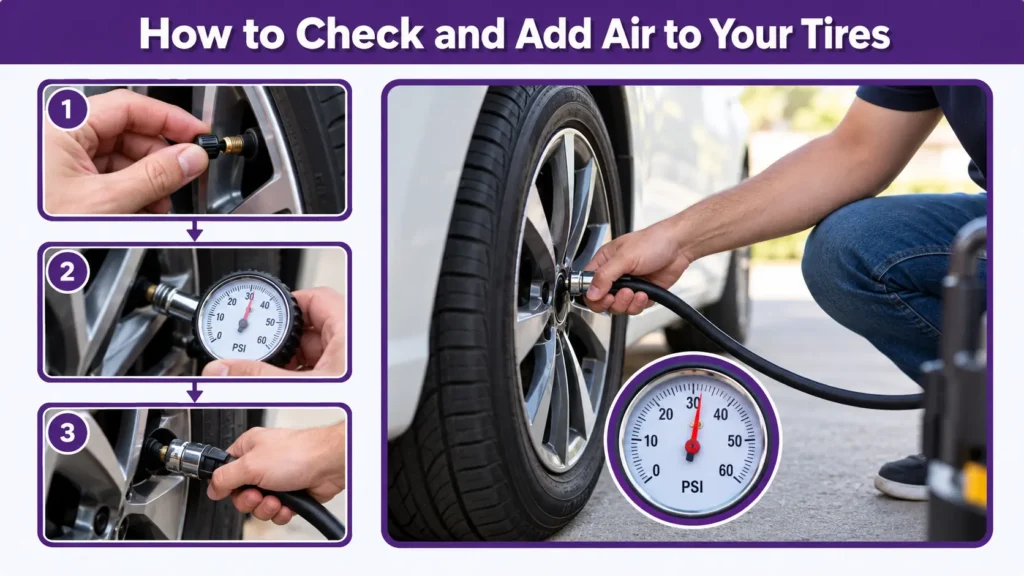
Checking tire pressure regularly is one of the simplest vehicle maintenance tasks. You only need an accurate tire pressure gauge and an air compressor or tire inflator.
Follow these steps to inflate your tires correctly:
- Park your vehicle: Check the tires before driving or after the vehicle has been parked for at least three hours.
- Find the correct PSI: Read the recommended cold tire pressure on the vehicle’s tire information label.
- Remove the valve cap: Unscrew the cap from the tire’s valve stem.
- Measure the pressure: Press the tire pressure gauge firmly against the valve and read the PSI.
- Add or release air: If pressure is low, inflate the tire gradually. If it is too high while cold, release small amounts.
- Check again: Measure the pressure after each adjustment until it matches the manufacturer’s recommendation.
- Replace the cap: Secure the valve cap and repeat the process for the remaining tires.
If a tire is severely underinflated, visibly damaged, or repeatedly loses pressure, have it professionally inspected before driving.
Should You Check Tire Pressure When Tires Are Cold or Hot?
Tire pressure should normally be checked when the tires are cold. This means the vehicle has been parked for at least three hours or has traveled only a very short distance at low speed.
Driving generates heat, which increases the air pressure inside the tires. As a result, a warm tire may show a higher PSI than it would when cold.
Do not release air from a warm tire simply to reach the recommended cold pressure. Doing so can leave the tire underinflated after cooling.
If you must add air while the tires are warm, follow the manufacturer’s instructions and recheck the pressure when cold.
What Happens If You Put Too Much or Too Little Air in Tires?
Incorrect tire inflation can affect vehicle safety, ride comfort, and tire longevity. Both underinflation and overinflation create problems, although they affect tire performance differently.
Problems Caused by Low Tire Pressure
Underinflated tires flex excessively while driving, producing additional heat and increasing rolling resistance.
Common consequences include:
- Increased fuel consumption
- Excessive wear near the tread edges
- Reduced steering responsiveness
- Greater risk of tire overheating and failure
Driving on a significantly underinflated tire can cause internal damage that may not be immediately visible.
Problems Caused by High Tire Pressure
Excessive inflation can make tires less able to absorb road irregularities and may reduce traction under certain conditions.
Overinflated tires may produce a harsh ride, uneven tread wear, and increased vulnerability to impact damage.
Maintaining the manufacturer’s recommended pressure helps balance handling, durability, comfort, and efficiency.
How Often Should You Check Your Tire Pressure?
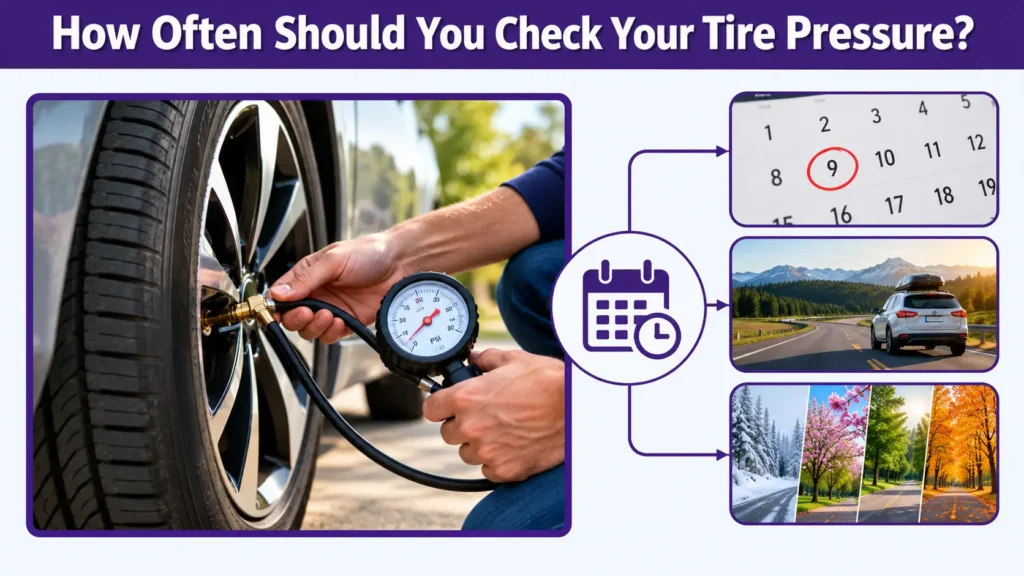
Check your vehicle’s tire pressure at least once a month and before long road trips. Regular inspections help identify slow leaks and pressure changes before they become serious problems.
Air pressure naturally changes with temperature. Cold weather can cause tire pressure to decrease, while warmer temperatures can increase pressure readings.
You should also inspect tire pressure after hitting a pothole or noticing changes in steering, handling, or ride comfort.
Do not rely entirely on the tire pressure monitoring system (TPMS). Its warning light may not activate until a tire is already significantly underinflated.
FAQs
1. Is 35 PSI Too Much Air for a Tire?
Not necessarily. Many passenger vehicles recommend tire pressures around 35 PSI. However, this pressure may be too high or too low for another vehicle. Always compare it with the manufacturer’s recommended cold PSI.
2. Should All Four Tires Have the Same PSI?
Not always. Some vehicles specify different pressures for front and rear tires because of weight distribution and handling requirements. Follow the manufacturer’s tire information label rather than automatically inflating all four tires equally.
3. Can I Put 40 PSI in My Tires?
You can use 40 PSI if your vehicle manufacturer recommends that pressure and your tires and wheels are rated appropriately. Otherwise, inflating tires to 40 PSI may cause unnecessary overinflation and affect vehicle handling.
4. How Do I Know If My Tires Need More Air?
Use a tire pressure gauge and compare the reading with your vehicle’s recommended cold PSI. A TPMS warning or visibly low tire may indicate underinflation, but a tire can be low without appearing flat.
5. Does Tire Pressure Change With Weather?
Yes. Tire pressure generally decreases as outdoor temperatures fall and increases as temperatures rise. Check your tires more frequently during seasonal temperature changes and adjust them according to the manufacturer’s recommended cold inflation pressure.