
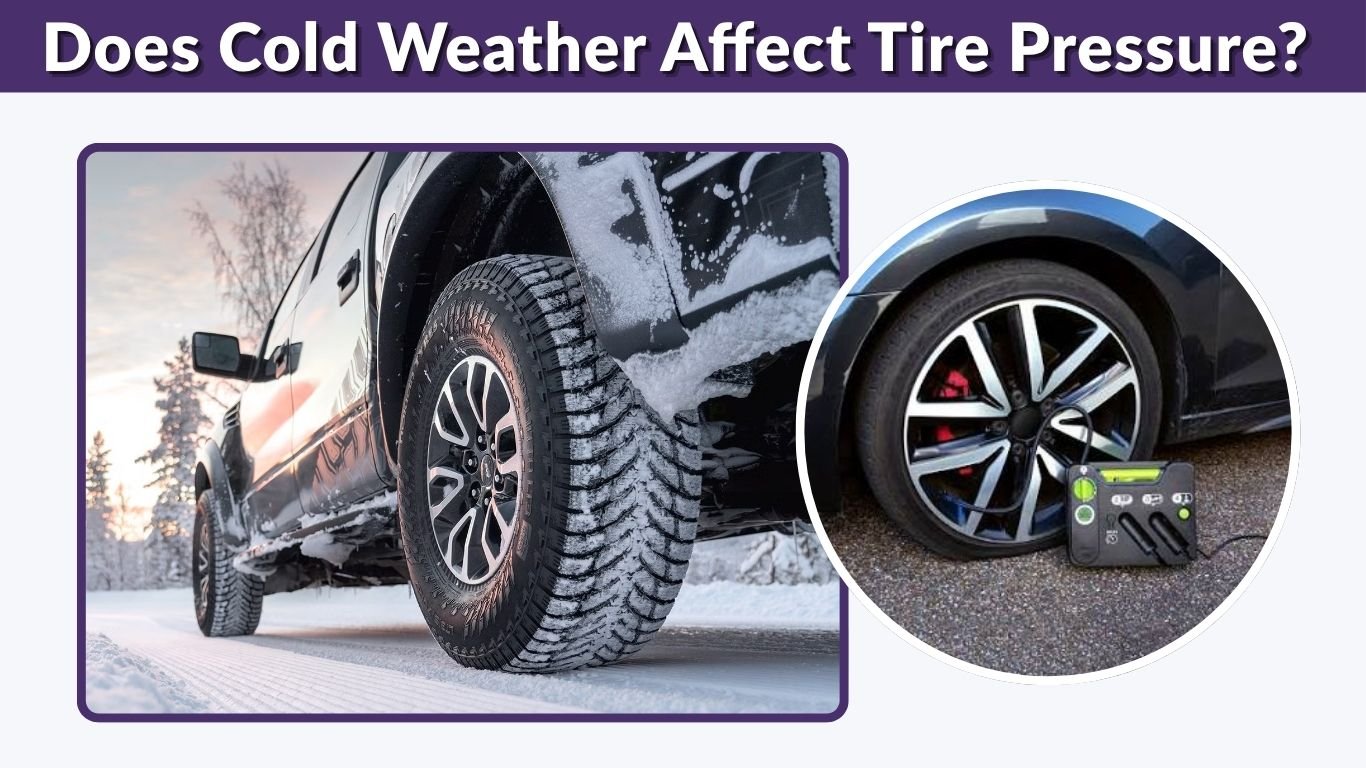
Yes, cold weather affects tire pressure by causing the air inside your tires to contract, lowering inflation pressure. For every 10°F (5.6°C) temperature drop, tire pressure typically decreases by about 1 PSI. This means a tire inflated to 35 PSI in warm weather could drop to around 31 PSI after a 40°F temperature decrease. Cold weather can also trigger tire pressure monitoring system (TPMS) warnings. Understanding these changes helps you maintain proper inflation, protect your tires, and drive safely during winter.
How Does Cold Weather Affect Tire Pressure?
Cold weather directly affects tire pressure because air temperature influences the pressure inside a tire. When temperatures decrease, air molecules move more slowly, reducing the pressure they exert against the tire’s interior.
This natural process explains why tires often show lower pressure readings during winter, even when they do not have leaks.
Why Does Tire Pressure Drop in Cold Weather?
The relationship between temperature and pressure follows the principles of gas behavior. When the air inside a tire cools, its pressure decreases.
For example, a tire inflated to 35 PSI at 70°F may measure approximately 32 PSI when the temperature drops to 40°F.
This pressure reduction does not necessarily mean air has escaped. Instead, the cooler air inside the tire produces less pressure.
However, tires also gradually lose air through normal permeation. Michelin notes that tires can lose up to approximately 1 PSI monthly, making regular pressure checks important.
How Much Does Cold Weather Affect Tire Pressure?
The amount of tire pressure lost depends primarily on the temperature change, starting pressure, and tire characteristics.
For typical passenger car tires, a useful guideline is approximately 1 PSI lost for every 10°F decrease in temperature.
Tire Pressure Drop by Temperature
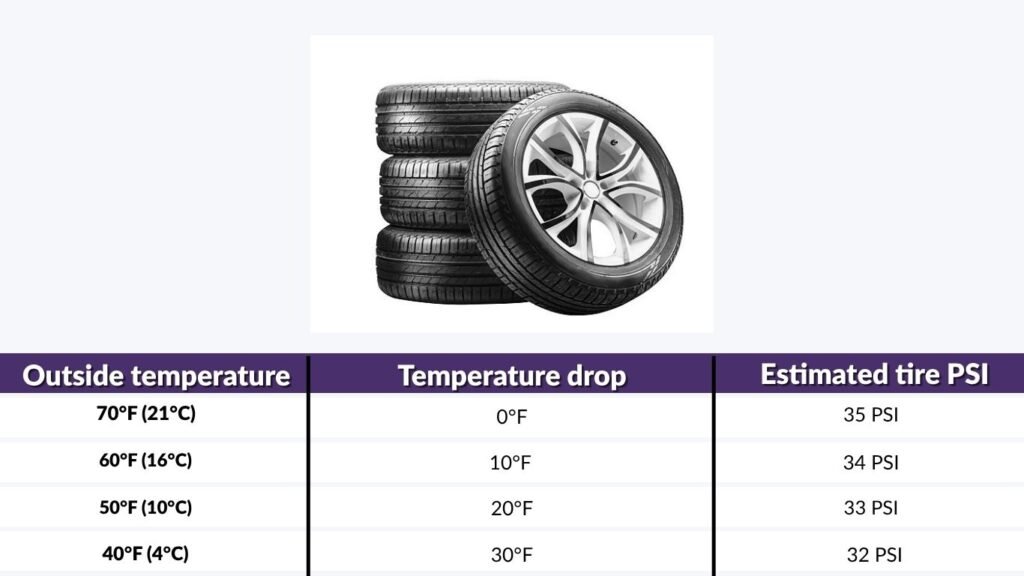
The following table shows approximate changes for a tire originally measuring 35 PSI at 70°F.
| Outside temperature | Temperature drop | Estimated tire PSI |
| 70°F (21°C) | 0°F | 35 PSI |
| 60°F (16°C) | 10°F | 34 PSI |
| 50°F (10°C) | 20°F | 33 PSI |
| 40°F (4°C) | 30°F | 32 PSI |
| 30°F (-1°C) | 40°F | 31 PSI |
| 20°F (-7°C) | 50°F | 30 PSI |
| 10°F (-12°C) | 60°F | 29 PSI |
These values are estimates based on a common rule of thumb, not exact predictions.
For instance, a sudden overnight temperature drop of 30°F may reduce tire pressure by approximately 3 PSI.
Although this change may appear small, it can be significant if the tire was already underinflated.
Does Cold Weather Affect Tire Pressure Sensors?
Yes, cold weather can affect the readings and warning behavior of tire pressure monitoring systems. However, cold temperatures usually cause the actual tire pressure to decrease rather than directly damaging the sensors.
The TPMS monitors tire inflation and alerts drivers when pressure becomes significantly low.
Why Does the TPMS Light Turn On in Cold Weather?
During cold mornings, tire pressure can fall below the warning threshold established by the vehicle’s monitoring system.
As a result, the TPMS warning light may illuminate even though the tires appeared normal the previous afternoon.
Sometimes, the warning disappears after driving because the tires warm up and their internal pressure increases.
However, this does not mean the tires are properly inflated when cold. NHTSA recommends checking the tires whenever the TPMS warning appears, including intermittent cold-weather warnings.
Can Extreme Cold Damage TPMS Sensors?
Cold temperatures do not automatically damage tire pressure sensors.
However, TPMS components can develop faults due to aging batteries, damaged sensors, or communication problems. Direct TPMS systems use sensors located in the wheels, while indirect systems estimate pressure changes using wheel-speed information.
If the warning light flashes for approximately 60–90 seconds before remaining illuminated, it may indicate a TPMS malfunction rather than simply low tire pressure.
In that situation, check the manufacturer’s instructions and have the system inspected if necessary.
Does Extreme Cold Weather Affect Tire Pressure More?

Extreme cold can cause a more noticeable pressure decrease when temperatures fall substantially below their previous levels.
For example, a vehicle traveling from a relatively warm region into freezing conditions may experience a considerable change in tire pressure.
Several conditions can make winter inflation problems more noticeable.
- Sudden temperature drops: Rapid weather changes can reduce tire pressure overnight.
- Existing underinflation: Tires already below the recommended PSI may become significantly underinflated.
- Extended parking: Tires cool to the surrounding temperature when parked outdoors for long periods.
- Slow leaks: Small punctures or valve problems can combine with temperature-related pressure reductions.
Severely underinflated tires may experience excessive flexing, heat buildup, uneven wear, and reduced handling performance.
Consequently, drivers should not assume that every winter pressure warning is caused only by temperature changes.
How to Check Tire Pressure in Cold Weather
Checking tire pressure correctly during winter is essential because driving warms the tires and affects pressure readings.
For accurate measurements, check inflation when the tires are cold, ideally before driving or after the vehicle has been parked for at least three hours.
Steps to Check Tire Pressure
- Find the recommended PSI: Look at the tire information label inside the driver’s door or in the owner’s manual.
- Use a reliable gauge: A digital or analog tire pressure gauge can provide accurate readings.
- Measure when cold: Check before your morning drive whenever possible.
- Add air if necessary: Inflate each tire to the vehicle manufacturer’s recommended cold pressure.
- Check all tires: Inspect front, rear, and spare tires where applicable.
- Recheck regularly: Measure tire pressure at least monthly and after substantial temperature changes.
NHTSA recommends monthly cold tire pressure checks and emphasizes that TPMS warnings are not substitutes for routine measurements.
Should You Add More Air to Tires in Winter?
You should add air whenever the measured cold tire pressure falls below the vehicle manufacturer’s recommendation.
For example, if your vehicle requires 35 PSI and the cold-weather reading is 31 PSI, add approximately 4 PSI to restore the recommended pressure.
Do not intentionally overinflate tires above the recommended cold setting simply because winter is approaching.
Also, avoid using the maximum pressure printed on the tire sidewall as your regular inflation target. That specification is not necessarily appropriate for your vehicle.
How Do Hot and Cold Weather Affect Tire Pressure?
Both hot and cold weather affect tire pressure, but in opposite directions.
Cold conditions lower tire pressure as the air cools. Hot conditions increase pressure because warmer air exerts greater pressure inside the tire.
| Factor | Cold weather | Hot weather |
| Tire pressure | Decreases | Increases |
| Main cause | Air temperature falls | Air temperature rises |
| Common concern | Underinflation | Higher pressure readings |
| TPMS warning | More likely if pressure becomes low | Less likely from temperature alone |
| Recommended action | Check cold PSI and add air if needed | Check cold PSI and avoid deflating hot tires |
Pressure also increases as tires warm during driving, regardless of the season.
If your tires are hot from driving, do not release air simply because the reading is above the recommended cold PSI. Michelin advises checking them again after cooling to avoid accidentally leaving them underinflated.
How to Prevent Low Tire Pressure During Winter

Cold weather cannot be prevented from affecting tire pressure, but consistent maintenance reduces the likelihood of serious underinflation.
Maintain Proper Tire Inflation
Always follow the vehicle manufacturer’s cold inflation recommendations.
Check pressure frequently during periods of changing temperatures, particularly before long trips. Keeping a portable tire pressure gauge in your vehicle makes regular inspections easier.
Inspect Tires for Leaks and Damage
If one tire repeatedly loses more pressure than the others, inspect it for punctures, valve stem problems, or wheel-related leaks.
A temperature change generally affects all tires exposed to similar conditions. A substantial difference in one tire may indicate a separate problem.
Respond to TPMS Warnings
Never ignore a tire pressure warning simply because the weather is cold.
Check the tire pressures with a gauge, inflate them when needed, and follow the vehicle’s reset or calibration instructions.
If the warning persists despite correct inflation, professional TPMS inspection may be necessary.
FAQs
1. Does cold weather make tire pressure go down?
Yes. Cold weather reduces tire pressure because cooling air exerts less pressure inside the tire. The typical decrease is approximately 1 PSI for every 10°F temperature drop.
2. Can cold weather cause a tire pressure warning light?
Yes. Lower temperatures can reduce tire pressure enough to activate the TPMS warning light. Always check the tires rather than assuming the warning is harmless.
3. Does tire pressure return to normal when it gets warmer?
Tire pressure usually increases as temperatures rise. However, any air lost through leaks or normal permeation will not automatically return.
4. Should I inflate my tires more in cold weather?
Inflate your tires to the manufacturer’s recommended cold PSI. If winter temperatures have reduced the pressure below that level, add the necessary air rather than choosing an arbitrary higher target.
5. Can extremely cold weather cause a flat tire?
Cold temperatures alone do not normally cause a healthy tire to become completely flat. However, significant pressure reductions or existing leaks can lead to dangerously low inflation that requires immediate attention.