
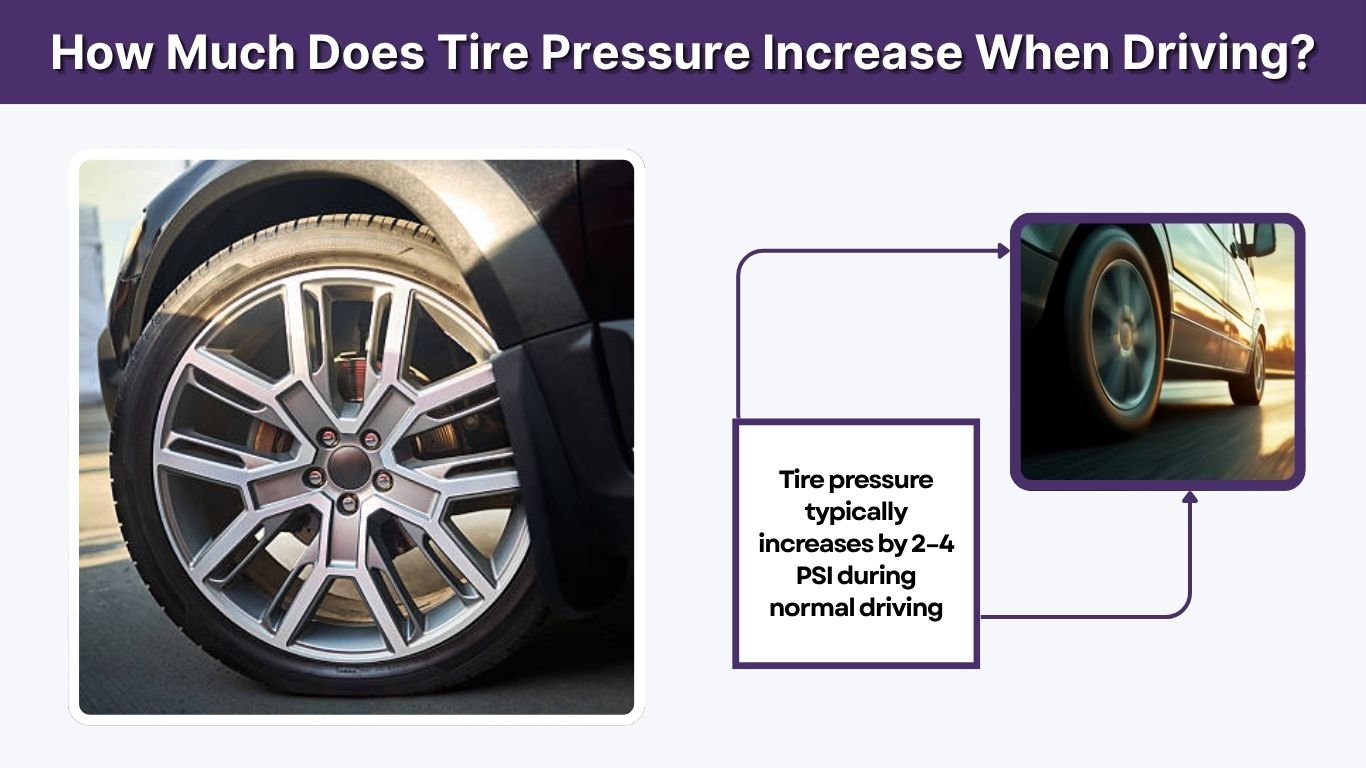
Tire pressure typically increases by 2–4 PSI during normal driving, although longer highway trips and hotter conditions can cause increases of 4–6 PSI or more. This happens because tires generate heat as they roll, warming the air inside and increasing its pressure. However, the exact increase depends on driving speed, road temperature, tire condition, and vehicle weight. Understanding how tire pressure changes while driving helps you maintain proper inflation, improve fuel efficiency, prevent uneven tire wear, and ensure safer driving in different weather conditions.
How Much Does Tire Pressure Increase When Driving?
Most passenger vehicle tires experience a pressure increase of approximately 2–4 PSI after warming up during regular driving. For example, a tire inflated to 32 PSI when cold may reach 34–36 PSI after driving.
During extended highway driving, pressure can increase by approximately 4–6 PSI, depending on conditions. Tire Rack recognizes similar increases as normal effects of driving-generated heat.
Average Tire Pressure Increase
The following table illustrates possible pressure changes under different driving conditions.
| Driving condition | Cold PSI | Possible hot PSI |
| Short city drive | 32 | 33–34 |
| Normal daily driving | 32 | 34–36 |
| Extended highway driving | 32 | 36–38 |
| Long drive in hot weather | 35 | 39–41 |
These numbers are illustrative, not fixed limits. Actual readings depend on tire temperature, inflation pressure, driving conditions, and vehicle characteristics.
A moderate pressure increase is normal and does not necessarily indicate overinflation. Manufacturers account for temperature-related changes when designing tires and establishing recommended cold inflation pressures.
Why Does Tire Pressure Increase When Driving?
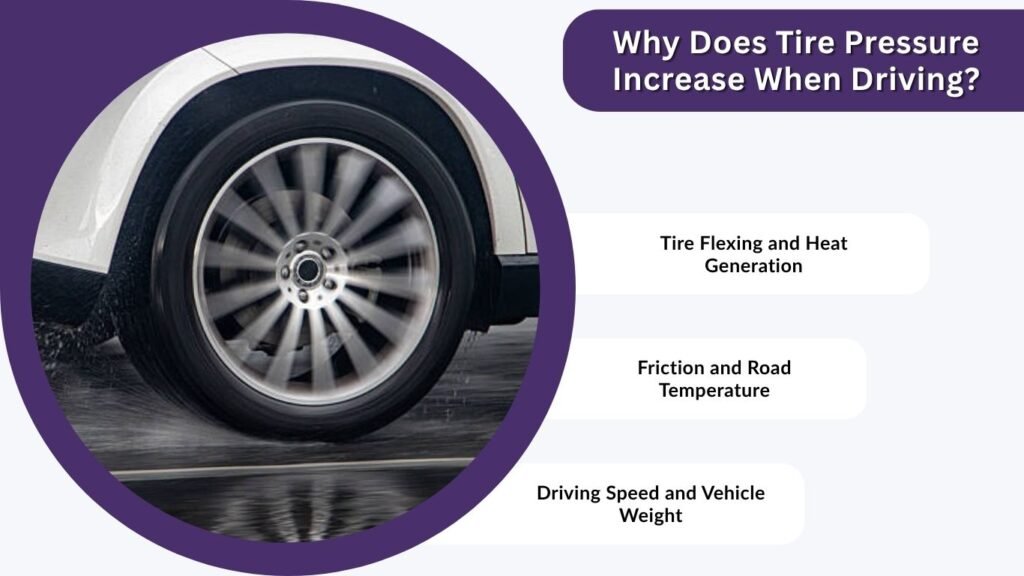
Tire pressure increases mainly because the air inside the tire becomes warmer. As air temperature rises, gas molecules move faster, producing greater pressure within the tire.
Several driving-related factors contribute to this temperature increase.
1. Tire Flexing and Heat Generation
As your vehicle moves, the tires continuously bend and flex where they contact the road. This repeated deformation generates heat within the tire materials.
Some of that heat transfers to the air inside the tire, raising its temperature and pressure. Tire flexing is a major reason why inflation pressure increases during normal driving.
2. Friction and Road Temperature
Contact with the road and internal friction within tire materials contribute to heat buildup.
On hot summer days, asphalt temperatures can become considerably higher than the surrounding air. Driving on these surfaces may increase tire temperatures, especially during extended trips.
3. Driving Speed and Vehicle Weight
Driving speed and vehicle weight also affect tire temperature.
Higher speeds increase the frequency of tire flexing, while heavier loads can increase the work performed by the tires. Both factors may contribute to additional heat generation.
Underinflated tires flex excessively and can become dangerously hot, making correct cold inflation particularly important.
How Much Does Tire Pressure Increase When Hot From Driving?
A tire’s pressure changes as it heats up during a trip, but there is no universal PSI increase for every distance or speed.
During Short Drives
A short trip may produce only a small tire pressure increase because the tires have limited time to warm up.
However, even brief driving can affect pressure readings. For this reason, measuring tire pressure before driving is generally more accurate than measuring it immediately after arriving somewhere.
During Long Highway Drives
During prolonged highway driving, tire pressure may increase by 4–6 PSI compared with the original cold reading.
The pressure generally approaches a relatively stable operating level once heat generation and heat loss become balanced, assuming driving conditions remain similar.
Hot pavement, heavy cargo, and sustained speeds can influence the final reading.
During Hot Weather
Hot weather increases tire pressure even when a vehicle is parked.
According to Tire Rack, passenger vehicle tire pressure typically changes by approximately 1 PSI for every 10°F change in ambient temperature. Direct sunlight can also temporarily increase reading.
This means a higher reading after driving on a summer afternoon may reflect both warmer outdoor temperatures and heat generated while driving.
How Much Does Tire Pressure Increase From Cold to Hot?
Cold tire pressure refers to the reading taken before driving has significantly warmed the tire.
For example, suppose your vehicle manufacturer’s recommended cold inflation pressure is 35 PSI.
After driving, the reading may rise to 38 or 39 PSI. This increase is generally expected and does not mean that you should release air.
The important distinction is that the manufacturer’s recommended pressure applies to cold tires, not hot tires.
NHTSA recommends checking pressure after the vehicle has been parked for at least three hours.
Does Tire Pressure Return to Normal After Driving?
Yes. As the tires cool after driving, the air inside also cools, and inflation pressure normally decreases.
If the original cold pressure was correct and no air has escaped, the reading should return close to its starting level when the tire reaches approximately the same temperature.
Changes in outdoor temperature can prevent the next cold reading from matching exactly.
Is a 4–6 PSI Increase in Tire Pressure Normal?
A 4–6 PSI increase can be normal, particularly after extensive driving.
However, a pressure increase should be evaluated alongside the vehicle manufacturer’s cold inflation recommendation and the overall condition of the tires.
Pay attention to the following warning signs:
- Unusually large differences: One tire consistently shows a substantially different pressure from the others.
- Rapid pressure loss: A tire loses air repeatedly between cold measurements.
- Visible damage: Bulges, cuts, cracks, or unusual tread wear appear.
- TPMS warnings: The tire pressure monitoring system indicates low pressure or another problem.
- Abnormal handling: The vehicle pulls, vibrates, or behaves differently from normal.
These symptoms may indicate a tire problem requiring professional inspection.
A tire that is significantly underinflated can generate excessive heat even though its pressure rises while driving.
Should You Lower Tire Pressure After Driving?

No. You should not release air from a hot tire simply to bring its reading down to the manufacturer’s recommended cold PSI.
For example, if your vehicle requires 32 PSI cold and the tires measure 36 PSI after driving, releasing 4 PSI would leave them underinflated once they cool.
Michelin specifically advises against deflating warm tires because temperature-related pressure increases are expected.
If a tire appears unusually overinflated, allow it to cool before comparing its pressure with the manufacturer’s recommendation.
If a tire is clearly underinflated while hot, do not continue driving on it without addressing the problem. Add air as needed for safety and recheck the pressure cold. Michelin provides a temporary warm-tire adjustment guideline of approximately 4.35 PSI above the cold recommendation, followed by a cold recheck.
How to Check Tire Pressure Correctly
Measuring tire pressure under consistent conditions helps you avoid unnecessary inflation adjustments.
Steps to Measure Tire Pressure
- Park for at least three hours. Allow the tires to cool before checking.
- Find the recommended PSI. Check the sticker inside the driver’s door or your vehicle’s owner’s manual.
- Use an accurate pressure gauge. Remove the valve cap and press the gauge firmly onto the valve stem.
- Compare the reading. Add or release air only when needed to achieve the specified cold pressure.
- Check every tire. Remember that front and rear tires may have different recommended pressures.
Check tire pressure at least once a month and before long road trips.
Do not use the maximum pressure printed on the tire sidewall as your normal inflation target. That number represents a maximum cold inflation specification, not necessarily the appropriate pressure for your vehicle.
Does Tire Pressure Increase More in Summer or Winter?
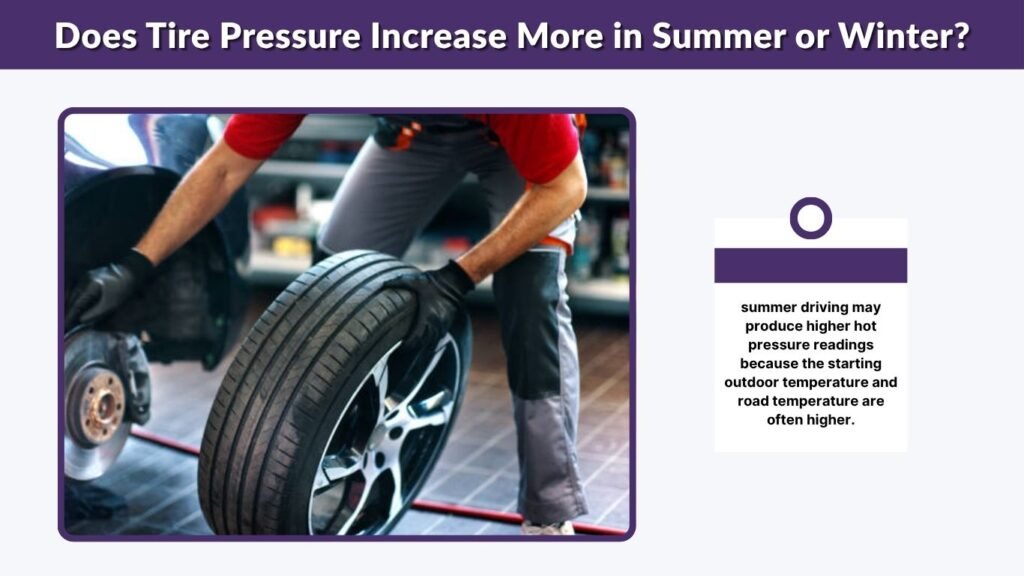
Tire pressure can increase while driving in either season because tire flexing generates heat regardless of the weather.
However, summer driving may produce higher hot pressure readings because the starting outdoor temperature and road temperature are often higher.
During winter, tires start at lower temperatures and may have lower cold pressures if they have not been adjusted for seasonal changes.
The manufacturer’s recommended cold inflation pressure generally remains the correct target year-round. Regular measurements are more useful than guessing how much air to add based on the season.
FAQs
1. Does tire pressure increase when driving?
Yes. Tire pressure normally increases as the tires heat up during driving. A typical increase is around 2–4 PSI, although longer trips may produce a larger change.
2. Is a 5 PSI tire pressure increase normal?
A 5 PSI increase can be normal after extended driving, particularly in warmer conditions. Compare tire pressures when cold, and investigate unusual differences or signs of damage.
3. How many degrees does tire pressure increase when driving?
Tire pressure is measured in PSI rather than degrees. The air temperature inside a tire can rise while driving, but there is no fixed temperature increase because driving conditions vary.
4. Can tire pressure increase by 10 PSI while driving?
A 10 PSI increase is greater than the commonly expected range for ordinary passenger-car driving. Verify the measurements and conditions, and have the tire inspected if the increase seems unexplained or is accompanied by other warning signs.
5. Should I check tire pressure before or after driving?
Check tire pressure before driving, preferably after the vehicle has been parked for at least three hours. Cold readings provide the most reliable comparison with the manufacturer’s recommended inflation pressure.