
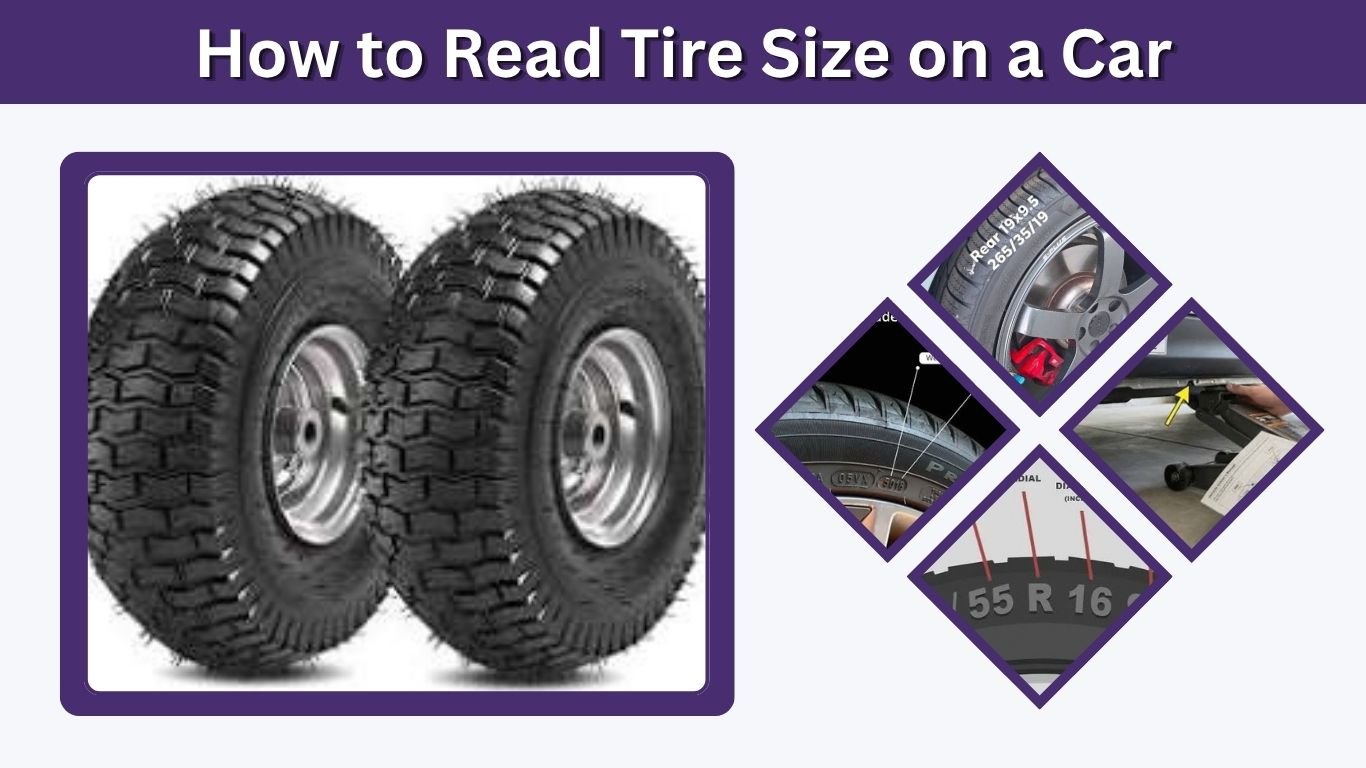
Knowing how to read car tire size helps you choose the correct replacement tires, understand your vehicle’s capabilities, and avoid problems with handling or safety. Tire sidewalls contain a combination of numbers and letters that describe tire width, aspect ratio, construction, wheel diameter, load capacity, and speed rating. Although codes such as P225/60R16 98H may look confusing at first, each part has a specific meaning. Once you understand the system, reading your car’s tire size becomes simple.
Where to Find the Tire Size on Your Car
Before learning what each number means, you first need to locate the tire-size information. Your vehicle manufacturer provides a recommended tire size based on factors such as vehicle weight, suspension, handling, braking, and wheel dimensions. Using this recommended specification is usually the safest approach when replacing your tires.
Check the Tire Sidewall
The easiest place to find the size is on the sidewall of your existing tire. Look for a code similar to:
P225/60R16 98H
This sequence contains nearly all the basic information you need about the tire.
Check the Driver-Side Door
Your vehicle usually has a tire information sticker on the driver’s door jamb or door frame. It typically shows:
- Recommended front tire size
- Recommended rear tire size
- Recommended tire pressure
- Vehicle load information
- Spare tire specifications
This label is especially useful if your current tires are not the original size.
Check the Owner’s Manual
Your vehicle owner’s manual can also provide recommended tire specifications. It may include alternative tire sizes approved by the manufacturer for different wheels, trim levels, or driving conditions.
How to Read a Car Tire Size Step by Step
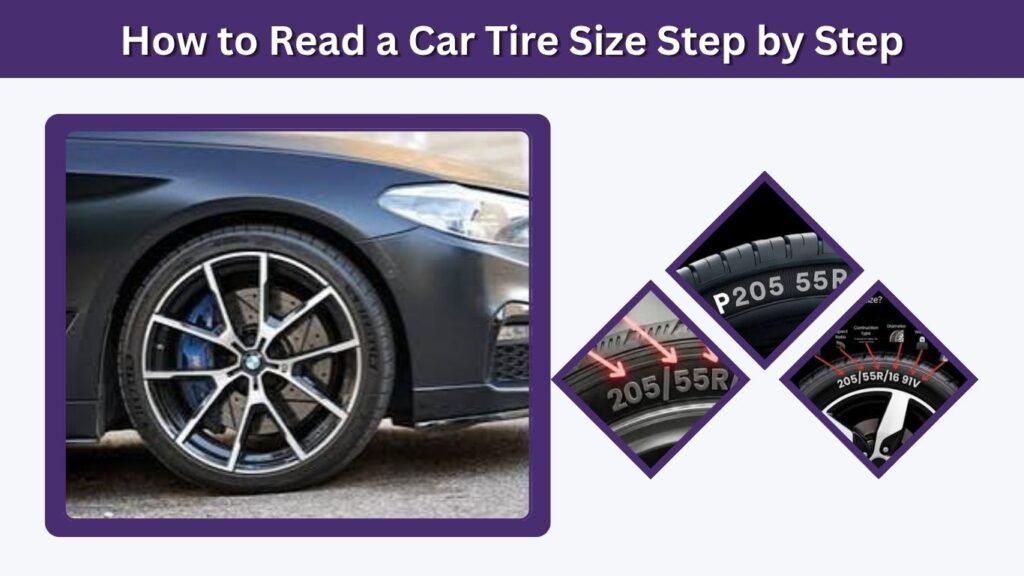
A tire-size code becomes much easier to understand when you break it into individual sections. Suppose your tire says P225/60R16 98H. Each letter and number represents a different characteristic of the tire, including its type, width, height, construction, wheel fitment, load capacity, and maximum speed capability.
P – Tire Type
The first letter indicates the general tire or vehicle classification.
For example, P stands for passenger vehicle tire. Some tires may have no letter before the width measurement.
Other markings can include:
- P: Passenger vehicle
- LT: Light truck
- ST: Special trailer
- T: Temporary spare tire
The correct type depends on the vehicle and its intended use.
225 – Tire Width
The number 225 represents the tire’s nominal section width in millimeters.
Therefore, a P225 tire is approximately 225 millimeters wide when mounted on its specified wheel width.
A larger number generally means a wider tire, although actual dimensions may vary slightly between manufacturers and wheel widths.
60 – Aspect Ratio
The number after the slash represents the tire’s aspect ratio.
In 225/60R16, the number 60 means the tire sidewall height is approximately 60% of its width.
A lower aspect ratio normally creates a shorter sidewall, while a higher number results in a taller sidewall.
R – Tire Construction
The letter R means the tire uses radial construction.
Radial tires use internal cord layers positioned primarily at approximately 90 degrees to the direction of travel. This construction has become the standard design for most modern passenger vehicles.
Other construction markings are much less common on today’s cars.
16 – Wheel Diameter
The number 16 tells you the diameter of the wheel that the tire is designed to fit.
Unlike tire width, wheel diameter is measured in inches.
Therefore:
225/60R16 = fits a 16-inch wheel
A 16-inch tire cannot simply be mounted on a 17-inch wheel because the wheel diameter must match the tire’s specified diameter.
What Load Index and Speed Rating Mean
The numbers and letters appearing after the main tire dimensions are also important. They usually represent the tire’s load index and speed rating. These specifications help determine how much weight the tire can safely support and the maximum speed capability assigned under standardized testing conditions.
Understanding the Load Index
Using P225/60R16 98H as an example, 98 is the load index.
The load index is not the weight itself. Instead, it corresponds to a standardized load-capacity chart.
For example:
- Load index 91 = approximately 1,356 lb per tire
- Load index 94 = approximately 1,477 lb per tire
- Load index 98 = approximately 1,653 lb per tire
- Load index 100 = approximately 1,764 lb per tire
You should generally avoid using tires with a lower load capacity than the vehicle manufacturer recommends.
Understanding the Speed Rating
The final letter identifies the tire’s speed rating.
Common ratings include:
- S: Up to 112 mph
- T: Up to 118 mph
- H: Up to 130 mph
- V: Up to 149 mph
- W: Up to 168 mph
The rating represents laboratory-tested tire capability under specified conditions. It should not be treated as a recommended driving speed.
Tire Size Example Explained
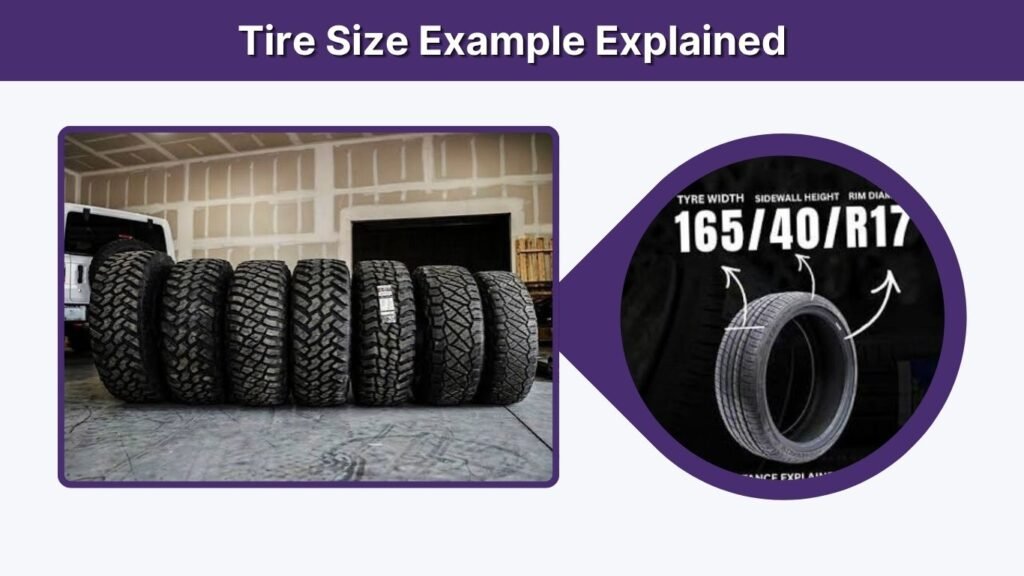
Looking at a complete example is one of the easiest ways to understand how to read a tire size on a car. Consider the marking P225/60R16 98H. Instead of seeing it as one complicated code, divide it into individual specifications that describe the tire’s dimensions and performance classification.
Breaking Down P225/60R16 98H
Here is what the entire marking means:
- P: Passenger vehicle tire
- 225: Tire width is approximately 225 mm
- 60: Sidewall height is 60% of tire width
- R: Radial construction
- 16: Designed for a 16-inch wheel
- 98: Load index
- H: Speed rating
Once you recognize this pattern, you can read most conventional passenger-car tire sizes quickly.
Why Every Number Matters
Changing one part of the tire size can affect another aspect of vehicle performance. A different width can affect clearance and steering feel, while a different aspect ratio may change overall tire diameter. Significant changes can influence ride quality, speedometer readings, braking behavior, and electronic vehicle systems.
Other Important Markings on a Car Tire
The main size code is not the only information printed on a tire. Manufacturers add several additional markings to indicate manufacturing date, seasonal capability, maximum inflation information, and other specifications. Understanding some of these codes can help when checking tire condition or comparing replacement options.
DOT Tire Date Code
The DOT identification marking includes information related to tire manufacturing.
The final four digits usually indicate the production week and year.
For example:
2426
means the tire was manufactured during the 24th week of 2026.
The date code can be useful when evaluating tire age.
M+S and Winter Symbols
You may see M+S, meaning Mud and Snow, on many all-season tires.
A tire with the three-peak mountain snowflake (3PMSF) symbol meets specific performance criteria for severe snow conditions.
These markings should not be confused with the basic tire-size numbers.
Maximum Pressure Marking
The tire sidewall may display a maximum inflation pressure.
However, this is not normally the pressure you should use for everyday driving. Follow the vehicle manufacturer’s recommended cold tire pressure, commonly shown on the driver’s door-jamb label.
How to Choose the Correct Tire Size for Your Car
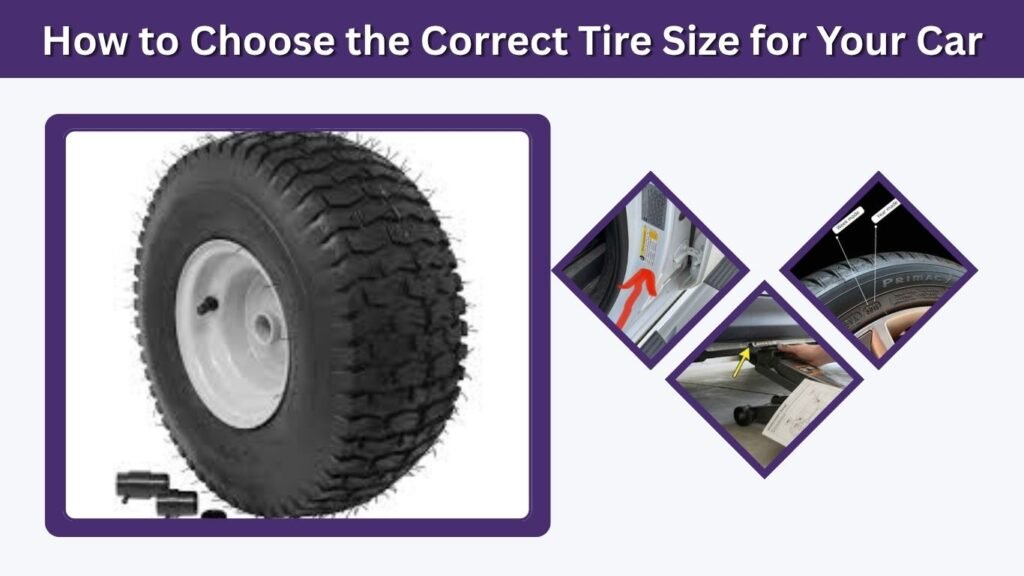
Correct tire sizing is important because tires are part of your vehicle’s steering, braking, suspension, and load-support system. Even when a different tire physically fits the wheel, that does not necessarily mean it is appropriate for the vehicle. Always compare replacement specifications carefully before installing new tires.
Start With the Manufacturer’s Recommendation
Check these sources before selecting tires:
- Driver-side door-jamb label
- Vehicle owner’s manual
- Original equipment tire specifications
- Vehicle manufacturer information
Using the recommended size helps preserve the vehicle’s intended performance characteristics.
Avoid Random Size Changes
Installing significantly wider, taller, or shorter tires can cause clearance problems and alter the tire’s overall rolling diameter.
Possible effects include inaccurate speedometer readings, rubbing against suspension components, reduced steering clearance, and changes to ride or handling.
Compare Load and Speed Ratings
Replacement tires should meet the vehicle’s required load capacity and an appropriate speed rating.
Size alone does not tell the full story, so check the complete tire specification rather than matching only the width and wheel diameter.
Common Mistakes When Reading Tire Sizes
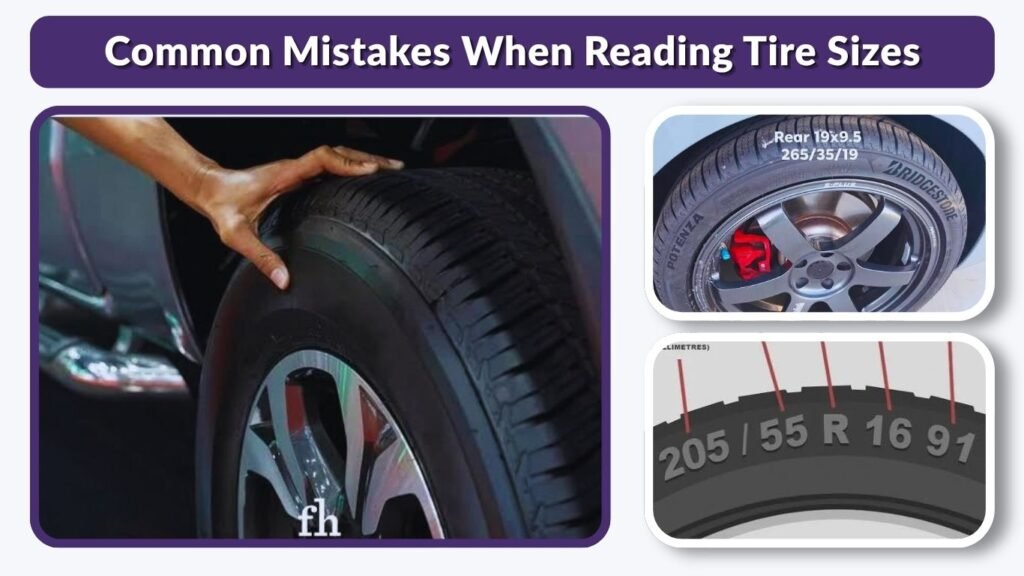
Many people focus only on the first few numbers when checking tire specifications. However, two tires can have the same width and wheel diameter while having very different sidewall heights or performance capabilities. Understanding the entire marking reduces the chance of selecting an unsuitable replacement tire.
Confusing Width With Wheel Size
In 225/60R16, 225 does not mean the wheel is 225 inches or millimeters in diameter.
The measurements use two systems:
225 = tire width in millimeters
16 = wheel diameter in inches
Recognizing this difference prevents common sizing mistakes.
Ignoring the Aspect Ratio
A 225/50R16 tire and a 225/60R16 tire are not the same size.
Although both tires are 225 mm wide and fit 16-inch wheels, their sidewall heights differ. This also changes their overall outside diameter.
Using the Maximum Tire Pressure
Another mistake is inflating tires according to the maximum pressure printed on the sidewall.
For normal operation, use the vehicle manufacturer’s recommended cold tire pressure unless specific professional guidance indicates otherwise.
FAQs
How do I read the tire size on my car?
Find a marking such as P225/60R16 98H on your tire sidewall. P describes the tire type, 225 is the width in millimeters, 60 is the aspect ratio, R indicates radial construction, 16 is the wheel diameter, 98 is the load index, and H is the speed rating.
Where can I find my car’s correct tire size?
The recommended tire size is normally listed on a label inside the driver’s door or door jamb. You can also check the vehicle owner’s manual. These sources are generally more reliable than simply copying the existing tires, especially if a previous owner changed the original wheel or tire size.
What does 225/60R16 mean on a tire?
The number 225 indicates a nominal tire width of 225 millimeters. The number 60 means the sidewall height is approximately 60% of the tire width. R means radial construction, while 16 indicates that the tire is designed to fit a wheel with a 16-inch diameter.
Can I use a different tire size on my car?
Sometimes manufacturers approve alternative sizes, particularly when different wheel packages are available. However, changing width, aspect ratio, or wheel diameter can affect clearance, handling, speedometer accuracy, and vehicle systems. Check manufacturer-approved sizes or consult a qualified tire professional before switching to a substantially different specification.
What is the most important number in a car tire size?
No single number should be considered independently because each specification serves a purpose. Width, aspect ratio, wheel diameter, load index, and speed rating all influence tire fit and performance. When replacing tires, compare the complete specification with the vehicle manufacturer’s recommended tire requirements.