
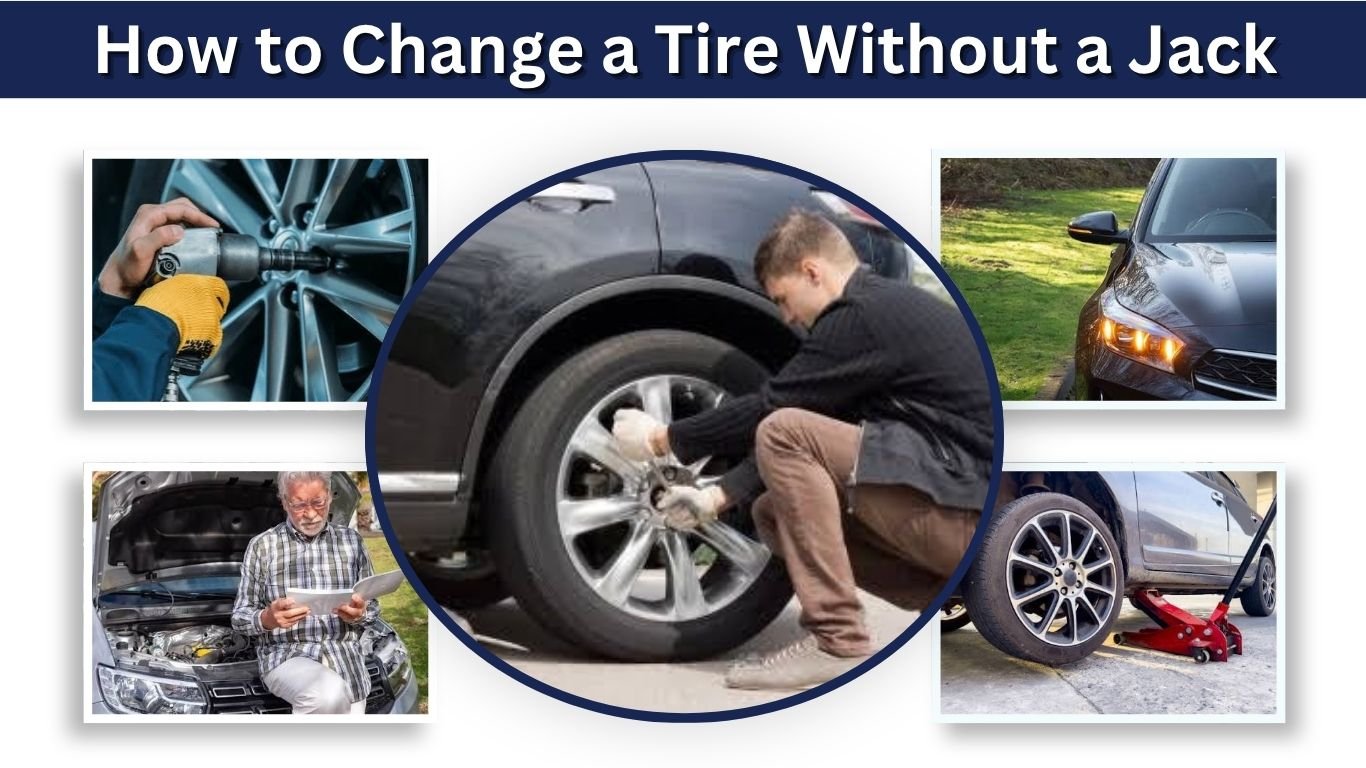
Knowing how to change a tire without a jack can seem useful when a flat happens unexpectedly and the factory jack is missing or damaged. However, safely replacing a wheel normally requires lifting the vehicle with equipment designed and rated for that purpose. Rocks, bricks, wood piles, curbs, and other improvised supports can shift or collapse without warning. If you do not have a suitable jack, safer alternatives include roadside assistance, a proper borrowed jack, a tire repair kit, or professional mobile service.
Can You Change a Tire Without a Jack?
Technically, the wheel must usually be lifted clear of the ground before it can be removed and replaced. That makes some form of properly rated lifting equipment necessary for a conventional tire change. Trying to create clearance by driving onto objects, digging beneath a tire, or supporting a vehicle with unstable materials can cause the vehicle to fall.
The Safest Answer
For a normal passenger vehicle, do not attempt to lift it without a suitable automotive jack or approved vehicle lift.
Vehicle manuals generally specify both the correct jack and exact jacking points. Using the wrong lifting location can damage body panels, suspension components, or the vehicle structure and may allow the car to slip. AAA similarly recommends checking the owner’s manual for the manufacturer-approved jack points before lifting.
What Not to Use Instead of a Jack
Do not support or lift a vehicle using:
- Loose bricks
- Stacked rocks
- Cinder blocks
- Unsecured pieces of lumber
- Random metal objects
- A bumper not designed as a lifting point
- Another vehicle
- Unrated household lifting equipment
A shifting vehicle can cause severe injury even if no one is completely underneath it.
What to Do If You Have No Jack

Discovering a flat tire without a jack does not necessarily mean you are stranded. The best solution depends on the type of tire damage, where the vehicle is parked, and what equipment is available. Before attempting anything, move as far away from traffic as practical, activate hazard lights, and keep occupants in a safe location.
Safe Alternatives to Changing the Wheel
Consider these options:
- Call roadside assistance.
- Contact a mobile tire service.
- Borrow a properly rated automotive jack.
- Have the vehicle towed to a tire shop.
- Use an approved puncture-repair kit if your vehicle provides one.
- Use a compressor and sealant kit when permitted by the tire and vehicle manufacturer.
- Follow the vehicle’s run-flat instructions if equipped with run-flat tires.
AAA notes that a proper roadside tire change requires a suitable jack, lug wrench, and usable spare tire.
When a Tire Repair Kit May Help
Some newer vehicles do not include a spare tire or conventional jack. Instead, manufacturers may provide an inflator and sealant system intended for certain tread punctures.
These kits are not suitable for every flat. A large cut, damaged sidewall, separated tire, bent wheel, or tire that has been driven while severely deflated may require professional service.
Always follow the instructions supplied with your vehicle’s repair system.
Why Improvised Tire-Changing Methods Are Dangerous
Online advice sometimes suggests positioning a vehicle on a curb, stacking blocks beneath it, digging a hole below the wheel, or building a makeshift lifting platform. These methods can create an unstable vehicle with thousands of pounds of weight resting on materials never designed for automotive lifting.
The Vehicle Can Shift Suddenly
A car may move when you loosen lug nuts or pull the wheel from the hub.
Even a small amount of movement can cause an improvised support to shift. A proper jack is designed to carry a specified load at a particular lifting point, whereas a rock, brick, or random piece of wood provides no equivalent protection.
Never Crawl Under a Jacked Vehicle
Even when using the correct jack, avoid placing any part of your body underneath the vehicle during a roadside tire change.
Manufacturer safety guidance warns that vehicles can roll or slip from a jack and says to use firm, level ground, approved jacking points, and the vehicle’s designated jack.
A jack raises the vehicle; it should never be treated like a secure service lift.
How to Use a Jack to Change a Tire Safely
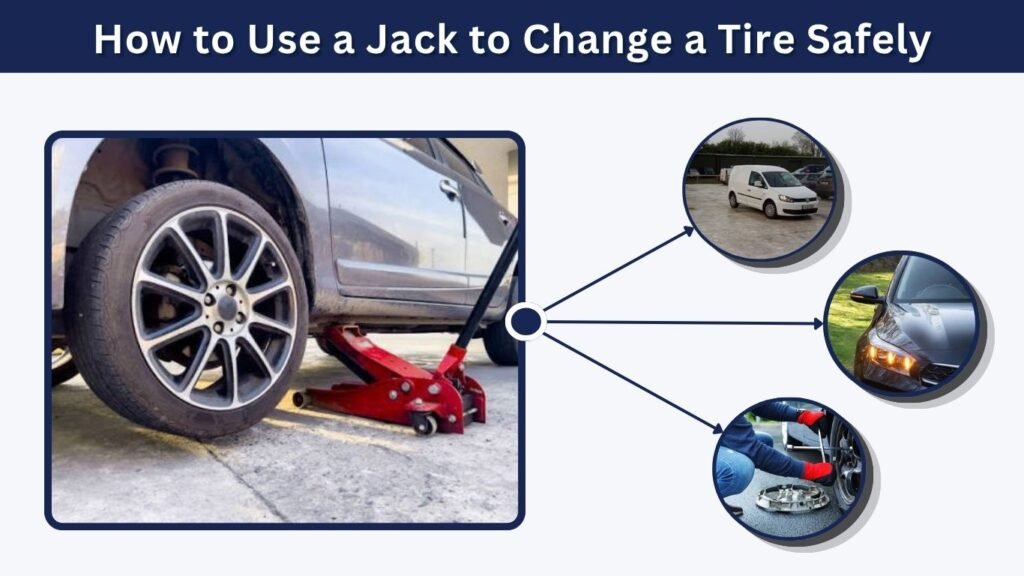
If you obtain a correct jack, changing the tire becomes much more straightforward. The exact procedure varies by vehicle, so consult your owner’s manual first. The manual identifies lifting points, spare-tire location, jack type, and sometimes the correct lug-nut tightening specification.
Basic Tire-Changing Steps
A typical procedure is:
- Park on firm, level ground away from traffic.
- Turn on the hazard lights.
- Apply the parking brake.
- Remove the spare tire, jack, and lug wrench.
- Locate the manufacturer’s specified jacking point.
- Loosen the lug nuts slightly while the wheel remains on the ground.
- Position the jack correctly.
- Raise the vehicle only enough to clear the tire.
- Remove the lug nuts and flat tire.
- Install the spare wheel.
- Thread the lug nuts by hand.
- Lower the vehicle carefully.
- Tighten the lug nuts in the recommended sequence and to the correct torque.
AAA recommends loosening the lug nuts before raising the vehicle because the tire is more stable while still on the ground.
How High Should You Jack the Car?
Raise the vehicle only enough to remove the damaged tire and install the fully inflated replacement.
More height does not make the job safer. Manufacturer guidance warns that lifting a vehicle higher than necessary reduces stability and increases the chance that it could slip.
Remember that an inflated spare may require slightly more clearance than the completely flat tire you removed.
How to Find the Correct Jack Point
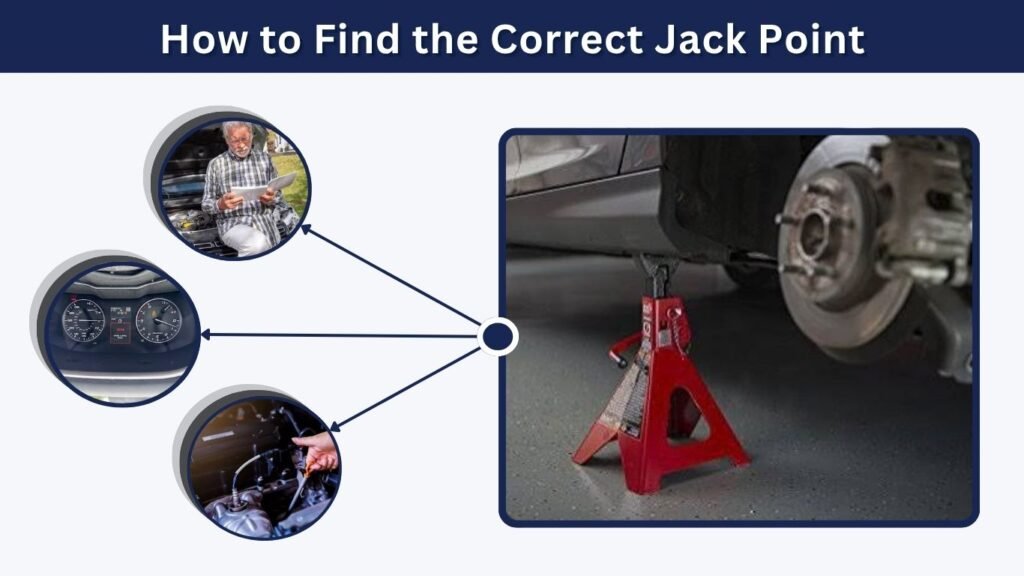
Correct jack placement is one of the most important parts of changing a tire. Jacking against thin bodywork, plastic trim, the floor pan, or an unsuitable suspension part can damage the vehicle and create an unstable lift.
Check the Owner’s Manual
The manual should show exactly where the jack belongs for each wheel.
Many passenger cars have reinforced points along the pinch weld beneath the doors. Other vehicles, including trucks and SUVs, may use different frame or axle lifting locations.
Never assume that the jack location from another vehicle applies to yours. AAA specifically advises using the model-specific jacking points described in the owner’s manual.
Front vs Rear Tire
Use the designated lifting point nearest the wheel being replaced unless the vehicle manufacturer specifies otherwise.
Do not automatically place a jack under the differential, bumper, suspension arm, or other convenient-looking component. Vehicle design varies considerably, and some components cannot safely support the lifting load.
Scissor Jack vs Floor Jack for Tire Changes
Both scissor and hydraulic floor jacks can lift vehicles when appropriately rated and used at approved points. The factory scissor jack is primarily intended for roadside emergencies, whereas a floor jack is commonly used in garages because it can provide easier and more controlled lifting.
Using a Scissor Jack
A typical factory scissor jack is compact and operated by turning a handle or wrench.
Position its lifting surface precisely at the specified jack point before raising the vehicle. Stop periodically and confirm that the jack remains vertical, stable, and properly seated.
Never start the engine or allow people to remain unnecessarily inside a vehicle while it is being raised.
Using a Floor Jack
A floor jack can be easier to operate on a hard, flat garage surface, but it must have enough rated capacity for the vehicle and must contact a manufacturer-approved lifting point.
A floor jack that works well with a small sedan may not be appropriate for a heavy pickup truck.
Capacity and lifting range both matter.
What If the Jack Does Not Go High Enough?
A jack that cannot safely raise the vehicle enough to install the spare is the wrong tool for that situation. This commonly happens with lifted trucks, modified suspension systems, large off-road tires, trailers, and vehicles using a jack with insufficient lifting range.
Do Not Stack Objects Under the Jack
Avoid creating additional height by placing unstable bricks, rocks, or random blocks underneath the jack.
If the jack does not provide sufficient range, obtain the correct jack or contact roadside assistance.
The equipment should match the vehicle’s weight and lifting requirements rather than being modified through an improvised setup.
Trucks and Lifted Vehicles
Large pickups and modified trucks may require higher-capacity and longer-travel equipment than passenger cars.
Check the owner’s manual and any instructions relating to suspension modifications before lifting.
A factory jack may no longer provide enough height after significant aftermarket suspension or tire changes.
How to Prepare for a Flat Tire
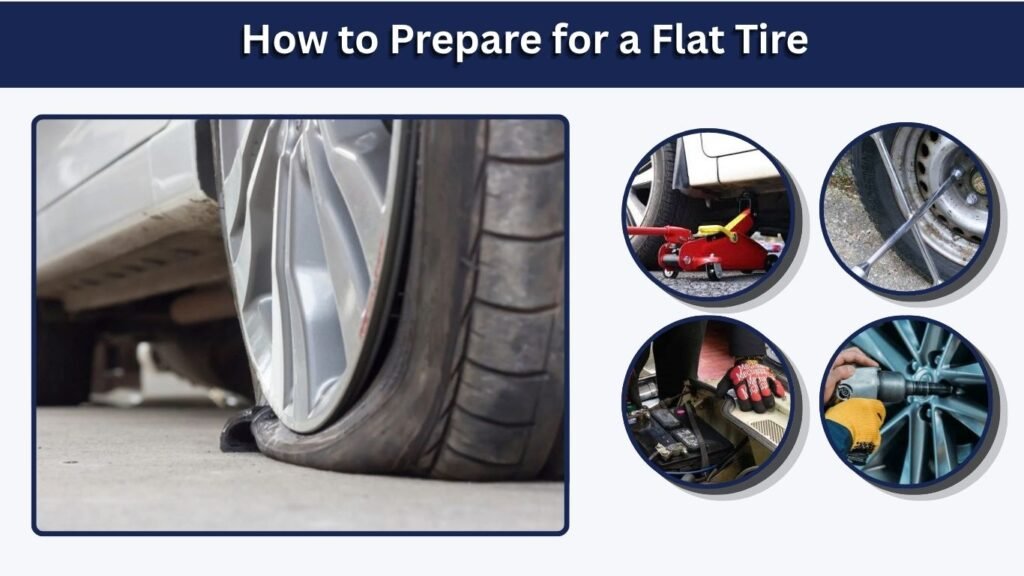
The easiest way to handle a missing jack is to discover the problem before you are stranded. Checking your emergency tire equipment occasionally allows you to replace missing tools, confirm that the spare is inflated, and understand the procedure before an actual roadside emergency occurs.
Keep These Items in Your Vehicle
A useful tire emergency kit can include:
- Vehicle-approved jack
- Lug wrench
- Properly inflated spare tire
- Wheel lock key
- Tire pressure gauge
- Portable inflator
- Flashlight
- Work gloves
- Reflective warning equipment
- Owner’s manual
- Roadside-assistance information
AAA also recommends useful emergency items such as a flashlight, gloves, tire gauge, and portable inflator.
FAQs
1. Can you really change a tire without a jack?
A conventional wheel replacement normally requires the vehicle to be safely lifted. Without a suitable jack or approved lifting equipment, the safer choice is roadside assistance, professional service, or an appropriate tire-repair system.
2. Can I use bricks instead of a car jack?
No. Bricks can crack, shift, or collapse and are not a safe substitute for an automotive jack.
3. What should I do if my car has no jack?
Check whether the vehicle has a tire inflator or sealant kit. Otherwise, obtain a properly rated jack, call roadside assistance, use mobile tire service, or arrange towing.
4. Where should I put a jack when changing a tire?
Use only the jacking point identified in your vehicle’s owner’s manual. Jack locations vary by model, so avoid guessing based on appearance.
5. Can I change a tire with a floor jack?
Yes, if the floor jack has adequate weight capacity and lifting range and is placed at a manufacturer-approved lifting point on firm, level ground.