
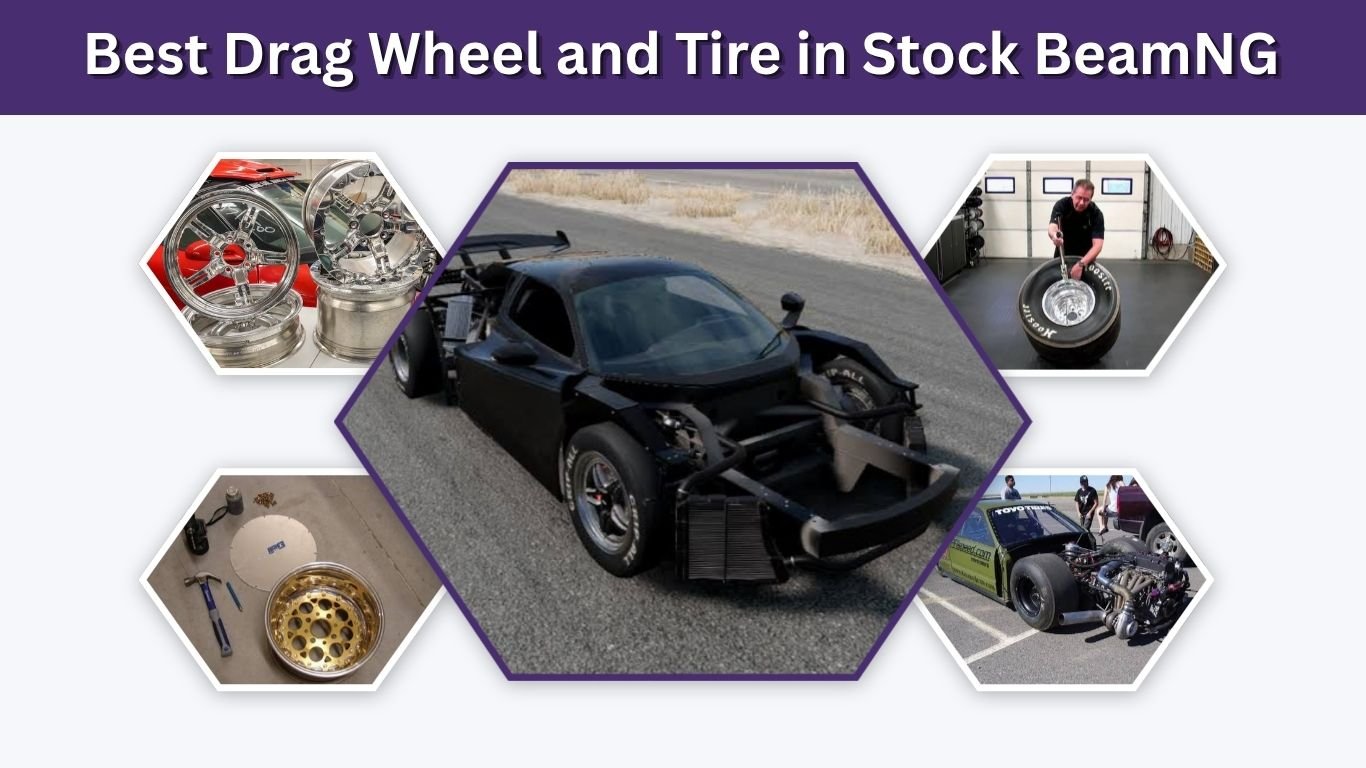
Choosing the best drag wheel and tire in stock BeamNG.drive depends on whether the vehicle is rear-wheel drive, front-wheel drive, or all-wheel drive. For most traditional rear-wheel-drive drag builds, the best combination is wide Alder Dragger wheels with Grip-All Drag rear tires, paired with narrow front drag wheels. The wide rear slicks maximize launching traction, while lightweight front skinnies reduce rolling resistance. BeamNG staff have specifically identified Grip-All Drag tires on Alder Dragger wheels as among the game’s highest-grip options.
Best Stock Drag Wheel and Tire Setup
For a rear-wheel-drive drag car, use the widest rear Grip-All Drag tire that fits without contacting the body or suspension.
| Position | Recommended stock setup | Main purpose |
| Rear | Alder Dragger 15×12 or 15×14 wheels | Supports wide drag tires |
| Rear tire | Grip-All Drag rear tires | Maximum straight-line traction |
| Front | Narrow 15×4 drag wheels | Lower weight and rolling resistance |
| Front tire | Front drag skinnies | Stable, low-resistance front end |
The 15×14 Alder Dragger is generally the best choice when the car has sufficient wheel-well clearance. If it rubs against the body, suspension, or inner fender, switch to the 15×12 version.
The largest available tire is not automatically faster. A slightly narrower tire that stays stable and maintains full contact with the road may produce a better launch than an oversized tire that clips the body or deforms excessively.
Best Rear Drag Tires in BeamNG.drive
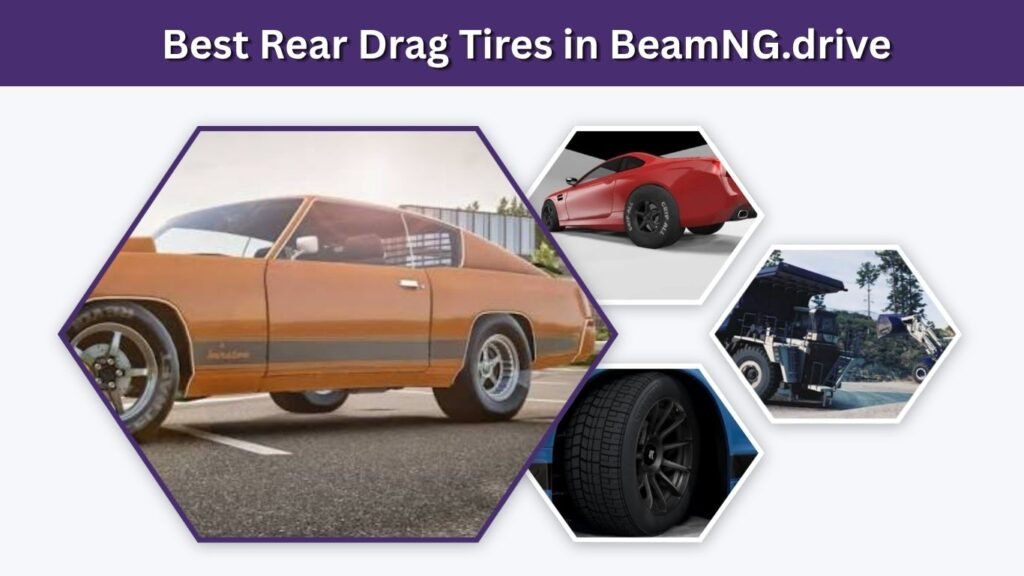
The Grip-All Drag rear tires are the best starting choice for a high-powered stock drag build. BeamNG includes these tires as dedicated drag-racing equipment, and official game materials have continued to recognize Grip-All Drag as a distinct tire type.
Why Grip-All Drag Tires Work Best
Grip-All Drag tires offer several advantages during straight-line acceleration:
- A wide contact area
- Strong forward traction
- Flexible sidewalls for launching
- Better control of wheelspin
- Compatibility with dedicated drag wheels
- Improved performance on prepared drag surfaces
These tires are designed primarily for acceleration. They are not the best choice for road racing, sharp cornering, or high-speed lane changes.
15×12 vs 15×14 Alder Dragger Wheels
The 15×14 wheel gives you the widest stock drag setup on compatible vehicles. It works well for extremely powerful muscle cars, trucks, and custom rear-wheel-drive builds.
The 15×12 wheel is often easier to fit and may be more stable on vehicles with narrower bodies. It is a practical choice when the 15×14 setup causes rubbing, shaking, or tire failure.
Choose 15×14 when maximum traction is necessary and clearance is sufficient. Choose 15×12 when you need better fitment or the car does not produce enough power to require the widest tire.
Best Front Drag Wheel and Tire
For a rear-wheel-drive drag build, use narrow front wheels such as the 15×4 Alder Dragger with front drag tires or skinnies.
Narrow front tires reduce unnecessary tire width and resistance because the front wheels are not delivering engine power. They can also reduce front-end weight, helping weight transfer toward the rear tires during launch.
BeamNG reduced the grip of front drag skinnies in version 0.34, making them less suitable for aggressive steering but more representative of their specialized drag-racing purpose.
Should You Use Drag Skinnies on the Front?
Use front skinnies when:
- The car is rear-wheel drive
- You are racing in a straight line
- The car remains stable during acceleration
- You do not need strong cornering performance
- The front wheels are not powered
Avoid them when the vehicle repeatedly wanders, spins, or becomes uncontrollable at high speed. A slightly wider front tire may create more drag but can significantly improve directional stability.
Best Tires for FWD Drag Cars
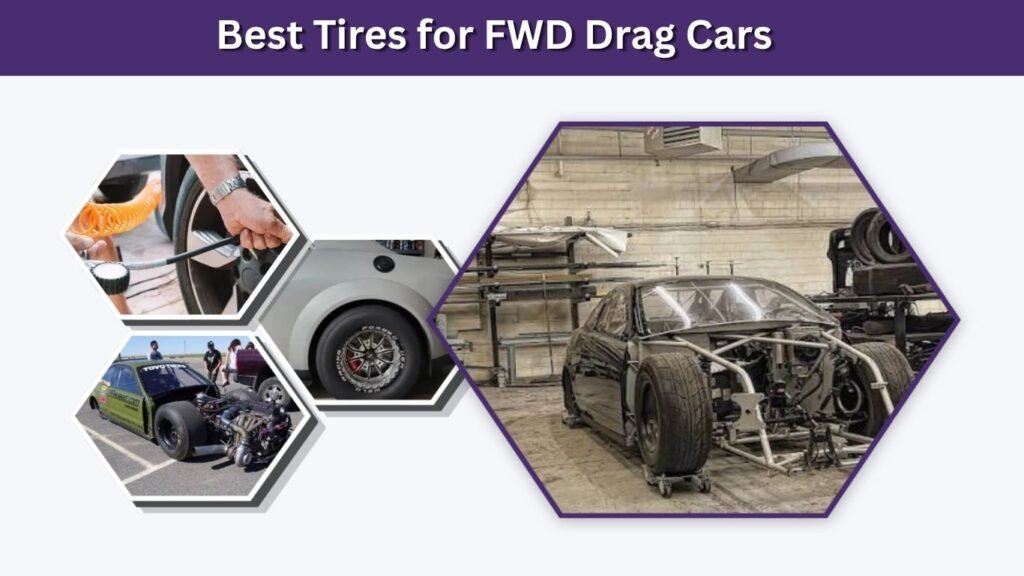
A front-wheel-drive car requires the opposite arrangement. The driven front axle needs the widest high-grip tires available, while narrower tires can be installed at the rear.
For a stock FWD drag build:
- Fit the widest compatible performance or drag tires to the front.
- Use narrow, lightweight rear wheels.
- Increase front suspension control to limit wheel hop.
- Keep the rear suspension firm enough to reduce excessive rearward weight transfer.
Do not install front drag skinnies on the powered front axle. They cannot provide enough traction for a high-powered FWD launch.
Some stock vehicles may not allow wide Alder Dragger rear-only wheels to be installed on the front without changing hubs or using mods. Wheel compatibility depends on the vehicle and available suspension parts.
Best Tires for AWD Drag Cars
All-wheel-drive vehicles need useful traction at both axles. Installing skinnies on the front will reduce the traction available from the AWD system.
Use wide drag or race tires on all four corners when compatible. If stock drag tires are unavailable for the front axle, choose the widest race slick or high-performance tire that fits.
For an AWD build, maintaining similar tire diameters at the front and rear is especially important. Large differences can affect gearing, differential behavior, stability, and launch consistency.
Recommended Tire Pressure
Tire pressure has a major effect on launching performance. Lower rear pressure can increase tire deformation and improve the contact patch, but excessively low pressure makes the car unstable and can cause the tire to fold or fail.
A useful starting range is:
- Rear drag tires: approximately 12–18 psi
- Front skinnies: approximately 28–40 psi
- AWD drag tires: approximately 18–25 psi
- FWD front drag tires: approximately 16–24 psi
These are starting points rather than universal settings. Vehicle weight, horsepower, suspension, tire size, track surface, and launch technique will change the ideal pressure.
Reduce rear pressure gradually when the car spins immediately. Increase it if the tires feel unstable, deform too much, or fail at speed.
How to Install Drag Wheels and Tires
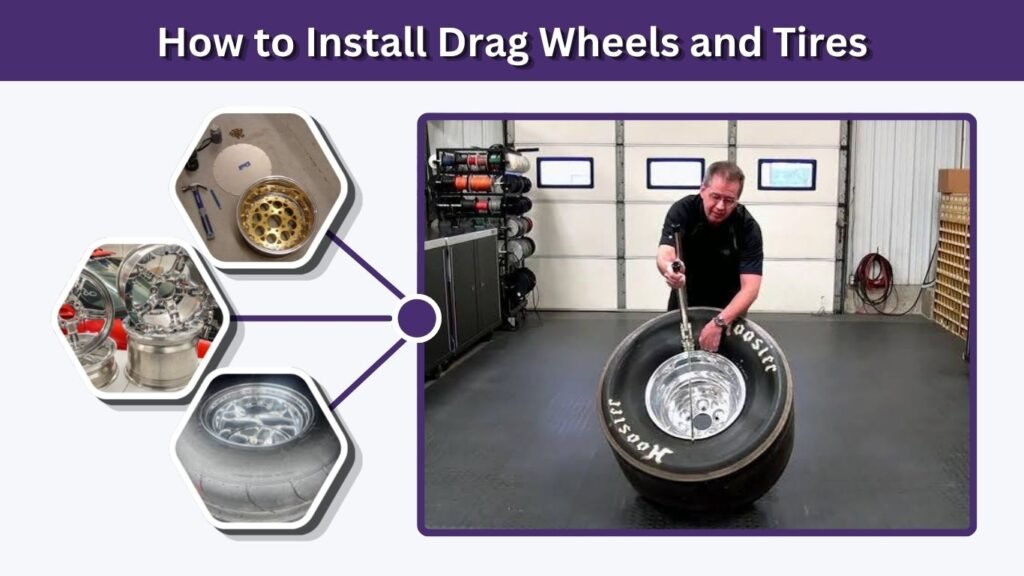
Open the Vehicle Configuration menu and follow these steps:
- Select the appropriate front or rear suspension.
- Confirm that compatible wheel hubs are installed.
- Open the wheel section.
- Choose the Alder Dragger wheel size.
- Open the tire section below the selected wheel.
- Choose Grip-All Drag tires.
- Adjust tire pressure under the tuning menu.
- Test the setup on a drag strip.
BeamNG introduced a redesigned drag-racing system in version 0.33, including drag practice modes on Gridmap V2 and West Coast, USA. Version 0.38 later refined the drag-racing system and its supporting interface.
Additional Drag Setup Tips
Use a Locked Rear Differential
An open differential may send excessive power to one wheel. A welded, locked, or drag-oriented differential helps both rear tires contribute during launch.
Adjust the Final Drive
A shorter final drive improves initial acceleration but may cause the engine to reach its limiter before the finish line. A longer ratio reduces acceleration but increases speed in each gear.
Set the gearing so the vehicle reaches the end of the quarter mile near the top of its final useful gear.
Control Wheelspin
More power does not always create a faster time. Reduce boost, throttle input, or launch RPM when the car spins through first gear.
Using adjustable boost by gear can make a high-powered vehicle easier to launch.
Tune the Suspension
A rear-wheel-drive drag car benefits from controlled weight transfer toward the rear axle. However, excessive movement may cause wheelies, poor steering, suspension damage, or an unstable landing.
Keep the front relatively soft enough to rise while controlling rear compression and rebound. Make one adjustment at a time and compare elapsed times.
Common Problems
The Rear Tires Keep Spinning
Lower the launch RPM, reduce first-gear boost, soften throttle input, or slightly lower rear tire pressure. Check that both rear wheels are receiving power.
The Car Pulls Sideways
Confirm that tire pressures match from left to right. Inspect wheel alignment, suspension damage, differential settings, and torque-steer effects.
The Front End Feels Unstable
Increase front tire pressure moderately or replace the skinnies with slightly wider tires. Add alignment stability and avoid sudden steering movements.
The Tires Explode at High Speed
Increase tire pressure, reduce wheel speed, use longer gearing, or choose a more suitable tire. Drag tires may deform significantly under extreme rotational speed.
FAQs
What is the best drag tire in stock BeamNG.drive?
The Grip-All Drag rear tire is generally the best stock option for maximum straight-line grip. Install it on a compatible wide Alder Dragger wheel.
What is the best rear drag wheel?
The 15×14 Alder Dragger provides the widest commonly available stock rear drag setup. The 15×12 version is better when clearance or stability becomes a problem.
What is the best front wheel for a stock drag car?
For a rear-wheel-drive car, use a narrow 15×4 drag wheel with a front drag skinny. For FWD or AWD cars, use wider high-grip tires on the powered front axle.
Are race slicks better than drag tires?
Race slicks are usually better for cornering and circuit racing. Grip-All Drag tires are better suited to hard straight-line launches because they are designed specifically for drag racing.
Does wheel size affect drag performance?
Yes. Wheel and tire dimensions influence traction, rotational mass, gearing, stability, and fitment. The best setup is the widest suitable driven tire that remains stable and does not rub against the vehicle.