
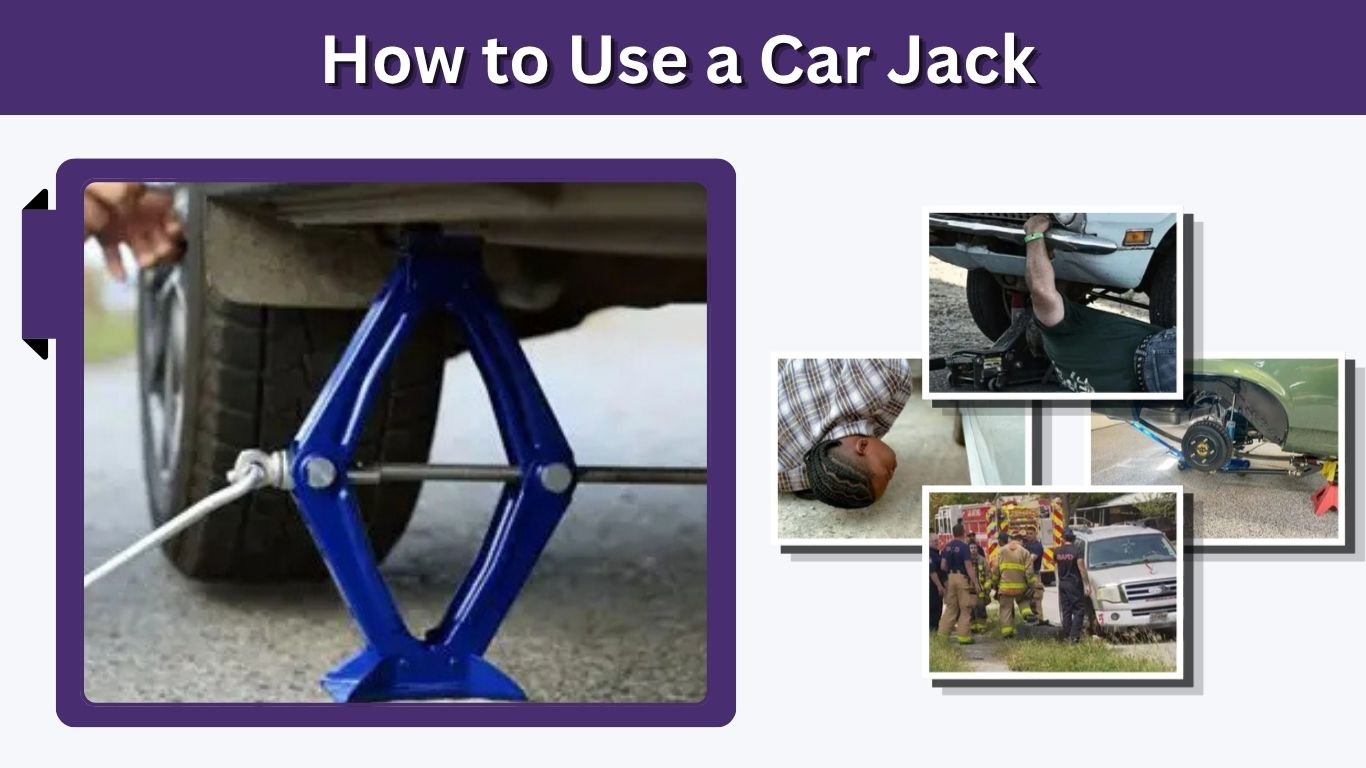
A car jack is one of the most important tools in a roadside emergency. However, lifting a vehicle incorrectly can damage the car or cause it to slip and fall. To change a flat tire safely, you must park on firm, level ground, secure the vehicle, locate the correct jacking point, and follow the proper lifting sequence. This guide explains how to jack up a car for a tire change, where to position the jack, which jack is best, and what mistakes to avoid.
What Do You Need to Change a Car Tire?
Before starting, confirm that your vehicle has the necessary equipment. Most cars originally come with a compact emergency jack and lug wrench, although some newer vehicles use run-flat tires or tire-inflation kits instead of spare tires.
You will normally need:
- A properly inflated spare tire
- A jack rated for your vehicle
- A lug wrench or tire iron
- The wheel-lock key, when applicable
- Wheel chocks
- Gloves
- A flashlight for nighttime emergencies
- A reflective warning triangle or emergency light
- Your vehicle owner’s manual
A flat, sturdy board can also help support the jack when the surface is slightly soft. However, it cannot make mud, sand, sloping ground, or an unstable roadside safe.
How to Use a Car Jack to Change a Tire
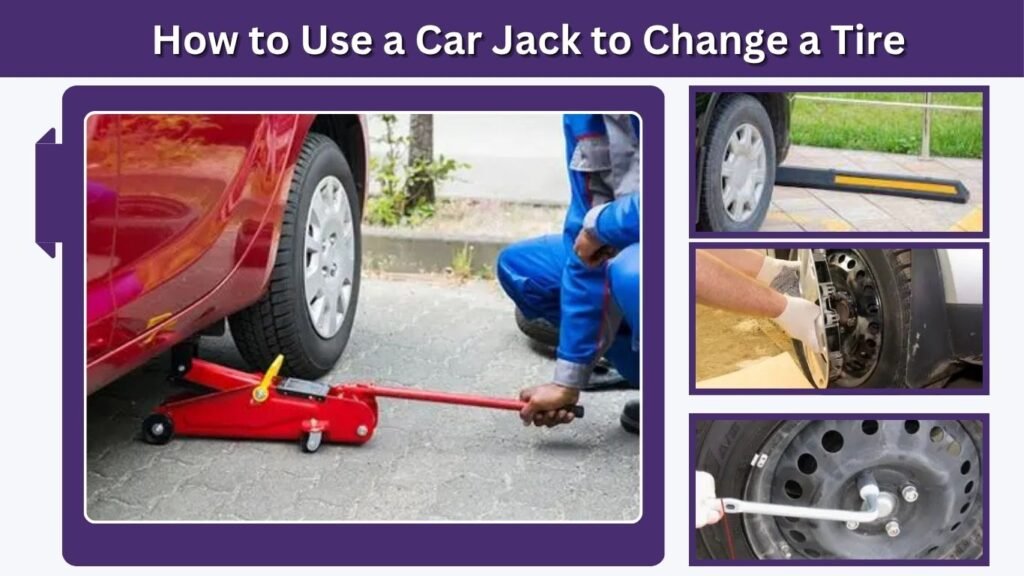
Changing a tire involves more than simply lifting the vehicle. The car must first be stabilized, and the wheel nuts should be loosened while the tire is still touching the ground.
1. Stop in a Safe Location
Move as far away from traffic as possible. Choose a firm, level area such as a parking lot, paved shoulder, or quiet side road.
Turn on the hazard lights, shift an automatic transmission into Park or a manual transmission into gear, and engage the parking brake. Ask passengers to leave the vehicle and wait somewhere away from moving traffic.
Do not attempt a roadside tire change where passing vehicles cannot give you sufficient space. Professional roadside assistance is the safer choice on a narrow shoulder, steep slope, bridge, or busy highway.
2. Secure the Wheels
Place wheel chocks against a wheel diagonally opposite the flat tire.
For example:
| Flat tire | Suggested wheel to chock |
| Front left | Rear right |
| Front right | Rear left |
| Rear left | Front right |
| Rear right | Front left |
When proper chocks are unavailable, a solid block may provide temporary assistance. Never depend solely on the transmission’s Park position to prevent movement. Using the parking brake and wheel chocks gives the vehicle greater stability.
3. Remove the Wheel Cover
Some vehicles have a wheel cover or hubcap hiding the lug nuts. Remove it using the tool supplied with the vehicle or the flat end of the lug wrench.
Place the cover face-up nearby so that it can hold the lug nuts after removal.
4. Loosen the Lug Nuts
Before jacking up the car, use the lug wrench to loosen each nut approximately one-quarter to one-half turn.
Turn the nuts counterclockwise, but do not remove them yet. Loosening them while the tire remains on the ground prevents the wheel from spinning and avoids applying heavy force while the car is raised.
Where to Place the Car Jack When Changing a Tire
The safest jack location is the manufacturer-designated jacking point nearest the flat tire. Its exact position varies between vehicles, so consult the owner’s manual rather than guessing.
Common Car Jacking Points
Many passenger cars have reinforced lifting points along the pinch weld beneath the side of the vehicle. They are usually located:
- Behind each front wheel
- In front of each rear wheel
- Beneath a marked or notched section of the rocker panel
SUVs, pickup trucks, electric vehicles, and body-on-frame vehicles may use frame rails, axle locations, or other specially reinforced points.
Look for small notches, arrows, raised markings, or reinforced metal sections. The jack saddle may also have a slot designed to fit around the pinch weld.
Places Where You Should Never Put the Jack
Do not position a jack beneath:
- Plastic body panels
- The floor pan
- Exhaust components
- Fuel lines
- Battery housings
- Suspension arms unless specifically approved
- Thin or rusty metal
- An unmarked area of the vehicle body
Using the wrong location can bend the body, damage important components, or allow the jack to slip. Vehicle-specific instructions should always take priority over general guidance.
How to Jack Up a Car for a Tire Change
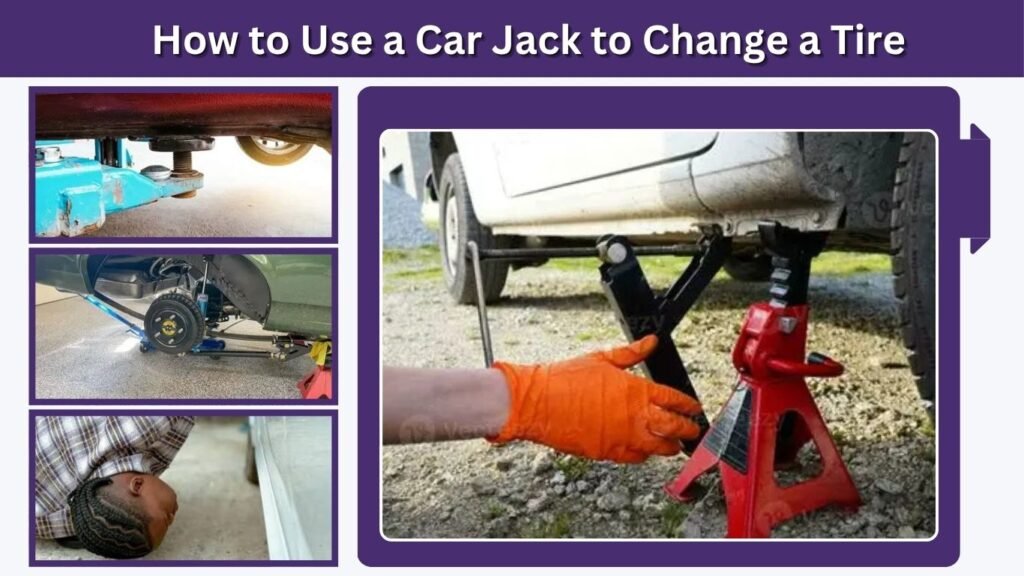
Place the jack on firm, level ground directly beneath the approved lifting point. Check that the jack base is sitting flat rather than leaning.
Raise the jack slowly until its saddle contacts the vehicle. Stop and verify that:
- The saddle is correctly aligned with the jacking point.
- The jack remains vertical and stable.
- The base has not shifted.
- No passengers remain inside the vehicle.
- Nobody is placing hands or feet beneath the car.
Continue lifting until the flat tire is approximately one or two inches off the ground. The wheel only needs enough clearance to be removed and replaced. Raising the car unnecessarily high makes it less stable. AAA guidance similarly recommends lifting only until the tire can rotate and clear the ground.
Never crawl under a car supported only by an emergency jack. A tire-changing jack is intended to lift the vehicle briefly, not to support someone working underneath it.
How to Remove and Replace the Tire
Once the tire clears the ground, fully remove the loosened lug nuts. Keep them together in the hubcap or another clean location.
Hold the tire on both sides and pull it straight toward you. A stuck wheel may require professional help; avoid shaking the raised vehicle or striking it forcefully.
Align the spare tire’s holes with the wheel studs and push it inward until it sits flat against the hub. Reinstall the lug nuts by hand with their tapered sides facing the wheel.
Tighten them lightly in a star or crisscross pattern. This helps seat the wheel evenly rather than pulling one side into position first.
Lowering the Car and Tightening the Lug Nuts
Lower the jack slowly until the tire touches the ground and cannot spin, but some vehicle weight remains supported by the jack.
Use the lug wrench to tighten the nuts in a star pattern:
- Tighten one nut.
- Move to the nut farthest from it.
- Continue crossing the wheel until every nut is secure.
Lower the vehicle completely and remove the jack. Tighten the nuts again in the same pattern.
For accurate final tightening, use a torque wrench set to the specification listed in the owner’s manual. Michelin also recommends tightening opposite lug nuts in sequence and retightening them after the car has been lowered.
How High Should You Jack a Car for a Tire Change?
Raise the car only high enough for the damaged tire to clear the ground and for the replacement tire to fit.
Remember that an inflated spare may be slightly larger than a completely flat tire. You may therefore need a little more clearance after removing the damaged wheel. Avoid excessive lifting because a taller jack position provides less stability.
Best Car Jack for Changing Tires
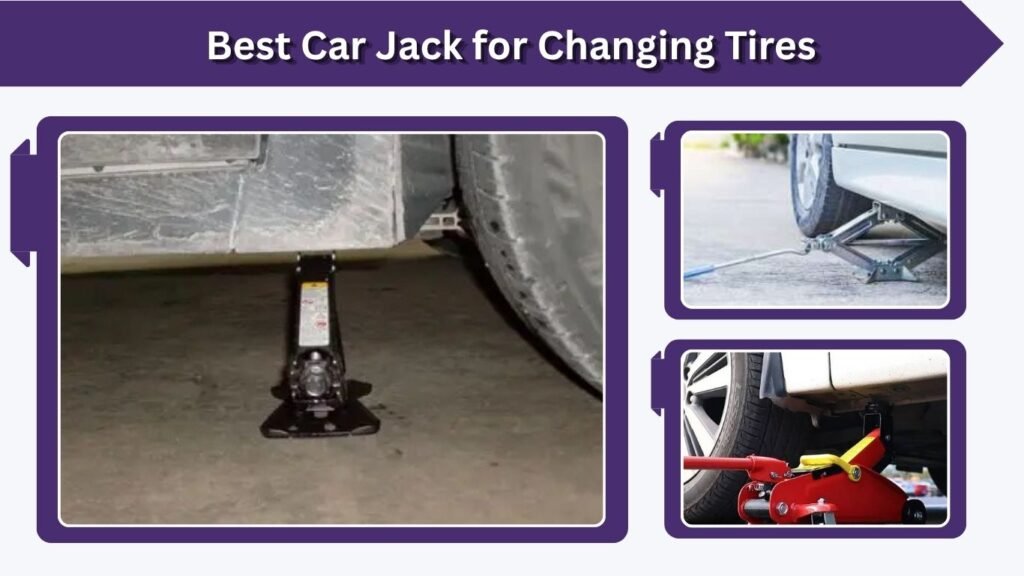
The best jack depends on the vehicle, storage space, lifting capacity, and intended use.
| Jack type | Advantages | Limitations |
| Scissor jack | Compact, lightweight and commonly supplied with cars | Slow and less stable than larger workshop jacks |
| Hydraulic floor jack | Fast, stable and easy to operate | Heavy and difficult to keep in a small trunk |
| Bottle jack | Compact with high lifting capacity | May be too tall for low-clearance cars |
| Electric scissor jack | Requires less physical effort | Needs electrical power and careful setup |
For roadside emergencies, the original manufacturer-supplied jack is often suitable when it is undamaged and used exactly as instructed. For home maintenance, a quality hydraulic floor jack with sufficient lifting capacity is usually easier to control.
Check both the jack’s lifting capacity and lifting range. A jack may be strong enough for the vehicle but too tall to fit underneath a car with a flat tire.
Can You Change a Car Tire Without a Jack?
A standard tire change should not be attempted without a suitable jack or professional lifting equipment.
Improvised methods involving stones, wood piles, slopes, curbs, or homemade supports can shift suddenly and cause serious injury or vehicle damage. When the jack is missing, damaged, incorrectly sized, or unable to sit securely, call roadside assistance.
What If the Car Falls Off the Jack?
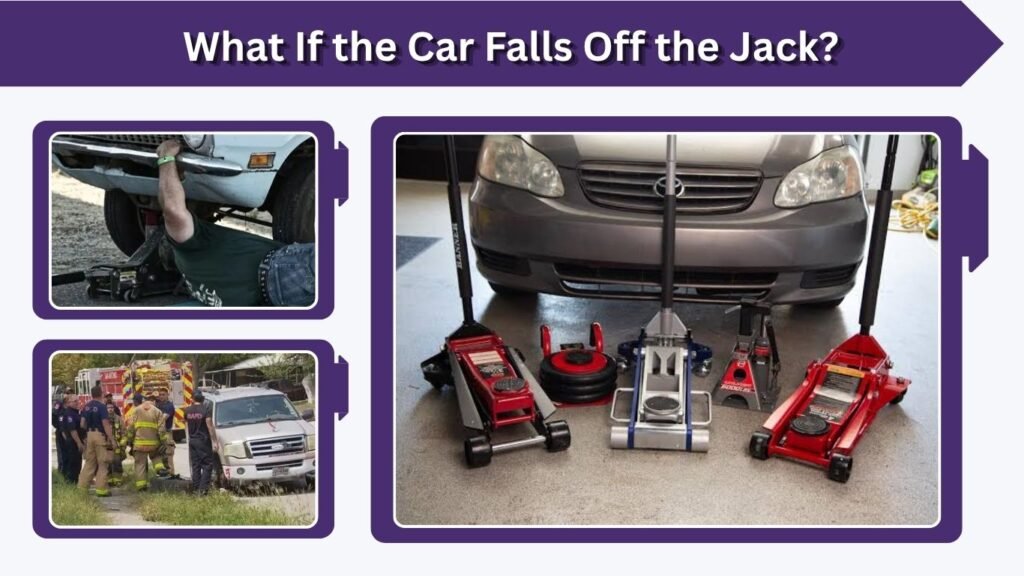
Move away from the vehicle immediately. Do not reach beneath it or attempt to catch, hold, or push it upright.
After the area is safe:
- Check whether anyone has been injured.
- Contact emergency services when an injury has occurred.
- Call roadside assistance or a qualified towing service.
- Do not reuse a bent or damaged jack.
- Have the vehicle inspected for wheel, brake, suspension, body, or undercarriage damage.
A car commonly slips because it was lifted on soft or sloped ground, the jack was placed incorrectly, the wheels were not secured, passengers moved inside the vehicle, or excessive force was applied after lifting.
Common Car-Jacking Mistakes
Avoid these dangerous errors:
- Changing a tire close to moving traffic
- Working on a steep or uneven surface
- Failing to set the parking brake
- Using an unidentified lifting point
- Removing lug nuts before lifting
- Raising the car higher than necessary
- Using a jack with insufficient capacity
- Leaving passengers inside the car
- Placing any part of your body underneath the vehicle
- Using bricks or unstable objects as jack supports
- Driving far or fast on a temporary spare
After installing the spare, check its pressure as soon as possible. Temporary spare tires usually have speed and distance restrictions printed on their sidewalls or listed in the owner’s manual. The damaged tire should also be inspected professionally rather than assumed to be safely repairable.
FAQs
Do you need a car jack to change a tire?
Yes. A conventional wheel replacement requires a suitable jack or professional lifting equipment. Do not use bricks, rocks, stacked wood, or other improvised supports. Call roadside assistance when the correct jack is unavailable.
Where do I put the jack under my car?
Place it at the manufacturer-approved jacking point closest to the damaged tire. These points are shown in the vehicle owner’s manual and may also be identified by notches, arrows, or reinforced metal beneath the doors.
Should I loosen lug nuts before jacking up the car?
Yes. Loosen each nut slightly while the tire remains on the ground. Do not remove the nuts completely until the vehicle has been raised and the wheel is clear of the surface.
Can I use a jack on soft ground?
A jack should be used on firm, level ground. A strong, flat board may help distribute its weight on a slightly soft surface, but it does not make loose sand, mud, gravel, or severely uneven ground safe.
Are jack stands necessary for a tire change?
A roadside spare-tire installation is normally completed using the vehicle’s approved emergency jack without going underneath the car. Jack stands are necessary when performing work that requires any part of your body to be beneath a raised vehicle.