
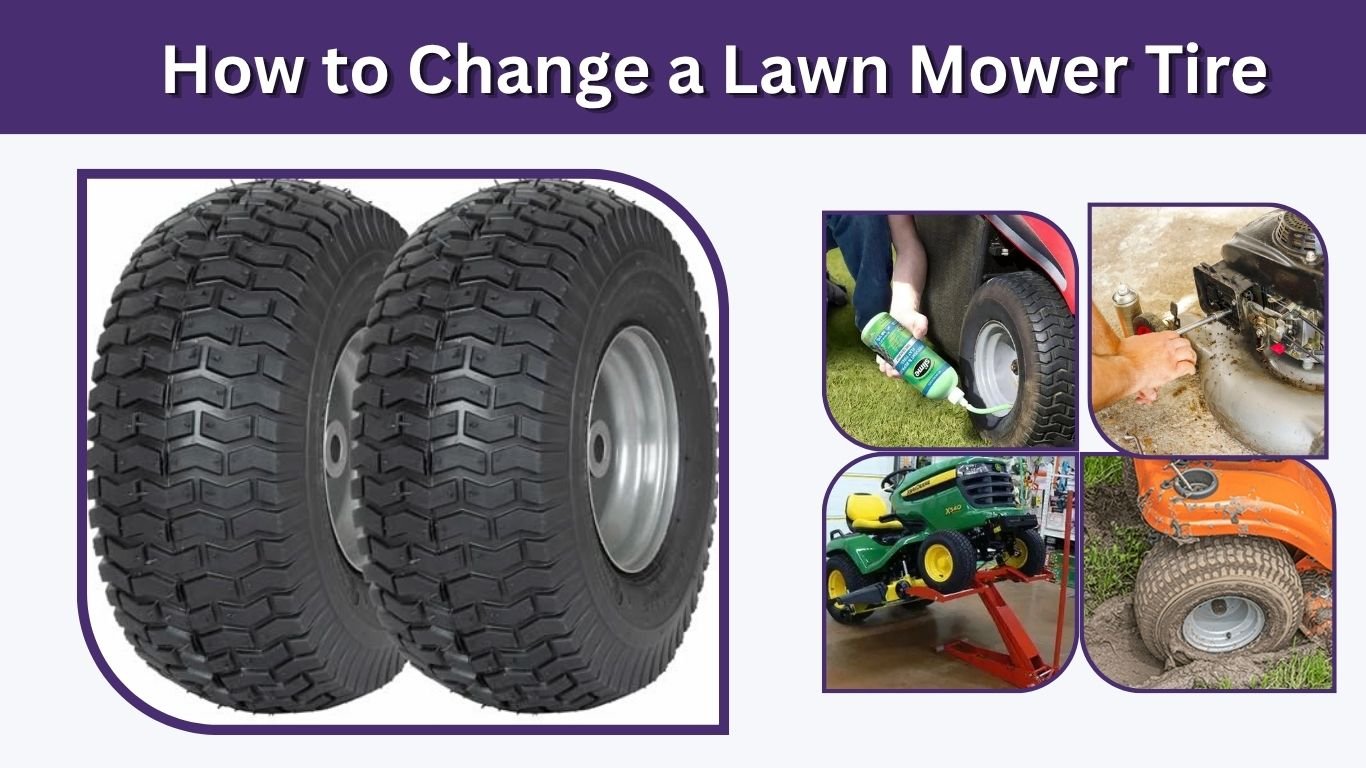
Changing a lawn mower tire is a useful repair skill for any homeowner. Whether you have a push mower, riding lawn mower, lawn tractor, John Deere, Craftsman, Husqvarna, Cub Cadet, or Murray mower, the basic process is similar. You need to lift the mower safely, remove the wheel, separate the tire from the rim if needed, install the new tire or tube, and inflate it correctly. This guide explains how to change a lawn mower tire at home step by step.
Tools and Supplies You Need
Before you start, gather the right tools. Lawn mower tires are smaller than car tires, but they can still be tight on the rim. Having the correct tools makes the job safer and easier.
| Tool or Supply | Purpose |
| Jack or mower lift | Raises the mower safely |
| Jack stands or wood blocks | Supports the mower while working |
| Pliers | Removes cotter pins or clips |
| Socket wrench | Removes axle bolts or wheel nuts |
| Tire irons or large screwdrivers | Helps remove tire from rim |
| Valve core remover | Releases air from tire |
| Air compressor or pump | Inflates the tire |
| Soapy water | Helps tire bead slide onto rim |
| New tire or inner tube | Replaces damaged part |
| Gloves | Protects hands from grease and sharp edges |
You may not need every tool for every mower. A front lawn mower tire is usually easier to remove than a rear tire on a riding mower or lawn tractor.
Safety Steps Before Changing a Lawn Mower Tire
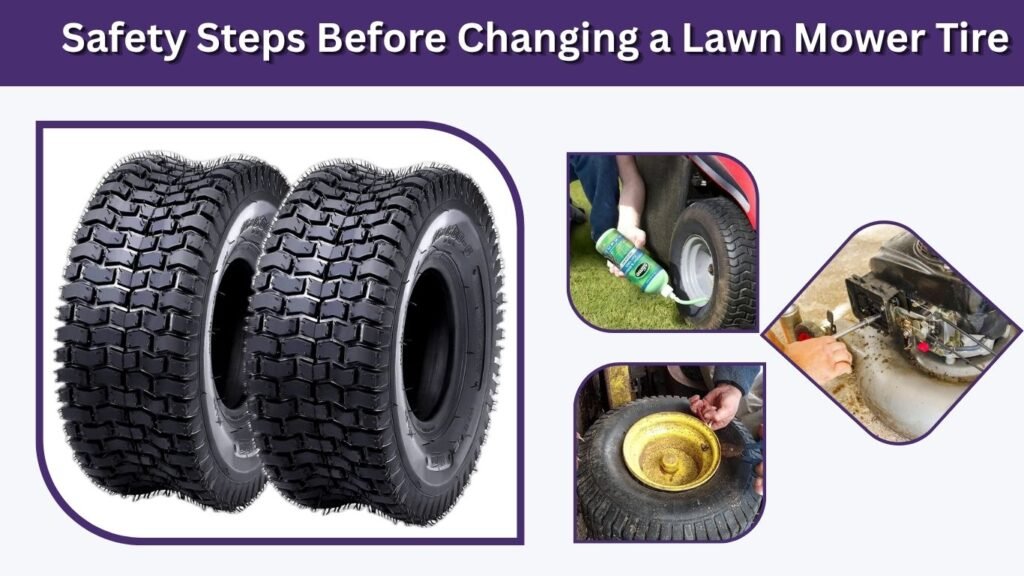
Lawn mowers are heavy machines, especially riding lawn mowers and lawn tractors. Always make safety your first step before removing any wheel.
Park on a Flat Surface
Move the mower to a flat, hard surface like a garage floor, driveway, or concrete pad. Avoid soft grass or uneven ground because the jack can sink or shift.
Turn Off the Mower Completely
Before working on the tire:
- Turn off the engine
- Remove the key
- Let the engine cool
- Set the parking brake
- Disconnect the spark plug wire on gas mowers
- Remove the battery connection if needed on riding mowers
This prevents accidental starting while you are working.
Support the Mower Properly
Use a jack to lift the mower, but do not rely on the jack alone. Place jack stands or strong wood blocks under the frame. This is especially important when changing a tire on a riding lawn mower or lawn tractor.
How to Remove a Lawn Mower Tire
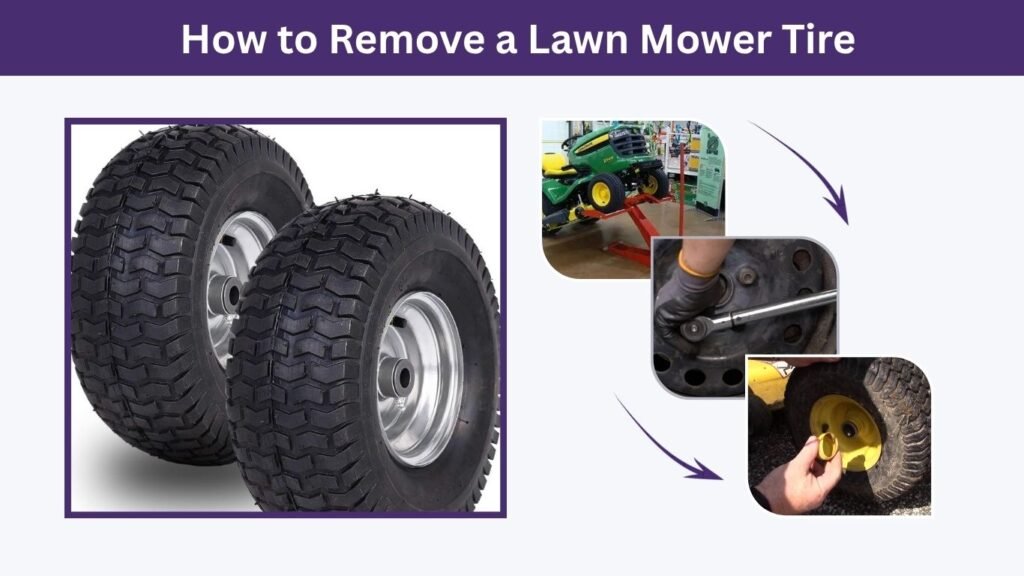
Removing the tire starts with removing the wheel from the mower. The process can be slightly different depending on whether you are working on a push mower, riding mower, or lawn tractor.
Step 1: Lift the Mower
Place the jack under a strong part of the frame. Lift the mower just high enough so the tire is off the ground. For a riding lawn mower front tire, lift the front axle. For a rear tire, lift the rear frame or rear axle area.
Do not place the jack under weak plastic parts, mower deck edges, or thin metal covers.
Step 2: Remove the Wheel Cap
Many lawn mower wheels have a plastic dust cap or center cover. Pry it off gently with a flat screwdriver. Behind the cap, you may see a cotter pin, retaining clip, washer, or axle nut.
Step 3: Remove the Retaining Clip or Nut
Use pliers to remove a cotter pin or retaining clip. If the wheel is held by a bolt or nut, use the correct socket wrench. Keep all washers, clips, and spacers in order so you can reinstall them correctly.
Step 4: Slide the Wheel Off
Pull the wheel straight off the axle. If it is stuck, spray a little penetrating oil around the axle and wait a few minutes. Gently wiggle the wheel while pulling. Avoid hammering too hard because you can damage the axle or wheel rim.
How to Change a Lawn Mower Tire on a Rim
Once the wheel is removed, you can change the tire itself. This step is needed if the tire is cracked, worn, punctured, or dry-rotted.
Step 1: Deflate the Tire
Remove the valve cap and press the valve stem to release air. For faster deflation, use a valve core remover to remove the valve core. Make sure the tire is fully deflated before trying to remove it from the rim.
Step 2: Break the Tire Bead
The bead is the edge of the tire that seals against the rim. It can stick tightly, especially on old mower tires.
To break the bead, you can:
- Press down on the tire sidewall with your foot
- Use a bead breaker tool
- Clamp the tire in a vise carefully
- Use a tire iron around the edge
- Apply soapy water to loosen the bead
Do this on both sides of the tire.
Step 3: Pry the Tire Off the Rim
Place the wheel flat on the ground. Insert a tire iron or strong lever under the tire bead. Work slowly around the rim, lifting the bead over the edge. Once one side is off, pull the second side off the same way.
Be careful not to bend the rim. Small lawn mower rims can be damaged if you force the tire too aggressively.
Step 4: Clean the Rim
Before installing the new tire, clean the rim edge. Remove dirt, rust, old rubber, and debris. A dirty or rusty rim can stop a tubeless lawn mower tire from sealing properly.
How to Install a New Lawn Mower Tire
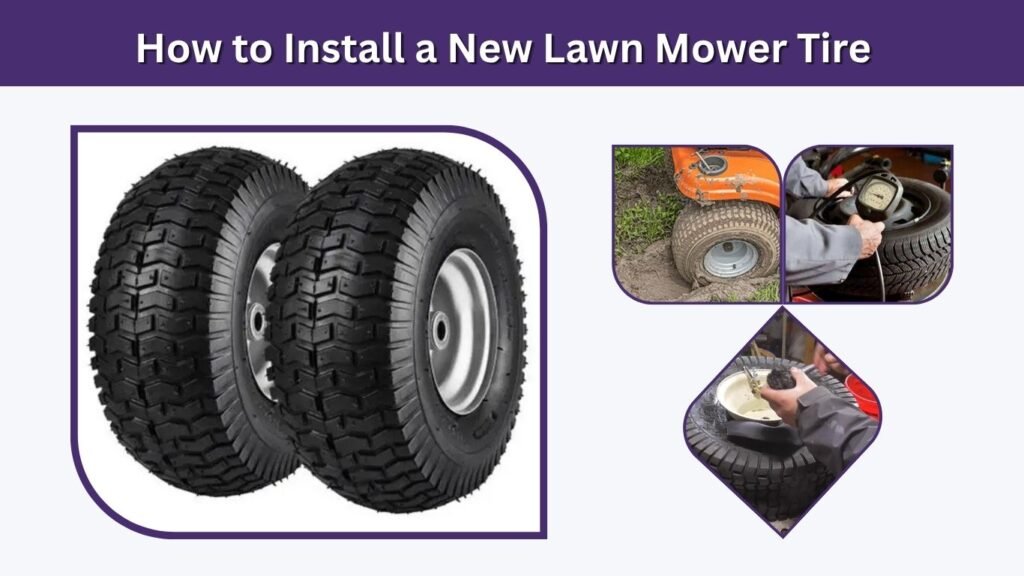
Installing the new tire is usually easier if you use soapy water. It helps the rubber slide over the rim without tearing.
Step 1: Check the Tire Direction
Some mower tires have a tread direction. Look for arrows on the tire sidewall. If the tire has directional tread, install it so the arrow points forward when the mower moves.
Step 2: Lubricate the Tire Bead
Apply soapy water around both tire beads and the rim edge. Do not use oil or grease because they can damage rubber and attract dirt.
Step 3: Mount the First Side
Push one side of the tire over the rim by hand. Use tire irons only if needed. Work slowly and avoid pinching the bead.
Step 4: Mount the Second Side
Push the second bead onto the rim. This side may be tighter. Use small movements around the rim instead of forcing one large section. If the tire is difficult, add more soapy water.
Step 5: Inflate the Tire
Inflate the tire slowly until the bead seats against the rim. You may hear a pop as the bead seals. Check the tire sidewall for the correct PSI. Do not overinflate.
| Tire Type | Common Use | Notes |
| Front lawn mower tire | Steering wheels | Usually easier to change |
| Rear lawn mower tire | Drive wheels | May be larger and harder to remove |
| Tubeless tire | Most riding mowers | Needs good rim seal |
| Tube tire | Older or damaged rims | Uses an inner tube |
| Lawn tractor tire | Heavy-duty mowing | May need stronger jack support |
How to Change a Tubeless Lawn Mower Tire
Many riding lawn mowers and lawn tractors use tubeless tires. These tires seal directly against the rim without an inner tube.
To change a tubeless lawn mower tire, remove the old tire, clean the rim, install the new tire, and inflate it until the bead seals. If the bead will not seat, wrap a ratchet strap around the center of the tire and tighten it slightly. This pushes the sidewalls outward so air can fill the tire.
If air leaks from the rim, check for rust, dirt, a bent rim, or damaged bead. Sometimes a tire shop can reseal the bead if it will not hold air at home.
How to Change a Lawn Mower Tire Tube
Some lawn mower tires use inner tubes. Tubes are also useful when the rim is slightly rusty or the tubeless tire will not seal.
Step 1: Remove One Side of the Tire
You do not always need to remove the whole tire from the rim. Remove one bead from the rim and pull the old tube out.
Step 2: Inspect the Tire
Check the inside of the tire for thorns, nails, sharp wire, or rough spots. If you skip this step, the new tube may puncture quickly.
Step 3: Add the New Tube
Add a small amount of air to the tube so it holds its shape. Insert the valve through the rim hole first, then tuck the tube evenly inside the tire.
Step 4: Reinstall the Tire Bead
Push the tire bead back over the rim. Be careful not to pinch the tube with tire irons. Inflate slowly and check that the tire sits evenly on the rim.
How to Change a Front Lawn Mower Tire
A front lawn mower tire is usually simple because it does not carry the same drive system as the rear tire. On many riding mowers, the front wheel is held by a dust cap, washer, and retaining clip.
Lift the front of the mower, remove the clip, slide off the wheel, and change the tire or tube. When reinstalling, make sure the washers go back in the same order. Grease the axle lightly if needed before sliding the wheel back on.
How to Change a Rear Lawn Mower Tire
A rear lawn mower tire can be harder because it may connect to the drive axle. Riding mower rear tires are also larger and heavier.
Before removing a rear tire:
- Set the parking brake
- Block the front wheels
- Lift the rear frame securely
- Check for axle keys or spacers
- Keep track of washers and clips
Some rear wheels have a square key that locks the wheel to the axle. Do not lose it. Without the key, the wheel may not drive properly after installation.
Brand-Specific Lawn Mower Tire Tips
The basic process is similar across most mower brands, but some models have small differences.
John Deere Lawn Mower Tire
John Deere riding mowers often use retaining clips and washers on front wheels. Rear tires may have axle keys. Check the wheel hardware carefully before removing the tire.
Craftsman Lawn Mower Tire
Craftsman riding mowers and lawn tractors commonly use simple axle clips or bolts. If the wheel is stuck, rust around the axle is often the reason.
Husqvarna Lawn Mower Tire
Husqvarna riding mower tires are usually tubeless. If the bead will not seal, cleaning the rim and using soapy water often solves the problem.
Cub Cadet and Murray Mower Tires
Cub Cadet and Murray mower tires follow the same basic process. Watch for spacers, washers, and dust caps when removing the wheel.
Can You Change a Lawn Mower Tire by Hand?
Yes, you can change a small lawn mower tire by hand, especially if it is a front tire or a small push mower tire. However, stiff or old tires can be difficult without tire irons.
Changing a lawn mower tire by hand is easier when you:
- Warm the tire in the sun
- Use soapy water on the bead
- Push the bead into the center of the rim
- Work slowly around the rim
- Avoid using sharp tools that can damage the tire
For large lawn tractor tires, using tire tools or getting help from a tire shop may be easier.
Common Problems When Changing Lawn Mower Tires
Even when you follow the steps, small problems can happen. Most are easy to fix if you know what to check.
Tire Will Not Come Off the Rim
The bead may be stuck from age, dirt, or rust. Add soapy water and work around the bead slowly. A bead breaker tool can help.
New Tire Will Not Seal
Clean the rim edge and check for bends or rust. Use a ratchet strap around the tire to push the sidewalls outward while inflating.
Tire Keeps Going Flat
The problem may be a puncture, leaking valve stem, damaged rim, or bad bead seal. Spray soapy water on the tire and look for bubbles.
Wheel Will Not Slide Off
Rust may be holding the wheel to the axle. Use penetrating oil and gently wiggle the wheel. Do not hit the axle too hard.
FAQs
Can I change a lawn mower tire at home?
Yes, you can change a lawn mower tire at home with basic tools, a jack, tire levers, and a pump or air compressor. Small front tires are usually easier, while rear riding mower tires may take more time.
Do lawn mower tires have tubes?
Some lawn mower tires have tubes, but many modern riding mower and lawn tractor tires are tubeless. If the tire has a tube, you will need to remove one side of the tire bead and replace the inner tube.
How do I know what size lawn mower tire I need?
Check the numbers printed on the tire sidewall. Lawn mower tire sizes may look like 15×6.00-6 or 20×8.00-8. Buy a replacement tire with the same size rating.
Can I change a tubeless lawn mower tire myself?
Yes, you can change a tubeless lawn mower tire yourself. The hardest part is usually breaking the bead and reseating the new tire on the rim. Soapy water and an air compressor make the job easier.
Why does my lawn mower tire keep losing air?
A lawn mower tire may lose air because of a puncture, leaking valve stem, rusty rim, damaged bead, or dry-rotted rubber. Spray soapy water on the tire, valve, and rim area to find air bubbles.